

Eye changes related to steroid use should be approached from two angles: not only cataracts that blur vision, but also elevated intraocular pressure (IOP) that can rise silently. Based on your medication history, we’ll outline a safe, practical direction for checkups to help protect your eyes.
“Can the medication I take regularly make my eyes worsen earlier than expected?”

Many people who visit the clinic share the same concern. These medications may be essential for managing chronic conditions or inflammation, yet it’s understandable to feel anxious if they seem to threaten your vision. Still, if you understand the medication’s characteristics accurately and combine that with regular ophthalmic checkups, you can often continue necessary treatment while managing eye health safely.
When evaluating a patient with a history of steroid prescriptions, an ophthalmologist does not start by simply asking whether “your eyes feel blurry.” Along with assessing posterior subcapsular cataract (PSC; lens opacity) that can explain noticeable vision decline, they also check for IOP elevation that may progress without symptoms—and the resulting optic nerve damage (steroid-induced glaucoma). In fact, a “steroid response,” where IOP rises, may occur in about one-third of steroid users. If left unaddressed, it can lead to optic nerve damage, making early detection especially important.
In this article, we’ll explain the key points steroid users should know to prevent and detect cataracts and glaucoma early, and how to protect eye health more safely.
1. “My vision feels blurry”—How is normal aging different from steroid side effects?
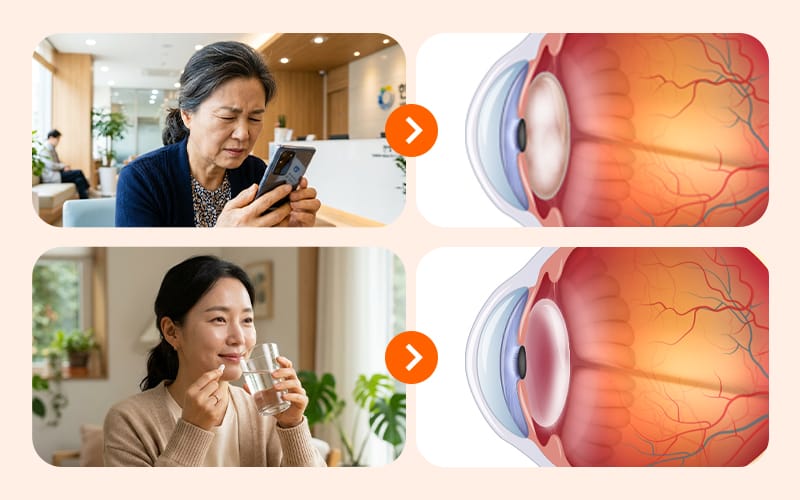
Age-related cataracts generally appear in two major forms. The most common, nuclear sclerotic cataract, develops as the central nucleus of the lens gradually hardens and turns yellow. Cortical cataract begins with spoke-like opacities in the outer cortex and spreads toward the center. Either type typically progresses slowly over years.
By contrast, steroid-associated posterior subcapsular cataract (PSC) concentrates clouding at the very back of the lens—just in front of the posterior capsule. Because this area is where light is focused most narrowly, even a small opacity can have a disproportionately large impact on vision. Unlike age-related cataracts, PSC may progress more quickly, sometimes over months.
A key feature is that in bright environments, as the pupil constricts, it becomes harder to “look around” the cloudy area—so glare and light scatter can feel worse. Vision decline may also be more noticeable during near work such as reading or using a smartphone.
If your vision feels blurry earlier than expected for your age, or if bright light makes symptoms worse, don’t dismiss it as simple aging. A slit-lamp exam is recommended to confirm the location of the lens opacity.
2. Are only “oral pills” risky? Eye checkup criteria by route of administration
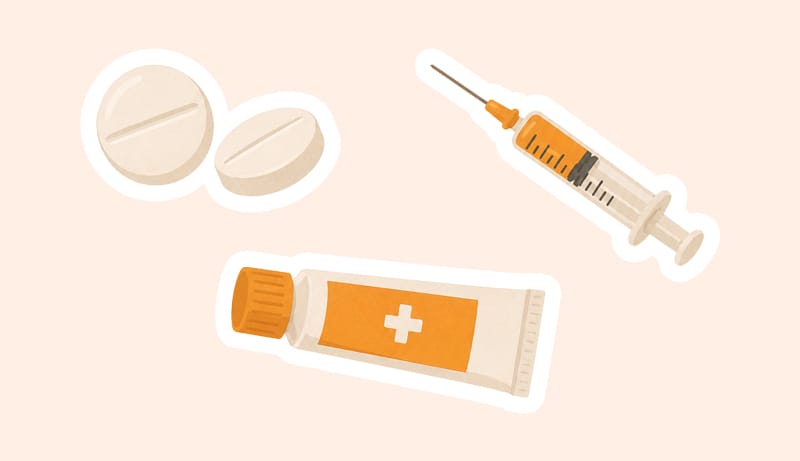
When people think of steroids, they often picture oral tablets. However, steroids come in many forms, including eye drops, inhalers, nasal sprays, and topical skin applications (ointments). Because eye-related effects can vary depending on the route and cumulative duration of use, it’s important not to assume “it’s just an ointment, so it won’t affect my eyes.” Instead, consider total cumulative exposure across all formulations you use.
Among administration routes, steroid eye drops are most likely to cause IOP elevation quickly and commonly. Compared with systemic or inhaled forms, topical ophthalmic steroids tend to raise IOP sooner—often within 2–6 weeks. Inhaled or topical skin steroids generally have lower systemic absorption, but that does not mean they are risk-free. IOP elevation and glaucoma have been reported with nearly all routes, including topical ophthalmic, periocular, intraocular, inhaled, nasal, systemic, and transdermal administration. There are also reported cases of glaucoma developing after long-term inhaled steroid use. Regardless of
route, steroids are associated with both glaucoma risk and cataracts.
Risk varies by potency, dose, duration, and individual responsiveness. The degree of IOP rise is influenced by route, potency, dose, treatment duration, steroid type, and patient risk factors. If you have diabetes, a history of high IOP, or a family history of glaucoma, earlier evaluation is a safer approach.
Because early stages often have few noticeable symptoms while IOP rises and optic nerve damage progresses, organizing a complete list of all steroid formulations you use and sharing it with your clinician is the first step in protecting your eye health.
✅Review your medication history
- Have you used steroid eye drops for more than 2 weeks, or received repeated
prescriptions? - Are you using high-dose oral steroids, inhalers, or nasal sprays long-term?
- Are you combining multiple formulations (eye drops, oral medication, inhalers, ointments, etc.)?
- Do you have diabetes, high IOP, or glaucoma (personal or family history)?
3. It’s not only about blurry vision—Why you must also check “tire pressure (IOP)”
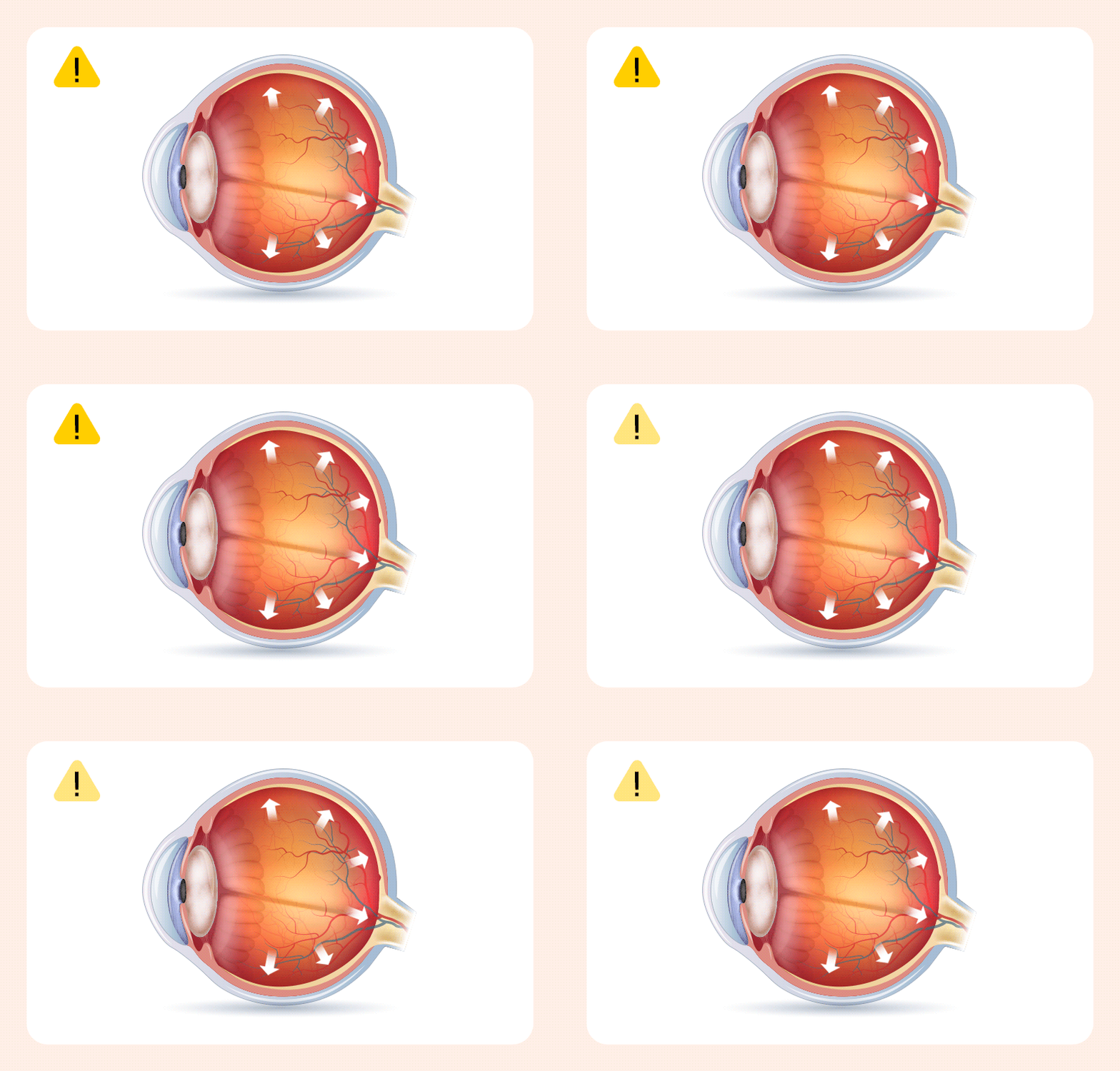
For steroid users, another factor that must be considered alongside cataracts is elevated IOP—medically referred to as “steroid-responsive ocular hypertension.” If cataracts are a discomfort you can feel on the surface, IOP elevation often progresses with little to no early symptoms.
Using the car analogy again: if a cataract is like frost on the windshield, elevated IOP is like tire pressure swelling to a dangerous level. When the windshield is cloudy, you try to wipe it right away—but tire pressure is hard for a driver to notice until it’s close to failure. If eye pressure remains high, it may lead to glaucoma, where the optic nerve is damaged.
If you have been using steroids for more than 2 weeks or receiving repeated prescriptions, it may be broadly appropriate to evaluate both lens status (whether cataracts are present) and IOP together. Rather than feeling reassured simply because your vision has not dropped dramatically, it is a more appropriate direction to undergo detailed testing to confirm that the optic nerve is safe.
4. Eye problems at a young age—Is it safer to stop the medication on your own?

Recently, more younger patients are using long-term medications for immune-related or skin conditions, and a significant number report eye-related issues at an earlier age. In that situation, some people—driven by fear that their vision is worsening—consider abruptly stopping the medication on their own.
However, suddenly discontinuing long-term steroid use can cause more than just worsening of the original condition. While external steroids are being supplied, the body reduces its own cortisol production. If the medication is stopped abruptly in that state, the adrenal glands may not produce enough cortisol, potentially leading to an adrenal insufficiency crisis with low blood pressure, severe fatigue, and other symptoms. If cataracts or IOP elevation are suspected, a much safer approach is to consult the prescribing physician to discuss dose adjustment or alternative medications rather than stopping on your own.
In children and adolescents, real-world cases suggest IOP elevation responses may occur faster and more sensitively than in adults. Caregivers should watch closely for signs such as increased light sensitivity or unexplained eye pain, and seek early ophthalmic evaluation if warning signs appear. Still, steroid-responsive ocular hypertension most often progresses without clear early symptoms. The list below reflects emergency warning signs of an acute, sharp IOP spike; the absence of these symptoms does not mean IOP is normal. Only regular examinations can detect quiet, progressive changes.
✅ Warning signs that may warrant prompt ophthalmic evaluation
- Sudden narrowing of the visual field or a major drop in vision
- Seeing a distinct rainbow-colored halo around bright lights
- A tight pressure sensation around the eye, severe headache, or vomiting
5. Surgery vs. monitoring—What is the most reasonable choice for my situation?
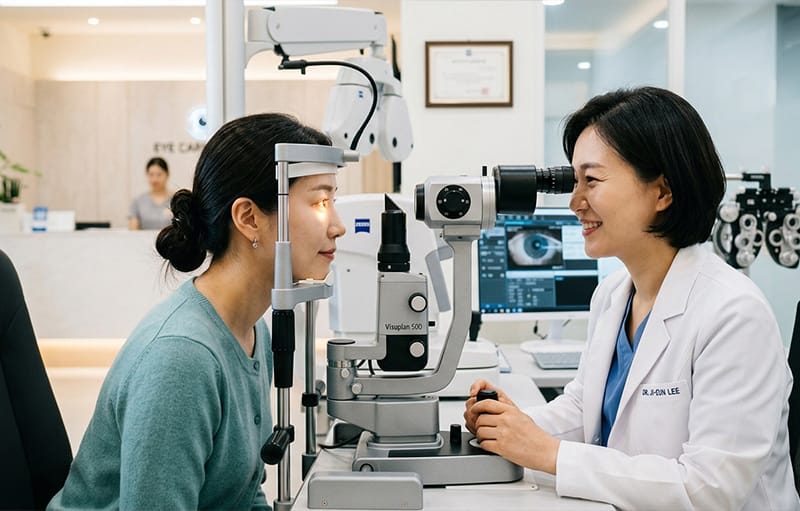
Even if an eye exam confirms changes, it does not automatically mean you must undergo surgery. Treatment direction is determined by a comprehensive assessment of the current degree of lens opacity, how much it affects daily life, and the IOP level.
Depending on your condition and comorbidities, the following approaches may be
considered flexibly:
- If vision decline is mild and daily inconvenience is limited: continue monitoring with regular follow-up exams
- If glare or light scatter significantly disrupts daily life: discuss cataract surgery to replace the lens
- If IOP is elevated: when possible, first consider reducing the dose of the causative steroid or switching to another medication; in addition, or when stopping steroids is difficult, combine this with IOP-lowering eye drops as needed
For those living overseas and receiving care, coordinating visits around time in Korea is important. It is helpful to plan the timeline in detail—from preoperative testing through the early postoperative recovery period. Bringing an English version of your local physician’s note and a list of prescribed medications can greatly help Korean ophthalmology clinicians understand your situation more quickly and accurately.
6. Frequently asked questions (FAQ)
Q. Does long-term use of inhaled steroids increase cataract risk?
Some studies have reported that long-term use of high-dose inhaled steroids may be associated with a somewhat increased tendency for cataracts to occur. However, controlling the underlying condition (such as asthma or COPD) is the top priority, so do not stop medication on your own. Discuss with your prescribing physician and consider regular ophthalmic checkups alongside ongoing treatment.
Q. If I reduce steroids, will a steroid cataract become clear again?
Once the lens becomes cloudy, it does not fully return to a completely transparent state. However, some reports suggest that adjusting medication at a relatively early stage may help prevent further progression and, in some cases, the worsening may stabilize. Still, if the cataract has progressed enough to affect vision, medication adjustment alone is often insufficient. Rather than stopping on your own, it’s important to coordinate closely with the prescribing physician to decide on timing and method.
Q. Why do I need to check for both cataracts and glaucoma together?
With a relevant medication history, cataracts (clouding of the lens) and a pressure-related response that can damage the optic nerve (glaucoma risk) may appear at the same time. In particular, IOP elevation often has few early symptoms, so proactively evaluating both together is a safer approach.
Q. When is the best time to get an ophthalmology consultation and detailed testing?
If eye pain, severe headache, or rainbow-like halos are present, prompt ophthalmic evaluation may be needed. If you are using long-term medication for a chronic condition, checkups can still be helpful even without symptoms. The exam interval can vary depending on cumulative dose, duration, and underlying conditions (diabetes, history of high IOP), so it is safer to decide the schedule in discussion with both the prescribing physician and an ophthalmologist.

The longer and more repeatedly steroids are used—and the more risk factors overlap—the more important it becomes to evaluate cataracts (lens clouding) and IOP elevation (which can threaten the optic nerve) as a paired set. Organize the cumulative dose and duration of the medications you’ve used, and if you have concerning symptoms, don’t delay—consider getting checked at a clinic equipped for detailed testing.
Not knowing about medication-related eye changes until now does not mean it is already too late. The effort you have made to manage your condition deserves respect, and from this point forward, regularly reviewing your eye status with an ophthalmology team can help you protect clearer, more comfortable vision in a safer way.
Sources
- Ministry of Food and Drug Safety (MFDS), Drug Safety Information (Monitoring of Corticosteroid Preparations), 2022
- Korean Ophthalmological Society (KOS), Guidance on Safe Use of Steroid Eye Drops and Glaucoma Prevention Information for Patient Safety, 2023
- American Academy of Ophthalmology (AAO), Corticosteroids and Eye Complications, 2023
※ The copyright for all content on this blog belongs to medihi. Unauthorized copying, distribution, or derivative use is strictly prohibited, and violations may result in legal action without prior notice.
Recommended reads
 medihi