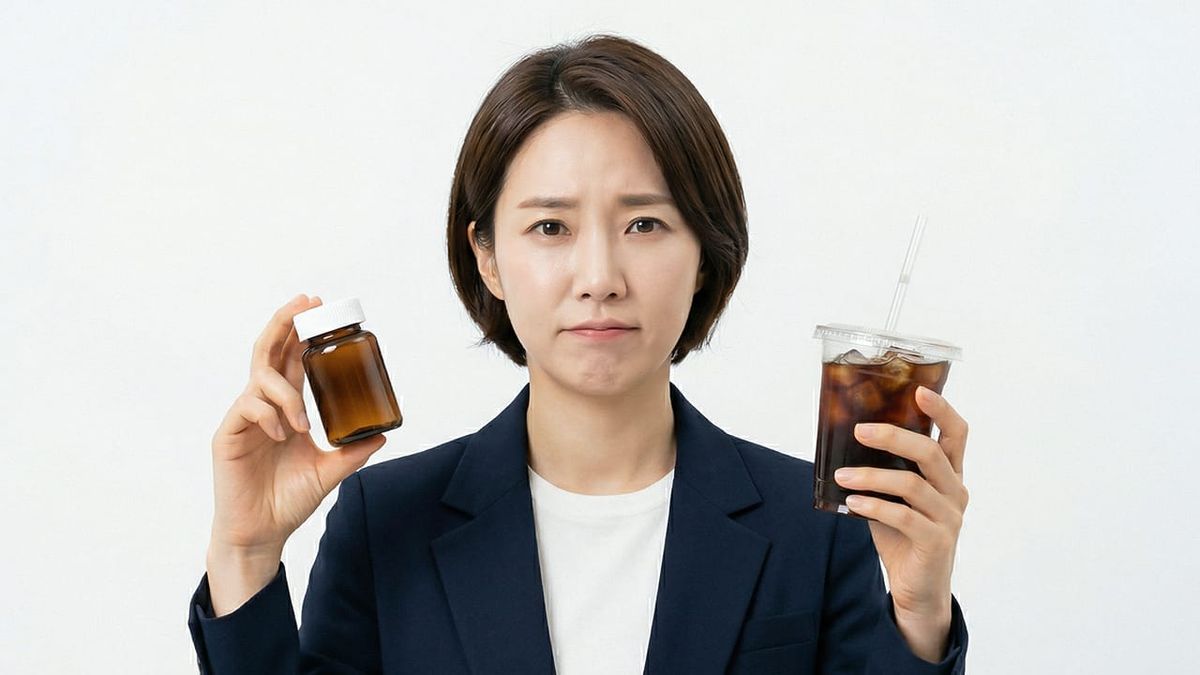

This post organizes the health signals and practical decision points that are easy to miss when you attribute chronic fatigue only to thyroid conditions. It also covers medical checkpoints worth reviewing if your fatigue doesn’t improve even after starting medication.
“Even after sleeping, I don’t feel refreshed—could it be a thyroid issue?”

If you’re over 40, you’ve probably had this thought at least once. But if you narrow the cause down to the thyroid just because you feel tired, you may miss other important signals your body is sending. Today, instead of vague anxiety, I’ll walk you through reasonable criteria you can use to judge the situation.
1. Fatigue isn’t an “engine failure”—it’s a “dashboard warning light”

When people feel fatigued, they often assume “the thyroid—my body’s engine—must be broken.” Medically, however, fatigue is less like a problem with the engine itself and more like a warning light on the dashboard.
A warning light doesn’t automatically mean you need to replace the engine (thyroid). It could be that you’re low on fuel (nutrition), the battery is drained (sleep), or the sensors are overly sensitive (stress).
Looking at a 1989 study by Schectman and colleagues, only a small portion of patients who visited the hospital for fatigue alone were found to have abnormal thyroid-stimulating hormone (TSH) levels. This suggests that the equation “fatigue = thyroid” doesn’t always hold.
Hypothyroidism is not simply a “fatigue disease.” When hormones are insufficient, metabolism slows down, and changes such as increased cold intolerance, weight gain, or dry/rough skin may accompany it.
If you don’t have these distinctive symptoms and only feel generally “low on energy,” it’s worth widening the lens. You may need to consider whether other factors are contributing in combination—such as sleep apnea, anemia, prediabetes, or menopause-related symptoms.
2. If your numbers are “borderline,” do you need medication? (ft. subclinical hypothyroidism)

Hearing “your numbers are borderline” on a screening test can feel alarming. This is often referred to as subclinical (latent) hypothyroidism. The signal from the brain (TSH) is elevated, but the actual thyroid hormone (FT4) remains normal. It’s like pressing the accelerator harder while going uphill (TSH rises), yet the car’s speed stays normal (FT4 remains normal).
In that moment, it’s easy to think, “I’m tired, so I should start medication quickly.” However, the 2023 Korean Thyroid Association recommendations and international guidelines advise a cautious approach. The trend is to consider follow-up monitoring first rather than immediate medication.
Especially in older adults or when symptoms are mild, there are reports that medication may not meaningfully improve fatigue. In a 2020 study by Moutzouri and colleagues (Journal of Gerontology: Series A), giving thyroid hormone to asymptomatic patients aged 65 and older did not show a clear benefit in improving fatigue.
Borderline numbers may not mean you need hormones right away. It could also be a sign that your body is trying to rebalance itself.
At this stage, rather than starting medication too quickly, watching changes at 3–6 month intervals may be a safer choice. Of course, exceptions exist—such as preparing for pregnancy or rapidly changing values—so you should discuss your situation with a clinician.
[Checklist Before Considering Medication]
- [Check] Is your TSH level below 10 mIU/L on your blood test?
- [Check] Is your thyroid hormone (Free T4) level within the normal range?
- [Check] Do you have no plans for pregnancy and no underlying conditions such as heart disease?
3. If you’re still tired even while taking medication, is it a “dose” problem?

Some people continue to feel tired even while consistently taking thyroid hormone (levothyroxine). The first thought is often: “Is the medication not enough? Should I increase the dose?”
But if your lab values have normalized and fatigue persists, it’s more likely not a dose issue. If you’ve filled the tank but the car still won’t move, you should suspect a fuel-delivery problem (absorption) or another component issue (a coexisting condition).
Clinical reports and patient follow-ups suggest that a substantial number of treated patients still report fatigue, even when lab values are within target ranges. This is a reminder that “normal numbers” don’t always mean symptoms disappear completely.
If fatigue persists, two areas should be checked:
First, factors that interfere with absorption. Antacids, calcium supplements, iron supplements, and coffee can reduce absorption of thyroid hormone, decreasing the amount that actually gets into your system.
Second, causes outside the thyroid. Fatigue that doesn’t resolve with medication is difficult to attribute to the thyroid alone. You may need to look for another contributor creating “residual fatigue,” such as sleep disorders, depressed mood, anemia, or nutritional imbalance.
4. Iodine and lifestyle habits Koreans should be especially mindful about

You may often hear, “Seaweed soup is good for the thyroid—eat more of it.” It’s true that iodine is a raw material for thyroid hormone. But that idea was more applicable to inland countries with iodine deficiency, or in earlier times. In Korean diets where seaweed is commonly eaten, it’s often more important to watch for iodine excess than iodine deficiency.
If too much raw material (iodine) flows into the hormone “factory” (thyroid), problems can occur. To prevent overload, the factory may temporarily slow down or malfunction.
In particular, some people with thyroiditis or suspected hypothyroidism take highly concentrated kelp pills or extracts as a form of “health boosting.” This can instead place extra burden on the thyroid, so caution is needed.
You generally don’t need to worry too much about normal dietary amounts like gim or miyeok-guk. However, intentionally taking high-dose iodine for “thyroid health” may bring more downsides than benefits.
Also, various supplements taken indiscriminately for fatigue recovery can conflict with medications. Rather than focusing on “what else should I take,” the first step in fatigue management is checking “what might be interfering with my thyroid.”
[Daily Fatigue Management Checklist]
- [Check] Are you experiencing only fatigue without specific thyroid symptoms (e.g., sensitivity to cold, weight gain)?
- [Check] Are you consuming excessive amounts of iodine through kelp supplements or highly concentrated extracts?
- [Check] Are there other factors causing your fatigue, such as a lack of sleep or stress?
5. To reduce fatigue, “when you take it” matters more than “what you take”

f you’re taking thyroid hormone, it’s important to follow consistent rules. This medication is sensitive—its absorption can change significantly depending on food or other drugs.
If you drink coffee or eat right after taking it in the morning, the effect may decrease. To turn off the fatigue warning light, you need to secure an “empty-stomach highway” so the fuel (medication) can reach the engine effectively.
In general, taking it immediately after waking on an empty stomach is recommended. Avoid eating for a certain period afterward, and leave enough time between the medication and coffee, milk, calcium, or iron supplements.
It’s usually helpful to separate timing to avoid interfering with absorption, but the exact interval can vary depending on your medications and condition—so following your clinician’s instructions is the safest approach.
If your lifestyle makes morning fasting difficult, discuss it with your clinician. Switching to bedtime—after dinner has been fully digested—may be an option.
Ultimately, the key is not to leave everything to a single pill. You need to create the conditions that allow the medication to do its job. Regular sleep and light exercise can be good catalysts that help hormones work more efficiently in the body.
6. Frequently Asked Questions(FAQ)
Q. If my fatigue is severe, do I need to get a thyroid test no matter what?
Fatigue is a common symptom of thyroid conditions, but it isn’t the only cause. That said, if unexplained fatigue lasts longer than one month, or if it comes with weight changes, cold sensitivity, or swelling, testing is recommended. This is not only to diagnose thyroid disease, but to clearly confirm and differentiate one possible cause among many.
Q. My health screening showed a slightly high TSH (thyroid-stimulating hormone). Do I need to start medication right away?
When TSH is high but thyroid hormone (FT4) is normal, it’s called subclinical hypothyroidism. If the value isn’t very high (often below 10 mIU/L) and there’s no pregnancy plan or severe symptoms, medication is often not started immediately. It’s common to recheck and monitor in 3–6 months.
Q. Should I completely avoid seaweed like miyeok-guk or gim?
No. Seaweed in the amount typically included in a Korean diet is usually not a major issue. However, taking kelp pills or highly concentrated extracts daily “for thyroid health” is better avoided. Excess iodine can instead reduce thyroid function, so moderation is important
Q. When is it a good idea to consult an endocrinologist?
When fatigue continues to the point that daily life feels difficult even after adequate rest. In particular, if you also notice a swelling sensation in the front of the neck, rapid weight changes, palpitations, or hand tremors, it’s advisable to seek care. A professional evaluation is needed to assess thyroid function and identify the cause.

The thyroid is an important organ that regulates energy in the body, but it isn’t the answer to every kind of fatigue. Rather than concluding you have a thyroid condition simply because you feel tired, it’s important to view your body with a broader perspective. If your numbers are borderline, waiting and trusting your body’s recovery capacity—rather than starting medication—may sometimes be the better choice. If fatigue persists even during treatment, I recommend checking not only the dose, but also your dosing habits and daily routine. Fatigue is a valuable signal from your body. Instead of forcing that signal off, if you identify what it’s truly pointing to and address it step by step, you may be able to regain an energetic daily life.
Sources
- Korean Thyroid Association, Recommendations for Subclinical Hypothyroidism, 2023.
- Korea Disease Control and Prevention Agency (KDCA) National Health Information Portal, information on chronic fatigue syndrome and thyroid conditions.
- Moutzouri, E., et al. “Levothyroxine treatment in elderly people with subclinical hypothyroidism.” Journal of Gerontology: Series A, 2020.
※ The copyright for all content on this blog belongs to medihi. Unauthorized copying, distribution, or derivative use is strictly prohibited, and violations may result in legal action without prior notice.
Recommended reads
 medihi