

In This Article
When using Digital Smile Design in prosthodontic treatment, avoid drawing firm conclusions about the final outcome based solely on on-screen simulation results. A virtual tooth design may conflict with real intraoral conditions, such as gingival status and the occlusal environment. Below, we outline precise hybrid diagnostic criteria to reduce errors by cross-checking digital convenience with analog, physical fit.
1. Is DSD technology really all-powerful?
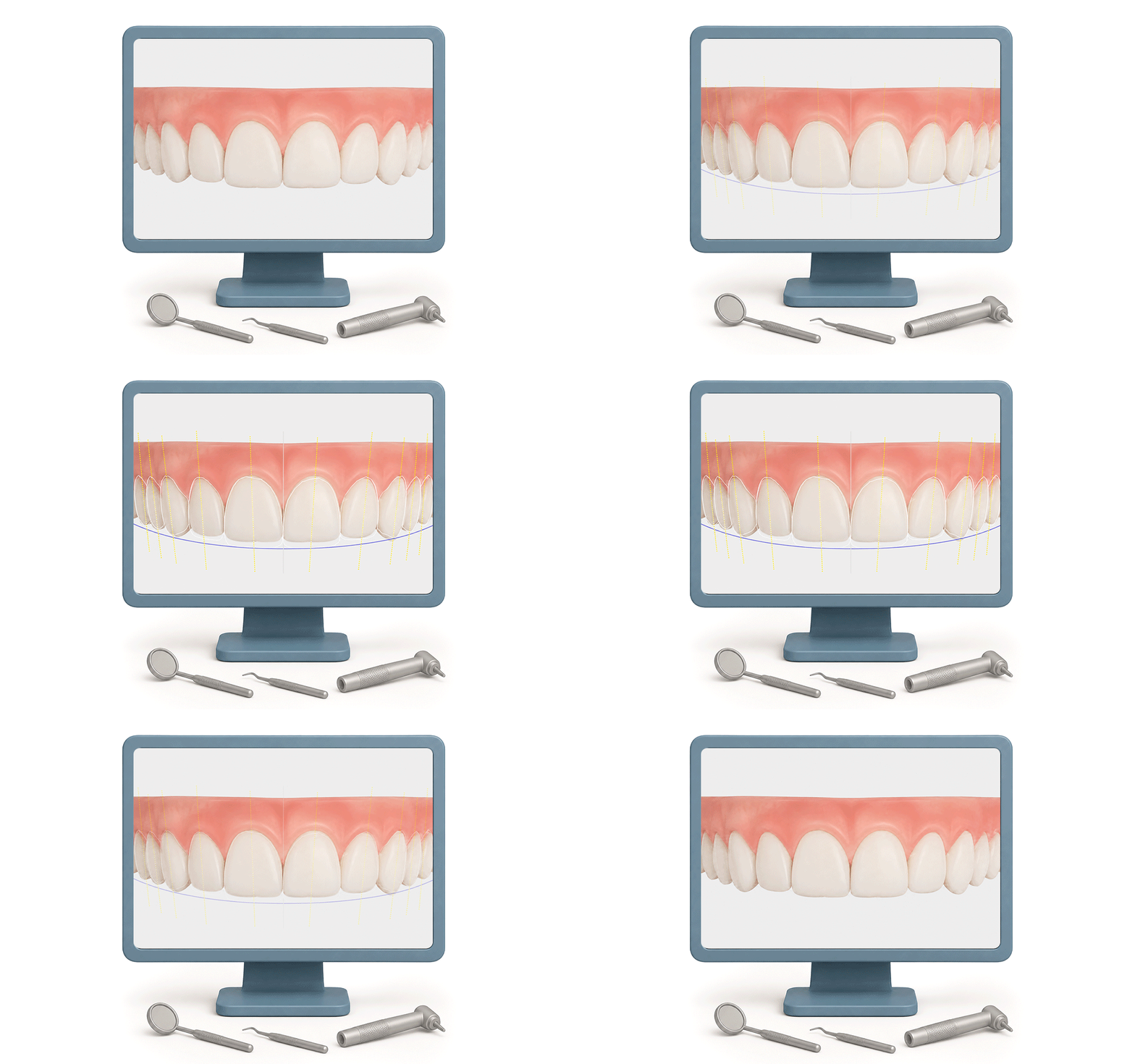
Digital Smile Design is not a tool that automatically determines treatment outcomes; it is a visualization-based diagnostic aid that facilitates communication through a virtual blueprint. Even if the on-screen result appears highly aesthetic, factors such as the patient’s actual gingival condition and the direction and distribution of occlusal forces are difficult to fully control using simulation data alone. For this reason, on-screen images are best used as a reference to establish the overall treatment direction.
Just as architectural drawings still require an understanding of real-world site contours, physical verification is essential to narrow the gap between the design and the actual oral environment. Treatment planning that relies only on the screen may negatively affect long-term prognosis. A virtual design becomes a safe treatment plan only when paired with meticulous clinical cross-verification.
2. Where do design errors come from?
Discrepancies between a virtual plan and the clinical outcome can occur as errors accumulate during scanning, data alignment (registration), and prosthesis fabrication. Intraoral scanners may be affected by saliva or patient movement, and additional errors can be introduced during the registration process when datasets are merged. These geometric discrepancies can directly influence the final prosthesis form.
A diagnostic wax-up (virtual tooth shaping) and a physical mock-up (intraoral try-in) use different methods, which can lead to region-specific dimensional differences. In particular, when the tooth–gingiva margin is complex, flat lines on a screen may be perceived differently in a 3D oral environment. Therefore, diagnostics should anticipate potential errors and establish a correction plan in advance.
3. Why hybrid diagnostics are necessary
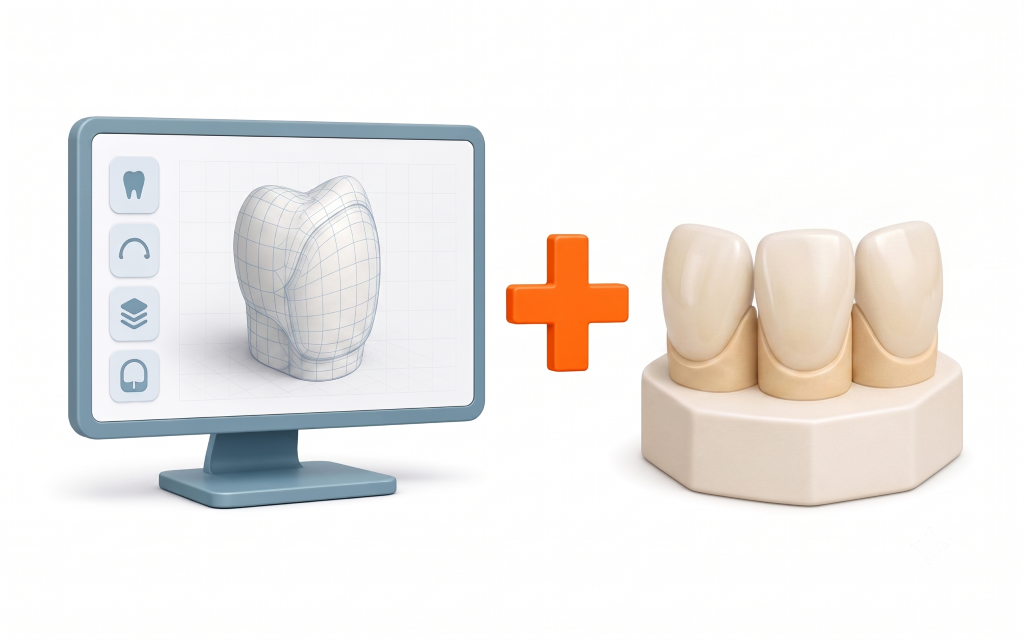
Hybrid diagnostics combine digital data utilization with the surface accuracy of analog impression materials to improve prosthesis fit. Because a scanner’s light source has physical limitations in precisely capturing tooth margins hidden below the gingival margin, analog methods are used in parallel to supplement complex areas. Correcting and validating data through both approaches helps reduce marginal gaps.
✅Key steps in hybrid cross-verification
- Perform a virtual design analysis that considers overall facial balance and skeletal asymmetry.
- Carefully compare actual physical interdigitation using an analog model and a precision articulator.
4. Why you should go through mock-ups and provisional restorations
Mock-ups and provisional restorations are essential safety steps that allow the on-screen design to be worn intraorally to confirm aesthetics and function. When tooth reduction is involved, identifying and correcting issues at this stage can significantly affect satisfaction with the final outcome. Evaluation should include not only tooth form, but also a three-dimensional assessment of tooth display during speech.
✅Must-check items during the mock-up/provisional stage
- Aesthetics: Assess not only the frontal view, but also whether the smile line and overall facial balance are harmonious.
- Function: Confirm there is no functional compromise, such as air leakage during speech or discomfort with lip movement.
5. What to check before veneer treatment
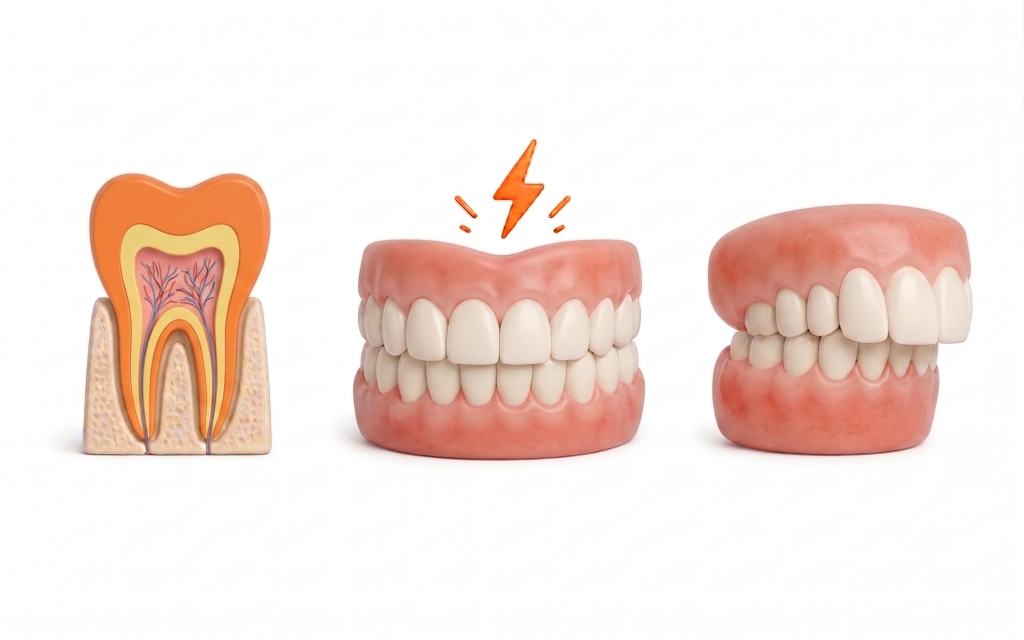
To extend veneer longevity, you should evaluate not only aesthetics but also occlusal risk factors such as remaining enamel, bruxism, and deep overbite. Enamel is a key determinant of prosthesis retention; excessive reduction may decrease bond strength and cause sensitivity.
One study reported that veneers bonded to dentin had approximately a 10-fold higher risk of failure than those bonded to enamel. It also reported a 99% survival rate when reduction remained entirely within enamel, and 94% when only the margin was in enamel.
A process to assess how occlusal forces are distributed should also be included to ensure structural safety.
| Core Precision Evaluation Area | Target & Associated Risks | Objective of Hybrid Complementary Measures |
|---|---|---|
| Enamel & Periodontal Condition | Risk of bonding failure and tooth sensitivity due to excessive reduction | Establishing customized minimal reduction and prioritizing prior periodontal stabilization |
| TMJ & Occlusal Structure | Prosthesis fracture and debonding caused by high masticatory forces | Guiding load distribution through static and dynamic occlusal analysis |
6. Frequently Asked Questions (FAQ)
Q. Does the design seen in a DSD simulation match the final result exactly?
Digital Smile Design is a blueprint that presents an ideal treatment direction, and minor physical discrepancies may occur during scanning and laboratory fabrication. Therefore, a verification process is included at the provisional stage to confirm intraoral response and fine-tune small discrepancies.
Q. If analog steps are added, does the treatment timeline become too long?
Because digital data serves as the primary guide and only key areas with higher error risk are fine-adjusted using a physical model, unnecessary delays are minimized. Pre-treatment cross-verification also helps prevent remakes due to intraoral misfit, improving overall treatment efficiency.
Q. Can digital diagnostics be performed even if the gums are not in good condition?
Gingival swelling or bleeding can interfere with accurate data capture and increase the likelihood of scan registration errors. To ensure stable digital diagnostics and precise marginal adaptation, gingival stabilization treatment before scanning is recommended.
Q. If bruxism is severe, is veneer treatment unfavorable?
Research indicates that bruxism increases the risk of prosthesis fracture and failure by 7.7 times. Therefore, planning to control loading through pre-treatment occlusal evaluation should take priority. Suitability is then assessed conservatively, incorporating individualized aftercare plans such as wearing a protective device during sleep.
This health content has been reviewed by medical professionals, compiled from authoritative domestic and international sources, and is regularly updated in accordance with the latest clinical guidelines.
Sources
- Korea Disease Control and Prevention Agency (KDCA) National Health Information Portal, “Basic Principles and Process of Dental Prosthetic Treatment,” 2024
- Journal of the Korean Academy of Prosthodontics, “A Case Applying a Hybrid Workflow to Resolve Subgingival Margins and Alignment Errors,” 2026
- The Journal of Korean Academy of Prosthodontics, 'Dimensional discrepancy between digital smile design and physical mock-up', PubMed PMID: 37699185, 2023
※ The copyright for all content on this blog belongs to medihi. Unauthorized copying, distribution, or derivative use is strictly prohibited, and violations may result in legal action without prior notice.