

In This Article
For veneer, bonding conditions vary depending on how much enamel (the tooth’s outer surface) is preserved. We’ll look at how the amount of tooth reduction and dentin exposure affect bonding, walk through the real bonding process, and review how to manage teeth grinding.
1. Why is bonding to enamel more advantageous?
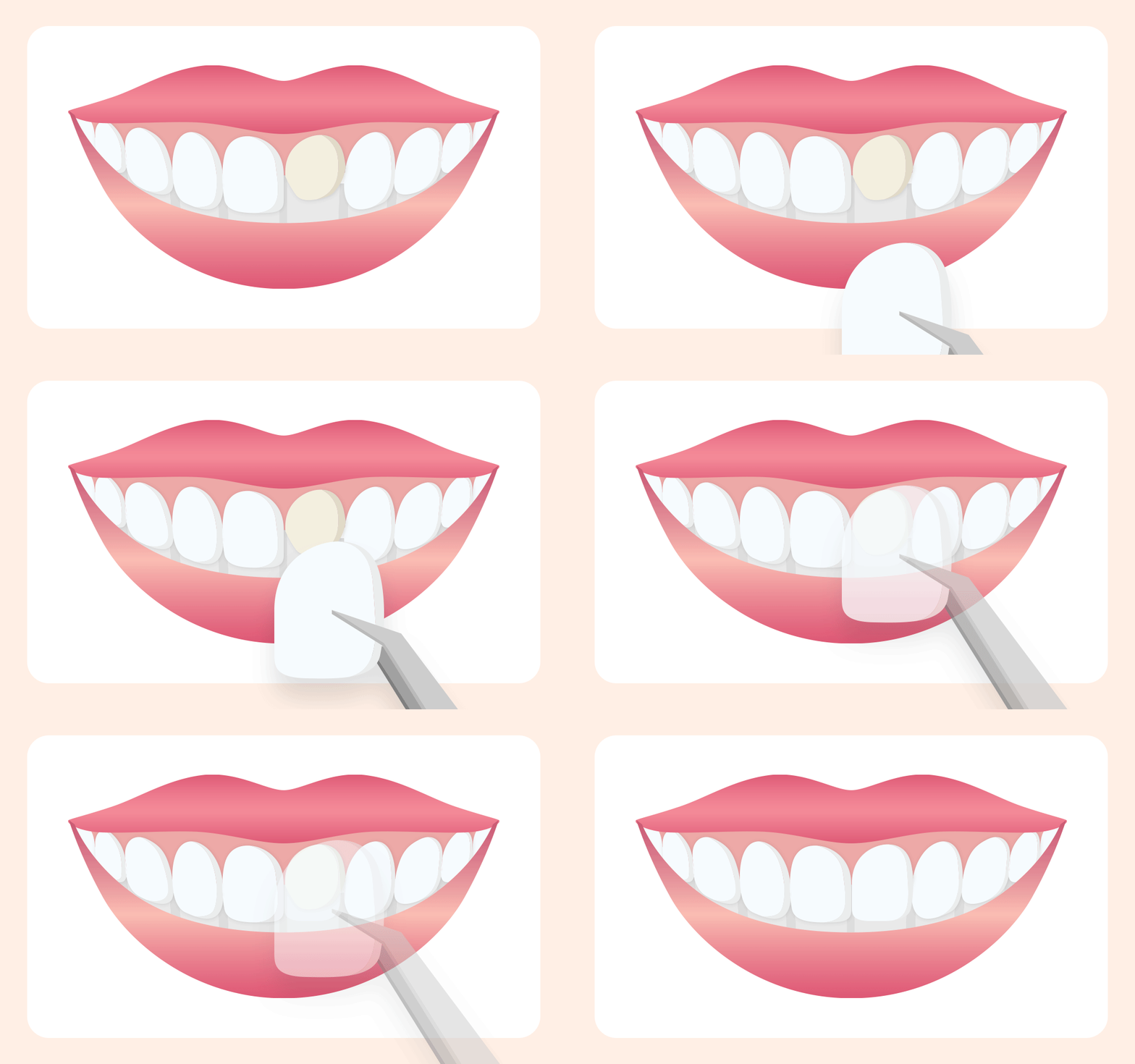
Veneer are more favorable for stable bonding when they are bonded to enamel. Enamel is the hard outer layer covering the tooth, rich in minerals and relatively low in moisture and organic content.
In dentistry, an acid is used to microscopically roughen the enamel surface. Resin cement in a liquid state penetrates these tiny irregularities and, once it hardens, mechanically interlocks the tooth and the restoration.
Because enamel contains less moisture, it also helps reduce the likelihood that the bonding material will degrade or deform. When the restoration margin sits within enamel, the risk of bacteria entering through a gap or the margin becoming stained can be reduced. For this reason, preserving as much enamel surface area as possible is important.
2. If you reduce less tooth structure, does the risk of debonding decrease?
A minimally invasive design that reduces tooth reduction and preserves enamel can lower the likelihood of veneer debonding. This is because aggressive tooth preparation can decrease the amount of enamel surface area that is favorable for bonding.
A minimally invasive approach means shaping only what is necessary, taking enamel thickness into account. Securing a larger remaining enamel area provides a broader foundation for the resin cement to interlock with and also helps maintain the natural strength of the tooth. When bonded precisely, it can also help distribute chewing forces more effectively.
In overseas clinical research, the 10-year cumulative survival rate of veneer bonded to enamel has been reported at approximately 95.5%. However, this figure does not represent an individual’s expected duration, and outcomes may vary depending on chewing forces, dietary habits, and aftercare.
3. What changes if dentin is exposed?
If dentin (the inner tooth layer) is exposed, bond strength may be lower compared with enamel. Dentin contains more moisture and organic material, which can make it harder for resin cement to form a stable bonded layer.
Moisture can enter through microscopic channels in dentin called dentinal tubules. Moisture interferes with bonding, and if stimuli are transmitted, sensitivity may occur with temperature changes or during chewing.
| Bonding Site | Shear Bond Strength |
|---|---|
| Enamel | Approx. 20 MPa |
| Dentin | Approx. 10 MPa |
(*The figures above are specific laboratory measurements using extracted teeth. Actual intraoral bonding conditions and restoration lifespan may differ.)
Dentin exposure does not automatically mean veneer are not possible. If dentin is exposed, pretreatment agents that work well in moist conditions and strict moisture control become important. If the damage is extensive, it is safer to also consider other restorative options such as a crown.
4. What matters most during the veneer bonding process?
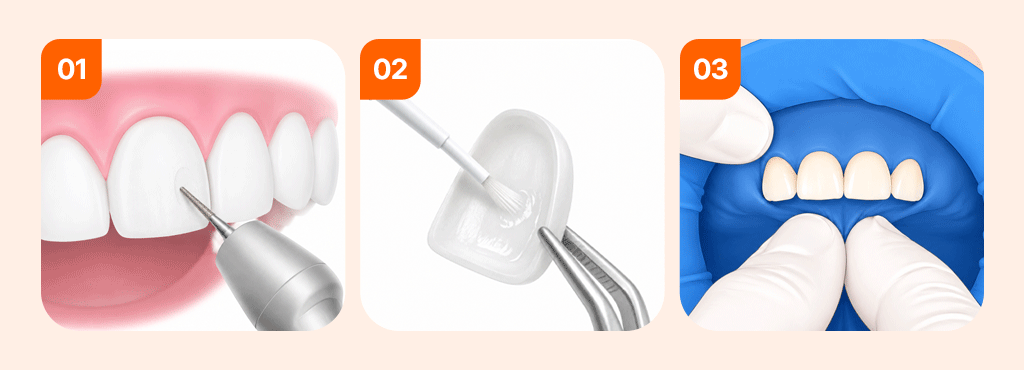
It is important to properly treat both the tooth surface and the ceramic surface and to prevent moisture contact during bonding. This is because the process creates a chemical bond between the tooth and the restoration.
✅Three steps in the bonding process
1. Enamel treatment: Create microscopic irregularities on the tooth surface using about 37% phosphoric acid. Follow the specified reaction time and dry the bonding surface so the adhesive can penetrate.
2. Ceramic treatment: Apply a thin, even layer of a coupling agent called silane to the inner surface of the glass ceramic. Silane chemically links the ceramic and the resin cement.
3. Moisture control: Use a dental rubber sheet (rubber dam) and similar methods to prevent saliva or blood from contacting the bonding surface. If moisture contaminates the surface, bond strength decreases.
Each step must be performed accurately according to the tooth condition and the ceramic material. The clinician’s skill in surface treatment and moisture isolation is also important for restoration longevity.
5. Does teeth grinding affect veneer as well?
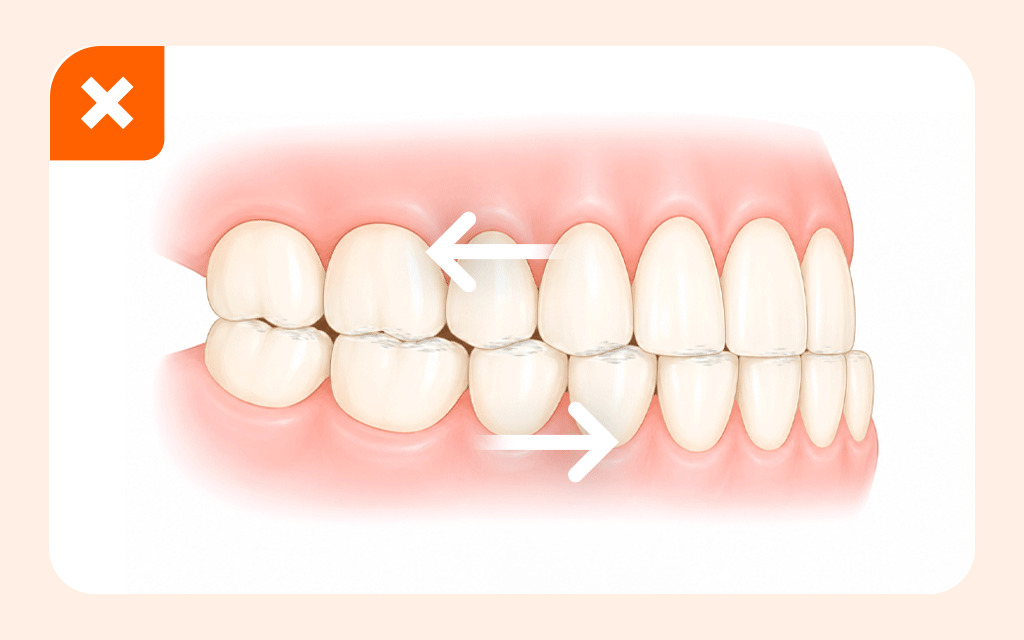
If you grind your teeth or clench, the risk of veneer cracking or debonding may increase. Even when enamel is well preserved and bonding is done properly, repetitive forces can place stress on the bonded interface.
Veneer are relatively more vulnerable to side-to-side rubbing forces than to vertical biting forces. Sleep bruxism can concentrate forces at the restoration margins, leading to microcracks, chipping, or debonding.
✅Management with bruxism in mind
- Nighttime protective appliance: Wear a night guard to distribute forces and protect both teeth and restorations.
- Bite check: At regular checkups, assess whether force is concentrated on specific teeth or whether any areas contact too early.
- Adjustments when needed: If bite issues are identified, areas that overload the restoration can be adjusted.
6. Frequently Asked Questions (FAQ)
Q. How much enamel should be preserved for favorable bonding?
It is advantageous to design the preparation so that the bonding area and the preparation margin remain within enamel as much as possible. Some experimental studies have suggested preserving at least 40% enamel.
Q. If dentin is visible, does that mean veneer cannot be done?
Even if some dentin is exposed, veneer are not automatically impossible. However, there may be a higher risk of shorter bonding longevity, so moisture-aware pretreatment and strict isolation are important. If the damage is extensive, a crown may also be considered.
Q. Are phosphoric acid etching and silane application necessary?
These are standard bonding steps that help the adhesive bond effectively to the tooth and ceramic. If steps are omitted or insufficient, the restoration may debond or gaps may form at the margins.
Q. If I grind my teeth, how should I manage it?
Side-to-side forces from grinding can place stress on veneer. Using a nighttime protective appliance and checking the bite relationship during regular follow-ups are important.
This health content has been reviewed by medical professionals, compiled from authoritative domestic and international sources, and is regularly updated in accordance with the latest clinical guidelines.
Sources
- Alenezi et al., Cumulative survival rates of porcelain laminate veneers, Journal of Prosthetic Dentistry, 2021.
- Zhu et al., Influence of remaining enamel on bond strength of laminate veneers, BMC Oral Health, 2022.
- Bansode et al., Protocol and principles for laminate veneers bonding, Int J Curr Res, 2019.
※ The copyright for all content on this blog belongs to medihi. Unauthorized copying, distribution, or derivative use is strictly prohibited, and violations may result in legal action without prior notice.