

In This Article
The smile arc is an esthetic indicator in which the incisal edge line of the upper front teeth runs parallel to the curve of the lower lip when you smile. To plan a natural-looking smile line, you need to evaluate not only tooth color and shape but also lip movement. This post summarizes the concept of the smile arc, treatment options, and what to check before getting veneer.
1. What Is a Smile Arc?

A smile arc refers to a smile line where the incisal edge line of the upper teeth naturally runs parallel to the curve of the lower lip when smiling. When these two curves are in harmony, the smile can look more visually balanced, creating a sense of stability, and the overall impression may appear more refined.
Smile arc patterns can be categorized into cases where the tooth edge line is parallel to the lower lip line (often described as a consonant smile arc), relatively flat, or reversed (an inverted/reverse arc).
For public-facing professions where a smile matters—such as news anchors or flight attendants—it can be important to analyze not only a still smile but also lip movement while speaking. The key is to assess whether the lip line and the tooth edge line remain naturally coordinated even in motion.
2. Why Can Straight, Flat Front Teeth Look Unnatural?
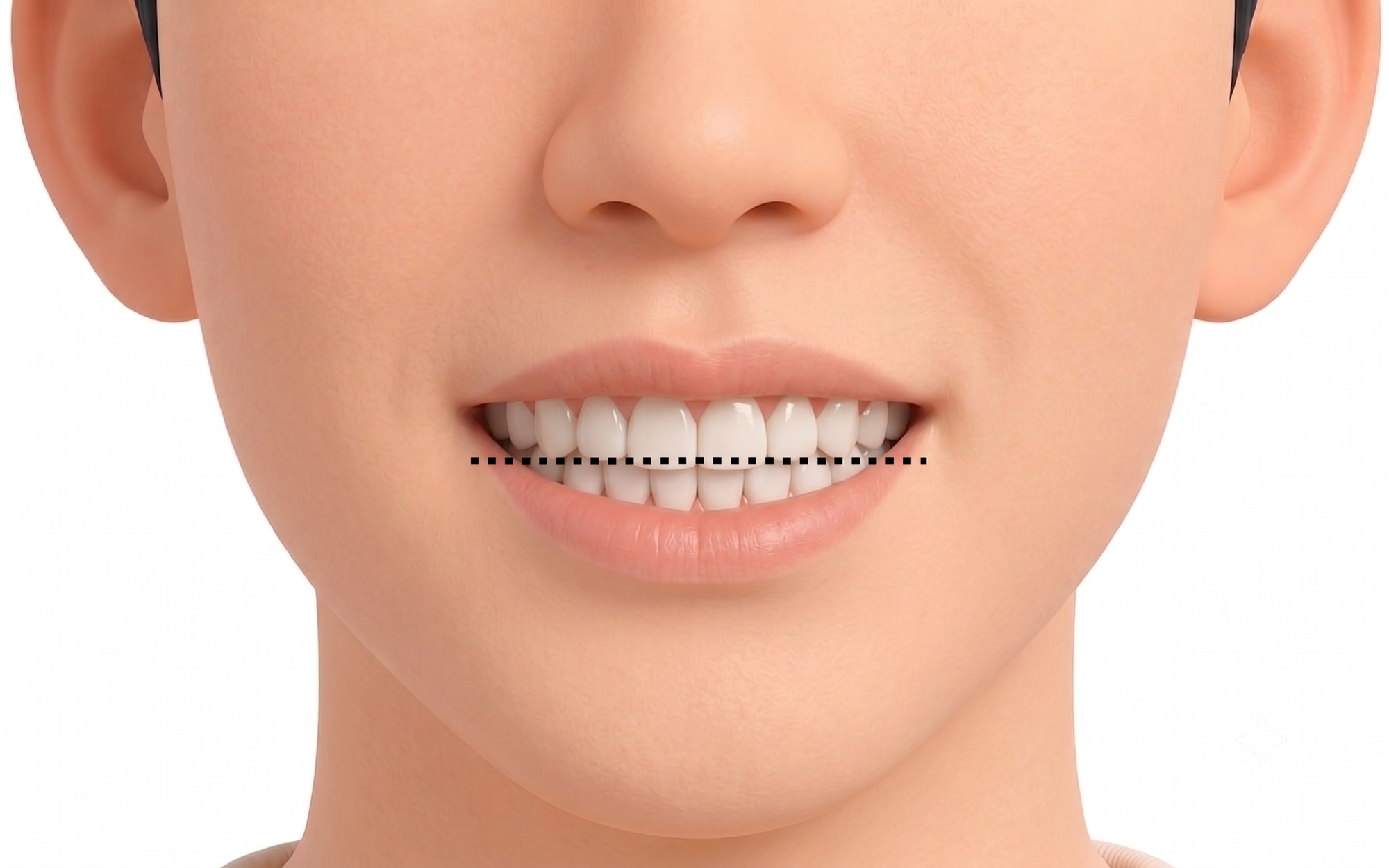
If the front teeth are aligned into a straight, flat line, it can clash with the rounded contour of the lower lip, making the smile look awkward. It’s easy to assume that perfectly straight teeth look neat, but when the mouth moves, the mismatch between the tooth edge line and the lip curve can become more noticeable.
✅Key issues with a straight-line front teeth design
- Visual conflict with the lips: If the teeth do not run parallel to the U-shaped curve of the lower lip, the smile can look tight or constrained.
- Association with aging: As people age, tooth edges tend to wear down and become flatter, so a flat design may contribute to an older-looking impression.
- Reduced three-dimensional esthetics: When the tooth edge line is flat, the smile can look horizontally “flattened,” creating an artificial feel.
For these reasons, designing a smile should involve evaluating each person’s natural smile curve and assessing the length proportions and inclinations of the upper teeth together.
3. What Treatment Options Improve the Smile Line?
Treatment is most effective when it starts by clarifying the main concern—whether it is primarily tooth color, or issues related to shape, alignment, and the curvature of the incisal edge line.
| Treatment Option | Features & Key Considerations |
|---|---|
| Teeth Whitening | Focuses on color and stain improvement; limited impact on tooth shape and smile arc |
| Resin Restoration | Correction of minor fractures and gaps; risk of discoloration and wear exists |
| Orthodontic Treatment | Improves alignment and positioning, preserves natural tooth structure, but requires extended time |
| Porcelain Laminate Veneers | Comprehensive improvement in shape, color, and alignment; irreversible due to tooth reduction |
For prosthetic treatments such as veneer, the process should include predicting and evaluating the post-treatment appearance through digital smile design or a diagnostic model/mock-up simulation before the procedure. It’s also important to confirm whether the expected changes to the smile line match your natural lip movement, not only in a posed smile but also during speech.
4. Risk Factors to Check Before Veneer
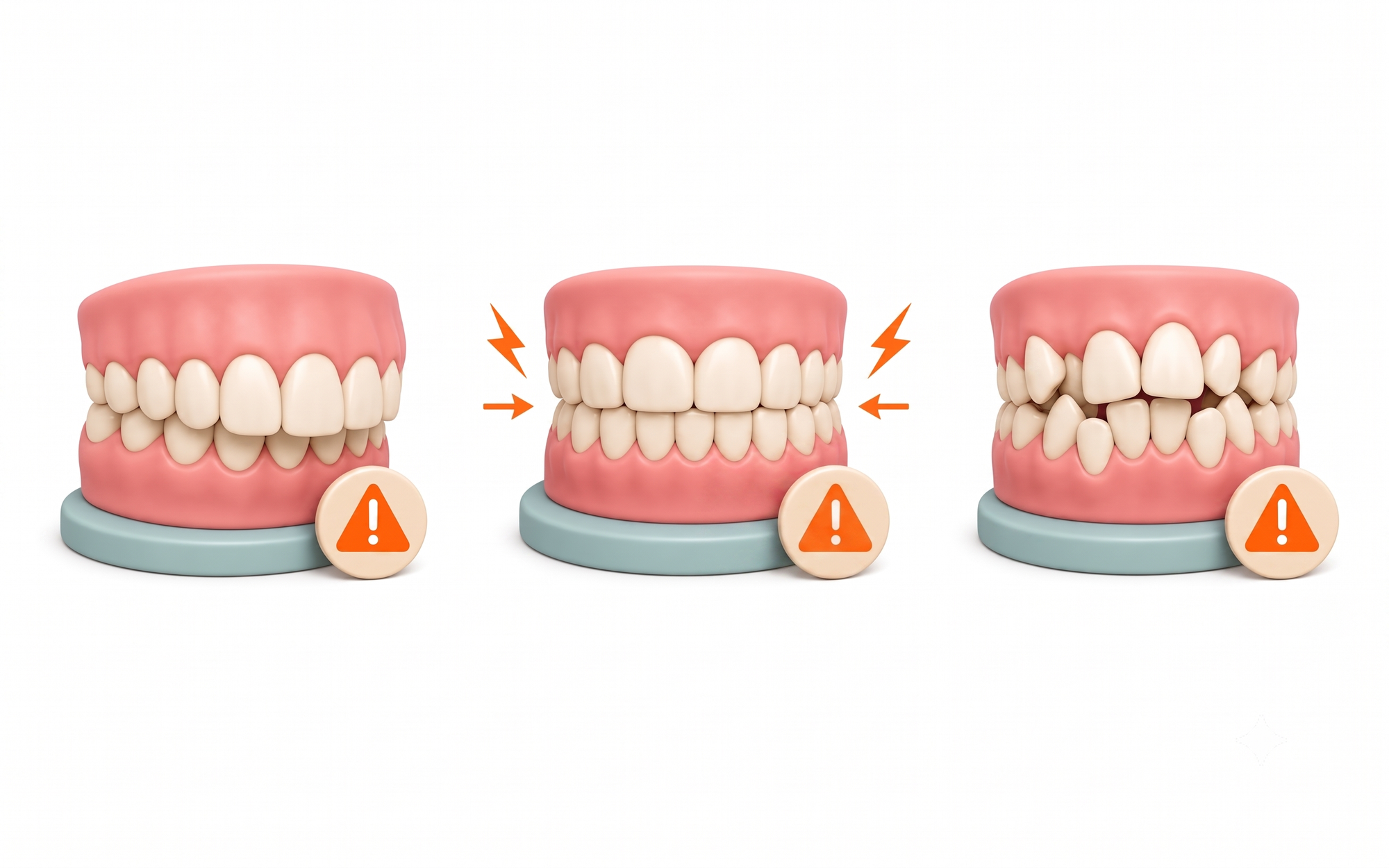
Before deciding on veneer, it’s important to review your bite (occlusion), habits that affect the teeth, and the condition of the gums and enamel. Without sufficient analysis, the risk of damage to the prosthesis can increase.
✅Risk factors to assess before treatment
- Deep overbite: If the upper teeth excessively cover the lower teeth, friction at the tooth edges increases, raising the risk of prosthesis fracture.
- Bruxism and clenching: Repeated heavy forces on the teeth can lead to mechanical fatigue at the bonding interface of the prosthesis.
- Irregular alignment and crowding: If teeth are severely misaligned, forcing a prosthetic approach may require excessive tooth reduction or lead to periodontal issues.
If risk factors are significant, it may be more favorable for tooth preservation to consider bite stabilization, orthodontic treatment, or conservative care first rather than proceeding with veneer alone.
5. Is a No-Prep Approach Always the Better Choice?
A no-prep approach (no tooth reduction at all) is not always the better standard. Depending on how protrusive the teeth are, minimal reduction may be safer and more predictable.
If the natural teeth are thick or angled and you insist on no-prep, the teeth can look bulky and may resemble a protrusive mouth. A ledge can also form at the margin, which may contribute to gum inflammation.
Minimal reduction—refining the surface slightly within the enamel—can help create space for the prosthesis to sit properly and support a more natural shape. No-prep can be useful under specific conditions (such as naturally small teeth or spacing between teeth), so the decision should be made conservatively with enamel thickness in mind.
6. Frequently Asked Questions (FAQ)
Q. Can the smile arc be improved with veneer alone, without orthodontic treatment?
If the alignment and bite are relatively stable, veneer can be used to fine-tune the curvature. If tooth position or angulation issues are significant, excessive reduction may be required, so you should be evaluated for whether orthodontic treatment should be combined.
Q. If I have a bruxism habit, what kind of aftercare is needed?
Bruxism can place strong pressure on prostheses and may cause fractures. Botulinum toxin (Botox) injections into the chewing muscles may help reduce excessive bite force applied to the teeth and prostheses.
Q. Why is simulation important before veneer?
Digital smile design or a diagnostic model/mock-up can help you preview the smile line after the procedure. Coordinating the virtual design with the clinician can help reduce awkwardness or dissatisfaction afterward.
Q. What tooth conditions make no-prep veneer difficult?
If the teeth are protrusive or crowding is severe, no-prep may be difficult to apply. Adding material aggressively can make the teeth look even bulkier or irritate the gums, so minimal reshaping may be necessary.
This health content has been reviewed by medical professionals, compiled from authoritative domestic and international sources, and is regularly updated in accordance with the latest clinical guidelines.
Sources
- Seixas & Câmara, 'The Smile Arc: Review and Synthesis', Dental Press Journal of Orthodontics, 2021
- Sarver, 'The importance of incisor positioning in the esthetic smile: The smile arc', American Journal of Orthodontics and Dentofacial Orthopedics, 2001
- Gaikwad et al., 'Influence of Smile Arc and Buccal Corridors on Facial Attractiveness', 2016
※ The copyright for all content on this blog belongs to medihi. Unauthorized copying, distribution, or derivative use is strictly prohibited, and violations may result in legal action without prior notice.