

In This Article
Before prosthetic treatment or veneer procedures, some people worry that their gums are thin or that the margin of a restoration might show through. “Periodontal biotype” refers to the thickness and characteristics of the gingiva, and it is an important diagnostic criterion for estimating the long-term prognosis of restorative treatment. In this post, we’ll review how gingival thickness is assessed, how restoration margins are designed, and what treatment sequence to consider when gingival recession is present.
1. Periodontal biotype—why is it also called a “phenotype”?
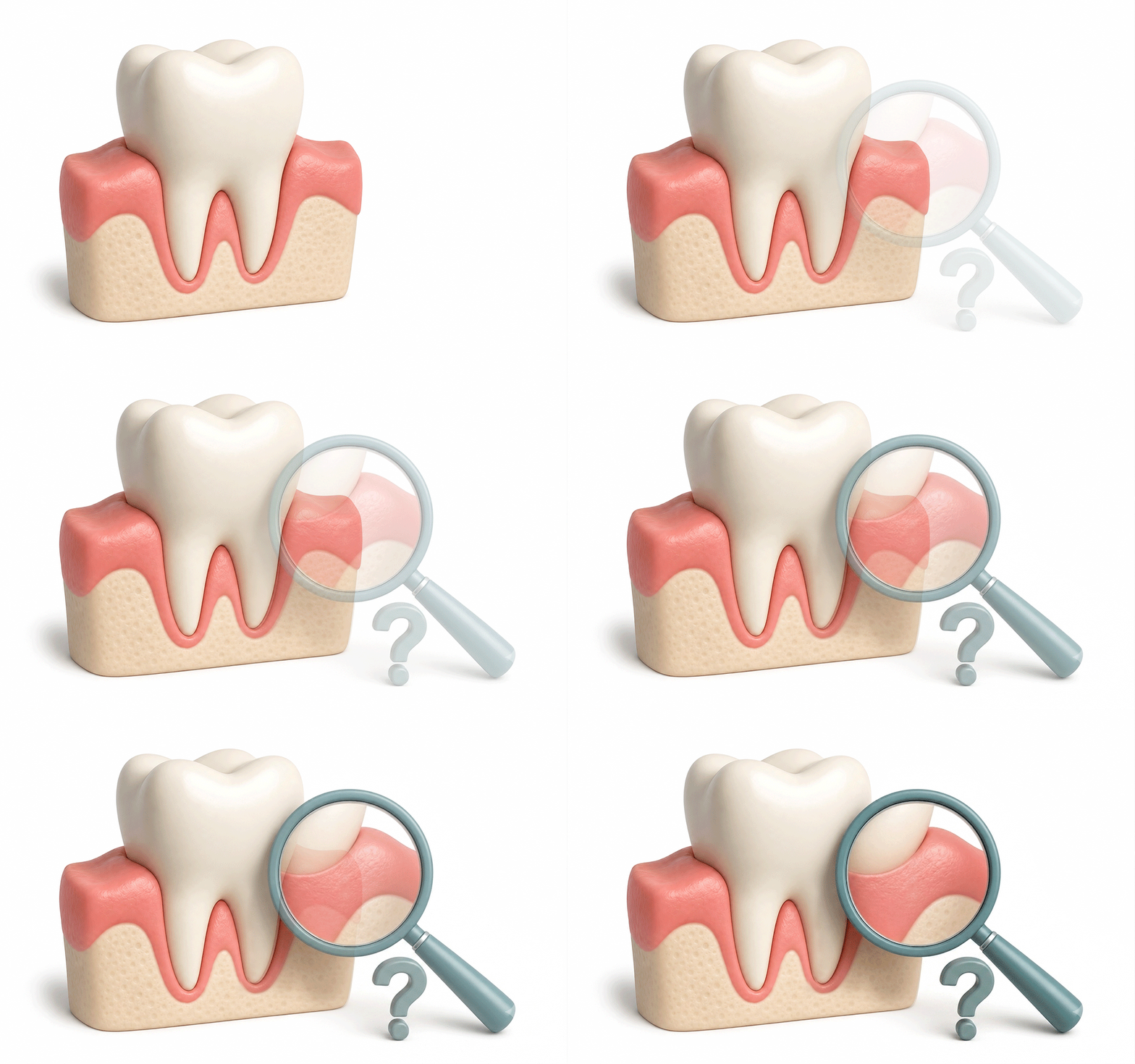
In contemporary dentistry, rather than classifying gingiva solely by thickness under the term “periodontal biotype,” clinicians may also use the concept of a “periodontal phenotype,” which includes the width and morphology of keratinized gingiva as well. This approach considers not only thickness, but also the overall condition of the gingiva and how the tissue responds to irritation.
Thin gingiva tends to react sensitively even to minor triggers—such as bacterial inflammation in the mouth or small brushing trauma—raising the risk of tissue injury. It’s similar to how thin fabric can be easily damaged by light friction.
For that reason, clinical decisions should not be based on gingival thickness alone. A safe treatment plan requires a comprehensive evaluation of gingival width and thickness, along with other anatomical characteristics in the oral cavity. Even when the gingiva is “thin,” confirming these accompanying conditions is an important step.
2. If your gums are thin, will the margin always show?
Even with thin gingiva, gingival recession after treatment or show-through of a veneer margin does not necessarily occur. Gingival thickness is one indirect risk factor among many, not a single determining cause. Therefore, it is difficult to predict post-treatment outcomes based on thickness alone.
Gingival recession is influenced by multiple factors, including the shape of the underlying alveolar bone, improper brushing habits, inflammation from plaque and calculus, and tooth alignment. In esthetic restorative care, outcomes are affected not only by the restorative material, but also by the design of the tooth–restoration interface, the accuracy of fit and bonding, and the patient’s home-care habits.
Maintaining good daily hygiene and fabricating precise restoration margins to reduce inflammation can help lower recession risk in thin gingiva and support long-term stability.
3. Practical criteria for evaluating gum condition in daily life
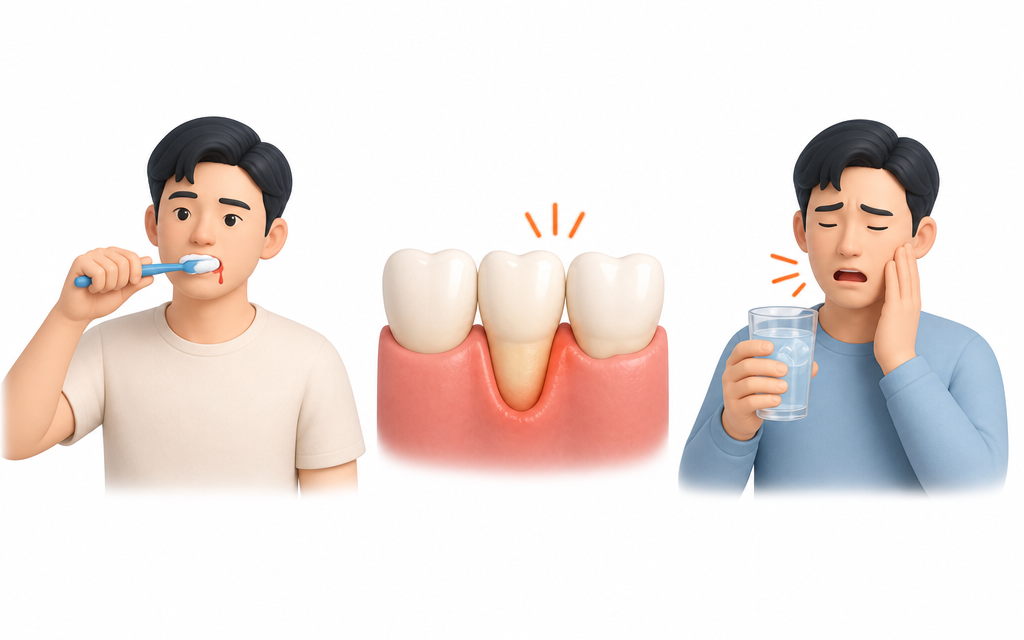
Because it is difficult to accurately determine gingival thickness based only on whether a periodontal probe shows through the tissue, multiple clinical indicators should be assessed together.
The probe transparency method is a simple reference test that estimates thickness by how visible the instrument is through the gingiva. However, Korean research has reported limited agreement with actual thickness measured using devices such as ultrasound, and overall diagnostic performance is restricted. This is because visibility can vary with operatory lighting and even subtle differences in the pressure applied by the examiner.
Therefore, rather than relying on the probe test alone, it is important to also consider other periodontal factors—such as day-to-day gingival sensitivity and whether there are signs of inflammation or recession.
✅Criteria for assessing gingival sensitivity and inflammation
- Bleeding or swelling repeatedly occurs in a specific area during brushing.
- The gumline appears to have moved downward toward the tooth root compared with before.
- A specific area along the gumline feels sharp or sensitive with cold water or cold air.
4. Where is the safest place for a restoration margin?
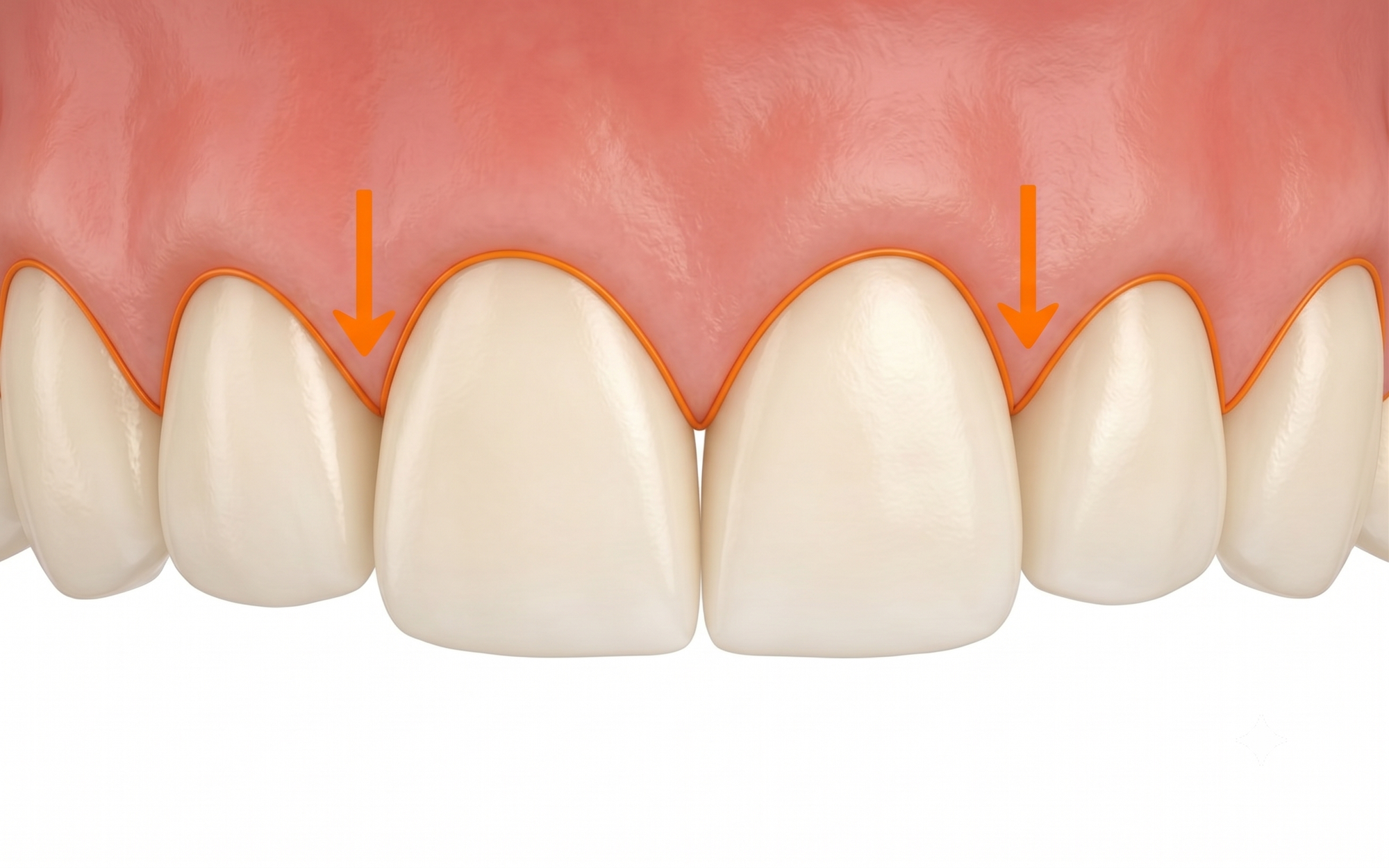
With thin gingiva, a conservative design is often preferable—placing the restoration margin at the gingival margin or supragingivally rather than deep subgingivally. If the margin is forced too deep for esthetic reasons, it may encroach on the supracrestal tissue attachment (the attachment area that supports the tooth), increasing the likelihood of chronic inflammation or accelerated recession.
✅A conservative approach to restoration margin design
- Supragingival and equigingival margins: Place the restoration margin at or above the gumline to reduce physical irritation to the tissue and make plaque control easier with brushing, helping maintain hygiene.
- Subgingival margins: Use only in limited, unavoidable situations—such as severe discoloration or esthetic issues with an existing restoration margin—and minimize how far the margin extends under the gingiva.
5. Gum recession—what should be treated first?
If your gingiva is sensitive and recession is progressing, the general principle is to complete periodontal treatment to stabilize gingival health before proceeding with esthetic prosthetic treatment.
If prosthetic treatment is performed when the area around the gingiva is not clean and stable, persistent inflammation afterward can also affect the restoration’s longevity. If there are active inflammatory factors—such as bleeding or a history of periodontitis—scaling and basic periodontal therapy to remove plaque and calculus and reduce swelling are important steps.
If recession is extensive, with significant root exposure or severe sensitivity, soft-tissue grafting or gingival recontouring may be considered depending on the condition. However, surgery is not performed simply because the gingiva is thin; it is considered selectively based on the degree of root exposure, esthetic needs, and the feasibility of long-term plaque control.
6. Frequently Asked Questions (FAQ)
Q. My gums are on the thin side—does that mean veneers are not possible at all?
Thin gingiva does not automatically mean veneers are impossible. If there is no active inflammation and the gingiva is healthy, treatment may be possible with precise bonding that prioritizes tooth preservation and a conservative design. Clinicians consider not only gingival thickness, but also the accuracy of fit and the feasibility of long-term hygiene maintenance.
Q. To keep the margin from showing, do I need to place it deeper under the gum?
Placing the restoration margin deep under the gingiva may conceal it initially, but it can irritate the attachment area and increase the risk of inflammation and recession. Considering long-term oral health and ease of plaque control, a design closer to the gingival margin is generally safer.
Q. If a probe shows through the gum, does that diagnose thin gums?
Probe visibility is only a reference indicator and may correlate poorly with actual thickness. Because it can vary with lighting and the examiner’s pressure, it is best to make a judgment by considering recession status and bleeding together.
Q. My gums have already receded—what should I treat first?
The general principle is to first remove inflammatory factors through periodontal treatment such as scaling and stabilize gingival condition. Once the gingival tissue is stable, it is appropriate to consider esthetic restoration and determine the specific restoration design.
This health content has been reviewed by medical professionals, compiled from authoritative domestic and international sources, and is regularly updated in accordance with the latest clinical guidelines.
Sources
- Journal of the Korean Academy of Periodontology, Accuracy of gingival thickness assessment using periodontal probe transparency, 2021
- Journal of Periodontology, Periodontal phenotype: Consensus report of workgroup 3 of the 2017 World Workshop, 2018
- BMC Oral Health, Systematic review on the importance of periodontal phenotype in periodontal and restorative treatment, 2024
※ The copyright for all content on this blog belongs to medihi. Unauthorized copying, distribution, or derivative use is strictly prohibited, and violations may result in legal action without prior notice.