

In This Article
Veneer longevity is influenced more by how much natural enamel is preserved, the precision of bonding, and the occlusal relationship than by a single design choice such as covering or not covering the incisal edge. Long-term stability is more achievable when veneer reduction design is applied in an integrated way that matches each patient’s oral anatomy and chewing function. To help you make a rational decision based on your own tooth condition, we’ve organized evidence-based design criteria and relevant research findings.
1. Does reducing the incisal edge determine longevity?
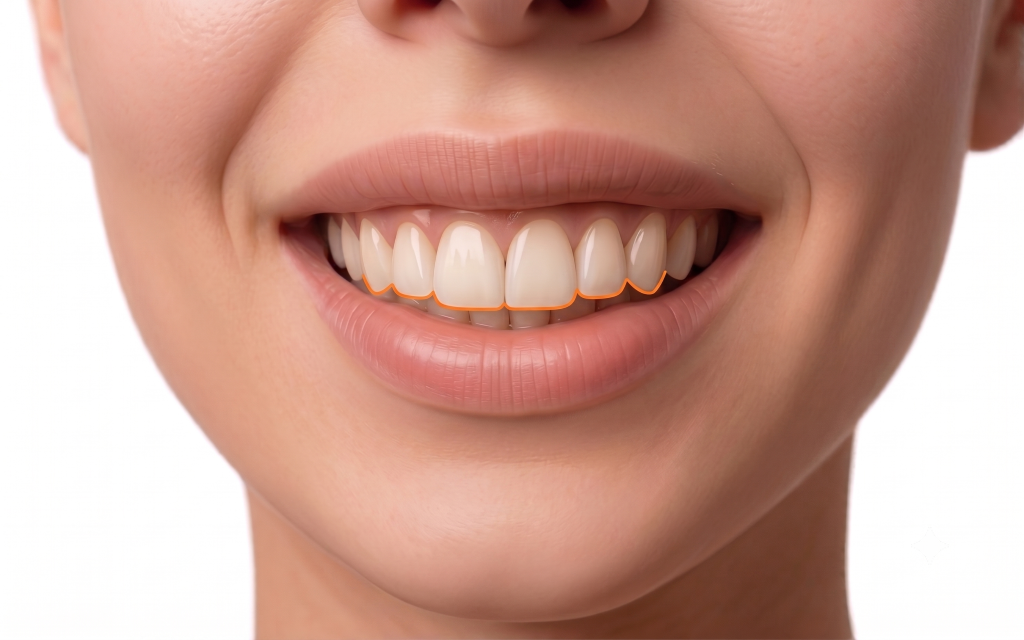
Veneer survival tends to be determined less by the incisal-edge reduction approach itself and more by how much enamel (the tooth’s outer surface) remains—because enamel strongly affects bonding strength.
In particular, bonding ceramic depends heavily on the biological quality of the substrate. Bonding to enamel—like attaching a structure to a dry, solid wall—differs greatly in both initial bond strength and long-term retention compared with bonding to dentin, which contains microscopic moisture and organic components.
In fact, one clinical study found that residual enamel volume, rather than design as a standalone factor, was a key variable supporting longevity. Therefore, instead of making an extreme choice to either aggressively reduce tooth structure or preserve it at all costs, it is more important to scientifically evaluate each individual tooth and define a safe reduction range.
2. Structural differences between window and butt-joint designs
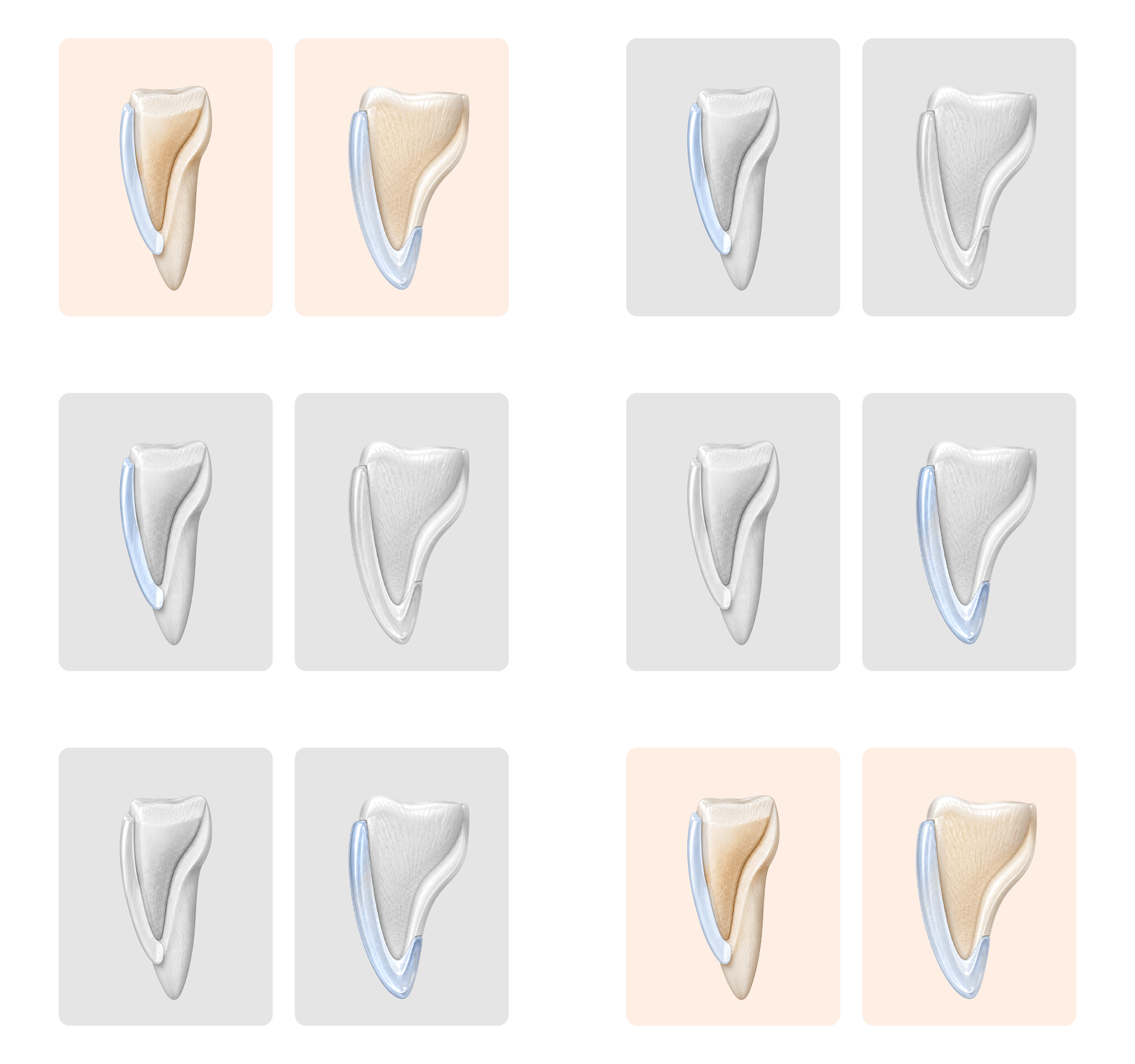
In veneers, a window (non-coverage) design preserves the incisal edge by preparing only the facial surface, whereas a butt-joint design horizontally reduces a damaged incisal edge to create space for the ceramic to meet the tooth.
A window design preserves natural tooth form as much as possible, which is advantageous for conserving tooth structure and may help reduce postoperative sensitivity. In contrast, some in vitro analyses suggest butt-joint designs may be advantageous for more precise margin finishing to reduce gaps, and they can make it easier to achieve a consistent ceramic thickness during fabrication.
However, these laboratory findings do not necessarily guarantee clinical longevity in the mouth, and treatment planning should consider the following characteristics comprehensively:
- Window design: A thin restoration bonded primarily to the facial surface without covering the incisal edge, minimizing circumferential reduction.
- Butt-joint design: The incisal edge is leveled in a straight line to distribute load more evenly and create a clear finish line.
3. When are no-prep veneers unfavorable?
A no-prep approach—where the tooth is not reduced at all—may actually cause over-contouring or gingival inflammation when applied to patients whose teeth are already protrusive or who lack sufficient space for the restoration.
In particular, placing ceramic over an unprepared tooth often makes the restoration thicker overall, which can lead to aesthetic dissatisfaction, such as the lips appearing more protruded. In addition, a subtle step can form at the tooth–gingiva junction, making it easier for food debris to accumulate; over time, this may increase the likelihood of periodontal disease or gingival recession.
According to a short-term clinical study, there are also cases in which the no-prep veneer group showed a higher fracture frequency than the minimally invasive preparation group. Therefore, rather than focusing only on the “no-prep” label, it may be more favorable for long-term preservation to analyze the oral structure three-dimensionally and secure only the minimum necessary space.
4. What design criteria fit my tooth condition?
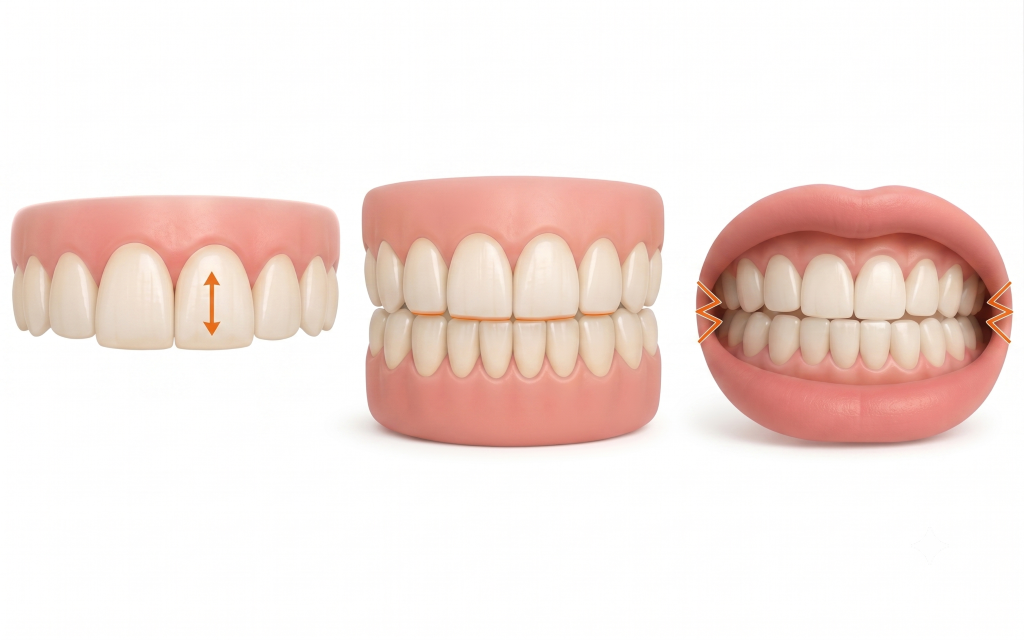
To determine the most appropriate retention design, it is necessary to comprehensively evaluate tooth wear, the contact location with the opposing teeth, and the presence of parafunctional habits such as bruxism.
It is especially essential to carefully assess the “anterior guidance” relationship, where the anterior teeth contact each other and guide mandibular movement during chewing or when the jaw moves forward and backward. If an aggressive design is applied or occlusal interferences are ignored, chewing forces can concentrate on specific areas, sharply increasing the risk of veneer fracture or complete debonding.
Key criteria to confirm during the dental consultation for a safe design include the following:
- Tooth wear and length: If there is significant incisal-edge fracture or wear and length recovery is needed, incisal leveling may be required to secure physical space.
- Occlusal contact location: Depending on whether the maxillary and mandibular teeth contact at the incisal edge or on the inner (palatal) side, the restoration’s coverage must be adjusted to avoid stress concentration.
- Habits such as bruxism: If abnormal horizontal forces are present, conservative design adjustments should be combined with splint (mouthguard) therapy.
5. What must be considered for palatal extension?
When planning a palatal extension design that broadly covers the inner (palatal) surface of the tooth, meticulous occlusal adjustment must accompany it so that concentrated chewing forces do not focus on the margin.
Simply increasing the surface area over which ceramic wraps the tooth may increase mechanical retention. However, if the direction of contact with the mandibular teeth is set incorrectly, stress can concentrate excessively on specific palatal areas, potentially increasing the risk of debonding or fracture.
Therefore, rather than insisting on a design that indiscriminately covers more tooth structure, careful diagnosis is essential to establish a safe margin position tailored to the patient’s chewing pattern and occlusal condition.
6. Frequently Asked Questions (FAQ)
Q. If the incisal edge is reduced, do veneers last longer?
Long-term clinical data suggest that enamel preservation and the extent of dentin exposure are more directly associated with outcomes than the reduction design itself. Whether the incisal edge is reduced is not a standalone longevity criterion and should be decided carefully according to individual functional goals.
Q. Who is a good candidate for no-prep veneers?
They can be advantageous when teeth are small (microdontia) or when there are spaces between teeth and sufficient room for the restoration. Conversely, if teeth are large or protrusive and space is limited, forcing coverage can increase gingival irritation and fracture risk.
Q. If I have bruxism, which design is safer?
Bruxism and clenching place strong fatigue loads on the anterior teeth, significantly increasing the risk of debonding or fracture. Rather than relying only on a specific reduction design, a precise occlusal evaluation should come first, and a protective strategy—wearing a nighttime mouthguard (splint)—must be implemented in parallel.
Q. If a lot of dentin is exposed, does bonding prognosis worsen?
As dentin exposure increases, long-term survival tends to decrease. Because moisture control and precise bonding are more challenging than with enamel, conservative preparation that minimizes dentin exposure and a strict bonding protocol are essential.
This health content has been reviewed by medical professionals, compiled from authoritative domestic and international sources, and is regularly updated in accordance with the latest clinical guidelines.
Sources
- Etienne et al., Survival of Ceramic Veneers: Impact of Dentin Exposure and Tooth Vitality After 1 to 15 Years of Follow-Up, Journal of Esthetic and Restorative Dentistry, 2025.
- Baig et al., Marginal and Internal Fit of Porcelain Laminate Veneers: A Systematic Review and Meta-Analysis, The Journal of Prosthetic Dentistry, 2024.
- Yilmaz et al., Clinical Performance Comparison of Prepless and Minimally Invasive Ceramic Laminate Veneer Restorations, Journal of Esthetic and Restorative Dentistry, 2026.
※ The copyright for all content on this blog belongs to medihi. Unauthorized copying, distribution, or derivative use is strictly prohibited, and violations may result in legal action without prior notice.