

In This Article
For older adults with diabetes, it’s more important to set goals that reduce hypoglycemia, dizziness, and falls than to lower glucose numbers uniformly. Based on the 2025 Clinical Practice Guidelines from the Korean Diabetes Association, this post summarizes practical criteria for adjusting targets by considering frailty, cognitive function, daily functioning, and medication use.
1. Why do diabetes targets need to be different for older adults?
Treatment goals for older adults with diabetes vary depending on overall health and day-to-day functioning. With age, warning signs of hypoglycemia—such as cold sweats or tremors—can become less noticeable, which may delay an appropriate response. Intensive glucose control can also lead to hypoglycemia-related cognitive impairment or falls.
Even among people aged 65 and older, safe targets differ depending on memory, independence with meals and medications, and coexisting conditions. Assessing activities of daily living and setting gentler, individualized targets is commonly recommended. If dizziness or fatigue increases during treatment, daily functioning may decline first—so balancing benefits and risks is often the safest long-term approach.
2. How should an HbA1c target be set?
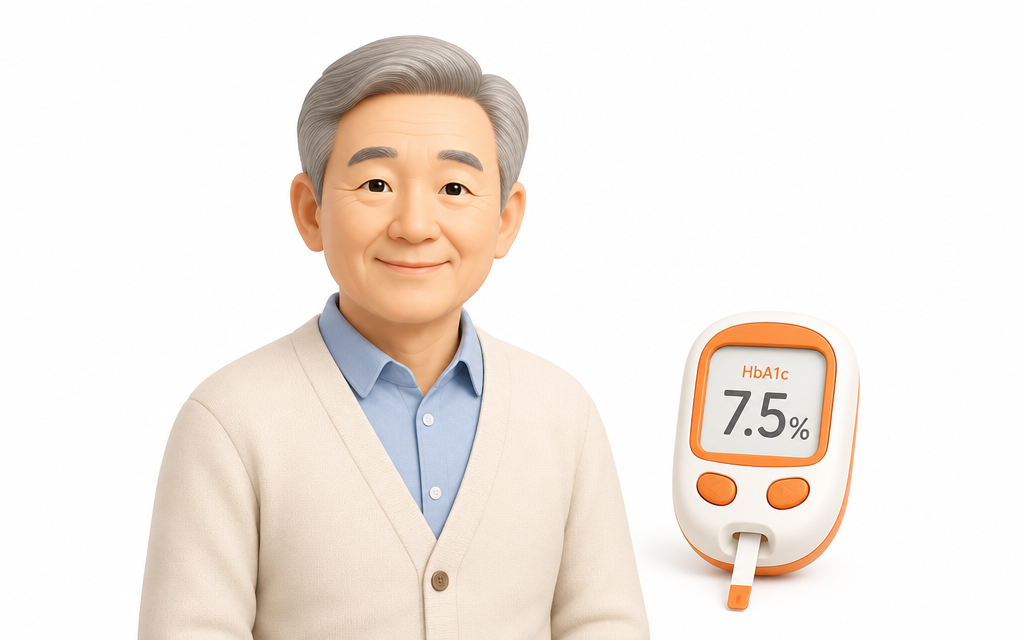
In the Korean Diabetes Association guidelines, an HbA1c target of under 7.5% for older adults is presented less as a fixed rule and more as a starting point. For healthier older patients who manage self-care well and are not using medications with a high risk of hypoglycemia, a stricter target—such as under 7.0%—may be considered.
On the other hand, if a patient has frailty, cognitive decline, reduced daily functioning, or a high burden of comorbidities, examples are provided where the target may be relaxed to 8.0–8.5%. However, prolonged blood glucose levels at or above 200 mg/dL should be avoided. Persistent hyperglycemia can lead to severe dehydration, electrolyte imbalance, infections, low energy, dizziness, increased fall risk, and acute hyperglycemic complications.
3. How can you check what’s causing early-morning dizziness?
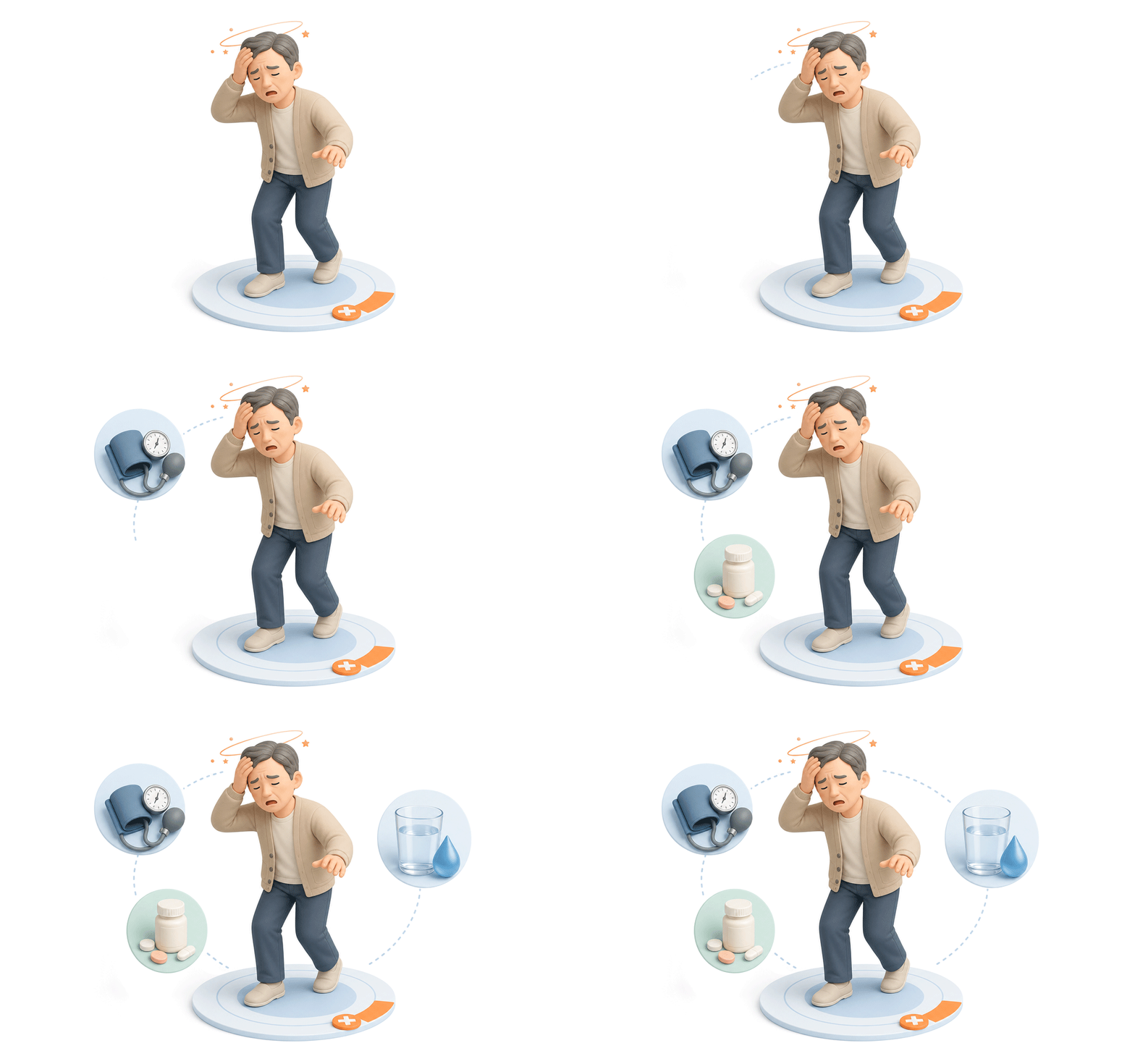
Dizziness at dawn or right after waking may be due to hypoglycemia, but it’s safer to check for other causes as well. In older adults, orthostatic hypotension, overnight dehydration, and the effects of diuretics, blood pressure medications, or sleeping pills taken the day before can also contribute.
✅ What to record if dizziness keeps happening
- Time symptoms occurred, what you were doing, and the actual blood glucose level
- Dinner/snack timing the night before and medications taken before bed
- Blood pressure changes when lying down vs. standing up
- Near-fall situations (staggering, needing to hold onto a wall, etc.)
If symptoms recur even when blood glucose is not below 70 mg/dL, it’s reasonable to use these records at a clinic visit to evaluate the cause together. If you assume dizziness is hypoglycemia and consume excessive sweets, blood glucose may spike—so confirm the actual number.
4. What should be reviewed when taking multiple medications?
When taking multiple medications, it’s important to check for duplicate prescriptions, contraindicated combinations, potentially inappropriate medications, and adverse effects. If prescriptions from different clinics are managed separately, the same ingredient may overlap, or side effects such as dizziness and dehydration may accumulate.
A study by the Health Insurance Review & Assessment Service observed that, among adults aged 65 and older, taking 10 or more medications for 90 days or longer was associated with unfavorable clinical outcomes—making this group a priority for appropriateness review. Reducing or stopping medications on your own can cause rebound effects or worsening of disease. For safety, compile a full list including prescription drugs, supplements, and health functional foods, then review each medication’s necessity and whether it includes potentially inappropriate medications with the prescribing clinician, with periodic reassessment.
5. How is insulin related to falls?
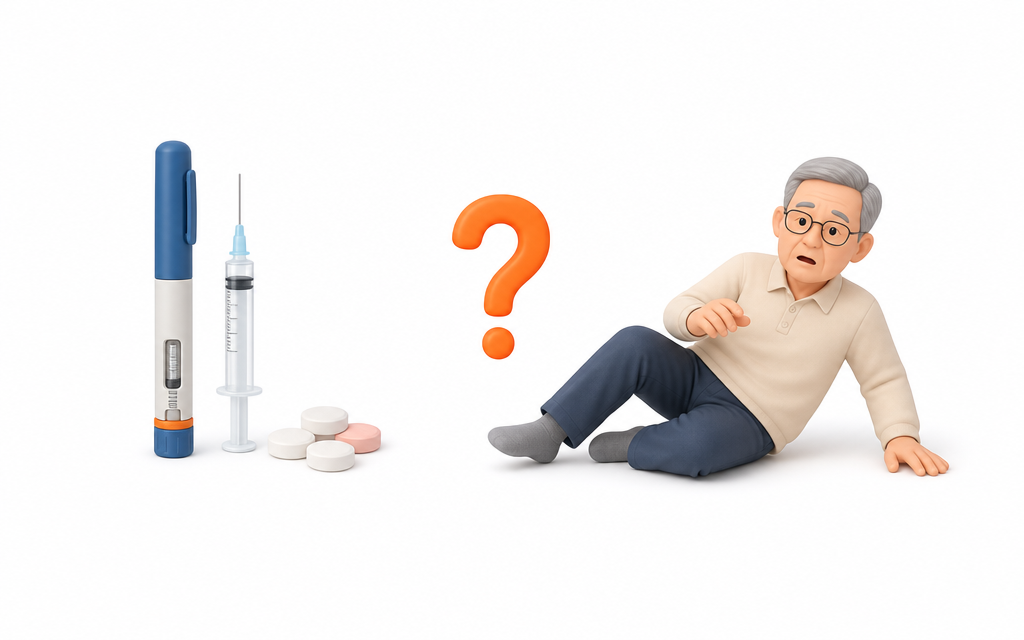
An association has been reported between the use of insulin or insulin secretagogues and falls, but this does not mean the medication itself is the only cause of falls. Insulin does not weaken bones or muscles; rather, dizziness and reduced balance during hypoglycemia can increase fall risk.
✅ Ways to reduce hypoglycemia and fall risk
- If blood glucose is below 70 mg/dL and the person is conscious, take 15–20 g of glucose and recheck after 15 minutes
- Keep indoor areas well-lit at night and remove floor obstacles
- Maintain regular meal times and use walking aids if needed
- Record dosing details and blood glucose to discuss whether the treatment plan can be simplified
Falls can also be influenced by reduced vision, nighttime urination, depression, and stress. Stopping medication on your own out of fear of falling can cause blood glucose to rise sharply. For patients with cognitive decline or difficulty with self-management, simplifying an insulin regimen under family and clinical supervision may be an alternative.
6. Frequently Asked Questions (FAQ)
Q. My parent’s HbA1c is 7.8%. Is that okay?
While under 7.5% is the basic target, 7.8% may be appropriate depending on frailty, cognitive function, daily functioning, and use of medications with a high risk of hypoglycemia. In some cases, a relaxed target up to 8.5% may be considered.
Q. If someone suddenly feels dizzy at dawn, is it always hypoglycemia?
Not necessarily. In addition to hypoglycemia, orthostatic hypotension, dehydration, and the effects of blood pressure medications or sedatives can be causes. Check the actual blood glucose, and if it recurs even when glucose is not below 70 mg/dL, evaluate blood pressure changes and medication information together.
Q. My parent takes more than 10 pills. Can we remove some on our own?
Removing medications on your own can lead to worsening disease or rebound effects. It’s safer to check for duplicate prescriptions, contraindicated combinations, and potentially inappropriate medications, and to coordinate necessity and interactions using a complete medication list with the prescribing clinician.
Q. If we start insulin, will a fall definitely happen?
Insulin is not the sole cause of falls. Reassess dose and timing while also reviewing hypoglycemia and environmental factors, and manage nighttime walking conditions and hypoglycemia prevention principles together.
This health content has been reviewed by medical professionals, compiled from authoritative domestic and international sources, and is regularly updated in accordance with the latest clinical guidelines.
Sources
- Korean Diabetes Association, *Clinical Practice Guidelines for Diabetes*, 9th edition, 2025.
- Health Insurance Review & Assessment Service, *Research on establishing management criteria for inappropriate polypharmacy use in older adults*, 2023.
- Kim et al., Older adults with diabetes in Korea: Latest clinical and epidemiologic trends, Diabetes & Metabolism Journal, 2025.
※ The copyright for all content on this blog belongs to medihi. Unauthorized copying, distribution, or derivative use is strictly prohibited, and violations may result in legal action without prior notice.