

In This Article
Some people delay treatment because they feel burdened by the idea of taking diabetes medication for life or worry about side effects. Diabetes care is long-term management aimed not only at today’s blood sugar numbers, but also at preventing damage to small and large blood vessels. Below is a clear overview of when to start medication and how adjustment decisions are typically made.
1. Why start diabetes medication?
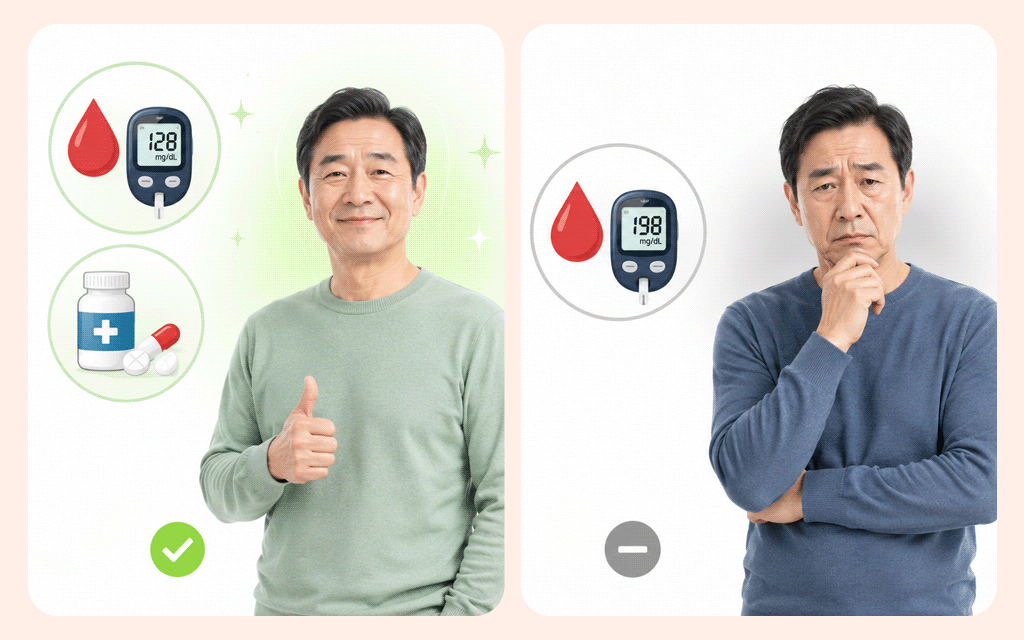
Starting diabetes medication is not a sign of treatment failure or “giving up.” Medication is one way to manage diabetes by keeping blood glucose stable and lowering the long-term risk of complications.
In a Korea-based study using National Health Insurance claims data on newly diagnosed diabetes patients (2018), the group that consistently took prescribed medication from the early stage after diagnosis showed a tendency toward more favorable long-term outcomes than the group that did not. Because this was an observational study, it cannot prove direct causation. However, early medication adherence and maintaining glucose control can be viewed as important indicators for reducing the risk of blood-vessel damage caused by hyperglycemia.
2. Do I need treatment even if I have no symptoms?
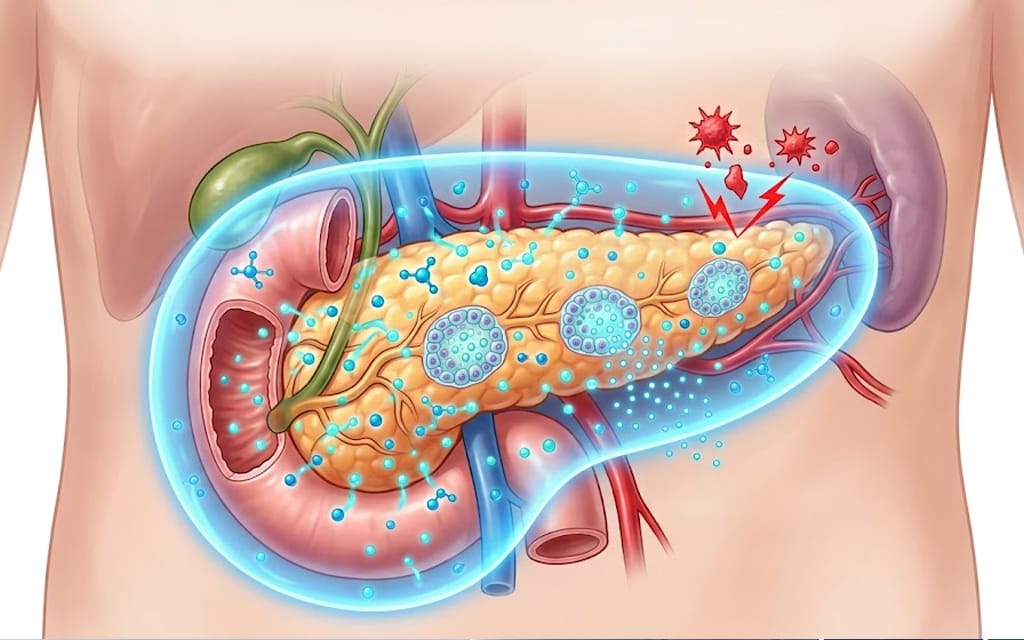
In early diabetes, there are often few noticeable symptoms—but having no symptoms does not mean your organs are safe. When high blood sugar persists, the pancreas is forced to work harder, releasing excessive insulin to bring glucose down.
If this state continues for a long time without medication, pancreatic beta cells can gradually become damaged, and insulin secretion capacity itself may decline in a way that is difficult to restore. Diabetes medication helps share the burden of glucose control with the pancreas. If complications or warning signs appear, a significant portion of pancreatic function may already be lost, making it harder to control blood sugar with oral medication alone. This can lead to earlier use of more complex medication combinations or insulin injections.
✅Signs to check for ongoing hyperglycemia
- You delay taking medication because you feel no symptoms after diagnosis
- Your thirst does not improve even when you drink a lot of water, or you wake up at night to urinate
- You experience noticeable weight loss even though your food intake has not decreased
- You have not had follow-up tests (such as HbA1c) in the past 3–6 months
If even one applies, it is safer to confirm your status with lab markers.
3. Side effects and how medications are chosen
Each drug class has different characteristics, and some commonly prescribed newer agents have a relatively lower risk of causing hypoglycemia. Clinicians select medications by considering overall health, kidney function, and coexisting conditions.
If the pancreas’s ability to secrete insulin has declined, medications with more traditional mechanisms may be considered. If preventive management is needed for the heart or kidneys, an SGLT2 inhibitor (which helps remove glucose through urine) may be reviewed as a priority option. If weight management is also needed, a DPP-4 inhibitor class (which acts on hormones involved in insulin secretion) may be advantageous.
✅What to discuss in the clinic
- Concerns about hypoglycemia: options with relatively lower risk and how to monitor
- Reduced kidney function: ingredients and dosing appropriate for your eGFR
- Gastrointestinal issues such as indigestion: how to take the medication or whether a switch is needed
4. Is insulin the final stage of treatment?
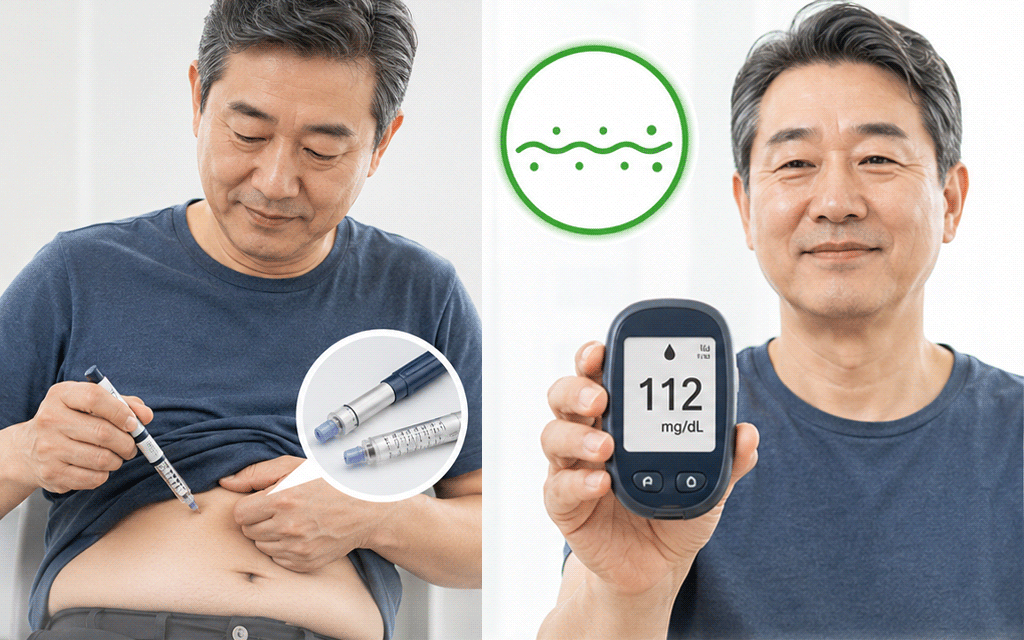
Insulin is not a “last resort,” but one of the treatment options used to stabilize blood sugar quickly in certain situations. If blood sugar is dangerously high at the time of first diagnosis or rapid worsening is suspected, giving insulin to let the pancreas rest can be a safe, standard approach.
Clinical evidence, including guidance such as the Korean Diabetes Association (KDA) clinical practice guidelines, indicates that early combination therapy can help some patients maintain target glucose levels. Starting combination therapy early does not necessarily mean severe deterioration; it can protect the pancreas early and provide a foundation for later medication adjustments.
✅Questions to ask your clinician
- What are my HbA1c level and pancreatic function status?
- How might this medication affect hypoglycemia risk or weight changes?
- If I reach target glucose through diet and exercise, can I expect medication reduction?
5. If my blood sugar stabilizes, can I stop taking medication?
Even if your blood sugar returns to the normal range after starting medication, it is often because medication and lifestyle management are working together to maintain stability. Stopping medication on your own can place stress back on the pancreas and cause blood sugar to rise rapidly.
That does not mean you must take the same dose for life. Based on HbA1c, fasting and post-meal glucose, kidney function, and coexisting conditions, you can discuss dose reduction, switching medications, or adjusting dosing time with your clinician. Adjustments may also be possible depending on how well lifestyle management is maintained.
6. Frequently Asked Questions (FAQ)
Q. Which tests determine whether diabetes medication can be reduced?
Decisions are typically based on HbA1c, which reflects average blood sugar over the past 2–3 months, and eGFR, which indicates kidney filtration capacity. Even if you feel well, you should not reduce medication on your own. Regular testing, hypoglycemia risk, and coexisting conditions must be reviewed together.
Q. Do I need to take diabetes medication even if I have no symptoms?
Yes, you should take it as prescribed. Diabetes can damage blood vessels without symptoms and may lead to vision decline, loss of kidney function, and cardiovascular disease. Once symptoms appear, it can be difficult to reverse vascular damage, so medication is typically started based on markers such as HbA1c.
Q. Do diabetes medications burden the kidneys or liver?
In general, the hyperglycemia that results from not treating diabetes is what can damage the kidneys and liver most quickly. A major cause of dialysis is diabetic nephropathy, where kidney capillaries are damaged by high blood sugar. However, it is important to confirm the appropriate medication type and dose for your kidney function through regular testing.
Q. When should I seek medical advice while taking medication?
You should seek care promptly if you have cold sweats, tremors, dizziness, severe hunger, or if you develop intense thirst, frequent urination, or rapid weight loss. You should also consult your clinician if severe indigestion or diarrhea persists, or if you want to reduce or stop medication.
This health content has been reviewed by medical professionals, compiled from authoritative domestic and international sources, and is regularly updated in accordance with the latest clinical guidelines.
Sources
- Korean Diabetes Association (KDA), 2025 Diabetes Clinical Practice Guidelines and Consensus Statement Revision, 2025
- Cohort study based on National Health Insurance claims data (2018): poorer long-term outcomes were observed in the group with low medication adherence early after diagnosis (causal inference is limited due to the observational design)
- Matthews DR, et al. Glycaemic durability of an early combination therapy with vildagliptin and metformin versus sequential metformin monotherapy in newly diagnosed type 2 diabetes (VERIFY): a 5-year, multicentre, randomised, double-blind trial. The Lancet, 2019.
※ The copyright for all content on this blog belongs to medihi. Unauthorized copying, distribution, or derivative use is strictly prohibited, and violations may result in legal action without prior notice.