

This post explains the medical reasons minor wounds may heal slowly and infections may recur in people with diabetes, and provides practical criteria for what to check and what to do next. Learn how to reduce everyday anxiety by responding in ways that fit your blood sugar status and symptoms.
“A small cut, but it hasn’t healed for weeks.”
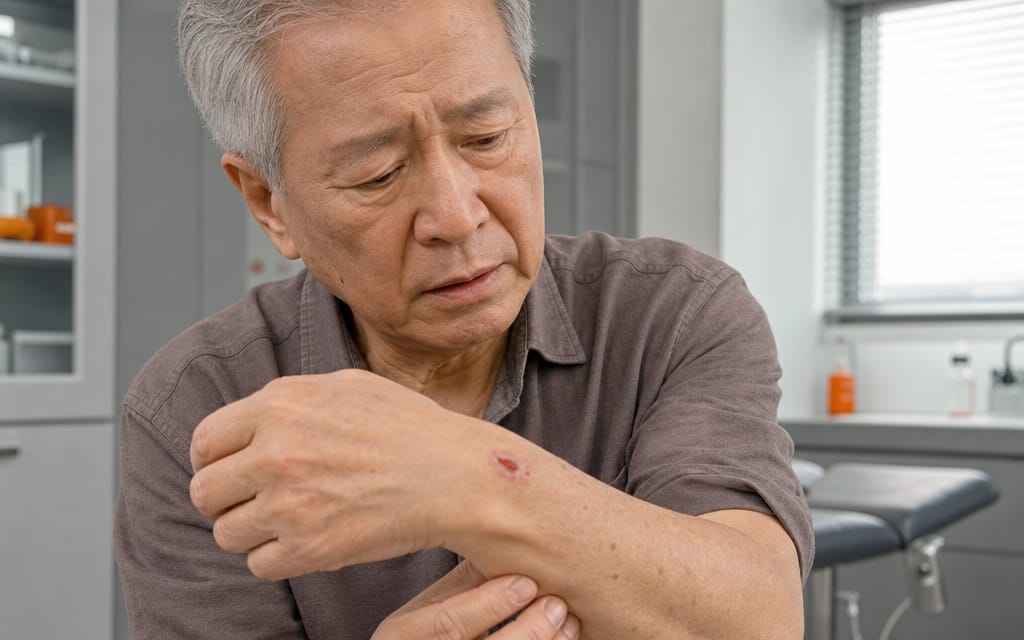
Many people struggle with frequent inflammation and slow-healing wounds. In these situations, it’s common to assume that “immune-boosting” supplements alone will solve the problem. However, supplements may not address the underlying cause.
In clinical practice, when clinicians see patients with recurrent infections, they don’t look only at inflammatory markers. They also assess the patient’s baseline metabolic status—especially the stability of glycemic control. Chronic hyperglycemia can impair immune function and contribute to microvascular damage. As a result, even mild infections may worsen, and recovery can be delayed.
1. When a wound won’t heal: immune “traffic jams” caused by high blood sugar
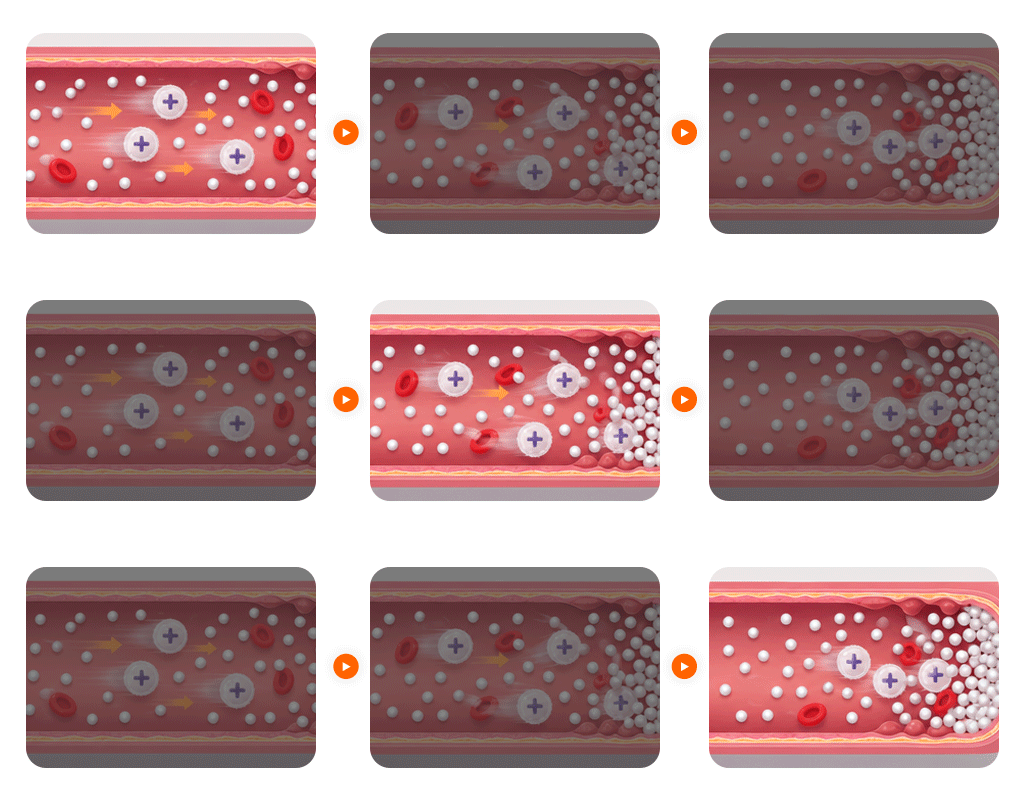
Sometimes a small skin wound lingers for a long time. It can be compared to a blocked logistics system inside the body. When you’re injured, immune cells travel through blood vessels to the wound, and oxygen and nutrients must also reach the area quickly.
But when there is too much sugar in the blood, it’s like congestion on a road network. If immune cells move more slowly, the resources needed for healing don’t arrive on time—making delayed wound healing more likely.
Medically, hyperglycemia can impair immune cell function. Neutrophils and macrophages, which help engulf and eliminate bacteria, may be affected. If diabetic neuropathy is also present, the risk of noticing a wound late increases as well.
A large UK cohort study has also reported this association. People with diabetes tend to have a higher risk of infection than those without diabetes. Higher glucose levels and greater glycemic variability may be associated with infection severity. The first step is to check whether overall glycemic control is off track.
2. When UTIs (cystitis) keep coming back: the link between urine conditions and blood
sugar
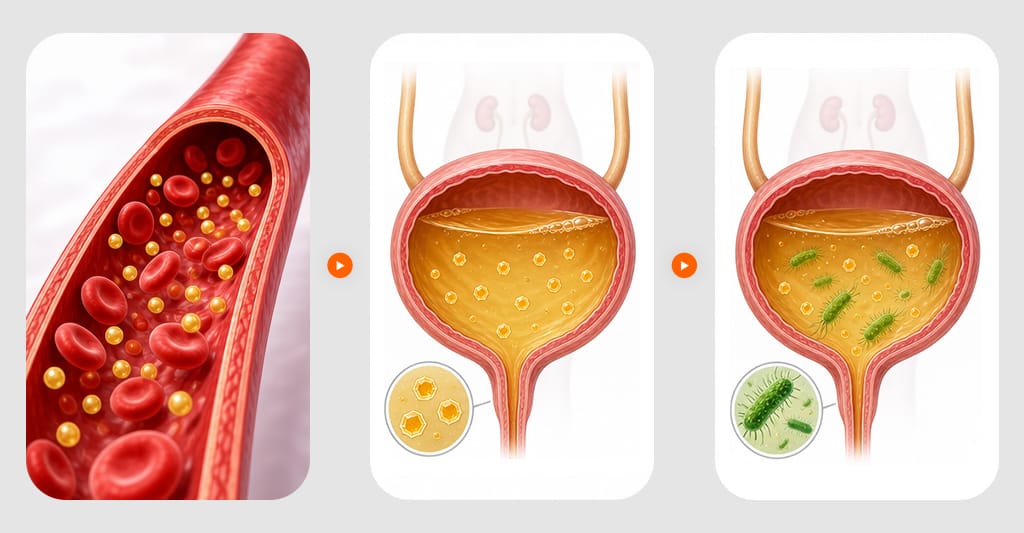
Women in their 30s to 50s may experience urinary tract infections (UTIs) frequently. Recurrent episodes can be linked to diabetes through a metabolic pathway. Just as stagnant water is more easily contaminated, glucose excreted into urine can become an excellent nutrient source for bacteria—accelerating infection.
When blood glucose rises, glucose may spill into the urine. Glucose in urine creates an environment where bacteria can multiply more easily. In practice, diabetes is associated with a higher frequency of UTIs, and infections may be more likely to progress to severe disease.
If diabetes-related complications affect the nervous system, incomplete bladder emptying can occur, leaving residual urine. Urine that pools in the bladder can become a breeding ground for bacteria. If UTIs recur often, it’s wise to review both glycemic status and voiding habits.
✅ Self-checklist for recurrent cystitis
- My blood sugar management has fluctuated significantly within the past 3 months.
- My HbA1c often falls outside my target range.
- I feel a stinging pain or burning sensation when urinating.
- I often feel like I still have urine left after voiding.
- I tend to hold my urine for long periods, or I don’t drink enough water.
3. The “asymptomatic bacteriuria” principle: why antibiotics may be withheld even when
bacteria are detected

When a urine test shows bacteria, it’s easy to feel anxious and want to take antibiotics immediately. However, there are exceptions—even when bacteria are detected in the urine of a person with diabetes. If the patient has no symptoms, treatment may be deferred.
This condition is medically called asymptomatic bacteriuria. It means bacteria are present in the urine, but there are no urinary symptoms such as dysuria (painful urination), fever, urinary frequency, urgency, or a sensation of incomplete emptying. In such cases, a conservative principle of not routinely using antibiotics is widely accepted, because unnecessary antibiotic use can promote antimicrobial resistance. In this situation, focusing on hydration and glycemic control may be more appropriate than taking antibiotics.
That said, pregnancy or an upcoming urologic procedure is different. In these cases, treatment may be needed even without symptoms. Rather than self-medicating, it is safer to follow a clinician’s assessment.
4. When a foot wound won’t heal: warning signs of diabetic foot risk and self-checks
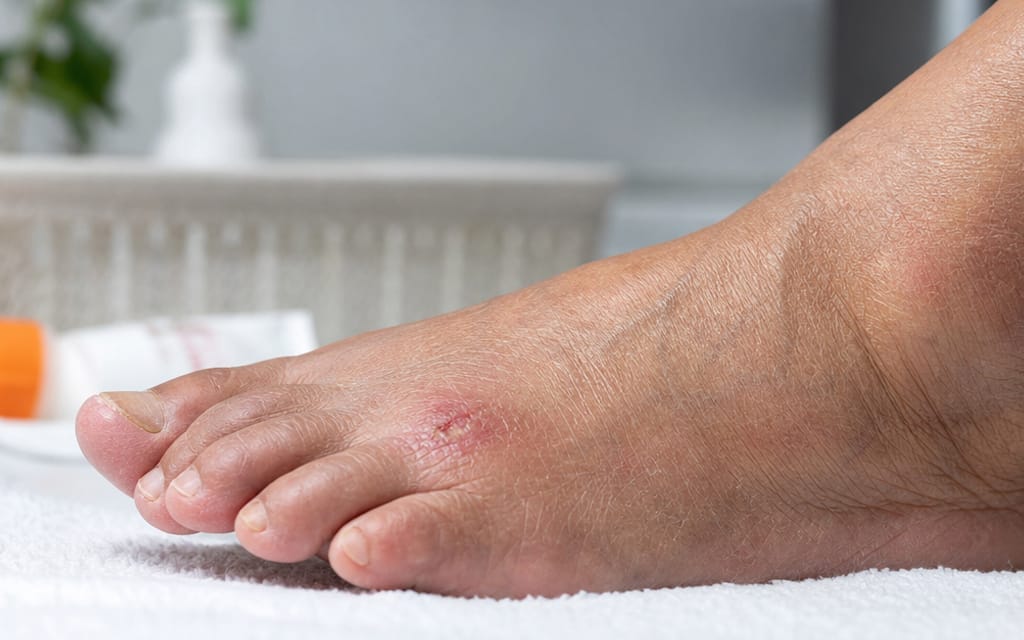
People with diabetes should not dismiss even small foot wounds. Minor inflammation can worsen into diabetic foot complications.
Dry skin can crack, and tiny wounds can form. If blood flow is reduced, healing slows and vulnerability to infection increases. In severe cases, this can progress to a diabetic foot ulcer, where the skin breaks down more deeply—so caution is needed.
Successful diabetic foot care requires a tailored approach based on whether lesions are present. If the feet are intact, preventive care is essential: wash daily with lukewarm water and maintain moisturization. In contrast, if there are abrasions, blisters, or tinea pedis (athlete’s foot), you should visit a medical facility promptly for professional evaluation and treatment.
Because sensation in the feet can become dulled, many people with diabetes may not feel pain even when a wound occurs, leading to delayed detection. If you find a wound, do not rely on self-treatment (such as applying ointment on your own). Prompt medical evaluation to assess wound depth and infection severity is important to prevent complications.
✅ Self-checklist for foot health
- My toes feel numb, or I often feel tingling pain.
- The skin between my toes becomes macerated, or my skin cracks.
- A small cut or blister on my foot hasn’t healed for more than 1–2 weeks.
- A callus forms in a specific area, and the surrounding skin becomes red and swollen.
5. A multi-layer strategy to prevent immune decline: glycemic control and vaccination
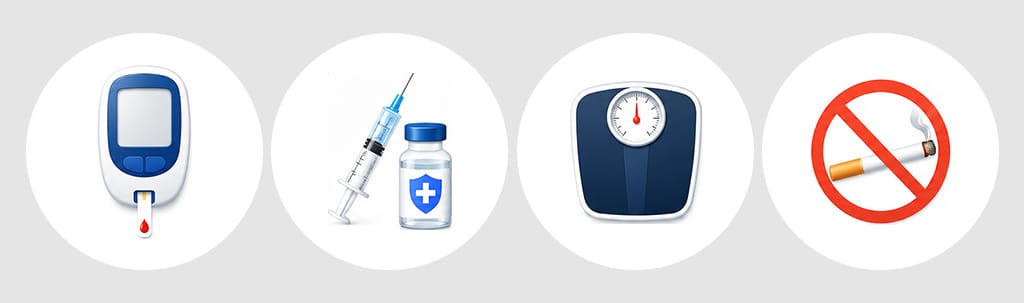
If you focus only on treating the inflammation in front of you, it can be hard to break the cycle. Preventing immune impairment related to hyperglycemia requires multiple layers of defense. A strategy that strengthens overall protective mechanisms is important.
The first line of defense is stable glycemic control. It’s recommended to keep HbA1c within an individualized target range. This is a key pillar that supports normal immune cell function.
The second line of defense is vaccination. The risk of severe illness may increase with influenza or pneumococcal infection. Receiving recommended vaccines in line with Korean Diabetes Association guidelines is advised.
Finally, lifestyle changes such as weight management and smoking cessation should be addressed in parallel. Preventive synergy can increase when kidney complication management is also included. Broad metabolic management and long-term complication care provide an important foundation for reducing recurrent infections.
6. Frequently Asked Questions (FAQ)
Q. At what blood sugar level does infection risk increase?
Infection risk can increase meaningfully when HbA1c is high or when blood glucose fluctuates widely. Rather than focusing on a single cutoff, it’s more accurate to understand that the poorer the control, the higher the risk tends to be. Specific targets should be set with a clinician based on age and underlying conditions.
Q. My cystitis keeps recurring—would diabetes testing help?
If cystitis recurs several times a year and wounds heal slowly, it may be reasonable to consider metabolic dysfunction. Chronic hyperglycemia can gradually reduce immune function without obvious symptoms. When frequent infections of unclear cause persist, checking basic blood glucose tests is a sensible step.
Q. Bacteria showed up on my urine test—do I need antibiotics even if I have no symptoms?
If bacteria are present in urine but there are no symptoms such as flank pain, urinary frequency, or fever, antibiotics are usually withheld and observation is chosen. Unnecessary antibiotic use can increase the risk of antimicrobial resistance. However, treatment may be needed in situations such as pregnancy or before urologic procedures, so follow a clinician’s assessment.
Q. If infections keep happening, when should I go to the hospital?
If the skin around a wound becomes red and warm, or if you develop chills with a high fever, you should seek medical care without delay. Also, if you feel sharp pain or burning when urinating, early evaluation is needed. In people with diabetes, infections can progress quickly, so seeking care early is safer.

Recurrent cystitis and wounds that won’t heal are not minor warning signs. They may indicate that your body’s metabolic system is under strain. Don’t dismiss them as “just chronic fatigue” and leave them unaddressed.
Self-medicating is also unlikely to solve the problem. You need an accurate diagnosis and, at the same time, a plan to stabilize blood sugar. Comprehensive preventive care is what ultimately helps break the cycle of recurrent inflammation.
Sources
- Korean Diabetes Association, Clinical Practice Guidelines for Diabetes, 2025
- Areum Kim, Literature Review on Diabetes and Urinary Tract Infection, Journal of Korean Diabetes, 2017
- Chaudhry et al., Infection risk in type 1 diabetes matched cohort, Diabetes Research and Clinical Practice, 2024
※ The copyright for all content on this blog belongs to medihi. Unauthorized copying, distribution, or derivative use is strictly prohibited, and violations may result in legal action without prior notice.
Recommended reads
 medihi