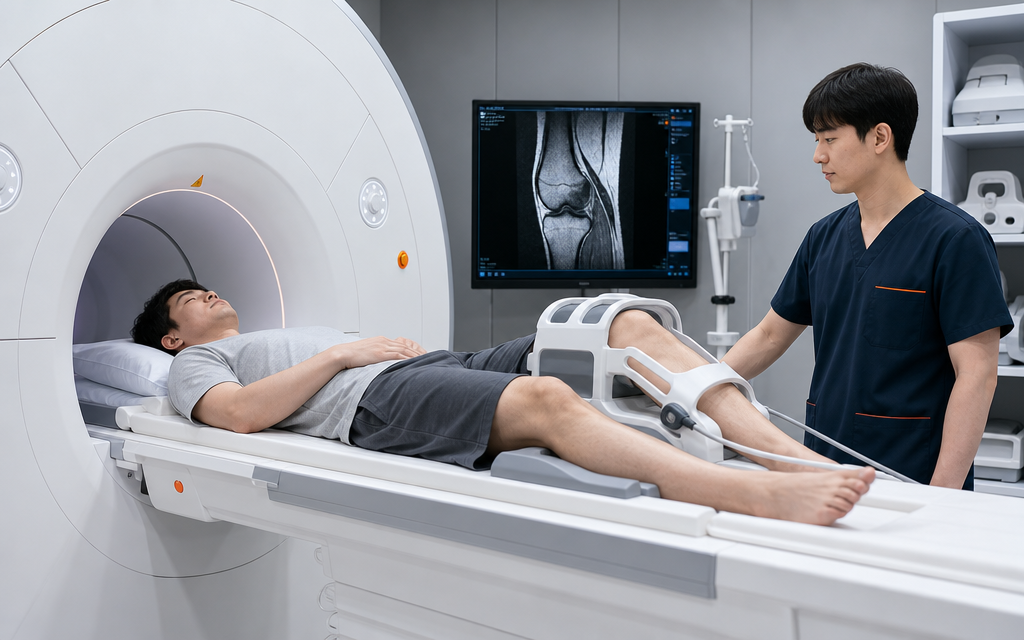

This post explains why your knee may feel like it “gives way” when you change direction, how to accurately diagnose an anterior cruciate ligament (ACL) injury, and how to decide between surgery and rehabilitation—including return-to-sport criteria. Use these practical standards to make a reasonable decision that helps prevent secondary cartilage damage (especially meniscal injury).
“I feel like my knee slips out when I just change direction.”
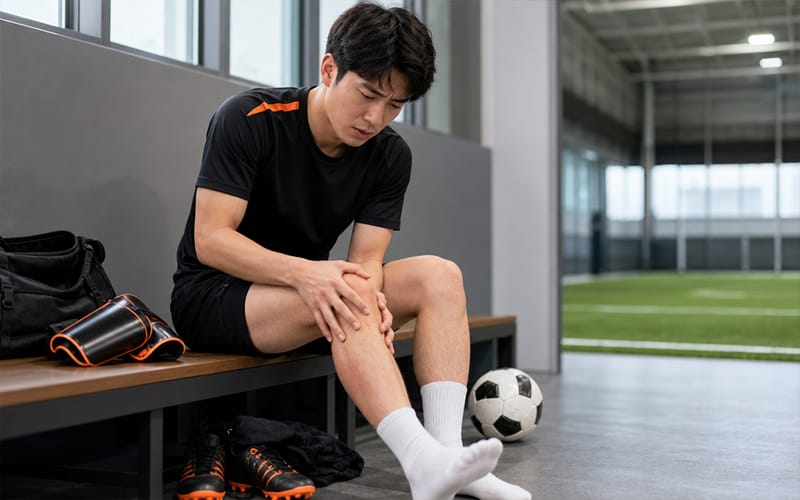
In the clinic, many people share the same concern. It’s a common symptom among men in their 20s–30s who enjoy soccer or basketball. After an injury, it’s easy to worry first—“If it tore, I must need surgery.” You don’t need to blame yourself or feel overly anxious.
When deciding on a treatment direction, clinicians follow a clear set of priorities. They don’t look only at whether the ligament is torn. They carefully check for associated injuries and consider what level of activity you want to return to. To help you make a reasonable choice, we’ll go through the criteria step by step so you can estimate which category your knee falls into.
1. When should you suspect a ligament injury even if you can walk fine on flat ground?
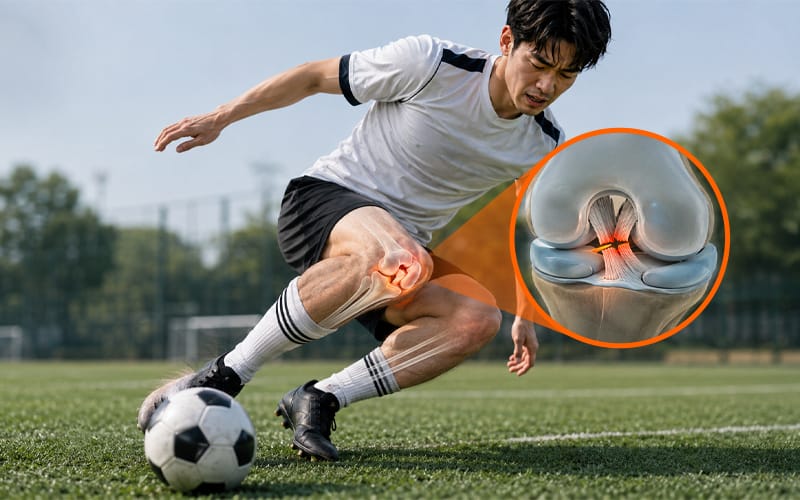
Some people hear a sound in the knee during sports and then experience significant swelling. After a few days of rest, the swelling and pain often settle down. Because walking on flat ground feels manageable, it’s easy to dismiss it as a minor bruise or muscle soreness. However, just because the swelling goes down does not necessarily mean the ligament function has fully recovered.
The ACL shows its true role more during intense movements than during light ones. It helps prevent the bones from shifting out of place when you pivot or land from a jump. It works much like a car seatbelt: it may seem loose when you’re moving slowly in a straight line, but it locks in to protect you when there’s a sudden force or a sharp change in direction.
When that “seatbelt” structure is damaged, a characteristic symptom appears. You may be able to walk straight, but when you twist or change direction, you feel a brief “giving way” sensation. It can feel like the joint is about to slip out of place—an instability pattern that is more suggestive of an ACL problem than a simple sprain. If this describes you, it’s better to get evaluated.
Some reports note positive changes on imaging after early rehabilitation. However, functional stability must be assessed separately through a clinician’s exam and your real-world symptoms. In many cases, it’s difficult to achieve enough stability through natural recovery alone, so discussions about rehabilitation versus surgery often begin based on whether instability keeps recurring.
2. Why can ignoring a “giving way” knee lead to damage in other cartilage?
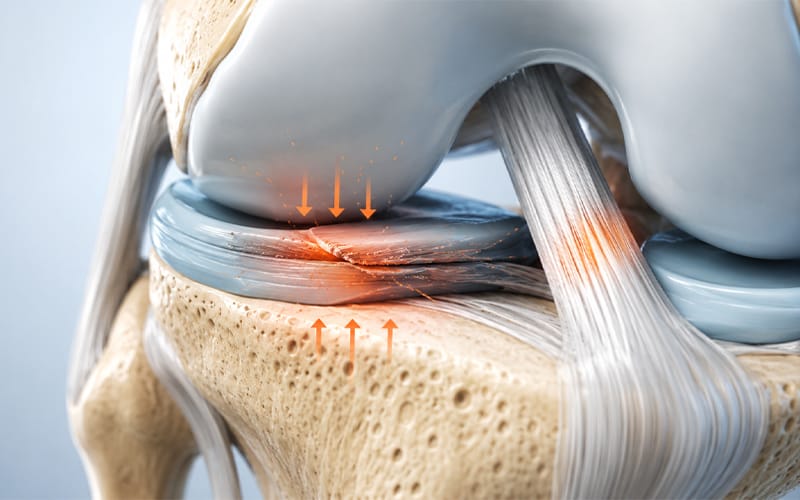
Because surgery can feel burdensome, some people keep exercising while tolerating the giving-way sensation. After a few days of rest, it may seem “fine,” so they tighten a brace and head back to the court. But if symptoms repeat, the risk of secondary injury can increase. If pain or discomfort persists, it’s safer to move up your knee evaluation rather than delay it.
Between the upper and lower bones of the knee sits the meniscus, which helps absorb shock. If the ACL is not functioning properly and you twist the knee, the bones can subtly shift. In that moment, the meniscus—caught between them like a cushion—can be compressed and torn, as if being ground down.
It’s like driving without a seatbelt on a bumpy road and then having the impact spread to other parts inside the car. As repeated stress accumulates, even cartilage that used to serve as a strong cushion can tear. That’s the mechanism by which an ACL injury can lead to secondary damage in surrounding cartilage.
Once cartilage is injured as well, the surgical scope can become larger and recovery can take much longer. This is why clinicians often advise people with frequent knee “shifting” not to miss the right timing for surgery. To protect the remaining cartilage, rebuilding a strong stabilizing “pillar” can be necessary.
3. Do you always need surgery? The criteria that separate surgery from rehabilitation
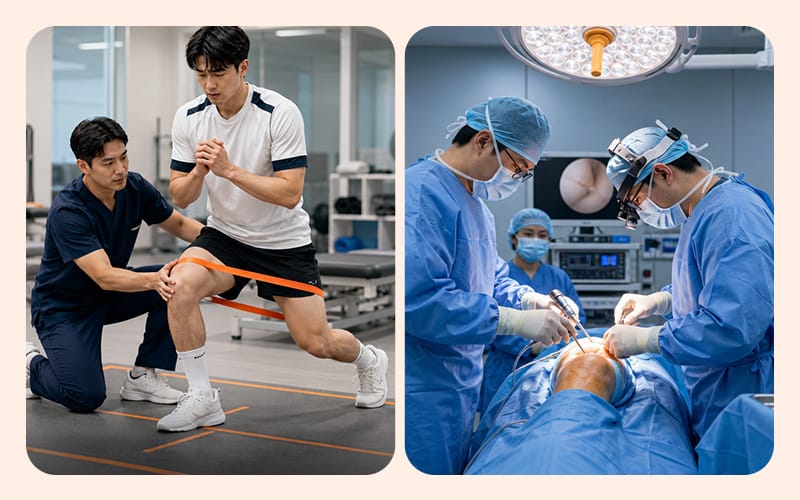
A torn cruciate ligament does not automatically mean you must go straight to the operating room. The choice depends on your symptoms and situation. Even with the same injury, the standard changes depending on “how far you want to return.”
When research findings are considered together, some reports suggest there may be no clear difference in functional recovery between early surgery and starting with rehabilitation first, then choosing surgery if needed. However, if your goal is to return to pivot-heavy sports like soccer or basketball, ACL reconstruction may be a safer option.
In real clinical practice, the direction is often divided using criteria like the following:
- When rehabilitation is discussed first
- Knee instability is not significant in daily life.
- The giving-way sensation does not recur frequently when changing direction.
- The main goal is returning to everyday activities, and you have an environment that supports consistent rehabilitation participation.
- When surgery (reconstruction) is considered sooner
- You have a clear goal of returning to high-rotation sports such as soccer or basketball.
- Instability repeatedly occurs during pivoting in sports or daily activities.
- MRI shows or raises suspicion for associated injuries such as meniscal or surrounding cartilage damage.
If surgery is chosen, the type of tissue (graft) must also be decided. Active recreational athletes in their 20s–30s often consider using their own tissue (autograft), which tends to incorporate firmly. On the other hand, if you are older or want to reduce pain related to graft harvesting, donor tissue (allograft) may be an option. This decision requires a discussion with your clinician after considering age, bone condition, daily functional limitations, and local insurance coverage criteria.
4. Why “pulling and testing the joint directly” can matter more than imaging
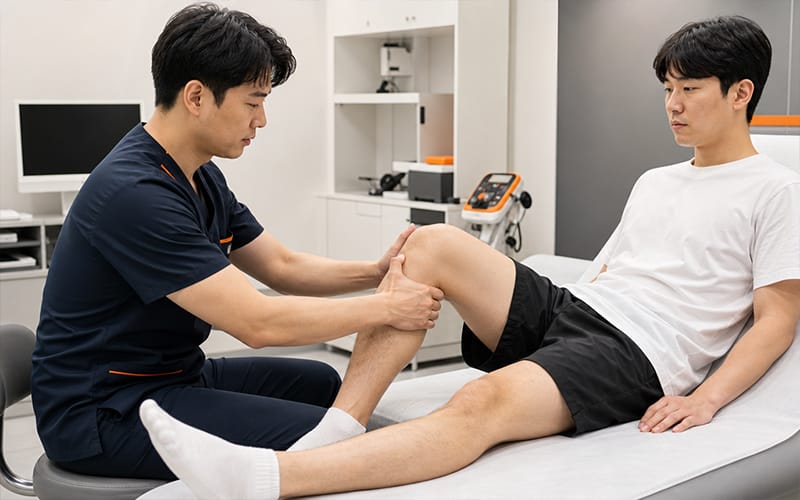
When the knee feels off, people usually think of getting an MRI first. But clinicians often test the knee directly before looking at the images. They pull the shin bone forward or apply twisting forces to feel how much the joint shifts. This is called a physical examination (clinical stability testing).
One reason imaging doesn’t tell the whole story is that it mainly shows structures in a still, static state. Even if a seatbelt looks intact, it fails if it doesn’t lock when your body is thrown forward. Similarly, even if the ligament’s shape appears to remain on MRI, if the knee slides forward noticeably when tested, it may indicate reduced function.
That’s why physical examination and imaging are complementary essentials. Imaging shows internal structures such as the tear location and associated cartilage injuries. The physical exam shows how unstable the knee is during movement. Only when these two puzzle pieces fit together can a safe and precise treatment plan be made.
You may feel some tightness or soreness while the clinician bends and pulls the knee. However, this is a key step in determining whether surgery is necessary.
✅Pre-visit preparation checklist
- Did you note the movement at the time of injury (sudden stop/pivot/landing/contact, etc.)?
- Did you record how many times the “giving way” sensation occurred over how many days?
- Did you organize when noticeable swelling (bleeding into the joint/effusion) started after the injury and how long it lasted?
5. To start exercising again, “function” matters more than “time”

The most common question after treatment is: “When can I kick a ball again?” Many people expect that once a certain number of months passes after surgery, they can run like before. But returning to the court based on time alone can lead to re-injury.
A calendar date changing does not automatically mean the ligament has become strong enough. Return to sport should be based not on time, but on how much joint function has recovered. Clinicians measure thigh strength symmetry between the injured and uninjured legs and evaluate whether you can land from a single-leg jump without wobbling.
Mental readiness is also essential. If fear of re-injury is high, the body can become stiff, making it harder to respond safely in risky situations. That’s why questionnaires that assess psychological confidence are used alongside physical tests.
You should meet criteria such as strength, passing functional tests, and psychological readiness. Completing these evaluations reliably is what helps you return to your original sports activities more safely.
6. Frequently Asked Questions (FAQ)
Q. The swelling went down after the injury—so why do I feel unstable only when I change direction?
Swelling and pain often decrease naturally as bleeding inside the joint is reabsorbed. However, the ACL plays a major role in controlling rotational instability, so symptoms can be more noticeable during pivoting movements. Even without swelling, it may be a sign that ligament function has not fully recovered.
Q. If it’s a partial tear, can I avoid surgery?
More important than the size of the tear is how much the knee actually shifts in real life. Even with a partial tear, if instability is significant and returning to sports is your goal, surgery to reinforce the ACL may be considered. If shifting is minimal and the goal is returning to daily life, rehabilitation can be tried first.
Q. If I have surgery, should I choose an autograft or an allograft?
For younger, active people, using your own tissue (autograft) is commonly recommended because it tends to incorporate firmly. If you are older or want to minimize pain at the graft-harvest site, donor tissue (allograft) may be considered. Please decide through discussion with your clinician after considering your individual situation and local insurance coverage criteria.
Q. How severe does the giving-way sensation need to be before I should seek care quickly?
If you feel a sudden sensation that the knee might slip out when you change direction while walking on flat ground, evaluation is recommended. If you push through symptoms and overuse stairs or slopes, the risk of secondary injury to the meniscus and other cartilage can increase, so caution is needed.

We’ve reviewed the key standards to check when responding to an ACL injury. The main point is that you should not judge everything based on a single imaging result. Knee instability found on physical examination, the presence of associated injuries, and your clear activity goals serve as a reliable compass. We hope you can return to the court in good health.
Sources
- Korean Orthopaedic Association. (2024). Disease information and clinical guidelines for cruciate ligament rupture.
- Health Insurance Review & Assessment Service (HIRA). (2017). Coverage criteria for allografts used in knee ligament injuries (Notice No. 2017-152).
- Primary surgery vs primary rehabilitation for ACL rupture, British Journal of Sports Medicine
※ The copyright for all content on this blog belongs to medihi. Unauthorized copying, distribution, or derivative use is strictly prohibited, and violations may result in legal action without prior notice.
Recommended reads
 medihi