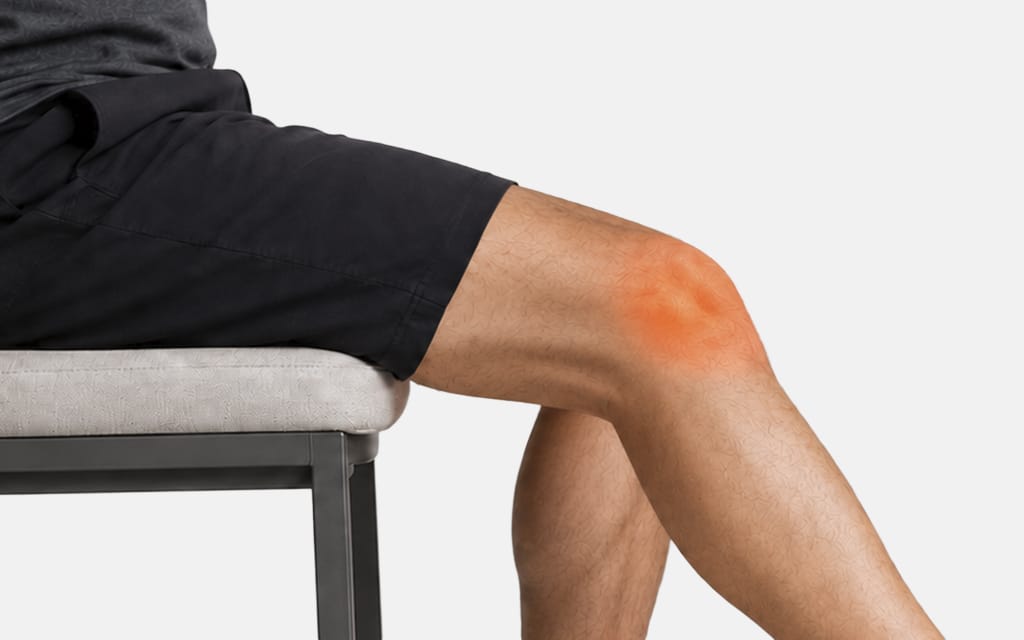

As people enter their 60s and 70s, walking and using stairs can gradually become more difficult. From a clinic-based perspective, this post explains how to interpret those changes. By considering both the location of pain and the degree of functional decline, it outlines conservative treatment options for knee osteoarthritis and provides step-by-step criteria for when to reassess the next stage of care.
“When I go down the stairs, the front of my knee hurts so much that I keep grabbing the handrail.”
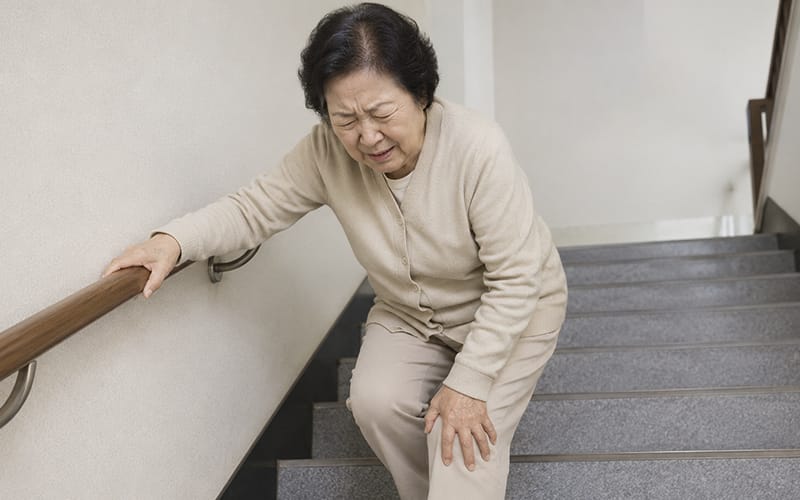
In the clinic, many people describe very similar discomfort. Some quietly endure it, assuming it is simply age-related pain. Others delay evaluation because they are afraid it might immediately lead to surgery.
Advertisements often emphasize convenience with messages like “One injection and you’re done,” or, on the other hand, provoke fear as if something terrible will happen without surgery. In real clinical decision-making, however, the first priority is different. We start by checking when the symptoms began and how much everyday function—such as walking and going up and down stairs—has actually been limited.
This article organizes a practical way to assess your current knee condition step by step and to work with your clinician to build a safe treatment plan.
1. Front knee pain when going downstairs—does it always mean the cartilage is worn down?
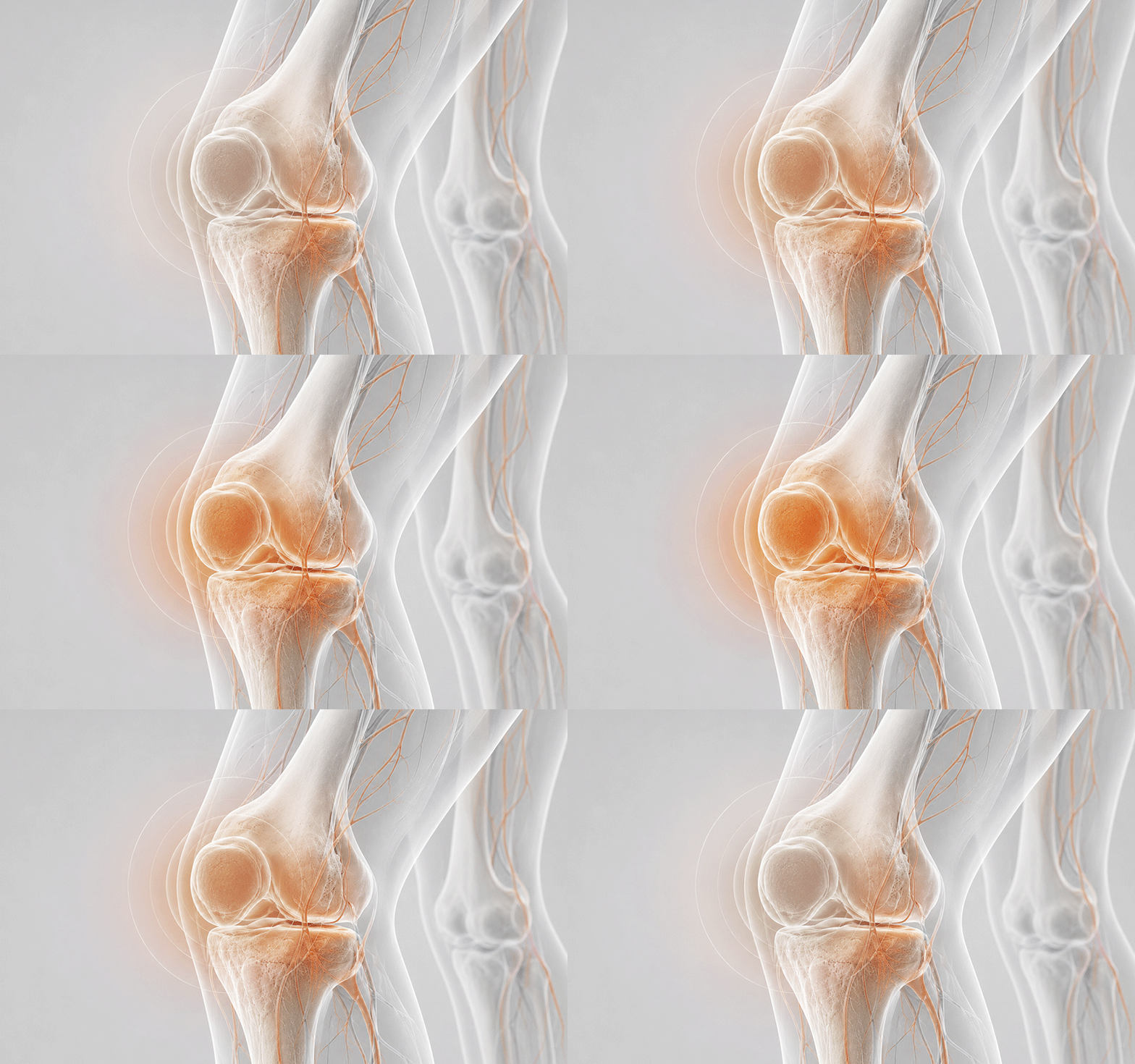
The way the knee joint works is quite similar to the wheel system of a car that has been driven for a long time. The cartilage inside the knee functions like a tire, helping withstand impact from the ground. Strong muscles around the thigh and hip act like shock absorbers, reducing that impact. Even if a tire has worn down a bit over time, a car can still roll safely if the surrounding shock-absorbing systems remain strong.
A sharp, front-of-knee knee pain felt when going downstairs can be a common early sign of knee osteoarthritis. However, it is difficult to conclude that this symptom is only due to the “tire”—that is, cartilage—wearing down. Compared with walking on flat ground, going downstairs increases the load on the front of the knee (the patellofemoral joint), so pain may show up there first.
At that point, pain tends to be more noticeable when hip and thigh strength (especially the hip abductors) and walking mechanics have broken down—structures that should normally stabilize the load.
From a medical perspective, this means that as weight-bearing muscles lose strength, excessive pressure concentrates on specific parts of the joint. That is why it is important to confirm whether the pain is located in the front of the knee or on the inner side. In addition, to evaluate the knee accurately, you need to consider the full picture—whether there is swelling (edema) and how the symptom pattern changes over time.
2. When your knee hurts, is resting really the choice that protects the joint?
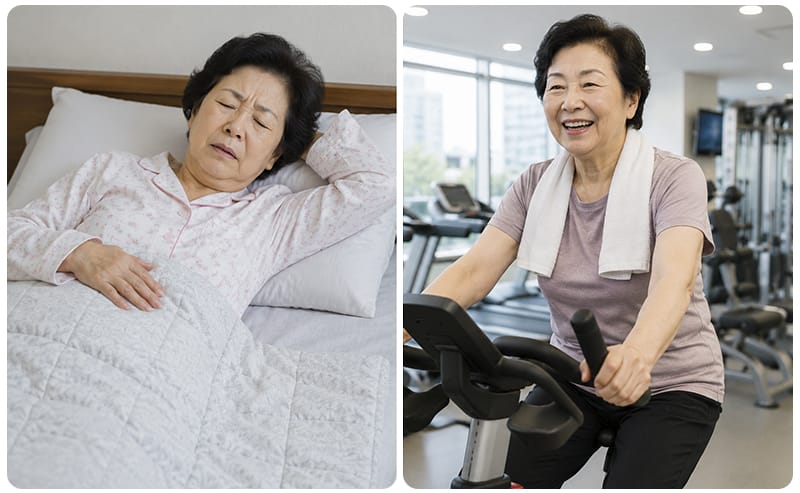
When the knee feels even slightly uncomfortable, many people stop moving and try to rest completely. This often comes from the belief that “if I use it, it will wear out, so I should save it.” One important caution here: if you sharply reduce activity out of fear of pain, the surrounding muscles that used to support the knee can weaken quickly.
When the “shock absorbers”—your muscles—lose strength, body weight is transmitted more directly to bone and cartilage. You may feel like you are protecting the joint by not walking, but in reality, joint pressure can increase and muscle strength can decline further. As a result, walking gradually becomes more difficult and pain control can become even harder.
This does not mean you should force yourself to endure strenuous hiking or repeatedly climb steep stairs. Instead, you need an approach that avoids direct impact on the knee while gently reactivating the surrounding muscles.
It is like extending the life of a car’s tires by reducing heavy cargo in the trunk and maintaining the suspension system. Major clinical guidelines in Korea and internationally (including NICE) recommend exercise and weight management as core pillars of non-surgical conservative care. Low-impact exercise—such as water-based exercise using buoyancy, or riding a stationary bike where your weight is supported by the seat—helps build a strong foundation. If you are carrying extra body weight, combining light flat-ground walking with dietary management is often much more advantageous in the long term.
✅Checklist to review starting today (walking and stair discomfort)
- Activities that trigger pain: When do you feel discomfort most—going downstairs, walking on flat ground, or squatting?
- Morning stiffness duration: After waking up, does knee stiffness resolve within 30 minutes?
- Associated symptoms: Is there noticeable swelling (edema) or unusual warmth compared with your baseline?
3. Pain management in daily life—when and how should medications and assistive devices be used safely?

Even small adjustments to your daily environment can significantly reduce the burden placed on the knee joint. Traditional floor-seated living commonly practiced in Korea can easily create high pressure inside the joint. Squatting on the floor to do housework or sitting cross-legged for meals is generally better to avoid when possible. Switching to chair- and bed-based living and installing safety grab bars in the bathroom alone can reduce knee fatigue.
When choosing medication or assistive devices, it is safer to set criteria tailored to your individual situation.
- When to consider oral anti-inflammatory pain medication: If knee pain is severe enough that routine outings are difficult, or if pain disrupts sleep at night, oral medication may be helpful for symptom relief.
- When to prioritize topical medication and assistive devices: If you are older or have chronic conditions involving the gastrointestinal system or the heart, it can be preferable to start with topical (local) formulations to reduce systemic burden.
The timing of introducing a walking aid also deserves attention. If you feel as though your knee might buckle while walking, or you sense instability because you cannot generate strength in the leg, early introduction should be considered. Using a cane actively when going out can help prevent falls and is a practical option that reduces pain by shifting part of the weight-bearing load to the arms.
4. Knee injections—if you get them often, does the cartilage become strong again?
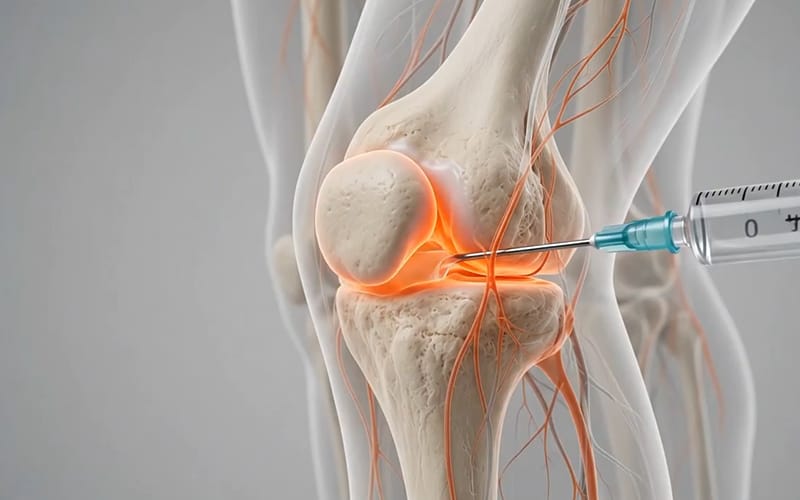
When pain is severe, some people receive intra-articular steroid injections or hyaluronic acid injections often referred to as “cartilage injections,” after discussing with a clinician. After an injection, the knee may feel smoother when bending and straightening. This can lead to the misunderstanding that worn cartilage has been newly restored. The mechanism is more like applying lubricant around stiff car parts to make movement smoother.
Medically, injection therapy plays more of an adjunct role—temporarily reducing inflammation inside the joint and decreasing friction to help control pain. It does not physically regenerate cartilage tissue that has already worn away. Steroid injections can be useful for calming acute pain in the short term. However, because of concerns about infection and side effects with repeated administration, there are limits on dosing intervals and the number of injections into the same joint under National Health Insurance coverage criteria.
Because you cannot rely on injections indefinitely, planning the sequence of treatment is essential. When severe pain decreases and movement becomes more comfortable after an injection, that is the time to begin focused management. Rather than feeling reassured and stopping there, it is important to start rehabilitation exercises in earnest—such as flat-ground walking or riding a stationary bike. Building the strength for the knee to support body weight on its own is a more desirable long-term strategy.
✅ Items to confirm during an injection consultation
- Were you informed whether the main goal of the joint injection is inflammation reduction or lubrication support?
- Did you confirm an appropriate dosing schedule for your joint condition and the National Health Insurance coverage limits?
- After the injection, did you discuss a stepwise exercise plan with your primary clinician to build strength around the joint?
5. Is delaying surgery as long as possible always the right answer? Practical criteria for considering knee replacement
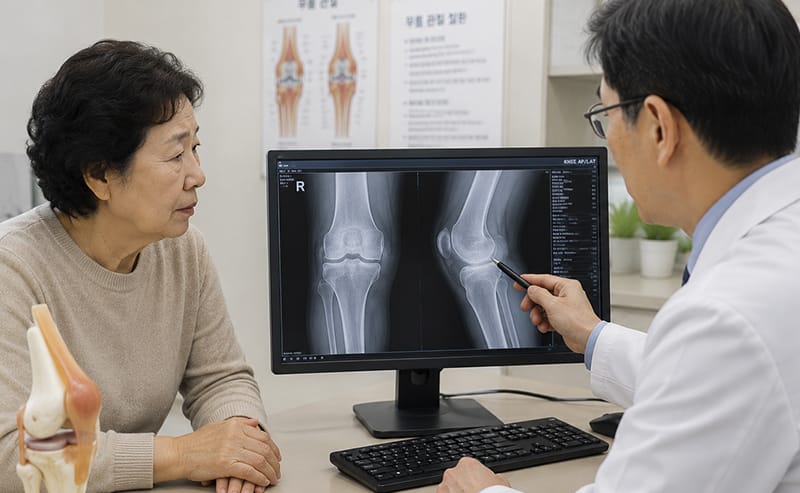
Because of vague fear about surgery, some people believe they must avoid total knee replacement (total knee arthroplasty) at all costs and endure symptoms as long as possible. Major clinical guidelines in Korea and internationally prioritize sufficiently trying conservative treatment first—using assistive devices, exercise, weight management, and medications—before surgery. Even if X-rays show progression of cartilage wear, surgery is not chosen aggressively if walking is still manageable and pain is well controlled.
This is where decision criteria become clearer. If consistent conservative care and lifestyle adjustments allow you to maintain daily function to a reasonable degree, it can be advantageous to preserve and manage your existing knee. On the other hand, there may come a point—like a car tire that is severely damaged and a suspension system that no longer works—when everyday walking essentially stops. If, despite months of adequate conservative treatment, pain keeps you awake at night and functional decline is so significant that even crossing a short crosswalk is difficult, a surgical approach may be the safer option to consider.
Surgery is one option that can control pain and restore function by resurfacing worn joint surfaces with smooth artificial materials. However, after surgery, you must go through active rehabilitation to adapt to the movement of the new joint. Therefore, rather than avoiding surgery unconditionally, it is better to discuss and decide step by step with your clinician at a time when you still have enough overall physical capacity to handle rehabilitation.
6. Frequently Asked Questions (FAQ)
Q. If it only hurts on stairs, can it still be knee osteoarthritis?
Yes. Because the load on the front of the knee joint becomes much greater when going downstairs than on flat ground, this can be a common early symptom of knee osteoarthritis. However, front knee pain may also be due to issues limited to the patellofemoral joint or to weakness in the thigh and hip muscles. So it should not be concluded based on symptom location alone; a comprehensive diagnosis using imaging findings and a physical examination is needed.
Q. How often can I get joint injections?
Hyaluronic acid injections (“cartilage injections”) that reduce friction inside the joint typically have National Health Insurance benefit criteria set by specific intervals. Steroid injections that reduce inflammation also follow limits on dosing intervals and the number of injections into the same joint to help prevent infection and side effects. Because injections are not unlimited, it is safer to proceed by reviewing coverage criteria and your individual condition together with your clinician.
Q. Which exercises should I avoid, and which are safer to choose?
Activities that involve deep knee bending with impact—such as jumping from a squat, or descending steep mountains quickly—place a heavy burden on the joint. Instead, choosing low-impact exercise that redistributes weight-bearing through buoyancy or a seat—such as water walking, aqua aerobics, or light stationary cycling—can help build strength around the knee more safely.
Q. When should I seek evaluation and consultation sooner rather than later?
If throbbing pain persists even at rest, or if the knee becomes significantly swollen and feels hot, it may signal an acute flare. Also, if you repeatedly experience severe instability—such as sudden loss of strength while walking that makes you feel like you might collapse—it is advisable to see a clinician as soon as possible.
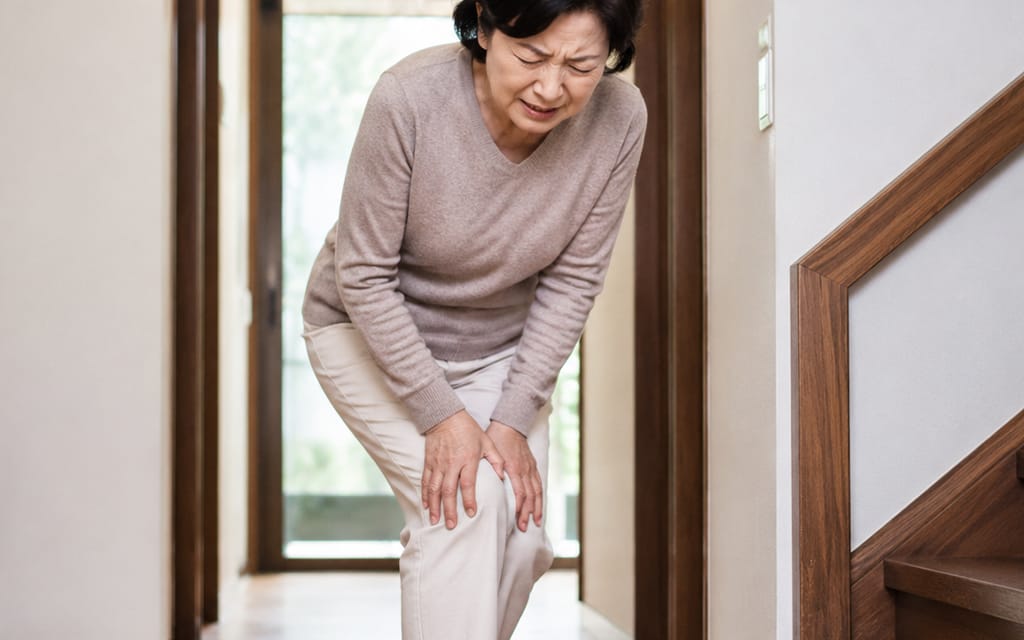
Knee osteoarthritis is not simply the result of “all the cartilage wearing away” with age. It is closer to a structural change created by a complex interaction of body-weight load, the strength of muscles surrounding the joint, and long-standing floor-seated lifestyle habits.
Rather than being overly swayed by an X-ray image or the pain you feel today, you may find it more reassuring to set a stepwise treatment plan based on how much your daily life and walking function have actually become limited. Instead of reducing activity out of vague fear of pain, consider healthier choices—such as shifting from floor sitting to chair-based habits and starting with short walks.
Sources
- Health Insurance Review & Assessment Service (HIRA), National Health Insurance coverage criteria for total knee arthroplasty and intra-articular injections, 2024
- Korea Disease Control and Prevention Agency (KDCA), National Health Information Portal: prevention and management guidance for knee osteoarthritis, 2023
- NICE(National Institute for Health and Care Excellence), Osteoarthritis in over 16s: diagnosis and management, 2022
※ The copyright for all content on this blog belongs to medihi. Unauthorized copying, distribution, or derivative use is strictly prohibited, and violations may result in legal action without prior notice.
Recommended reads
 medihi