
The lifespan of a veneer depends heavily on how you care for it during the 72-hour “golden time” right after the procedure, as well as on your everyday habits—especially how you use your front teeth. Below is a detailed guide covering the essentials, from preventing front-tooth fractures to keeping your smile bright and white for longer.
“I spent a lot of money on veneers, but I’m honestly scared to even take a bite of a sandwich. I keep worrying one might suddenly pop off, and I feel self-conscious eating out with friends.”

Right after getting veneer treatment, many people share this exact kind of anxiety at mealtimes. You made a big decision to improve your smile—but once the procedure is done, it’s common to feel stressed by thoughts like, “What if it cracks?” or “Will curry stain it right away?”
Those worries are completely natural. In fact, that careful mindset—wanting to protect your teeth—can become your biggest advantage in helping your veneers last longer.
It’s easy to think the process ends once the veneers are bonded, but in reality, the process of them truly becoming “your teeth” starts now. Especially in the first few days, your eating habits and small everyday behaviors can make a meaningful difference in how long your veneers hold up—sometimes by many years.
In this post, you’ll find practical, specific guidelines so you can eat with more confidence while maintaining aesthetics over time. If you follow what’s outlined below, you can significantly reduce the fear of needing retreatment and keep your smile looking bright.
1. Why is food so important during the first 3 days after veneers?
Avoiding food for 2–3 hours after the procedure—until the anesthesia wears off—is the basic rule. But the truly important golden time is the first **72 hours** after treatment. Even if the clinic has finished bonding the veneers, the invisible chemical bonding process continues for about three days.
From the outside, everything may feel fully set. However, the bonding resin between your tooth and the restoration needs time to reach its final strength.
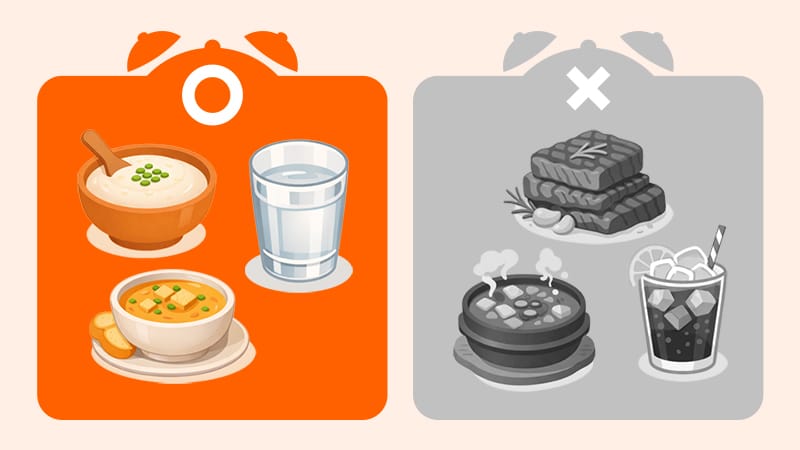
That’s why, from the day of the procedure through the first 24 hours, it’s safest to treat this as an “absolute stabilization period”: don’t chew until numbness is gone, and afterward stick to soft liquid or semi-liquid foods.
Temperature control also matters within those 72 hours. Extremely hot foods (like boiling stew) or very cold drinks (like beverages packed with ice) can subtly affect the physical properties of the bonding resin and may weaken long-term adhesion. For the first 48–72 hours, lukewarm foods and drinks are recommended.
If you get through these three days carefully, you can greatly reduce the risk of early failure such as veneers loosening or detaching.
2. Why should you avoid tearing food with your front teeth for life?
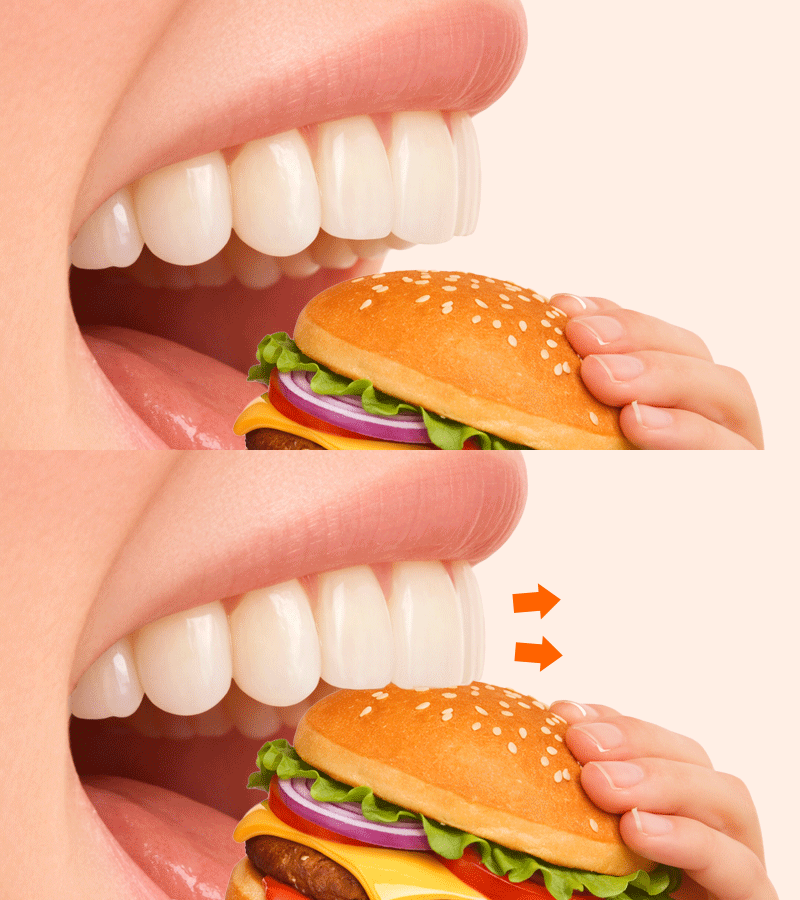
To get straight to the point: if you have veneers, you should avoid the habit of “tearing” food with your front teeth on an ongoing basis.
Many people ask, “If it’s not a hard apple, isn’t a hamburger okay?” The key issue isn’t the *hardness* of the food—it’s the *pulling force*.
Even with a hamburger, the moment you bite with your front teeth and pull away, you create forces that push or tug the veneer outward from the tooth surface.
Because a veneer is a thin ceramic shell bonded to the front of the tooth, it tends to tolerate straight downward pressure better than twisting or tearing forces.
So build the habit of pre-cutting food before it goes into your mouth.
Whether it’s steak, sandwiches, kimbap, or apples—anything that typically requires front teeth—cut it into bite-sized pieces and move it directly to your molars.
3. Do you really have to quit coffee and wine completely?
For working adults in their 20s and 30s, being told to quit coffee entirely can feel unrealistic. The good news is that ceramic veneers themselves have a glass-like smooth surface and are generally more stain-resistant than natural teeth.
The real concern is the margin where the veneer meets the natural tooth. If dark pigments from coffee or wine seep into tiny gaps at that boundary, the edge can discolor and look like a dark outline.
So rather than “banning” coffee or wine, the key is learning how to drink them strategically.
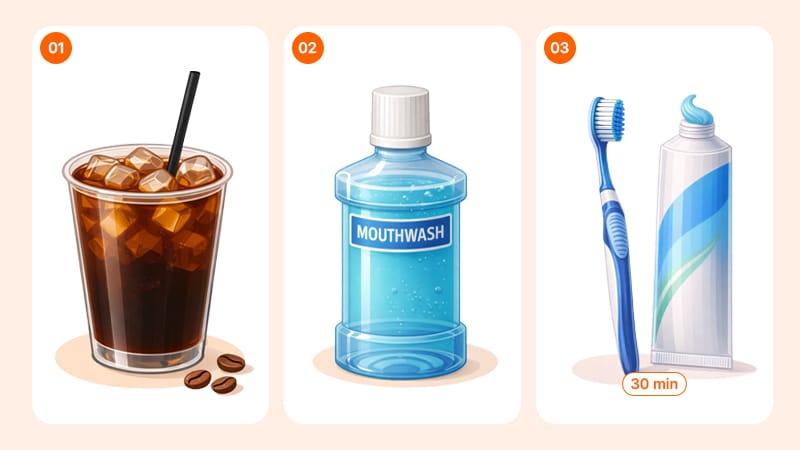
When drinking strongly pigmented beverages, use a straw so the liquid bypasses the front surfaces of your teeth and goes more directly toward the throat. This alone can significantly reduce contact between pigment and the tooth surface.
Also, it helps to remember a simple routine.
One more note: if you drink acidic carbonated beverages like cola, the enamel surface can become temporarily more vulnerable. Rinse thoroughly with water, then wait about 30 minutes before brushing.
4. How careful do you need to be with tough and hard foods?
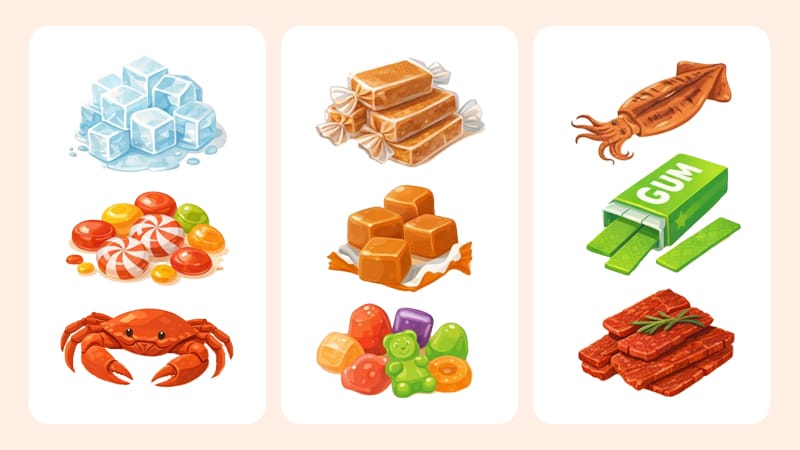
Foods that can lead to veneer fractures generally fall into two groups: foods that cause impact, and foods that pull at the bond. First, biting hard items like ice, candy, or crab shells is something you should avoid. These can crack ceramic due to sudden impact, regardless of how long it has been since treatment.
Even more caution is needed with sticky foods like taffy, caramel, gum, and jelly candies. These can adhere to the restoration surface and create pulling forces that tug the veneer away from the tooth. Over time, this can weaken the bonding agent and become a major cause of detachment.
Chewy foods like squid or jerky can also be risky because chewing them often involves side-to-side jaw movement, which places lateral pressure on the restoration.
If you must eat these foods, never use your front teeth—cut them into very small pieces and chew carefully using only the back molars.
5. Is there a care point that matters even more than food?
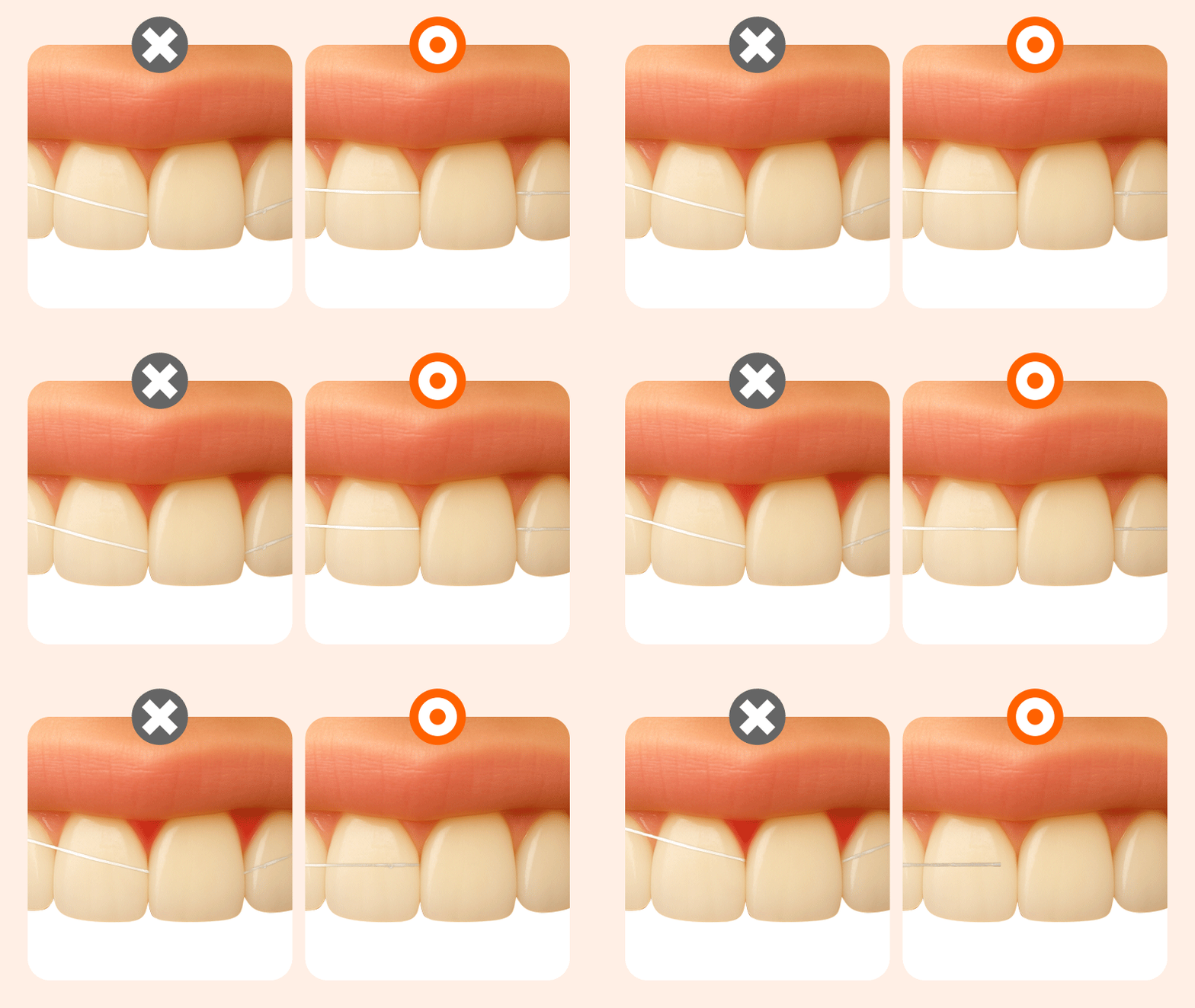
Long-term, the biggest threats to veneers aren’t only fractures—they also include gum inflammation and secondary cavities. If food gets trapped between the restoration and the gumline, inflammation can develop, causing swelling or gum recession, which can significantly reduce aesthetic results.
To prevent this, flossing isn’t optional—it’s essential.
Some people worry, “What if flossing makes my veneer come off?” But with the correct technique, it can be done safely.
When inserting floss, guide it in gently with a soft sawing motion. When removing it, don’t snap it upward—slide it out **sideways (toward the lips)**. This removes debris without stressing the bonded surface.
Also, veneers are not a protective shield against cavities. Unfortunately, decay under a veneer can be difficult to see from the outside, so it’s often discovered only after pain becomes significant.
That’s why, even without symptoms, you should get a dental checkup at least once every six months to evaluate the bonding margins and gum health.
6. Frequently Asked Questions (FAQ)
Q. Can I eat ramen for dinner on the day of the procedure?
For the first 24 hours after treatment, it’s best to avoid foods with a high risk of staining. Ramen broth can contribute to discoloration, and hot temperatures may interfere with bonding stabilization. On the day of the procedure, it’s better to choose lukewarm porridge or a clear, mild liquid-based meal.
Q. Can I use an electric toothbrush after getting veneers?
You can, but caution is needed. Strong vibration may create repeated micro-impacts at the bonding margin over time. Set the intensity to “low,” and use a light touch when brushing over the restoration surface. If possible, a soft manual toothbrush is often the safer choice.
Q. I have a habit of biting my nails with my front teeth—will that be okay?
It should be avoided. Nail-biting, chewing on pens, tearing tape with your front teeth, and crunching ice are among the most common causes of veneer fractures. Small, repeated impacts can accumulate and eventually lead to major damage, so habit correction is strongly recommended.
Q. What symptoms mean I should go back to the dentist after the procedure?
Mild temporary sensitivity can happen early on. However, if sharp pain with cold water lasts longer than two weeks, if your tongue catches on a sharp edge between the veneer and tooth, or if you have bleeding and swelling of the gums, you should visit your dentist promptly for an evaluation.
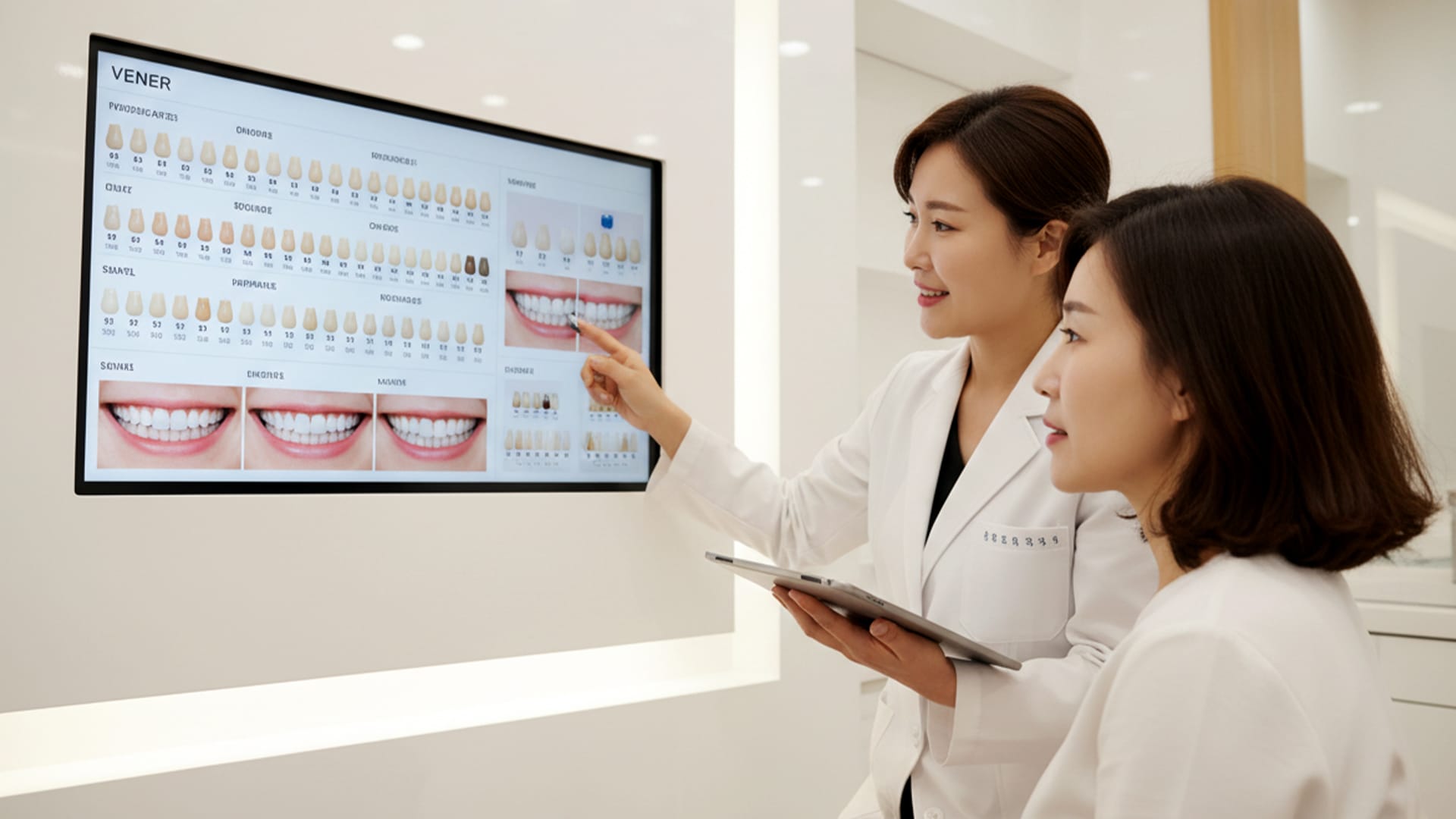
The first few days of inconvenience and changes in eating habits may feel bothersome. But small routines—like pre-cutting large foods before eating and flossing correctly—can become the foundation that helps protect your beautiful smile for many years. Accept that restorations are not steel, and treat them with a bit more care. With regular checkups and attentive daily management, veneers can remain one of the brightest parts of your expression for a long time. Practice the guidelines shared today, and we hope you maintain healthy, beautiful teeth for as long as possible.
Sources
- Korea Disease Control and Prevention Agency (KDCA), National Health Information Portal. (n.d.). Veneer treatment
- Korean Academy of Prosthodontics. (2025). Guidelines for esthetic prosthetic treatment
- Peumans, M., et al. (2004). A prospective ten-year clinical trial of porcelain veneers. Journal of Adhesive Dentistry.
※ The copyright for all content on this blog belongs to medihi. Unauthorized copying, distribution, or derivative use is strictly prohibited, and violations may result in legal action without prior notice.
Recommended reads
 medihi