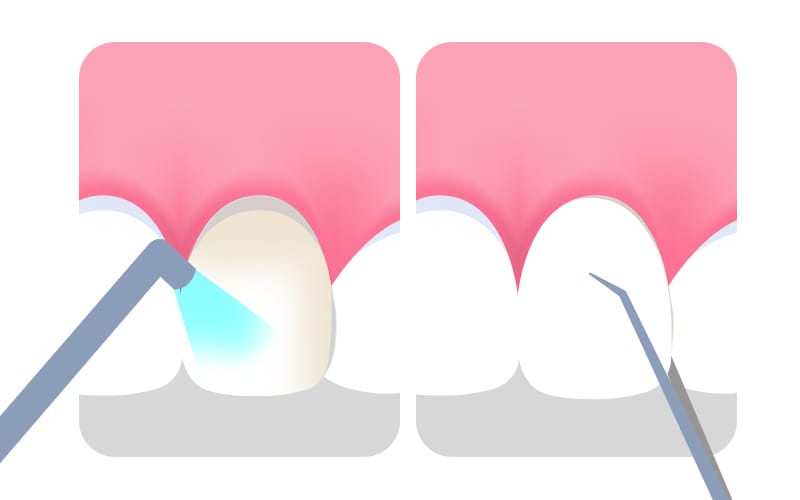

This guide is for people who find it difficult to tell whether tooth sensitivity and a “foreign-body” sensation after laminate veneers are part of normal adaptation or signs of a problem that needs treatment. It provides practical criteria for checking your tooth condition by tracking *how symptoms change over time* and summarizes key factors that help prevent re-treatment. Use it to reduce anxiety and protect your dental health safely.
“Did they shave my teeth too much and damage the nerve?”

If you feel a sharp twinge when drinking cold water right after the procedure, or if the tip of your tongue senses something unfamiliar, it’s easy to panic. Because you know your natural tooth structure was reduced, it’s normal to become extra sensitive to even small changes in sensation. This is not an unusual worry.
In clinical practice, however, we pay closer attention not just to the symptom itself, but to the pattern of change over time. Rather than immediately labeling something as “normal” or “abnormal,” clinicians first look for structural causes that can explain symptoms (amount of tooth reduction, bonding status, and bite/occlusion). Ads may describe veneers as a “simple procedure—bond it and you’re done,” but in reality, the tooth and restoration need proper conditions and time to function as a stable biological-and-mechanical unit.
This article is not meant to reassure you unconditionally. Instead, it helps you distinguish between discomfort that time may resolve and warning signs that warrant a professional evaluation. If you want to assess your situation without panicking, review the points below step by step.
1. Tooth sensitivity—how long is “normal”?
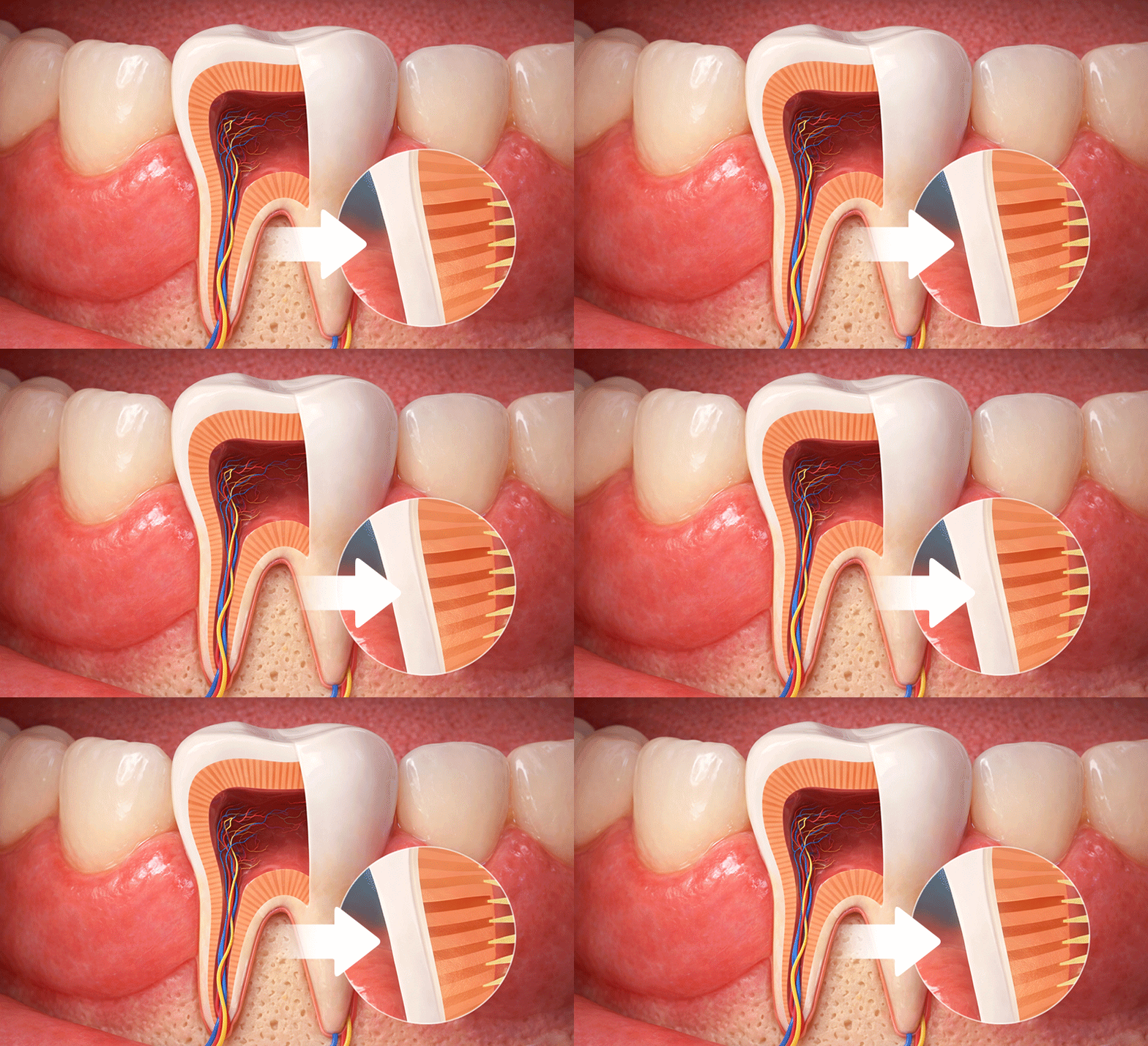
To understand sensitivity after veneers, it helps to think of a “bathroom tile renovation.” The outer surface of a tooth—enamel—is like a hard, waterproof tile that doesn’t let water seep in. The layer underneath—dentin—is more like a cement wall that can absorb and transmit stimuli.
Laminate veneers involve lightly refining the outer surface and firmly bonding a new ceramic “tile” on top. The most important point is to keep the tooth preparation within the enamel so that the inner “cement wall” (dentin) is not exposed.
That’s because bonding is much stronger when the original waterproof tile (enamel) and the new ceramic tile meet. It also helps block post-procedure sensitivity more effectively. In fact, studies report that bond strength is significantly better when bonding to enamel than to dentin.
So why can you still feel sensitivity even if dentin wasn’t exposed? Even when enamel is reduced within a safe range, the surface becomes thinner, which can temporarily allow external stimuli to transmit a bit more easily. However, this type of sensitivity often fades naturally once the veneer is fully and tightly bonded to the tooth without gaps.
The key is how the symptom changes. If sensitivity gradually decreases over time, that’s a positive sign that the pulp is adapting and sealing is improving. But if you notice the patterns below, an evaluation may be needed:
- Duration of pain: Does it disappear within 1–2 seconds after cold water, or does throbbing linger for 10 seconds or longer?
- Spontaneous pain: Does it hurt even at rest, without triggers like cold water or air?
- Direction of change: Is it improving day by day, or becoming sharper over time?
2. For long-term success, why “protecting the enamel” matters more than a “digital” method
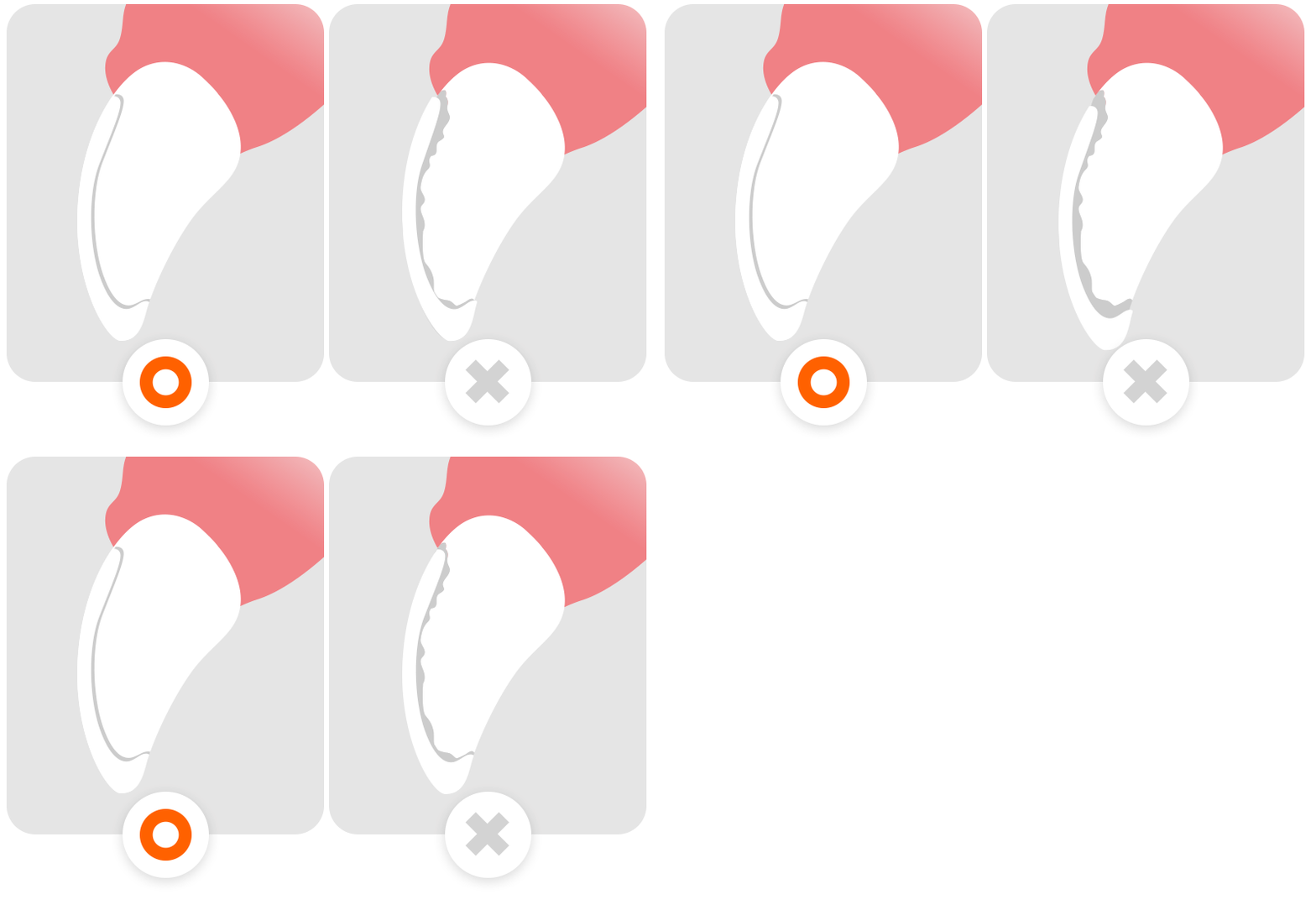
The key factor that determines veneer longevity and safety is not the name of the latest equipment, but the amount of remaining enamel. Returning to the tile analogy: the new tile (veneer) bonds most strongly and lasts longest when it is attached to smooth, waterproof tile (enamel).
If more tooth structure is reduced and a larger area of rough “cement wall” (dentin) is exposed, two risks increase:
First, bonding becomes weaker, raising the chance of debonding or marginal lifting.
Second, stimuli can travel through microscopic channels in dentin (dentinal tubules) directly toward the pulp, potentially causing chronic sensitivity.
If a tooth sits in a relatively ideal position within the arch, enamel reduction can often be minimized. And if the existing enamel has little damage (e.g., caries or wear), the long-term prognosis is more favorable. If teeth are severely crowded or misaligned, it may be better—rather than trying to solve everything with veneers alone—to consider orthodontic treatment together with veneers, as this can be a more tooth-preserving choice.
3. A “catching” sensation on the tongue—just unfamiliar, or something else?
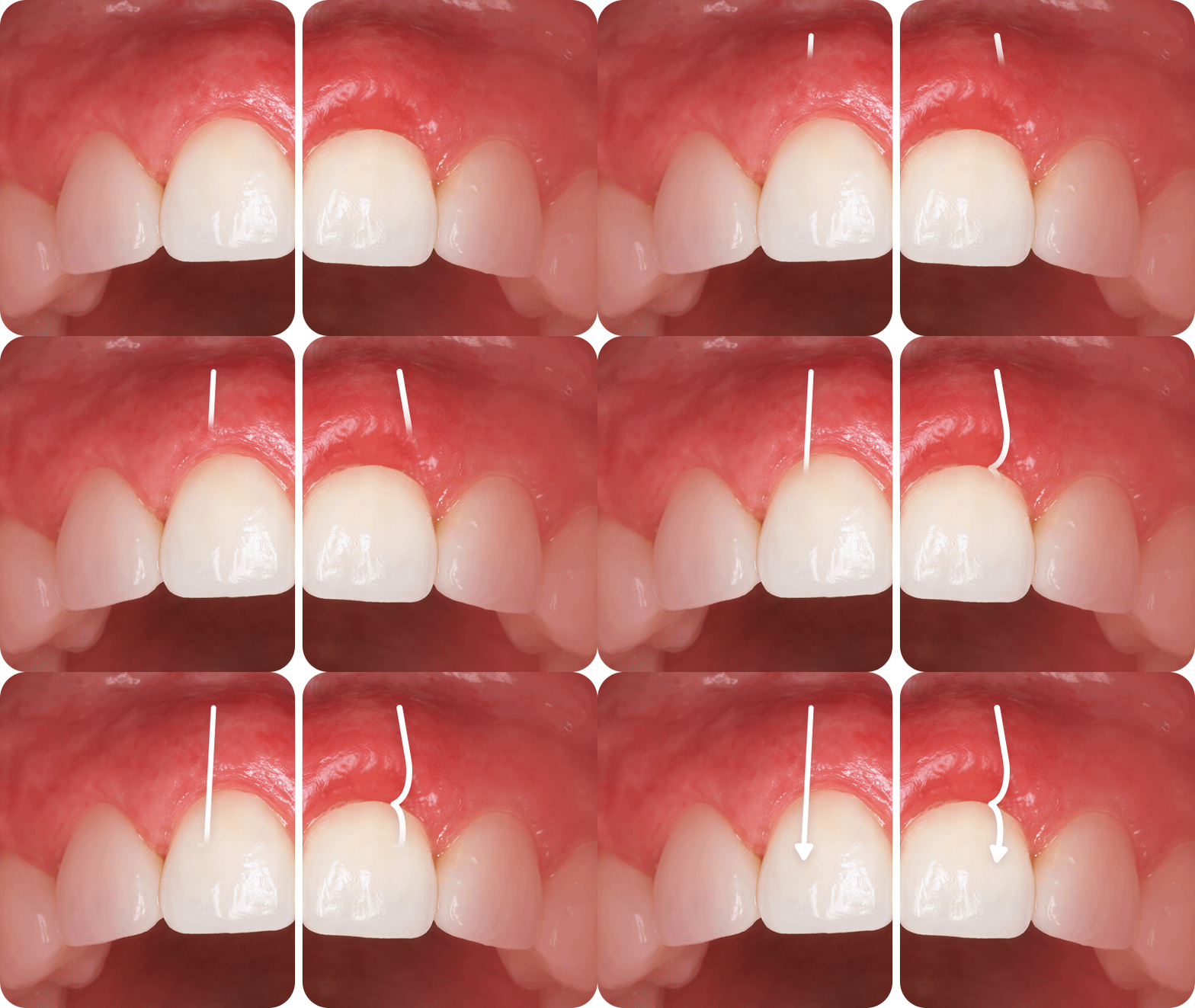
“It feels like something is filling up my mouth.”
A foreign-body sensation after veneers is common while your tongue and lips adapt to changes in tooth shape and thickness. But not all discomfort should be dismissed as “just adjustment.” If the cause is structural, it may not resolve with time.
In particular, discomfort that is felt in a specific spot may require a physical check. Use the table below to review your symptoms.
| Symptom | Suspected Cause | Required Action |
|---|---|---|
| Only a specific tooth contacts when chewing | Occlusal interference (high bite) | Consider micro-adjustment of bite height |
| Dental floss gets caught or shreds | Overcontouring (overhanging margin) | Modification of prosthesis shape required |
| Gums are swollen and bleeding | Residual cement | Cement removal and gum treatment |
A generally heavy, bulky feeling may fall within the adjustment range. However, if—like the examples in the table—something catches in a certain area or chewing feels uncomfortable, it’s better to inform your dental clinic rather than endure it.
4. No-prep veneers—can tooth damage really be close to “zero”?
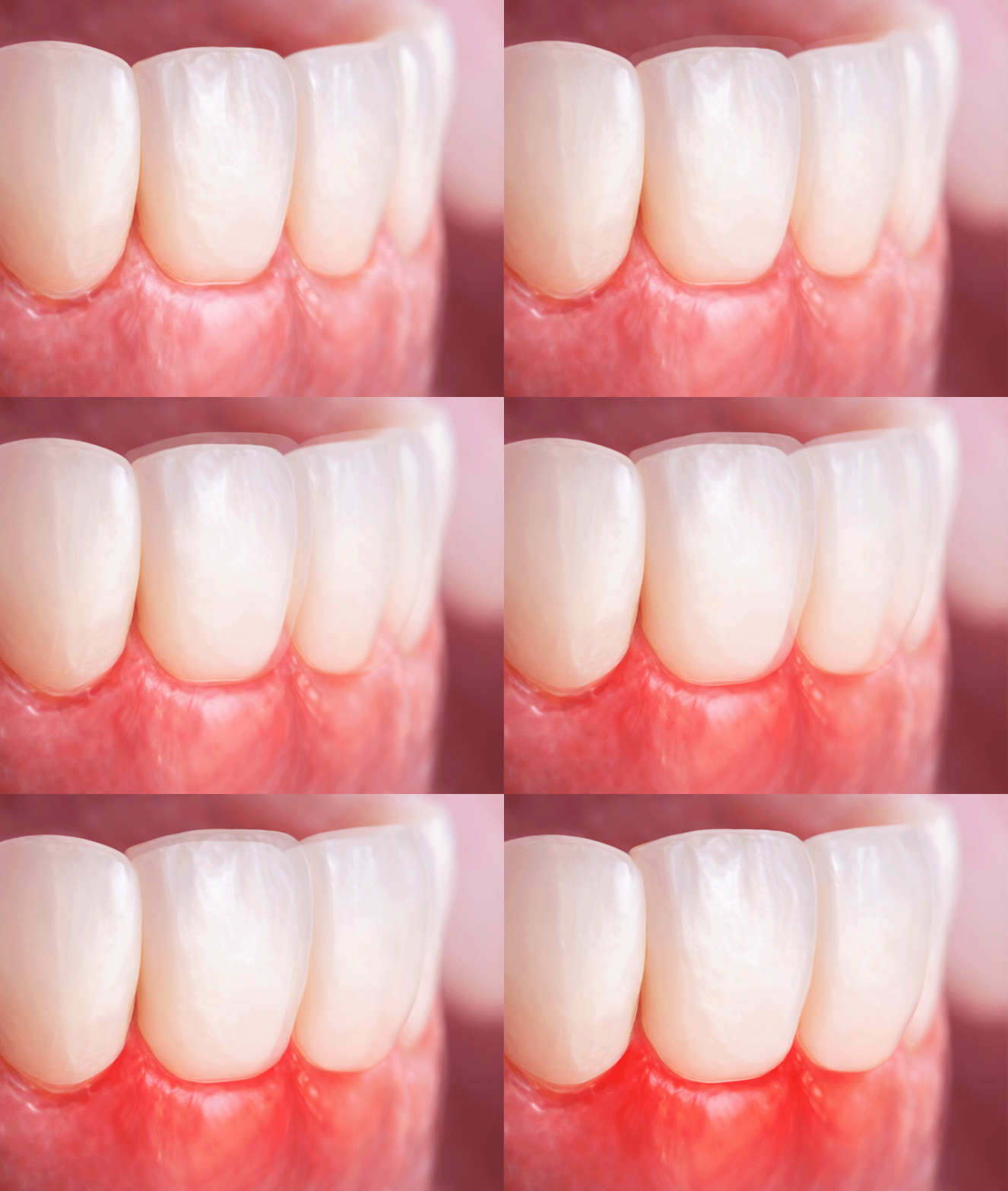
The term “no-prep” is appealing, but it isn’t the right answer for everyone. Not reducing the tooth means adding a new restoration on top of the existing tooth. Inevitably, the tooth becomes thicker.
This is where proper case selection (indications) matters.
If your teeth are naturally small or positioned inward (e.g., microdontia), adding thickness can still look natural and remain safe. But if your teeth are already large or protrusive, insisting on no-prep can create problems. Also, if worn or stained enamel is not removed, it may contribute to internal discoloration. Increased bulk can make teeth look more protrusive (reduced esthetics) or thicken the gingival margin area, increasing the risk of gingival inflammation.
Even with no-prep veneers, the bonding process remains critical. If saliva or moisture is not fully controlled (isolated) during bonding, discoloration or debonding can occur under the restoration—even if the tooth was not reduced. So rather than focusing only on “prep vs. no-prep,” it’s more important to judge whether (1) your tooth space allows no-prep and (2) fundamental bonding principles are being followed.
✅ No-prep veneer checklist
- Is there a risk that my mouth will look more protrusive after treatment (a “bulging” appearance)?
- Is the structure such that the gumline margin and restoration boundary can be finished smoothly?
- Is my tooth size appropriate for adding a restoration on top?
- Are there issues such as enamel contamination or staining?
5. What should a “pre-treatment exam” include to reduce side effects?
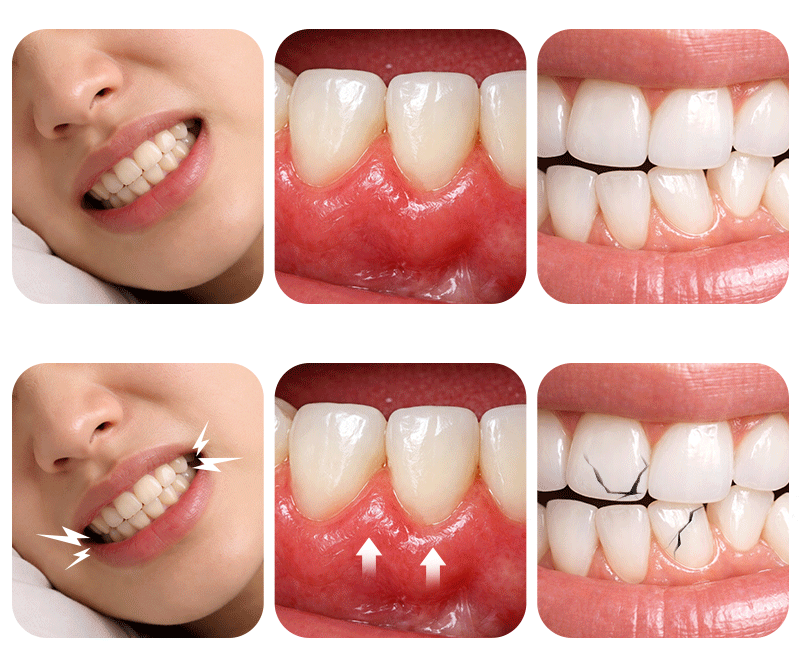
A practical way to improve satisfaction and reduce risk after veneers is to identify and address “risk factors” in advance. Beyond designing a prettier tooth shape, the clinician should confirm whether the restoration can withstand the oral environment.
For a safer procedure, check the items below beforehand:
- Bruxism/clenching habits: Strong forces during sleep are a major cause of restoration fracture. If you have this habit, a protective device (splint) may be needed.
- Gum health: If gums are swollen, it’s difficult to take accurate impressions. After swelling subsides, gaps can appear, so periodontal treatment should come first.
- Existing occlusion (bite relationship): How the upper and lower teeth meet affects restoration design and the required material strength.
6. Frequently Asked Questions (FAQ)
Q. My teeth feel sensitive when I drink cold water—how long should I wait?
Right after the procedure, sensitized teeth can react to cold stimuli. What matters more than the timeline is how symptoms change. If sensitivity decreases day by day, that’s a positive sign. But if pain worsens over time or you also feel pain with hot water, you should contact your dental clinic without delay to have it checked.
Q. It feels like one tooth hits first every time I chew.
If, after the anesthesia wears off, you feel that the bite is “high” (occlusal interference), a minor adjustment may be needed. If left unaddressed, excessive force can concentrate on that tooth, causing pain or increasing the risk of veneer fracture—so early evaluation is recommended.
Q. Why do my gums bleed or swell after veneers?
This can happen if the restoration margin presses on the gums (over-contouring) or if residual cement remains in the gingival sulcus/interproximal area. If bleeding continues even after careful brushing, you should have the area around the restoration checked.
Q. What symptoms mean I should consult or visit the clinic?
If sensitivity or foreign-body sensation does not improve and persists, or worsens over time, the cause should be evaluated. In particular, if pain is prominent only when chewing, or if you notice changes such as floss shredding and gum bleeding, professional diagnosis is essential.

You can summarize the criteria for judging post-veneer discomfort into three main points.
First, watch how sensitivity changes. If it eases over time, it may be part of adjustment—but if it intensifies or becomes spontaneous pain, a check is needed.
Second, distinguish the cause of the foreign-body sensation. Overall bulk may be adaptable, but catching in a specific area or a height discrepancy is something to confirm.
Third, preserving enamel is the key to long-term safety. Both insisting on no-prep unconditionally and excessive reduction should be avoided; maintaining an appropriate reduction amount suited to your tooth condition is important.
What you feel now may be a temporary phase as the restoration settles more securely. But if you have doubts, consulting your clinician rather than enduring it alone is a wise way to protect your teeth for the long term.
Sources
- Korea Disease Control and Prevention Agency (KDCA), National Health Information Portal: laminate veneer treatment information.
- Journal of Korean Academy of Prosthodontics (JKAP), Differences in maxillary central incisor reduction volume according to restoration design and margin location changes, 2011;49(2):152-160.
- Materials (MDPI), Risk Factors with Porcelain Laminate Veneers Experienced during Cementation: A Review, 2023;16(14):4932.
※ The copyright for all content on this blog belongs to medihi. Unauthorized copying, distribution, or derivative use is strictly prohibited, and violations may result in legal action without prior notice.
Recommended reads
 medihi