
The success of a veneer procedure depends less on what equipment is used and more on where and how it is bonded. Below are three practical criteria patients should check to achieve results that last and look natural.
“Will it suddenly pop off later?”
“What if it turns out too white and looks obvious?”
Many people considering veneers feel these kinds of worries. It’s natural to be concerned because the tooth often needs to be reshaped—and that change can’t simply be undone.
However, when clinicians evaluate the quality of veneers, the first thing they check is not the surface color. They first look at whether the boundary where the tooth and restoration meet (the margin) is precise, and whether the bonding surface is solid outer enamel.
If these fundamentals are not met, it can be difficult for veneers to last long—even if expensive materials are used. It’s like a building that looks impressive on the outside but has weak foundational work.
This article does not recommend any specific technique or clinic. Instead, it aims to give you clear criteria so you can judge for yourself what is safe and reasonable when you’re faced with choices in the consultation room.
1. Does a 3D scan automatically make everything perfect?
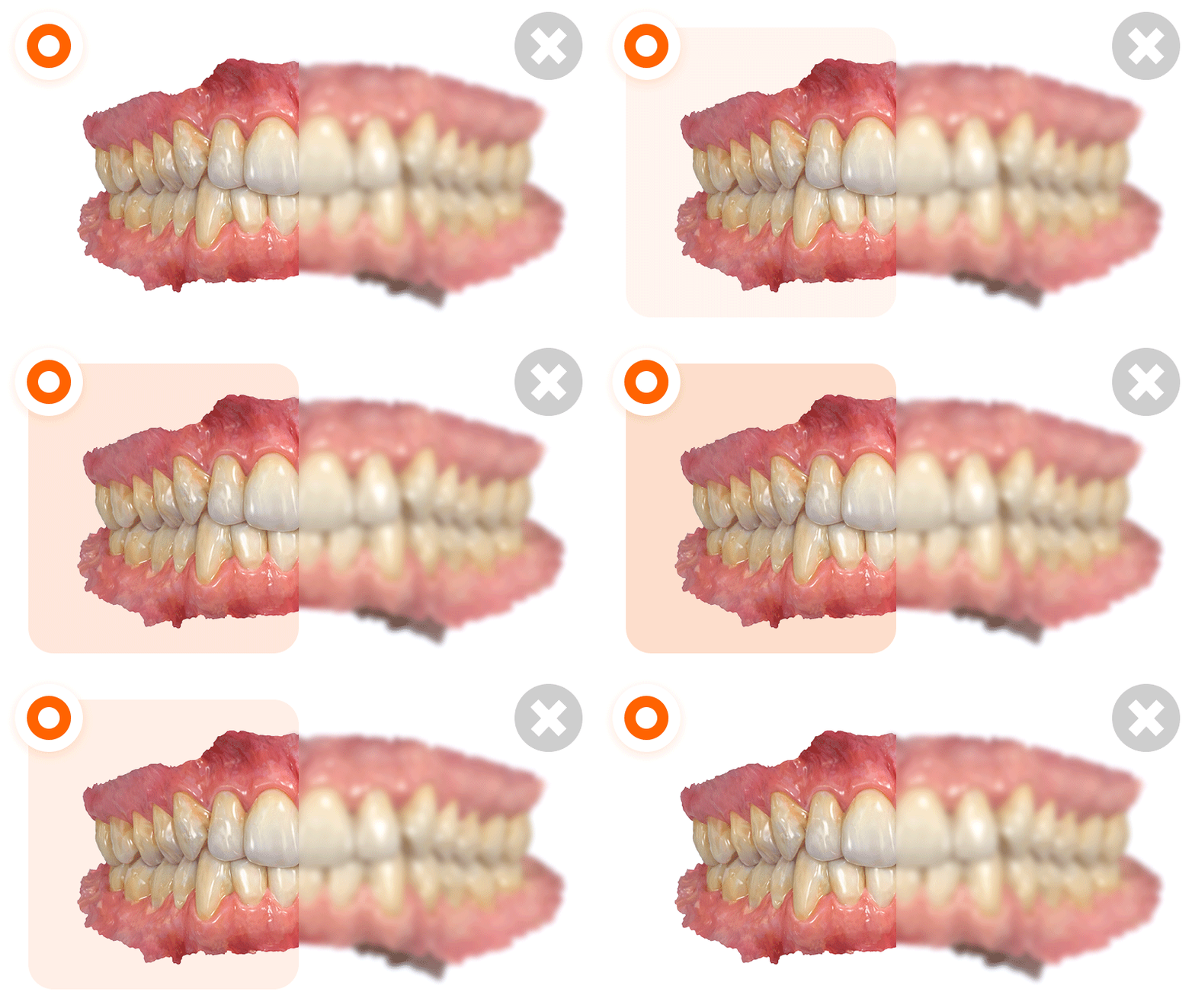
Recently, many clinics promote “digital veneers” and advertise intraoral scanners. But believing that scanning alone automatically produces perfect teeth can be risky. A scanner is only an input tool that reads tooth shape—it does not ensure the outcome by itself.
Think of it like photography. Even with an expensive high-performance camera (scanner), you won’t get a great photo if the lighting is poor or the photographer lacks skill.
Veneers are the same. Even with scan data, the clinician’s design and the dental
technician’s craftsmanship must be added to achieve a result that looks like your own teeth. In particular, if the gums are swollen or bleeding, the scanner may not capture details accurately—like taking photos on a foggy day.
So the key question is not “Do they use a scanner?” Instead, you should check: “Were the gums treated and stabilized before scanning?” and “Do they communicate precisely with the lab and revise the design carefully?”
2. Why “preserving enamel” is the key to long-term use
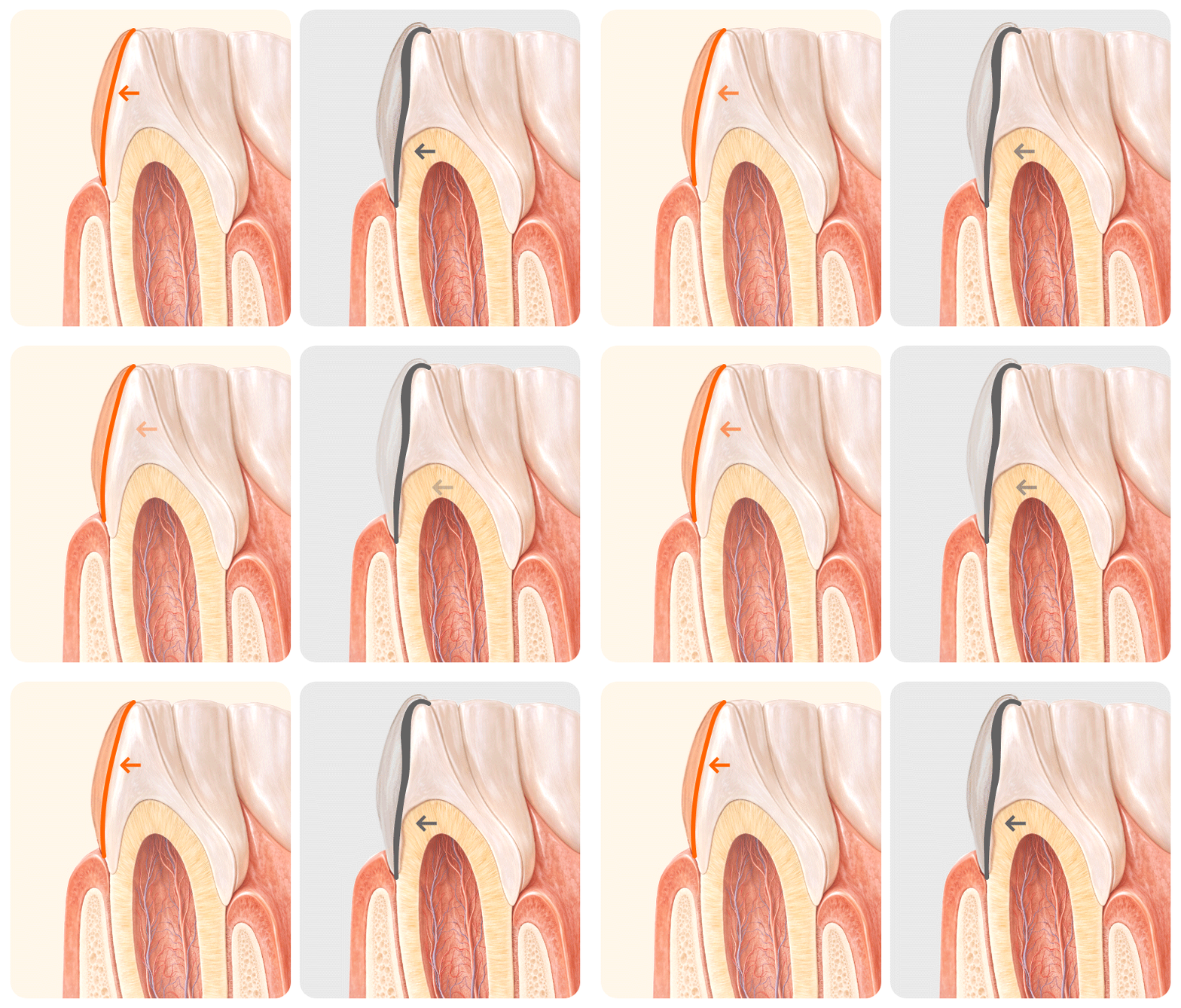
For veneers to remain firmly bonded for 10+ years, the most important factor is where they are bonded. To understand this, compare a tooth to bathroom tile (enamel) versus a cement wall (dentin).
Enamel, the outermost layer of the tooth, is smooth and hard like tile. When a veneer is bonded to enamel, the adhesive tends to form a stronger bond. But if too much tooth structure is reduced and the inner dentin becomes exposed, the situation changes. Dentin is more like a cement wall—more porous and moisture-containing—so bonding conditions can become more demanding. Studies report a tendency for failure risk to increase as dentin exposure increases.
In other words, veneer longevity is often more closely related to how much enamel is preserved than to how thin the veneer is made. This is also why minimal reduction—often around 0.3 mm to 0.7 mm—is commonly recommended: to protect that “tile layer,” the enamel.
If your tooth alignment is significantly irregular and the reduction would inevitably be large, it may help to compare whether crown treatment could be safer than veneers.
3. Could “no-prep” veneers harm the gums?
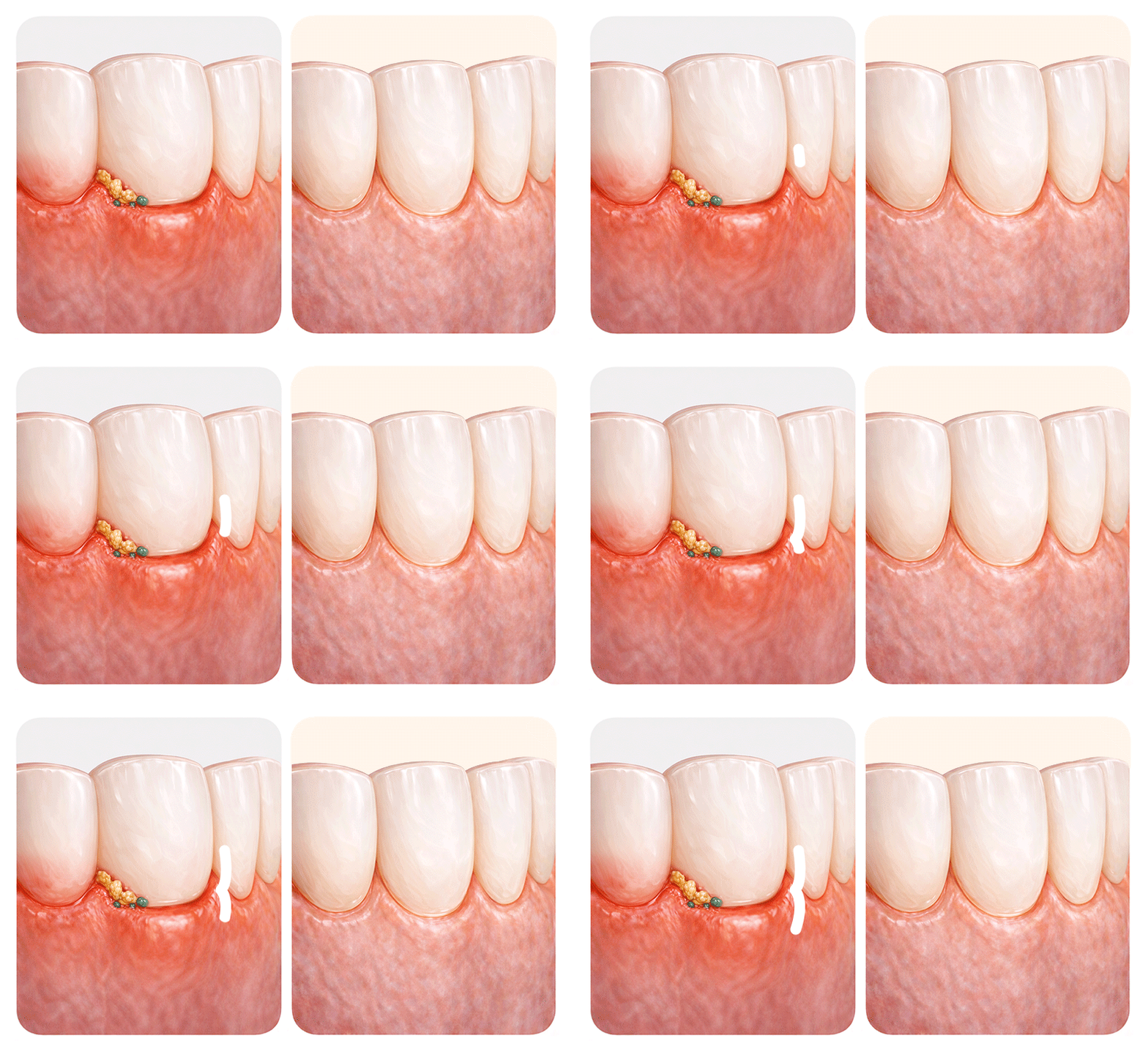
A “no-prep” (prep-less) approach—meaning “no tooth shaving at all”—sounds appealing. It can feel ideal because it preserves your natural tooth structure. But it is not the right answer for everyone. No-prep is typically limited to cases where there is space between teeth or where teeth are positioned inward and volume needs to be added.
What if teeth are protrusive or the alignment is uneven, but the case is still done with no-prep? Adding a layer on top of the tooth can make the mouth look more protruded.
A bigger issue is the gumline. If a tiny ledge (step) forms where the tooth meets the gum, food can get trapped and brushing can become difficult. This can lead to gums that swell frequently or bleed.
So rather than chasing the word “no-prep,” it’s important to consider whether minimal reduction is actually better for your gum health. It’s also worth considering that a very small refinement—around 0.3 mm—may be safer long-term than forcing a no-prep approach.
4. Hidden conditions for bonding that lasts 10+ years
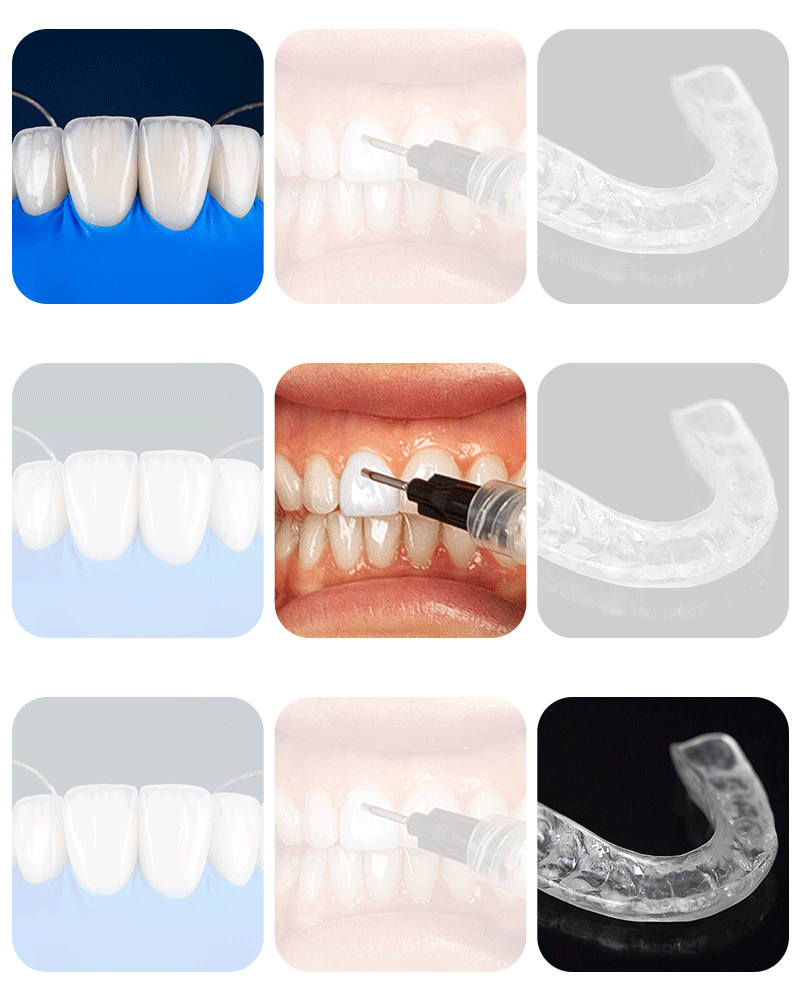
For veneers to stay in place long-term without suddenly debonding, strict “bonding principles” are required. Let’s bring back the tile (enamel) analogy.
Even with excellent adhesive, if the tile surface is wet or oily, it can come off quickly. The mouth is constantly wet with saliva, so moisture control is crucial. That’s why isolation (blocking moisture) is a core step.
Using devices such as a rubber dam to isolate the tooth and keep it thoroughly dry helps the adhesive set more reliably. In addition, both the inner surface of the restoration and the tooth surface require appropriate pretreatment, and the standard sequence must be followed.
This process is complex and time-consuming. If the price is unusually low or the clinic emphasizes only that it “finishes quickly,” it may be worth checking whether these essential bonding steps are being followed carefully.
✅ Items worth confirming during consultation
- Whether they use isolation devices (rubber dam, etc.) to prevent saliva contamination during bonding
- Whether they perform the correct bonding pretreatment for both the inner restoration surface and the tooth surface
- If you grind your teeth, whether they recommend a protective device (night guard)
5. How can you prevent the “the color looks unnatural” failure?
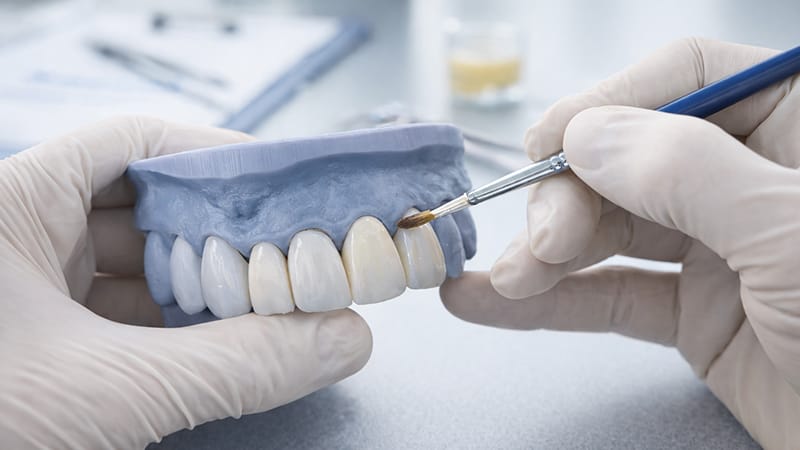
After veneers, some people complain that “the color looks dull” or “it looks like a Go stone.” This often comes from differences in how the restoration is made.
A restoration milled from a single block by machine can be strong, but the color may look flat and less translucent. Natural teeth have layered optical properties—more translucent on the outside with a more yellowish tone inside—creating depth. If you want a more natural result, a layering technique may be advantageous: a technician builds up translucent porcelain layer by layer over a milled framework.
For this to work well, communication is essential. Instead of simply saying “Make it brighter,” it can help to take photos and record your tooth translucency and color distribution like a map (shade map) and share it.
In the end, what matters more than “what machine is used” is how carefully your tooth information is documented and communicated—because that largely determines how natural the result looks.
6.Frequently Asked Questions (FAQ)
Q. Do veneers last for life once you get them?
They are not a long-term, unchanging treatment. Studies report that about 95% remain successful at 10 years and about 90% at 15 years. However, that assumes good maintenance. Lifespan can vary depending on diet, teeth
grinding, and gum condition, and replacement may be needed over time.
Q. My teeth are crooked—can I do no-prep?
If alignment is uneven or teeth are protrusive, no-prep is often not recommended. If you add material on top of protruding teeth, they can look even more protruded and gum health may be compromised. In these cases, creating space with minimal reduction or doing limited orthodontic treatment first may be safer.
Q. Is tooth sensitivity after the procedure a side effect?
Temporary sensitivity can occur due to stimulation from tooth refinement and the bonding process. It often improves over time, but the duration and intensity vary widely by individual. If symptoms persist for a long time or worsen, a dental evaluation is needed.
Q. When is a good time to come in for a consultation?
Consider a consultation if you have gaps between the front teeth that affect pronunciation, or if you feel less confident when you smile. Also, if the gums around existing veneers look red, swollen, or bleed, it may be time to have the restorations checked.

The key to successful veneers is not equipment, but principles. Please remember the three criteria summarized today.
First, minimal reduction that preserves as much enamel (tile) as possible is what determines bonding strength.
Second, thorough moisture control and standard bonding protocols largely determine longevity.
Third, digital tools are only tools—precise design and communication are what create natural-looking results.
Rather than choosing what is merely fast or inexpensive, choose a place that follows fundamentals while protecting the original health of your teeth. I hope these criteria help you protect your bright smile.
Sources
- National Health Information Portal medical information, esthetic prosthetics (veneers), Korea Disease Control and Prevention Agency.
- The Korean Academy of Prosthodontics, common knowledge and guidelines for dental prosthetics.
- Komine et al., Clinical performance of laminate veneers: A review of the literature, PubMed, 2024.
※ The copyright for all content on this blog belongs to medihi. Unauthorized copying, distribution, or derivative use is strictly prohibited, and violations may result in legal action without prior notice.
Recommended reads
 medihi