

In This Article
Even if you’re diagnosed with a “ruptured” lumbar disc, not everyone needs surgery. Pain can improve as the herniated disc material is naturally resorbed or as surrounding inflammation decreases. In this post, we’ll look at how disc resorption happens, how long conservative treatment is typically tried, the role of non-surgical procedures, and warning signs that require prompt medical evaluation.
1. How can a lumbar herniated disc be naturally resorbed?
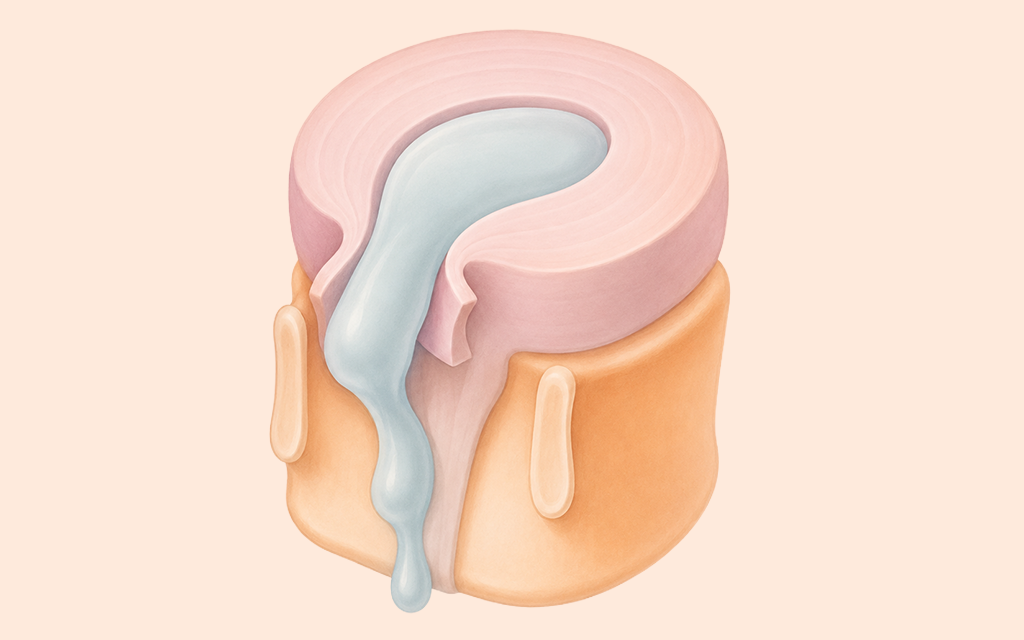
Natural resorption of a lumbar herniated disc is the process in which immune cells break down the extruded tissue and the disc shrinks as its water content decreases. The body recognizes the displaced disc material as a foreign substance and triggers a response to remove it.
At first, pain can be severe due to inflammation around the disc, but this reaction is also linked to the resorption process. As new blood vessels form nearby, immune cells called macrophages gather and break down the extruded tissue.
✅Natural resorption in 3 stages
- Inflammation and new blood vessel formation: Along with inflammation, blood vessels form to allow immune cells to reach the area.
- Breakdown by macrophages: Accumulated macrophages fragment the extruded disc material so it can be absorbed.
- Reduced water content and shrinkage: As the tissue loses water, the overall volume may decrease.
2. Why a “ruptured” disc may actually resorb more easily
Disc material that has extruded significantly through the outer layer surrounding the disc may be more likely to undergo natural resorption than tissue that is only mildly bulging. This is because a larger extruded fragment has more contact with nearby blood vessels, making it easier for immune cells to access it.
If the disc fragment has completely separated, this immune response may become more active. On the other hand, when the disc is only partially protruded, even if resorption is relatively limited, symptoms can still improve as inflammation and nerve irritation decrease with medication and physical therapy.
However, even if an MRI shows the disc has become smaller, that does not mean all pain will disappear. Treatment decisions are made by considering not only changes in disc size but also the actual pain level and neurological symptoms.
3. How long should conservative treatment be continued?
If there is no progressive muscle weakness or bowel/bladder dysfunction and the pain is tolerable, the first 4–6 weeks after onset can be monitored with conservative treatment. The goal during this period is to manage pain while restoring movement and daily function.
Inflammation and pain are controlled with medication and physical therapy. Bed rest should be kept short—about 1–2 days—and it is generally recommended to walk on flat ground within a pain-tolerable range to help maintain the muscles that support the lumbar spine.
In many patients, pain may decrease within 6–12 weeks, but it can take several months before disc resorption is confirmed on imaging. If walking becomes more difficult or toe sensation becomes dull, you should inform your clinician and reassess the treatment plan. If pain becomes severe enough to interfere with daily life, the current treatment should also be re-evaluated.
4. What is the role of nerve blocks and percutaneous epidural neuroplasty?
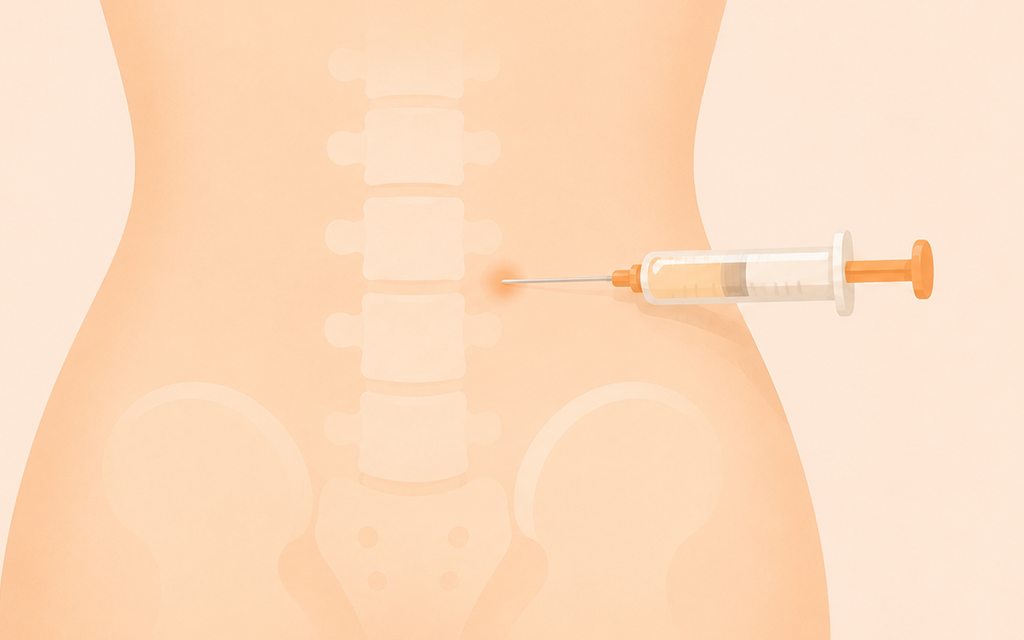
Nerve blocks and percutaneous epidural neuroplasty are non-surgical treatments that help control surrounding inflammation and pain—they do not directly remove the herniated disc. They may be considered when medication and physical therapy alone still make it difficult to walk or sleep.
A nerve block uses a steroid injection to reduce inflammation and swelling, easing radiating pain from the buttock down the leg and supporting rehabilitation. Percutaneous epidural neuroplasty involves inserting a thin catheter through the tailbone area to separate adhered tissue and wash out inflammatory substances.
However, repeating steroid injections too frequently or excessively may weaken surrounding tissues or increase the risk of endocrine-related side effects. For this reason, the interval and number of procedures should be decided in consultation with a clinician, and after treatment, changes in pain and walking function should be monitored—not only disc size.
5. Emergency warning signs that may require prompt surgical evaluation
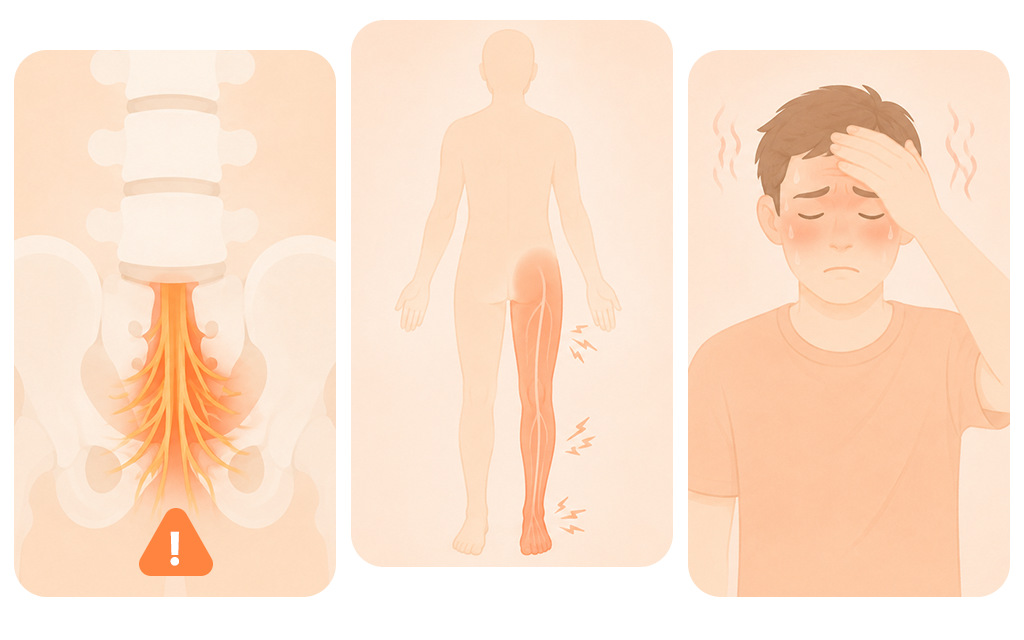
If you develop bowel/bladder control problems or worsening leg weakness, you should seek medical care promptly. These may be signs of severe nerve compression, and delayed treatment can leave lasting nerve damage.
✅Signs that require urgent evaluation
- Bowel/bladder dysfunction: Urine or stool leakage, difficulty urinating or defecating, and numbness around the groin and buttocks. This can be a warning sign of cauda equina syndrome.
- Progressive leg paralysis/weakness: Difficulty lifting the ankle or toes, or the toes catching on the ground while walking (foot drop).
- High fever and severe night pain: Unexplained high fever or severe low back pain at night may require evaluation for other conditions such as spinal infection or tumor.
Bowel/bladder dysfunction or progressive paralysis requires urgent assessment and consideration of whether surgery is needed. The decision is made by integrating MRI findings, pain severity, and neurological examination results.
6. Frequently Asked Questions (FAQ)
Q. If the disc looks large on MRI, can I delay surgery?
If there is no cauda equina syndrome or progressive muscle weakness, initial conservative treatment may be considered. The treatment plan is determined by considering imaging findings together with pain and neurological exam results.
Q. How long does natural disc resorption take?
The time it takes to confirm disc resorption on imaging varies by individual and may take several months. Pain may decrease within 6–12 weeks during conservative treatment.
Q. Can I get a nerve block injection whenever I have pain?
Excessive repetition of steroid injections can increase the risk of tissue weakening and endocrine-related side effects. The dosing interval and number of injections should be discussed with a clinician.
Q. What should I do if my leg suddenly becomes weak during treatment?
If sudden leg weakness makes walking difficult, or if bowel/bladder symptoms occur, this may be an emergency warning sign. Stop watchful waiting and seek prompt medical evaluation to assess whether surgery is necessary.
This health content has been reviewed by medical professionals, compiled from authoritative domestic and international sources, and is regularly updated in accordance with the latest clinical guidelines.
Sources
- Yonsei University College of Medicine (Ji et al.), Clinical observation of percutaneous epidural neuroplasty (PEN) in lumbar disc herniation, *Yonsei Medical Journal*, 2015
- Chiu et al., The probability of spontaneous regression of lumbar herniated disc, Clinical Rehabilitation, 2015
- Zhong et al., Incidence of Spontaneous Resorption of Lumbar Disc Herniation, Pain Physician, 2017
※ The copyright for all content on this blog belongs to medihi. Unauthorized copying, distribution, or derivative use is strictly prohibited, and violations may result in legal action without prior notice.