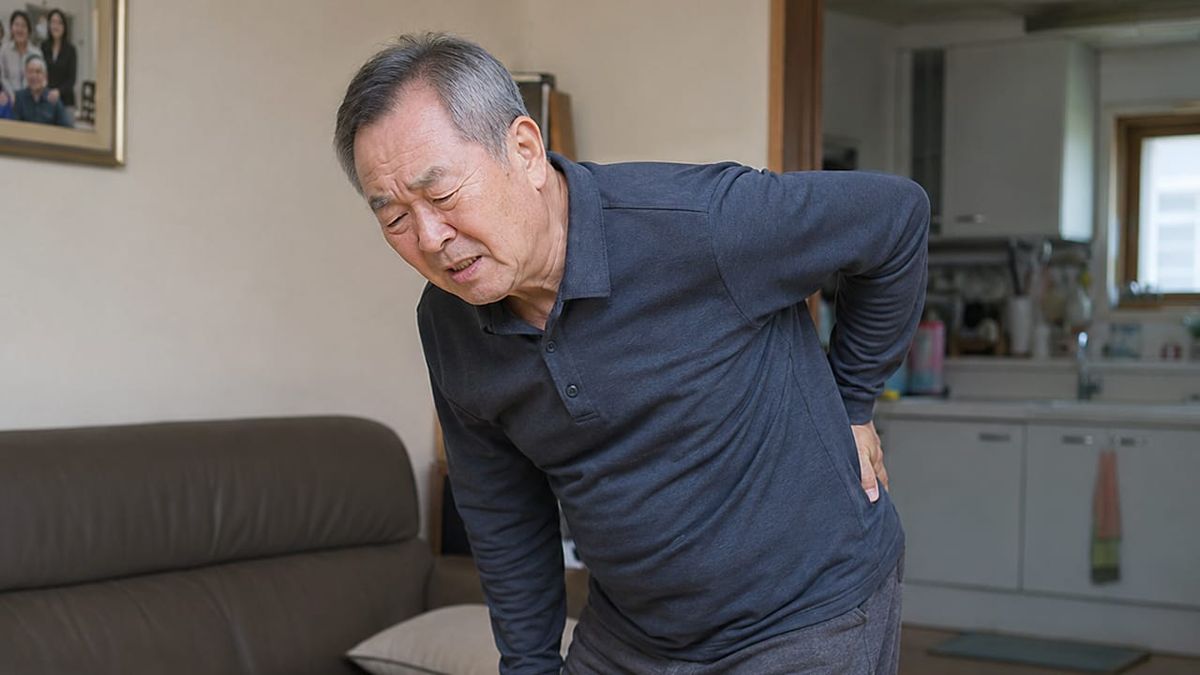

If your pain is severe enough to wake you at night, or it persists even when you’re lying down, it may not be a typical disc problem or simple muscle strain—it could point to an infection or a tumor. Rather than brushing it off, it’s important to evaluate your condition using objective criteria that stratify risk.
“My lower back hurts so much at night that it wakes me up.”

Many people who come to the clinic struggle with lower back pain severe enough to wake them from sleep. When we think of low back pain, it’s easy to assume a herniated disc or simple muscle strain. However, if night pain or pain at rest is accompanied by other warning signs suggesting a serious condition, it may indicate 'Spinal Tumors or Infections' rather than an ordinary disc or muscle problem.
'Spinal Tumors or Infections' refers to a clinical situation in which both spinal infection and spinal tumor (including metastasis) must be considered and differentiated. Below, we’ll review the signs that help distinguish routine low back pain from 'Spinal Tumors or Infections'.
1. Why are night-time low back pain and pain at rest considered a “red flag”?

Night pain doesn’t simply mean “it hurts at night.” It refers to pain that wakes you up, or pain that worsens even while lying down and disrupts sleep. Pain at rest means the pain continues even when you are resting, regardless of activity.
Common muscular or ligament-related low back pain often changes depending on posture or activity level. In contrast, infections or tumors can cause pain that feels unrelated to posture or movement. That’s why night pain and pain at rest are classified clinically as internal red flags within the spine.
It’s like a fire alarm going off inside a building in the middle of the night when everyone is asleep. It may not be harmless “cooking smoke”—there could be a real problem inside the building, such as inflammation or a tumor.
That said, night pain alone does not allow us to conclude infection or tumor. Night pain can still occur with disc or joint problems. Conversely, infections or tumors may occur without night pain. What matters is combination-based risk assessment—whether it’s a single warning light or multiple warning lights turning on together.
2. If you’re immunocompromised, why do clinicians approach spinal infection more cautiously?

Immunosuppression is not limited to a small group of people. It can include those with diabetes, those undergoing chemotherapy, or those taking steroids long-term. The same applies to people taking immunosuppressive medications for rheumatologic diseases.
There’s a reason spinal infections are more challenging when immunity is reduced: even if an infection is present, classic symptoms like high fever may not be obvious.
Just as a fire may not trigger an alarm if the heat sensor is broken, a weakened immune system may fail to produce a noticeable fever response even when inflammation develops in the spine. In such cases, it’s difficult—and risky—to assume “no fever means no infection.”
If you have unexplained generalized weakness or persistent night-time worsening, you should be cautious. Some people feel reassured simply because they don’t have a fever, but that can be a dangerous assumption. If night pain continues even without fever, it is safer to also evaluate for possible infection.
✅Night pain checklist for immunocompromised patients
- Do you have diabetes, or are you having difficulty controlling your blood sugar?
- Are you taking steroids or immunosuppressive medications long-term?
- Even without fever, do you have unexplained chills or a sense of weakness?
- Has waking up at night due to back pain become more frequent recently?
3. Spinal infection vs metastatic spinal cancer: why is it hard to tell based on pain alone?

If we focus only on the pattern of pain that wakes someone at night, spinal infection and Spinal Tumors or Infections can overlap. In both cases, pain may persist regardless of posture or activity, and many people feel it worsens at night. That’s why it’s difficult to distinguish the two based on the “feel” of pain alone.
Clinicians assess risk by bundling pain together with other signals. If pain is accompanied by the following, the risk level may be considered higher:
- Immunocompromised status (e.g., diabetes, chemotherapy)
- Fever or chills
- Unexplained weight loss
- Past or current history of cancer
Many people ask whether less severe pain means lower risk. Clinically, however, risk is not judged by pain intensity alone. The pattern of pain and accompanying warning signs together guide the assessment. This is a key principle for not missing Spinal Tumors or Infections.
4.If the X-ray is normal, can you feel reassured? When MRI is considered

When someone has low back pain, an X-ray is often the first test performed. X-rays are very useful for checking overall bony alignment or obvious structural problems. However, when red flags are present, an X-ray alone may not be enough to rule out infection or an early-stage tumor.
An X-ray is like looking at a building from the outside. You can see whether there’s a major crack in the exterior wall, but you can’t see what’s happening inside. A spinal MRI, on the other hand, is like a thermal imaging camera that can look deep inside the building.
It can show subtle inflammatory lesions in soft tissue and even within the bone marrow. Early on, an X-ray may appear normal even while inflammation is progressing internally. When multiple red flags overlap, a more conservative approach with advanced imaging may be necessary.
If night pain is clear and is accompanied by immunosuppression, fever, weight loss, or a cancer history, evaluation including spinal MRI (with contrast if needed) may be considered. In particular, if you develop leg numbness/tingling or changes in bowel or bladder control, early neurologic evaluation is important.
✅ Items to check before your appointment
- Does the pain fail to improve—and even worsen—when lying down and resting?
- Does the pain wake you up or make it hard to stay asleep?
- Do you have leg weakness or reduced sensation?
- Have you had unexplained weight loss or severe fatigue recently?
5. Treatment differs not by “eliminating pain,” but by “setting the right goal”

If test results confirm a spinal infection or a spinal tumor, the overall treatment framework changes completely. That’s why it’s important to quickly classify what category your current pain falls into. Night pain and pain at rest help accelerate that classification.
For pyogenic spondylitis, the basics involve identifying the causative organism and then providing targeted antibiotic therapy. For tuberculous spondylitis, months of consistent combination anti-tuberculosis treatment may be discussed. Because treatment can be prolonged, monitoring for adverse effects and adjusting daily-life plans often follow.
For spinal tumors, treatment is further individualized based on lesion location and overall systemic condition. Through multidisciplinary discussion, radiation therapy, systemic therapy, surgery, and procedures may be combined in various ways. The approach is structured by dividing goals—pain control, prevention of neurologic deterioration, and preservation of function.
Rather than concluding that night pain is “just a disc,” it’s more important to first check the combination of risk signals. Early confirmation using safer criteria can reduce unnecessary anxiety and serve as the starting point for a more reliable treatment plan.
6. Frequently Asked Questions(FAQ)
Q. My back hurts only at night, but I can function fine during the day. Is that a warning sign?
Even if you can forget the pain during the day, night pain severe enough to disrupt sleep is not something to dismiss lightly. However, night pain alone does not confirm infection or a tumor. Risk is assessed by also considering accompanying signals such as immunosuppression, weight loss, and a history of cancer.
Q. Is spinal infection possible even without fever?
Yes. Spinal infections can occur without a clearly noticeable fever. In particular, people with reduced immunity—such as those with diabetes or those taking immunosuppressive medications—may have a blunted fever response, so it’s important to evaluate the pain pattern together with other warning signs.
Q. If I’m immunocompromised (diabetes/long-term steroid use), what additional tests are considered?
If infection is suspected, blood tests to check inflammatory markers and blood cultures to identify the causative organism may be discussed first. If red flags such as night pain are present, an X-ray alone may be insufficient, and advanced evaluation such as spinal MRI may be additionally considered.
Q. When should I seek medical consultation or visit a hospital sooner?
If night pain or pain at rest persists along with immunosuppression, fever, weight loss, or a cancer history, early evaluation may be helpful. In particular, if you develop leg weakness, reduced sensation, or changes in urinary or bowel control, it’s advisable to seek evaluation without delay.

The first criterion for evaluating night-time low back pain is not an immediate diagnosis, but whether the pattern is severe enough to wake you from sleep. The second criterion is whether the pain occurs together with immunosuppression, weight loss, a history of cancer, or neurologic abnormalities. The third criterion is that when these red flags overlap, you should not rely on X-ray alone and should consider advanced evaluation such as MRI.
What you’re experiencing does not automatically mean an irreversible situation. However, if you interpret your body’s signals using the right criteria, you can reduce vague anxiety while moving toward a safer path of care.
Sources
- Korea Disease Control and Prevention Agency (KDCA). Tuberculosis information (guidance on diagnosis and treatment of tuberculosis).
- National Cancer Information Center (NCIC). Cancer information (guidance on metastasis and bone metastasis).
- Infectious Diseases Society of America (IDSA). Clinical Practice Guidelines for the Diagnosis and Treatment of Native Vertebral Osteomyelitis in Adults. Clinical Infectious Diseases. 2015.
※ The copyright for all content on this blog belongs to medihi. Unauthorized copying, distribution, or derivative use is strictly prohibited, and violations may result in legal action without prior notice.
Recommended reads
 medihi