

In This Article
During menopause, menstrual cycles and bleeding patterns can change, but not all bleeding should be considered a natural transition. In particular, any new bleeding that occurs after 12 months have passed since the last period should be evaluated for a cause—even if the amount is small. This article summarizes how to differentiate abnormal bleeding during menopause, the typical order of tests, and when it is safe to begin Korean medicine treatment.
1. Menopausal bleeding—can it be considered a normal change?
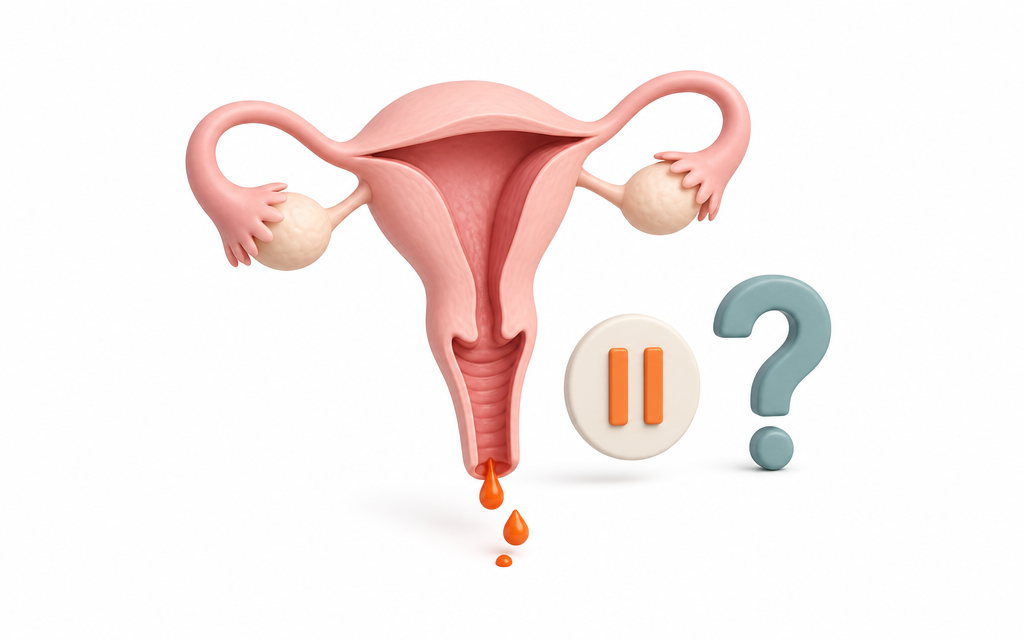
As menopause approaches, changes in ovarian function can increase anovulatory bleeding, and menstrual timing or flow may become irregular. However, structural causes—such as endometrial polyps, uterine fibroids, adenomyosis, or endometrial thickening/hyperplasia—can also lead to similar bleeding.
It is difficult to identify the cause based only on the color of the blood or how it looks on a pad. If you have metabolic conditions such as obesity or diabetes, or a family history of endometrial cancer, risk should be assessed together. Therefore, if bleeding occurs that is different from your usual pattern, it is safer to confirm the condition of the uterus through an exam and imaging rather than dismissing it as simple menstrual irregularity. During the visit, clinicians will also check whether the bleeding is recurring and whether it differs from your usual period pattern.
2. Why does spotting after menopause require evaluation?
Menopause is generally defined as having no menstrual periods for 12 consecutive months after the last menstruation. Any new vaginal bleeding after that point—even a small amount of brown spotting—should be evaluated to rule out conditions such as endometrial hyperplasia or tumor-related disease.
During the menopausal transition (perimenopause), irregular bleeding is relatively more likely due to hormonal fluctuations, but structural causes should be ruled out first before concluding it is functional bleeding. After menopause, it is safer to identify the cause rather than simply observing because the bleeding seems minimal. Even with similar bleeding, evaluation criteria may differ depending on whether it occurs before or after menopause and whether it recurs. Even if the bleeding stops temporarily, newly started bleeding after menopause still warrants evaluation.
3. What kinds of bleeding require prompt medical care?
If bleeding is heavy or if new bleeding appears after menopause, prompt evaluation is needed. It is difficult to judge the condition inside the uterus based only on color or the presence of pain, and if anemia or reduced daily functioning is present, faster confirmation is even more important.
✅ Bleeding warning signs that need prompt care
- Bleeding heavy enough to soak a large pad within 1–2 hours, or accompanied by dizziness or fainting
- New brown discharge or light bleeding after 12 months or more without periods
- Repeated bright-red bleeding after intercourse, or vaginal discharge mixed with a reddish tint
If you are taking tamoxifen or using anticoagulants, be sure to mention even small changes in bleeding during your visit.
4. In what order are tests done for abnormal bleeding?
Evaluation of abnormal bleeding during menopause begins with medical history and a physical exam, followed by transvaginal ultrasound, and—if needed—endometrial biopsy or hysteroscopy. First, clinicians confirm when the bleeding started, how long it lasted, the amount, whether there are clots, and what medications you take, and they examine the actual source of bleeding.
✅ Tests that may follow depending on the situation
- Transvaginal ultrasound: Checks uterine structure, endometrial thickness, and whether polyps or fibroids are present.
- Endometrial biopsy: Collects endometrial cells to assess for precancerous changes or malignancy.
- Hysteroscopy: Uses a camera to directly examine the inside of the uterus and, if needed, remove lesions at the same time.
If risk factors such as obesity or diabetes are present, or if the endometrium appears abnormally thick on ultrasound, additional testing may be considered. Whether to proceed with biopsy is determined by the clinician based on both risk level and ultrasound findings.
5. When is it safe to start Korean medicine treatment?

When the cause of bleeding is identified first, the direction of Korean medicine treatment can be set more safely. After evaluating for urgent structural lesions or the possibility of malignant disease, Korean medicine pattern identification can be used to set treatment goals for functional bleeding without organic abnormalities and for accompanying symptoms such as hot flashes/facial flushing or sleep discomfort.
In Korean medicine, treatment direction is individualized by integrating not only bleeding patterns but also accompanying symptoms such as fatigue, sleep, heat sensations, and digestive status. Acupuncture and herbal prescriptions can be adjusted by monitoring these conditions and the patient’s response.
However, Korean medicine assessment does not replace ultrasound or biopsy for determining whether endometrial hyperplasia or tumors are present. If bleeding patterns change suddenly or the amount increases during treatment, the uterine condition should be re-evaluated.
6. Frequently Asked Questions (FAQ)
Q. It has been a year since my last period—if I have a small amount of bleeding, do I need testing?
If new bleeding occurs after 12 months or more without menstruation, it should be evaluated for a cause even if the amount is small. Postmenopausal bleeding is best checked with an exam and ultrasound.
Q. If the bleeding stopped after a few days, can I skip going to the hospital?
Bleeding stopping does not mean a structural cause has disappeared. If it recurs or is different from your previous pattern, it is safer to confirm the cause.
Q. If the ultrasound is normal, is a biopsy unnecessary?
Ultrasound alone cannot detect all cellular changes. If there are risk factors such as obesity, diabetes, tamoxifen use, or recurrent bleeding, additional testing may be considered.
Q. What should be confirmed before starting treatment at a Korean medicine clinic?
It is important to first evaluate the cause of bleeding to check for urgent structural lesions. Then, based on the results, it is safer to establish a Korean medicine treatment plan.
This health content has been reviewed by medical professionals, compiled from authoritative domestic and international sources, and is regularly updated in accordance with the latest clinical guidelines.
Sources
- Korea Disease Control and Prevention Agency (KDCA) National Health Information Portal, health information on abnormal uterine bleeding and conditions in menopausal women, year not specified.
- National Cancer Information Center, risk factors for endometrial cancer and the clinical importance of postmenopausal bleeding, year not specified.
- Shim et al., Trends in the incidence and survival outcomes of endometrial cancer in Korea: A nationwide population-based cohort study, Journal of Gynecologic Oncology, 2024.
※ The copyright for all content on this blog belongs to medihi. Unauthorized copying, distribution, or derivative use is strictly prohibited, and violations may result in legal action without prior notice.