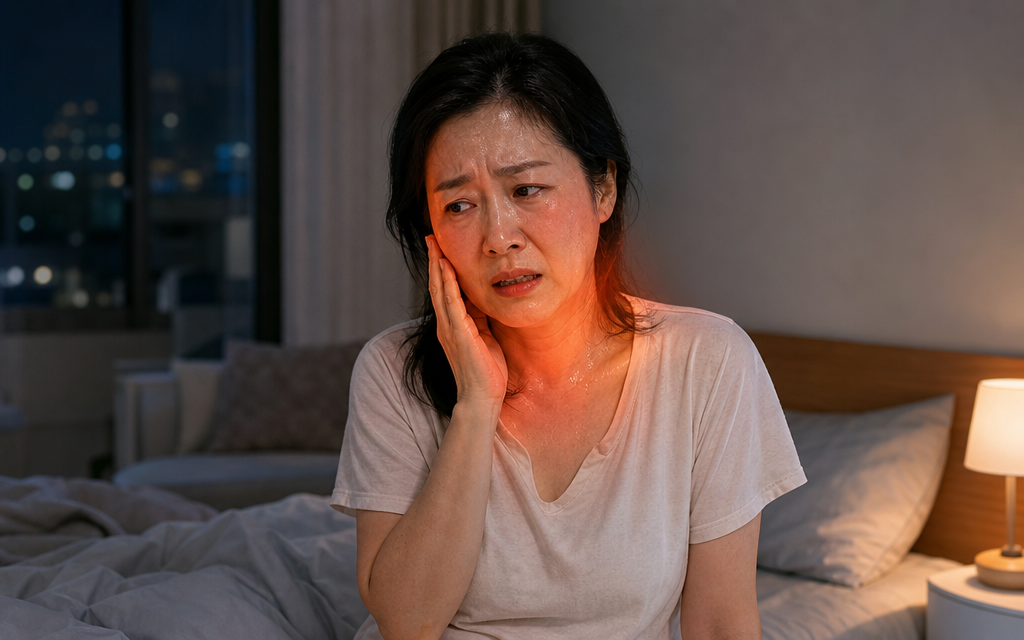

A menopause diet is not about a single “key” food. Decisions become clearer when you review your eating pattern together with exercise and lifestyle habits as one bundle. This article outlines practical criteria for combining calcium intake, vitamin D, soy isoflavones, weight management, and caffeine reduction.
“Will diet or nutrition management help?”
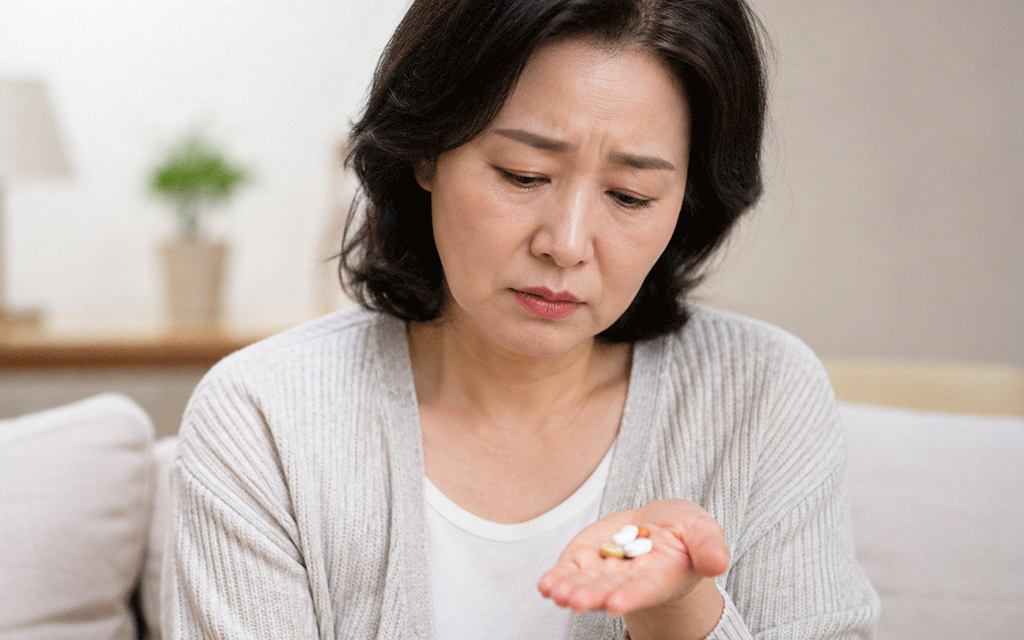
Diet and nutrition management during menopause is less a short-term “treatment” and more a way to build foundational health so your body can adapt to a changing internal environment.
This is why menopause consultations look beyond hormone changes and assess multiple areas such as bone health (calcium and vitamin D), weight and metabolic changes, and symptoms like hot flashes or night sweats. As hormone levels decline, the body’s overall balance can shift at the same time.
For that reason, menopause nutrition management is not achieved by taking one or two “good-for-you” ingredients. A balanced eating pattern should be the foundation, and healthy lifestyle habits—resistance training, smoking cessation, moderating alcohol, and more—need to be managed together as one comprehensive bundle. If this foundation is unstable, even a well-chosen supplement may be unlikely to deliver lasting benefits.
1. Menopause diet: Why does an “eating pattern” come before any “specific food”?
Advertisements sometimes suggest that taking one specific ingredient is enough. But in a menopause diet, what you need first is not an added “special” component—it’s a stable, sustainable baseline diet. Once the basics are in place, supplements or optional foods can actually do their job.
If you can’t maintain your diet, it won’t work in daily life—so it’s important to consider whether you can keep it up long-term.
The direction of an eating pattern is not complicated: base meals on vegetables, fruit, whole grains, and high-quality protein, while moving toward reducing ultra-processed foods, processed meats, and excess sodium.
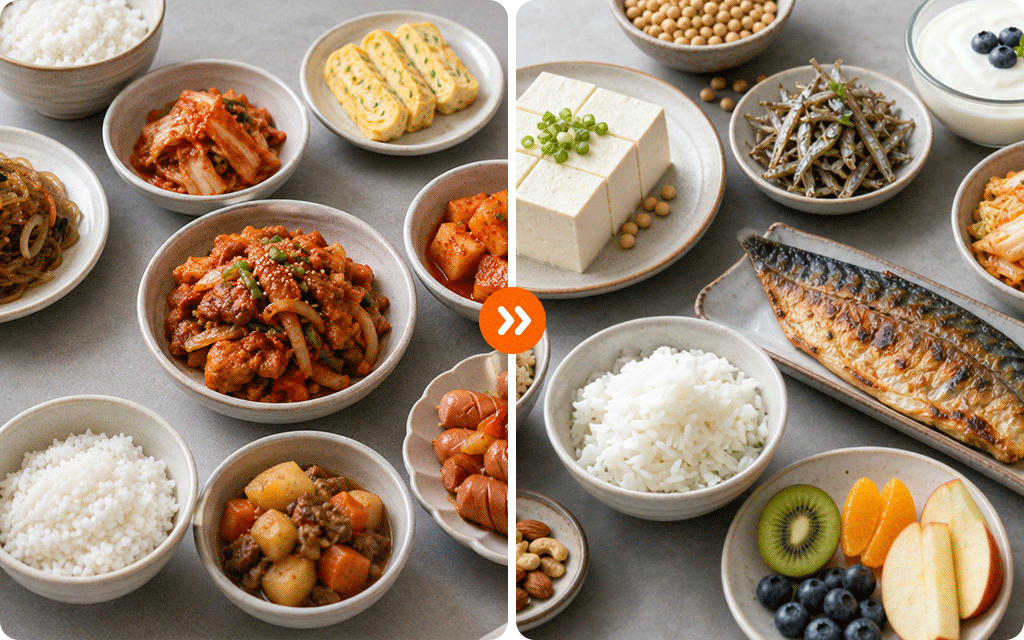
A menopause diet is like keeping a daily household budget. Writing a big number for one category (calcium, isoflavones) doesn’t stabilize the whole budget. You need to organize fixed expenses first (the quality of everyday meals). Then discretionary spending (supplements) feels less burdensome. Use the table below to gently adjust your everyday meals.
✅ Korean-meal ingredient alternatives for a sustainable diet
| Current Diet (Needs Adjustment) | Recommended Diet (Menopausal Diet Alternatives) |
|---|---|
| Refined flour | White rice |
| Salty broth of soups and stews | Focus on solid ingredients (keep broth to less than half) |
| High-sodium kimchi, salted seafood | Blanched seasoned vegetables, fresh wrap vegetables |
| Processed meats (ham, sausage, etc.) | Lean proteins such as grilled white-flesh fish, tofu, eggs, and boiled pork |
2. Bone health after menopause: How should you review calcium intake and vitamin D?
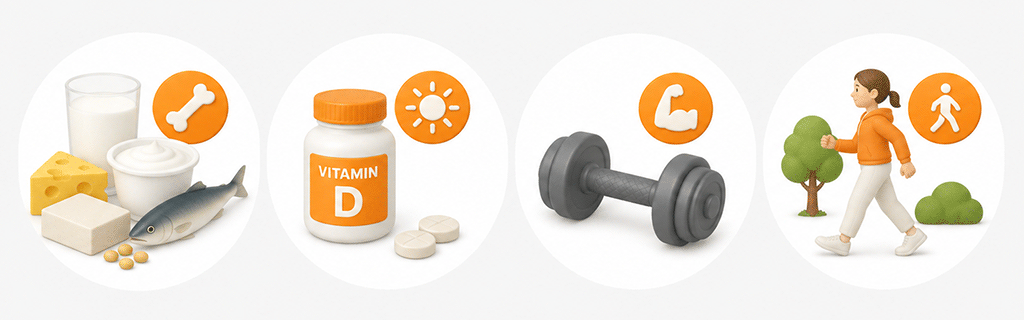
In the first several years after menopause, bone loss can accelerate. That’s why bone health often needs more proactive attention. The key is not simply taking “as much calcium as possible.” Instead, think of it as one set: “Calcium (food first) + vitamin D + resistance/weight-bearing exercise + lifestyle habits.”
In principle, calcium should be prioritized through food. If dairy works for you, milk or yogurt a few times a week can be good options. If dairy is difficult, you can combine tofu, beans, and small fish eaten with the bones. If it’s hard to meet needs through meals, supplements can be an alternative at that point.
Vitamin D needs to be individualized based on how much time you spend indoors. That’s why a test-based approach using serum 25(OH)D is helpful.
In general, calcium is best taken consistently every day, while vitamin D is better adjusted based on test results and individual risk.
✅My bone-health lifestyle checklist
- I make sure to eat calcium-containing foods and protein foods at least once a day.
- I take an outdoor walk in daylight for at least 30 minutes, at least 3 times per week.
- I do resistance training or weight-bearing exercise (such as stair climbing) at least twice per week.
- I have had a vitamin D test within the last 2–3 years.
If you checked one item or fewer, focus on organizing your basic routine first rather than worrying about what else to buy.
3. Weight management: Why is “just cutting calories” often not enough?
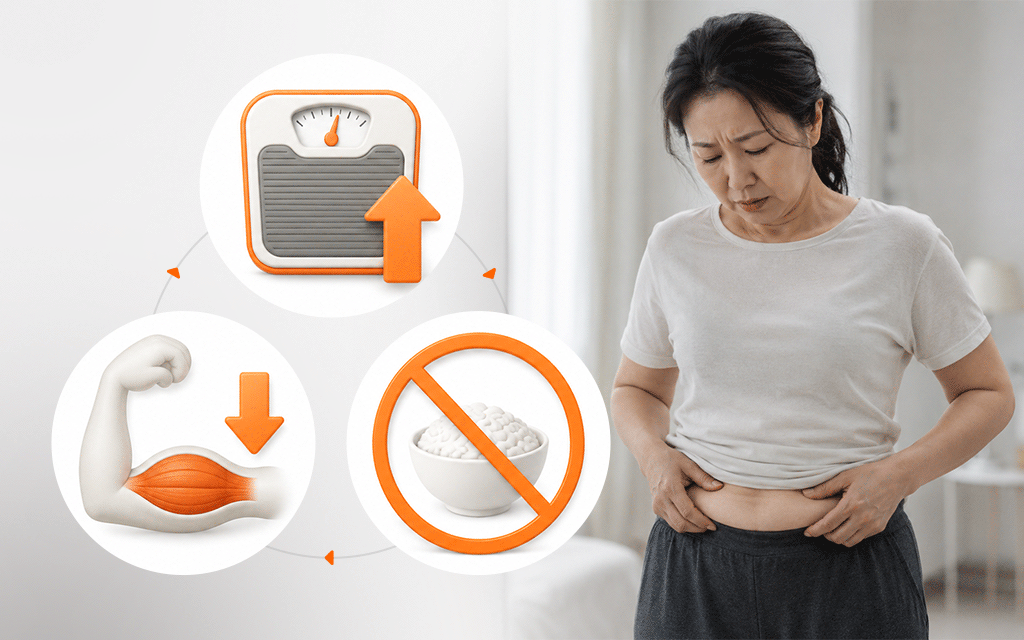
Weight gain during menopause can occur for multiple reasons—sleep deprivation, reduced activity, stress, and more. That’s why calorie counting or simply starving yourself is often insufficient. Restrictive fasting can easily create a vicious cycle by reducing muscle mass and lowering basal metabolic rate even further.
To manage weight in a healthier way, first look at what you eat most often. If you have stew, prioritize the solid ingredients rather than the broth. Instead of cutting rice entirely, it’s often more sustainable to slightly reduce the portion while increasing protein and vegetables. Try concrete changes like the examples below.
- Swap example 1: Ramyeon and kimchi ➡️ Half a bowl of rice, one piece of grilled Spanish mackerel, seasoned napa cabbage greens
- Swap example 2: Refined bread and syrupy coffee ➡️ Unsweetened yogurt, a handful of nuts, cherry tomatoes
- Swap example 3: Ham and sausage side dishes ➡️ Tofu browned in perilla oil, soft steamed egg custard
When you feel your metabolism slowing down, it can lead to self-blame. But this is not simply a willpower issue—your body’s rhythm has changed. A realistic approach is to adjust your environment and eating pattern first.
4. Soy isoflavones: What should you check before trying them?
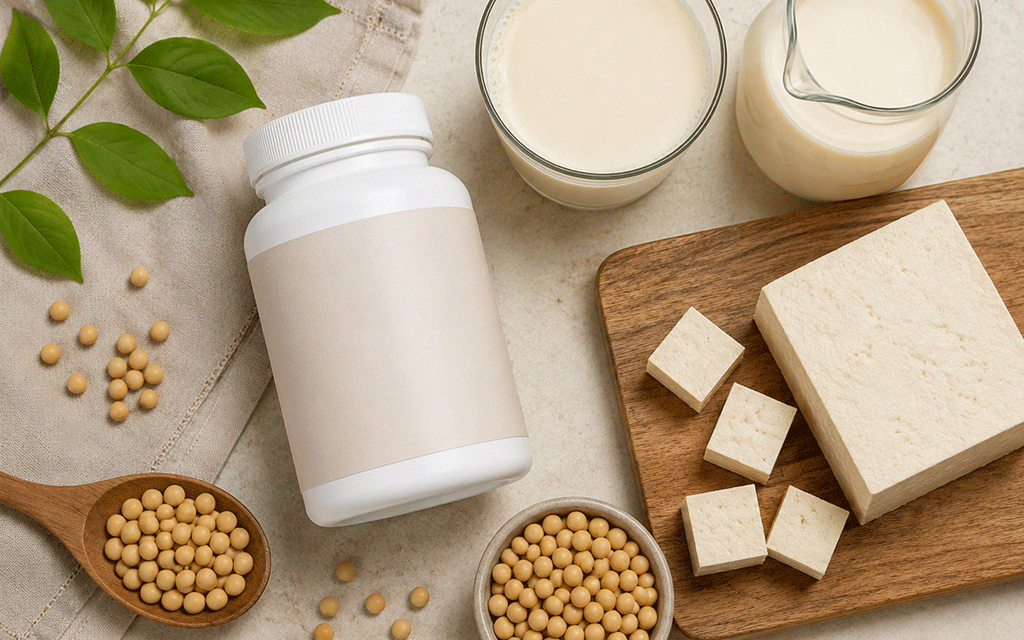
Phytoestrogens—especially soy isoflavones—are commonly sought by people who feel discomfort from hot flashes or night sweats. Some studies report positive signals, but perceived effects may be inconsistent because they can vary depending on an individual’s gut microbiome and metabolic capacity. So if you want to try them, it’s reasonable to do so—while setting clear criteria for what you will monitor.
The key is to start with food forms first. Whole soybeans can be harder to digest, so it’s generally better to choose forms such as tofu or cheonggukjang (fermented soybeans). During menopause, gastrointestinal function may decline; eating soybeans (including black beans) casually or relying mainly on soy milk may be more likely to trigger digestive discomfort—so the form matters.
In contrast, refined high-concentration supplements can raise expectations, and if you have a history of breast- or uterine-related conditions, discussing them with a clinician in advance is essential. Isoflavone supplements are optional. If you take them before your diet, exercise, and sleep are in order, meaningful benefits may be hard to expect. Build the basics first and proceed cautiously.
✅Checklist before trying soy isoflavones
- Am I already including soy foods such as natto or cheonggukjang in my diet?
- Do I know what situations worsen my hot flashes (coffee, alcohol, spicy foods, etc.)?
- Have I practiced an eating-pattern adjustment (more protein and vegetables) for at least 2 weeks?
- If I have a history of breast/uterine conditions or I’m taking medication, have I consulted my primary doctor?
5. Reducing caffeine: What is a realistic standard?

Sleep disturbance and hot flashes are often closely related to everyday “treats.” But the goal is not a complete ban on coffee. Identifying and adjusting your triggers is far more sustainable.
Caffeine, alcohol, spicy foods, and hot beverages may interfere with thermoregulation in some women and can trigger hot flashes. Rather than quitting abruptly, first identify when symptoms worsen. Use the 3-step routine below to find your personal triggers.
1. Record: For about 3 days, record when hot flashes or cold sweats occur and what you ate right beforehand.
2. Reduce: To avoid disrupting nighttime sleep, first stop “caffeine after 2 PM” for one week.
3. Compare: Compare sleep quality and symptom intensity before and after to find a personal threshold that works for you.
When these small, personalized dietary adjustments add up, it becomes easier to stay steady even during a time of hormonal fluctuation.
6. Frequently Asked Questions (FAQ)
Q. How much calcium should I take per day, and what if it’s hard to meet through food?
Before looking for supplements, first check how many times calcium sources appear in your meals. If dairy is uncomfortable, try combining tofu, beans, and small fish eaten with the bones. If it’s difficult to meet needs through meals, or if you are in a high-risk group for bone health (such as a prior fracture history or early menopause), it’s safer to discuss supplement dosing with a clinician.
Q. Should I start with testing for vitamin D, and how much sun exposure is appropriate?
Outdoor activity such as walking for about 15–20 minutes during daytime at least three times per week is an excellent foundation. However, if you spend most of your time indoors or apply sunscreen thoroughly, it is practical to check your serum vitamin D (25(OH)D) level at a nearby clinic and then supplement only as needed.
Q. Will eating tofu or soy help with hot flashes?
Isoflavones in soy foods may help reduce symptoms for some people, but individual differences are large. First, adjust your overall eating pattern in a healthier direction for at least two weeks, then include natto or cheonggukjang consistently. At the same time, reduce triggers such as coffee or hot foods and observe your own changes.
Q. Even if I don’t have special symptoms, is it still good to get medical care or counseling?
Even without clear symptoms, bone health issues (such as osteoporosis) can progress quietly without noticeable signs. If you have risk factors such as early menopause, low body weight, or a family history of fractures, pairing lifestyle adjustments with regular bone density testing and medical follow-up is a realistic way to protect your health.
When choosing a menopause diet, the order matters more than what you eat. First, check whether your “fixed expenses”—your eating pattern—are in place. Next, prioritize calcium through food, and review vitamin D by checking your “balance” through testing.
On that foundation, refining optional elements such as soy foods or caffeine adjustment based on your own response becomes much less burdensome. The dietary changes you start now are a solid preparation for preventing chronic disease and supporting a healthier, more active later life.
Sources
- Korean Society of Menopause, *The 2024 Guidelines for Osteoporosis - Korean Society of Menopause: Part I*, 2024.
- Shin et al., Optimal Serum 25(OH)D Levels and Vitamin D Intake in Korean Postmenopausal Women, 2023.
- Hu et al., Optimal dietary patterns for lower weight gain and risk of obesity surrounding menopause, 2025.
※ The copyright for all content on this blog belongs to medihi. Unauthorized copying, distribution, or derivative use is strictly prohibited, and violations may result in legal action without prior notice.
Recommended reads
 medihi