

If you frequently wake up feeling overheated at night, it helps to sort out not only bedroom temperature but also sleep hygiene and accompanying symptoms (snoring/nocturia/palpitations, etc.). This post provides practical criteria for separating the factors that disrupt sleep in menopausal women—and deciding what to adjust first and in what order.
“I keep waking up because I feel too hot.”

This is a common concern among women in their 50s. During menopause, the brain’s thermoregulatory center can become more sensitive. Even mild warmth can fragment sleep, and waking up night after night can significantly drain daytime energy. This is a natural response related to hormonal changes.
In the clinic, we focus less on the exact thermostat setting and more on the sleep pattern itself. That’s because safe, appropriate sleep management starts with distinguishing whether this is a temporary thermoregulation issue, an established chronic insomnia pattern, or another factor that repeatedly wakes you up—such as obstructive sleep apnea.
1. Nighttime awakenings during menopause—Is it only about heat? Start by separating the causes
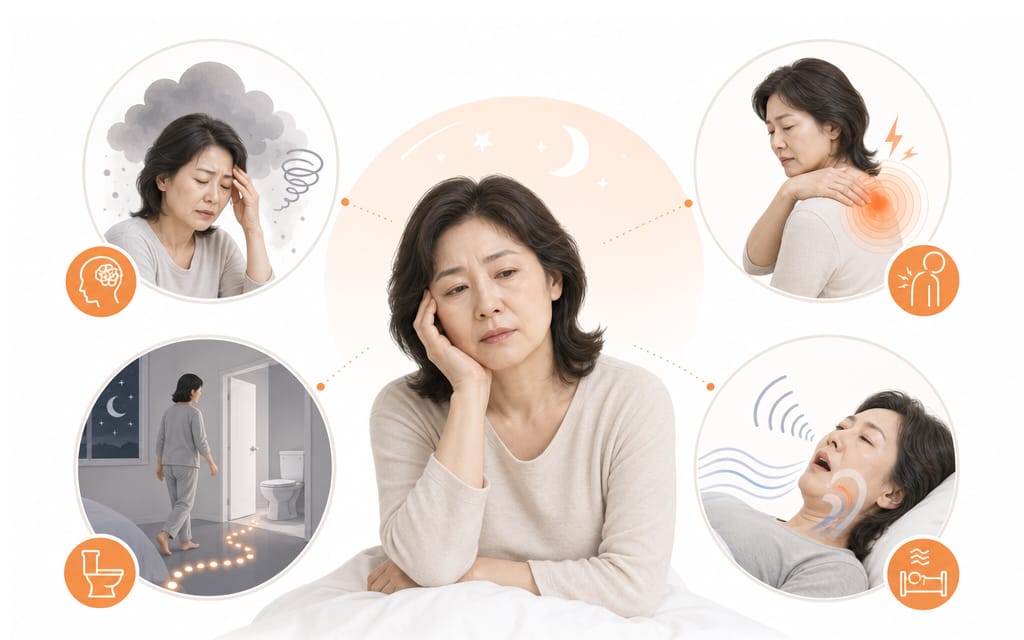
After your 50s, nighttime awakenings can indeed be strongly tied to thermoregulation. Heat sensations and night sweats are typical. But in many cases, it doesn’t end with temperature alone. That’s why the first step is separating the possible causes.
Contributing factors are more diverse than many people expect. Mood changes such as anxiety or depression can play a role. Physical pain can wake you up. Nocturia—waking to urinate at night—is also common. Sleep-related breathing disorders such as snoring and obstructive sleep apnea can be key drivers as well.
Nighttime awakenings often have a different “switch” for each person. For some, overheating is the switch. For others, it’s breathing issues or anxiety. Different switches require different strategies. This is why changing the sleep environment can feel very effective for one person and barely help another.
Use the following criteria to check your situation:
- When you wake up, do you clearly notice heat sensations or night sweats?
- Has anyone observed loud snoring or pauses in breathing during sleep?
- Are you excessively sleepy during the day, or do you wake with morning headaches?
- Do you repeatedly wake up every night to use the bathroom?
These questions help reduce unnecessary trial and error and clarify what to change first.
2. Aim for “not too hot”: The order for adjusting room temperature, ventilation, and bedroom setup
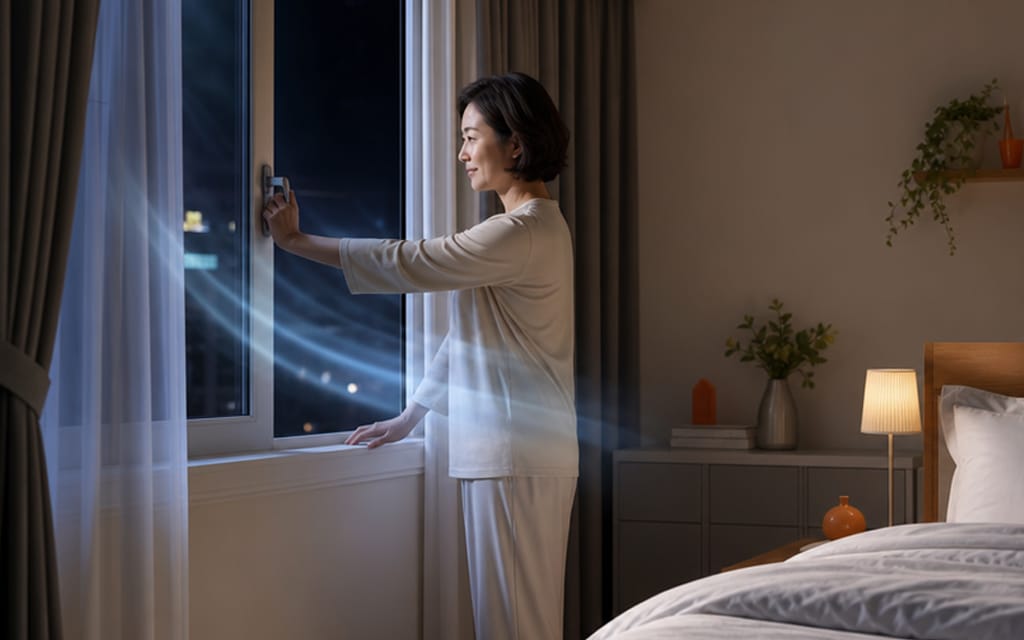
Improving your sleep environment may seem complex, but the core rules are simple: avoid overheating, keep air circulating, make the room dark and quiet, and keep your wake-up time consistent.
There is no single “correct” bedroom temperature. Individual differences are large, and housing conditions vary. The goal is not “a specific number of degrees,” but “not too hot.” So rather than forcing a precise temperature, it can be better to slightly open a window to create a cooler airflow.
When creating a comfortable sleep setting, the first priority is getting the basics right—room temperature and air circulation. Even if you buy high-end bedding or sleep devices, you won’t sleep well if the room feels stuffy. Control the environment first; consider new products second.
📌 Four practical sleep-environment steps you can start today
- Ventilation: Lightly ventilate about 15 minutes before bed to circulate stagnant air
- Light blocking: Use blackout curtains or a sleep mask to block residual light
- Noise control: If recurring household noise is an issue, consider gentle white noise or earplugs
- Temperature: Don’t fixate on a number—adjust to a level that feels “cool” to you
What touches your skin can also change how you perceive comfort—namely pajamas and blankets. Even if the room air is cool, sleep quality can suffer if clothing doesn’t wick sweat well. Thin, breathable cotton pajamas are a good option.
3. Cooling pads (cooling bedding)—What’s realistic to expect? How to view them as a supportive tool
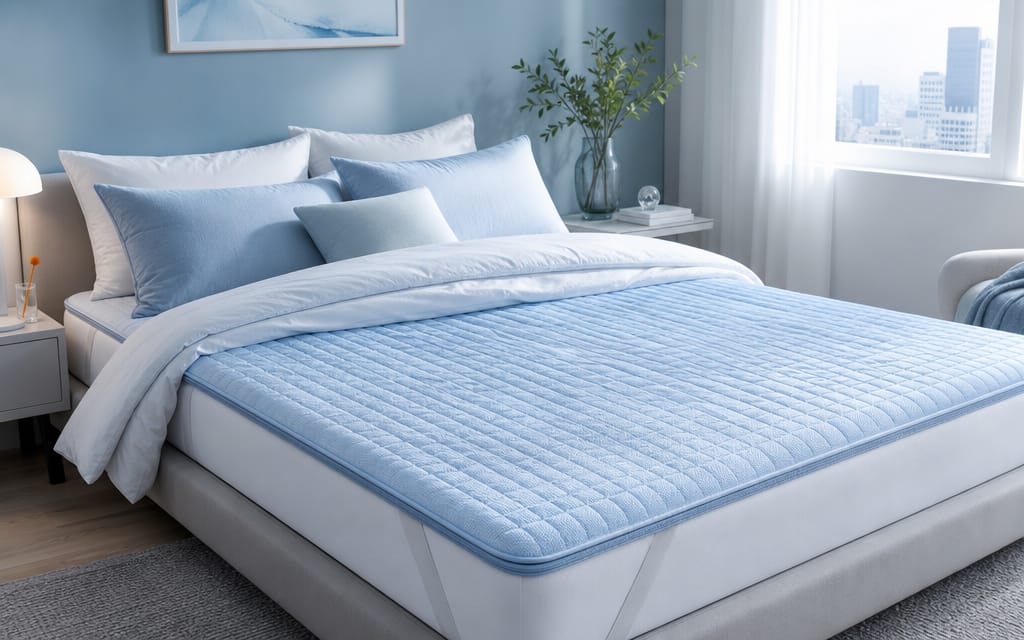
Cooling pads or PCM bedding can feel cool on contact and may help reduce heat discomfort as you’re falling asleep. However, you may feel disappointed if you expect them to function like a primary treatment. It’s safer to view them as tools that support the sleep environment.
Looking at related studies, cooling bedding may temporarily lower skin surface temperature. But many reports suggest it does not consistently improve sleep efficiency or reduce time awake after sleep onset. Simply cooling the outer surface makes it difficult to influence core body temperature changes or psychological arousal.
It helps to reframe the question. Instead of asking whether the product “works,” ask whether it’s a supportive tool your situation calls for. If heat sensations are prominent and it’s hard to lower room temperature, it may be worth considering in the short term. On the other hand, if you wake frequently even without heat sensations, it’s more important to review the sleep pattern itself than to focus on products.
4. If you still wake up despite sleep hygiene and a bedtime routine—What’s the next step?
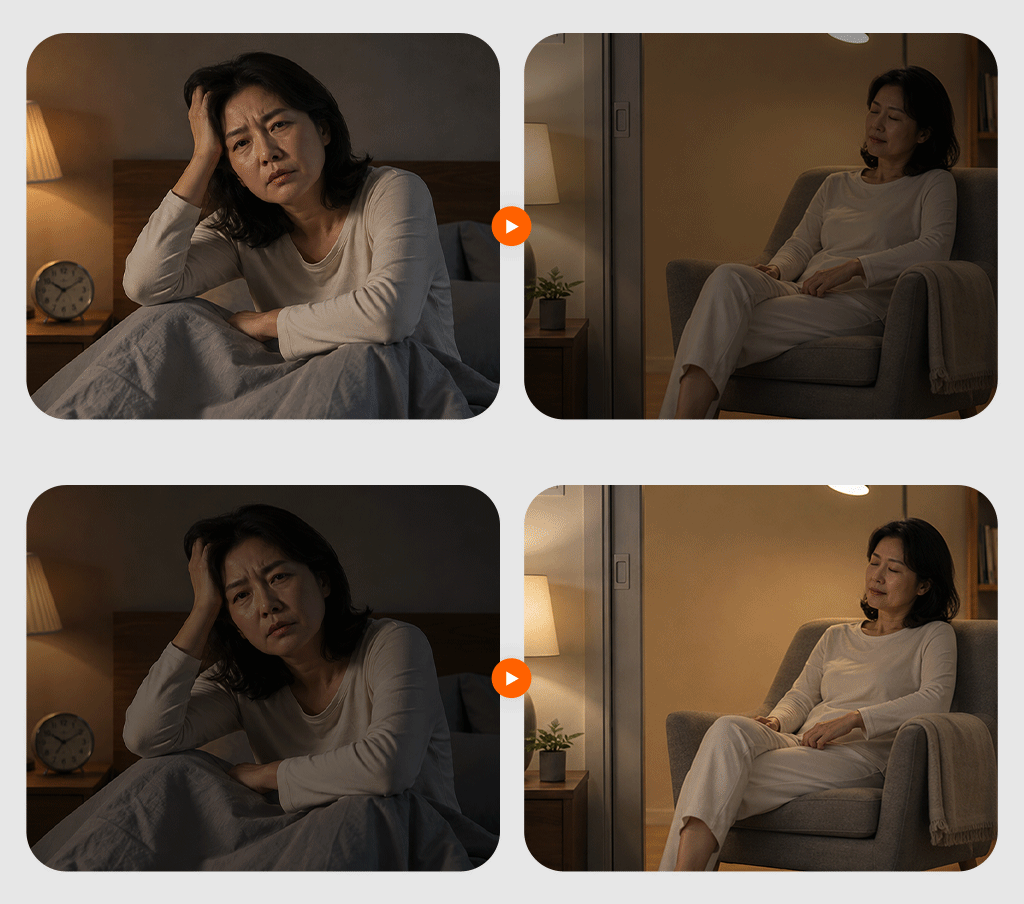
If you’ve completed basic sleep-environment improvements but nightly awakenings persist for more than three months, you may start to hit a limit. In chronic insomnia, cognitive behavioral therapy for insomnia (CBT-I) is often considered first as a non-pharmacologic approach. CBT-I uses strategies such as stimulus control to rebuild a healthy association between the bed and sleep. Evidence also supports its benefit for insomnia in menopausal women.
At this stage, people often misunderstand and think, “I should follow sleep hygiene rules even more strictly.” But sleep hygiene is only the foundation. If you stay in bed for a long time despite not feeling sleepy, your brain may learn that the bedroom is a place to be awake.
In Korean medicine, menopausal insomnia is sometimes viewed as stemming from “deficiency heat” affecting the heart. Accordingly, herbal prescriptions and acupuncture aimed at replenishing depleted body fluids and calming “heart heat” to stabilize arousal may also help some patients.
📌 Self-check and roadmap for your sleep status
- Frequency check: Do you wake up at least 3 times per week and struggle to fall back asleep?
- Time check: After waking, does it take 30 minutes or more to return to sleep?
- Sleep diary: For 2 weeks, record bedtime, number of awakenings, and alcohol/caffeine intake before bed
- Next step: If symptoms persist after environmental checks, discuss non-pharmacologic behavioral therapy (CBT-I)
5. If you have snoring, apnea, nocturia, or palpitations—Signals to shift from “environment” to “medical evaluation”
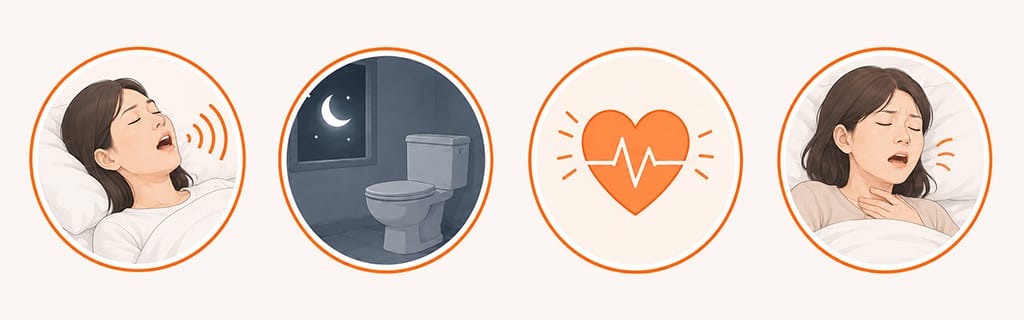
You’ve cooled the bedroom and blocked light and noise. If nighttime awakenings still continue, it may not be “just the environment.” In that case, it’s safer to shift your focus to medical consultation and evaluation.
A drop in estrogen can reduce the tone of muscles around the neck. This can narrow the airway during sleep—like a laptop overheating when its ventilation outlet is clogged with dust. When oxygen supply decreases, the brain sends a strong wake-up signal to protect the body. Waking up gasping or feeling like your breathing is blocked can be a sign that obstructive sleep apnea should be considered.
Separating symptoms clarifies what kind of evaluation may be needed:
- Suspected sleep apnea: If snoring is severe, apnea has been observed, or morning headaches are frequent, a detailed evaluation such as polysomnography may be helpful.
- Ruling out urologic/endocrine factors: If nocturia repeatedly wakes you every night, or if major weight changes and severe palpitations occur together, it’s safer not to conclude “it’s just menopause,” and to discuss a cause-focused evaluation with a clinician.
6. Frequently Asked Questions (FAQ)
Q. Is it common to wake up often at night during menopause?
Yes. During menopause (the menopausal transition and postmenopause), sleep difficulties become more common. However, it’s not only because you “feel hot.” Hormonal changes, night sweats, mood changes, and sleep-related breathing disorders can interact. If you break the causes down from multiple angles, management becomes much easier.
Q. What bedroom temperature is appropriate?
There is no single correct temperature that fits everyone. Rather than targeting a specific number, it’s safer to adjust to a temperature that feels “not too hot” (avoids overheating) for you. Because housing conditions and individual physiology differ, consider adjusting over 1–2 weeks while keeping a sleep diary to find your optimal setting.
Q. Will cooling bedding reduce night sweats?
Cooling bedding can be a helpful supportive tool, cooling the skin surface and improving comfort as you fall asleep. However, evidence that it consistently improves overall key sleep metrics is limited. It’s safer to use it alongside ventilation and sleep-pattern review rather than relying on cooling bedding alone.
Q. When should I consider a medical consultation?
If nighttime awakenings persist even after about 2–4 weeks of sleep-environment changes and bedtime routine adjustments, consider consultation. In particular, if snoring, observed apnea, morning headaches, frequent nocturia, or severe palpitations are present, it’s safer to identify the cause through a sleep clinic and/or endocrine evaluation.
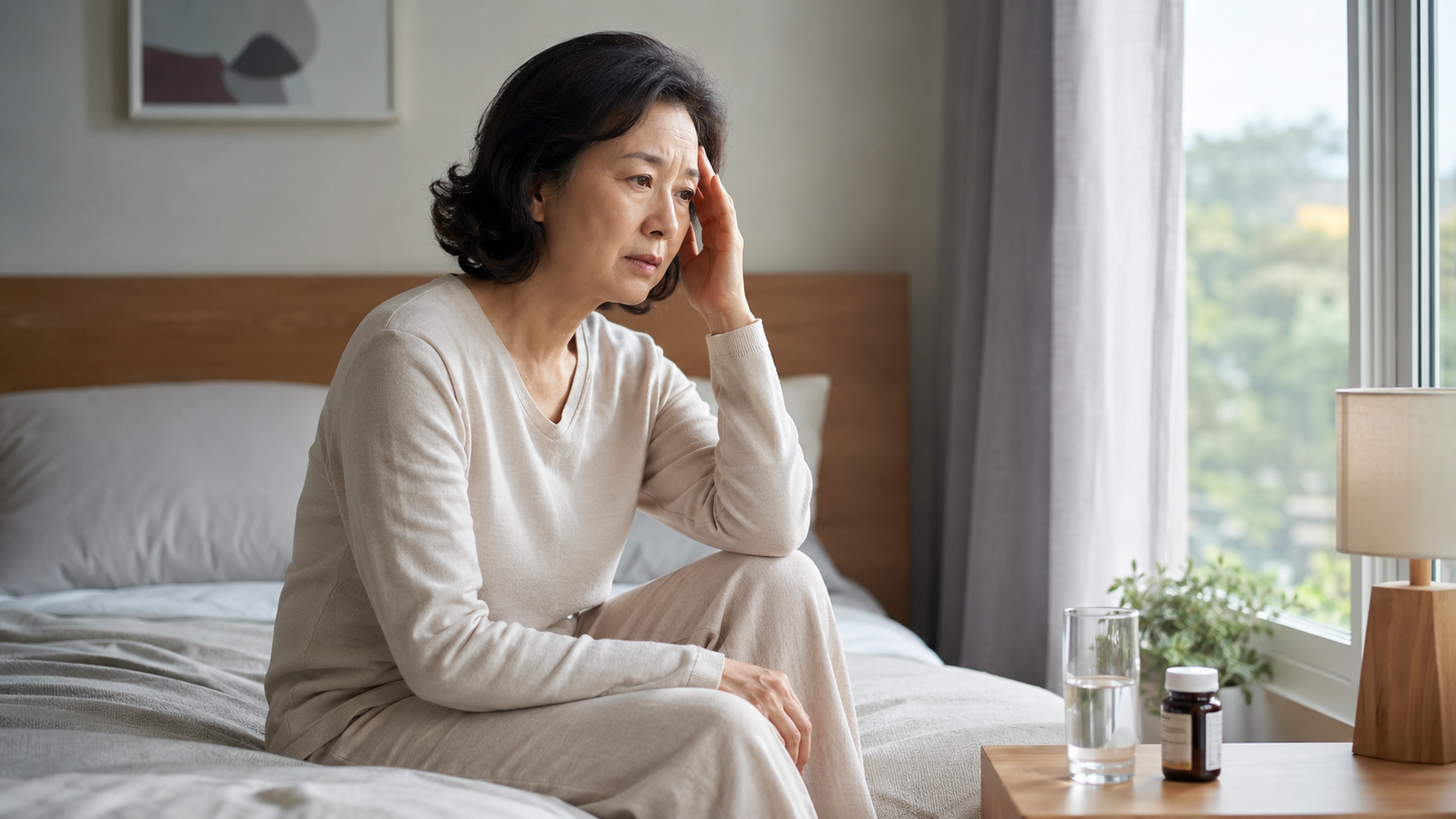
Waking up sweaty every night often doesn’t end with the question of “What temperature should I set the air conditioner to?” Rather than relying only on trending products, start by creating an environment that avoids overheating and by organizing your bedtime routine.
When sleep becomes unstable, it can feel as though the balance of your entire day collapses into exhaustion. Instead of enduring it alone, calmly separate the possible causes. Starting with environmental adjustments you can make in daily life—and moving to professional evaluation when needed—can be a safer step-by-step path to restoring nighttime calm.
Sources
- Park KM. Sleep disturbance in perimenopausal women. 2024.
- Moon HJ et al. Effects of CBT on sleep quality and ISI in women with menopausal insomnia. 2025.
- Pasquier F et al. Does body cooling facilitated by bedding improve sleep? Sleep Medicine Reviews. 2025.
※ The copyright for all content on this blog belongs to medihi. Unauthorized copying, distribution, or derivative use is strictly prohibited, and violations may result in legal action without prior notice.
Recommended reads
 medihi