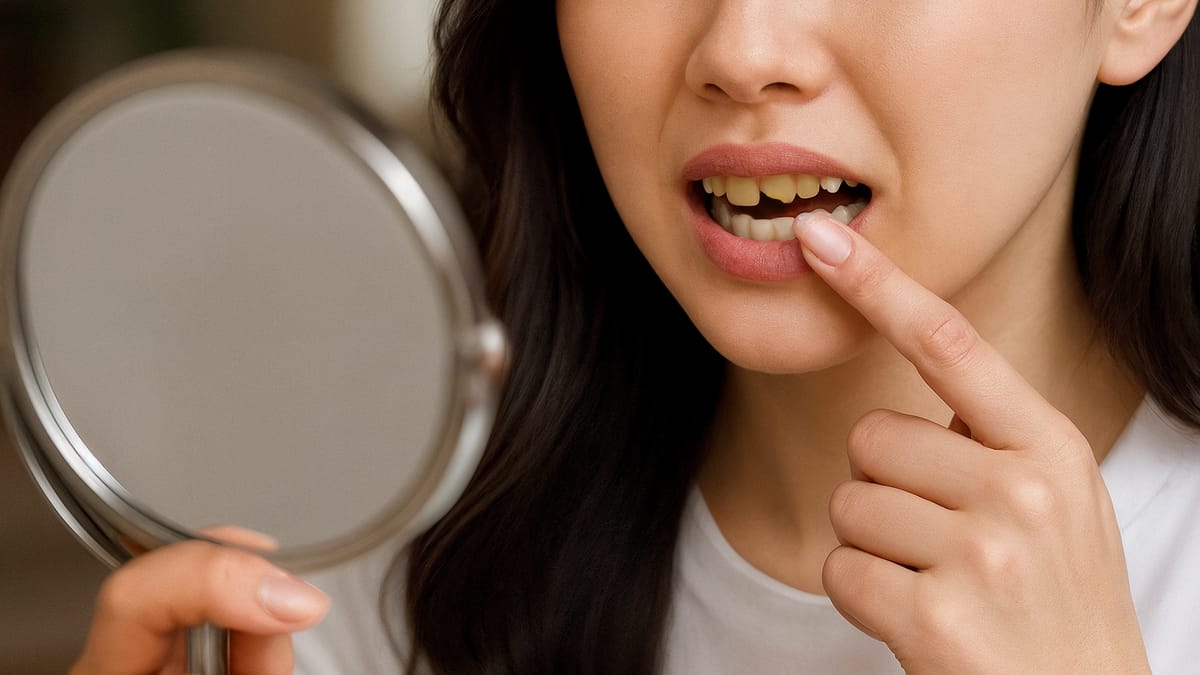

What’s the real story behind 'no-prep veneers' that claim to avoid tooth reduction? This guide explains the practical limitations of no-prep veneers and how to make a more informed decision that helps protect your natural teeth.
“I want a nicer smile, but I’m really worried about having to shave down my healthy teeth.”
“I’m scared that if something goes wrong later, I won’t be able to go back to how things were.”
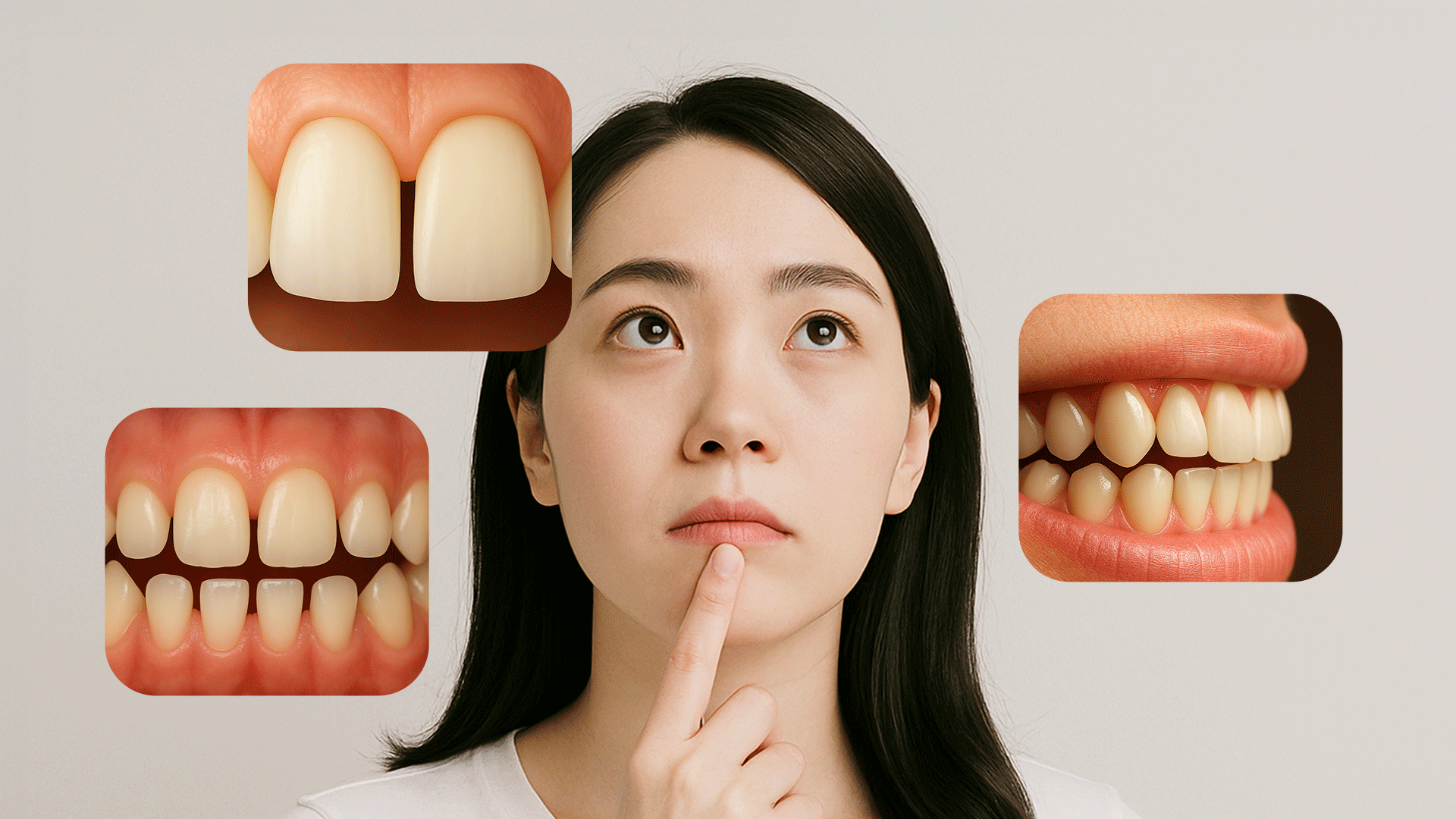
Many people share these concerns when considering veneers. For younger patients in particular, the idea of 'no-prep veneers'—veneers that claim to require little to no tooth reduction—can sound especially appealing.
But behind the word 'no-prep,' there are important details you should understand. Does avoiding tooth reduction automatically lead to the best outcome?
In this article, we’ll take a careful look at what no-prep veneers really mean, where the limits are, and how you can make a smarter choice to maintain both a healthy bite and a beautiful smile over the long term.
1.Veneers without tooth reduction—what kind of treatment is it?
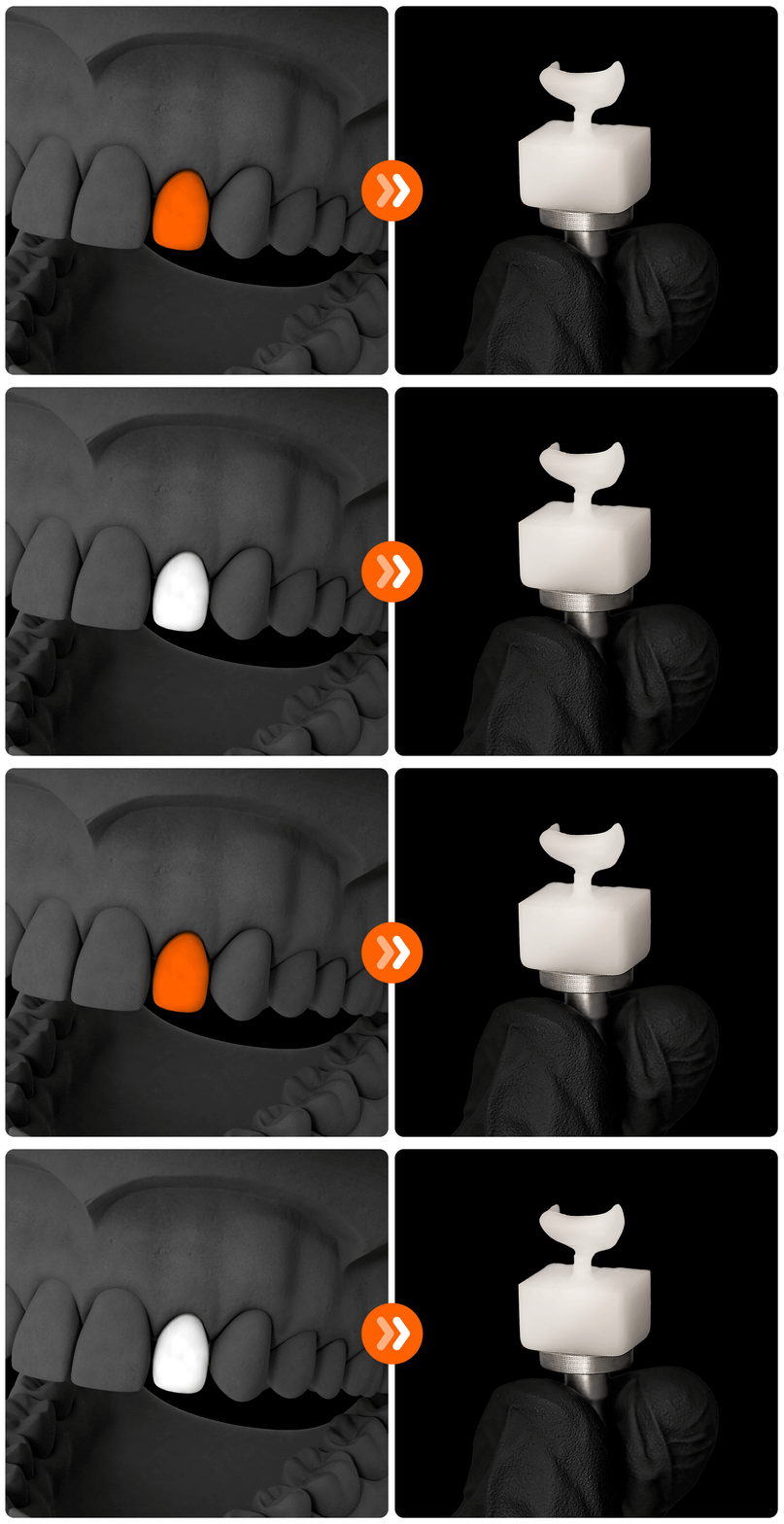
Veneers are a procedure that improves the shape or color of front teeth by bonding a very thin ceramic shell to the outer surface using a strong dental adhesive.
In the past, due to limitations in fabrication and bonding materials, dentists often needed to reduce a certain amount of tooth structure to create space for the veneer. 'No-prep veneers,'by contrast, refer to an approach that uses precise fabrication methods—such as CAD/CAM—to produce very thin ceramic shells, allowing the tooth surface to be minimally adjusted, or in some cases, adjusted only very slightly.
The term 'no-prep' can feel reassuring to patients who are worried about tooth damage. However, some experts point out that the term is not a strict academic definition, and may function more like marketing language that appeals to patient concerns.
In reality, cases where veneers are placed with absolutely no surface adjustment are uncommon. To bond veneers securely and help them last, it is often necessary to refine the surface very slightly, especially if it is uneven or contaminated.
So, a more accurate description is often 'minimal-prep'—meaning the tooth is reshaped only as much as needed, and as conservatively as possible.
2.Who is a good candidate for no-prep veneers?
Many people hope that even if their teeth are slightly crooked or protruding, 'no-prep veneers' can still make everything look perfectly straight. But veneers do not move teeth or change their position the way orthodontics does. That means it can be difficult to 'pull back' teeth that stick out simply by adding veneers.
This approach works by adding ceramic to the surface to improve shape and proportions. So it tends to be most effective when there is enough space to add material while still maintaining a natural look.
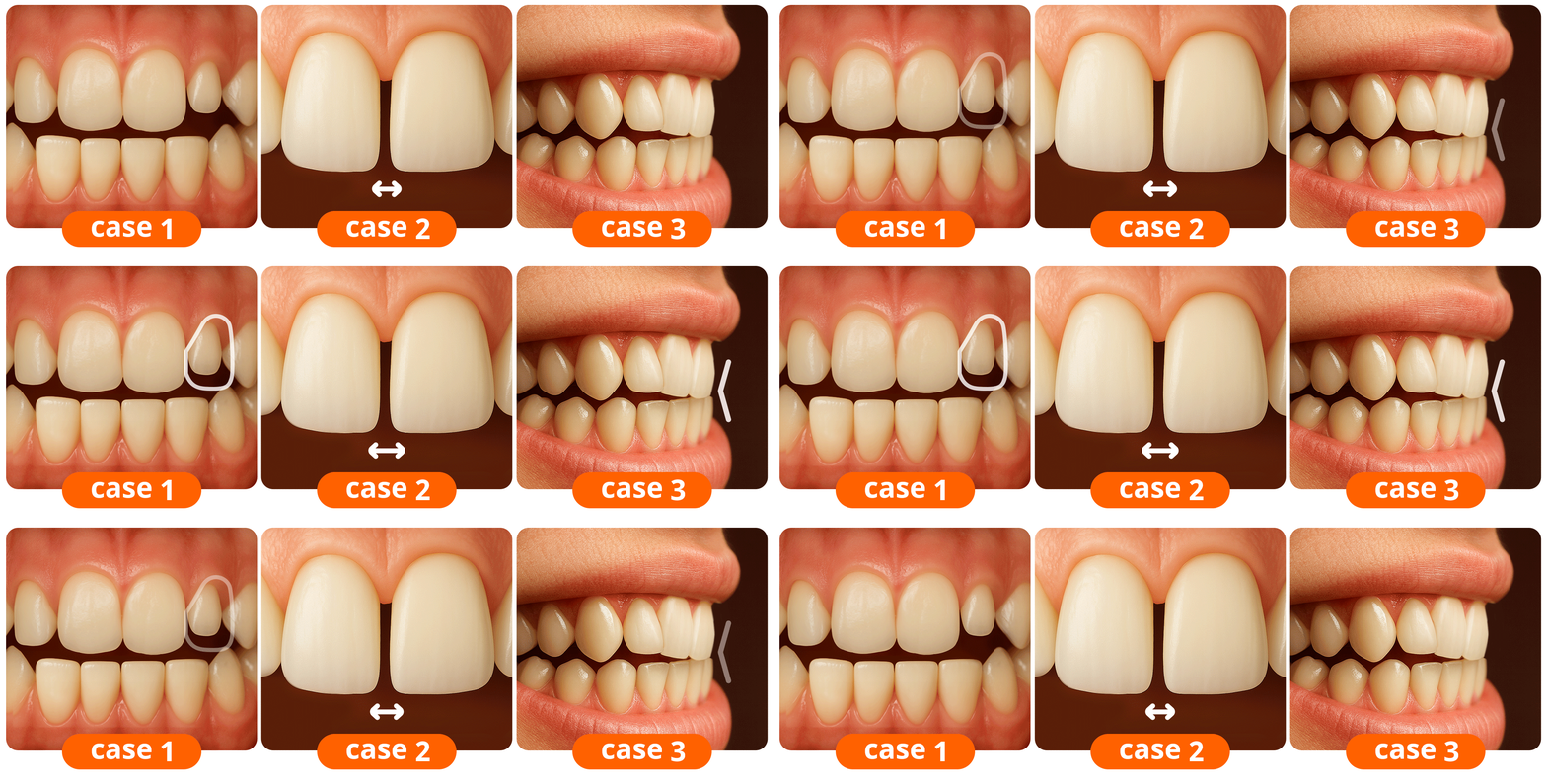
No-prep (or near no-prep) veneers are often considered in situations like:
- Microdontia (Case 1): when teeth are smaller than average and you want to increase size
- Gaps between teeth (Case 2): when you want to close spacing between front teeth
- Teeth that tilt inward (Case 3): when teeth lean inward and you want a slightly fuller outward appearance
On the other hand, if your teeth are already large or slightly protruding, extra caution is needed. If veneers are added without reshaping, the teeth may become thicker by the veneer’s thickness and can look bulky—sometimes described as a 'corn-kernel' look.
Rather than focusing only on 'not shaving teeth,' the first and most important step is getting an accurate diagnosis of your tooth shape, alignment, and available space.
3.Can veneers cause problems if used to 'fix crooked teeth quickly'?

As discussed above, no-prep veneers can be effective for improving size and shape. However, many people consider veneers primarily to address crooked alignment. So what happens when veneers are chosen as a “quick fix” to make teeth look straight?
Because the idea of fast improvement can be tempting, some people choose veneers as if they are a shortcut to orthodontics. But depending on the case, that choice may not be the most protective path for your natural teeth.
Veneers do not move teeth. They can only create the appearance of straighter teeth by reducing areas that stick out and adding material where teeth look recessed. In particular, if the goal is to quickly correct protruding teeth, the tooth may need to be reduced more than expected in some cases. That can bring the work closer to the tooth’s inner structures—potentially leading to significant sensitivity or pain, and in some situations, the need for additional treatment.
If crooked alignment is your main concern, it’s wise to start with a professional evaluation to determine which approach fits your case. For some patients, veneers alone may be sufficient. For others, orthodontic treatment may be recommended first—especially when bite issues need to be addressed.
4.If veneers are placed without shaving teeth, can they be removed easily later?
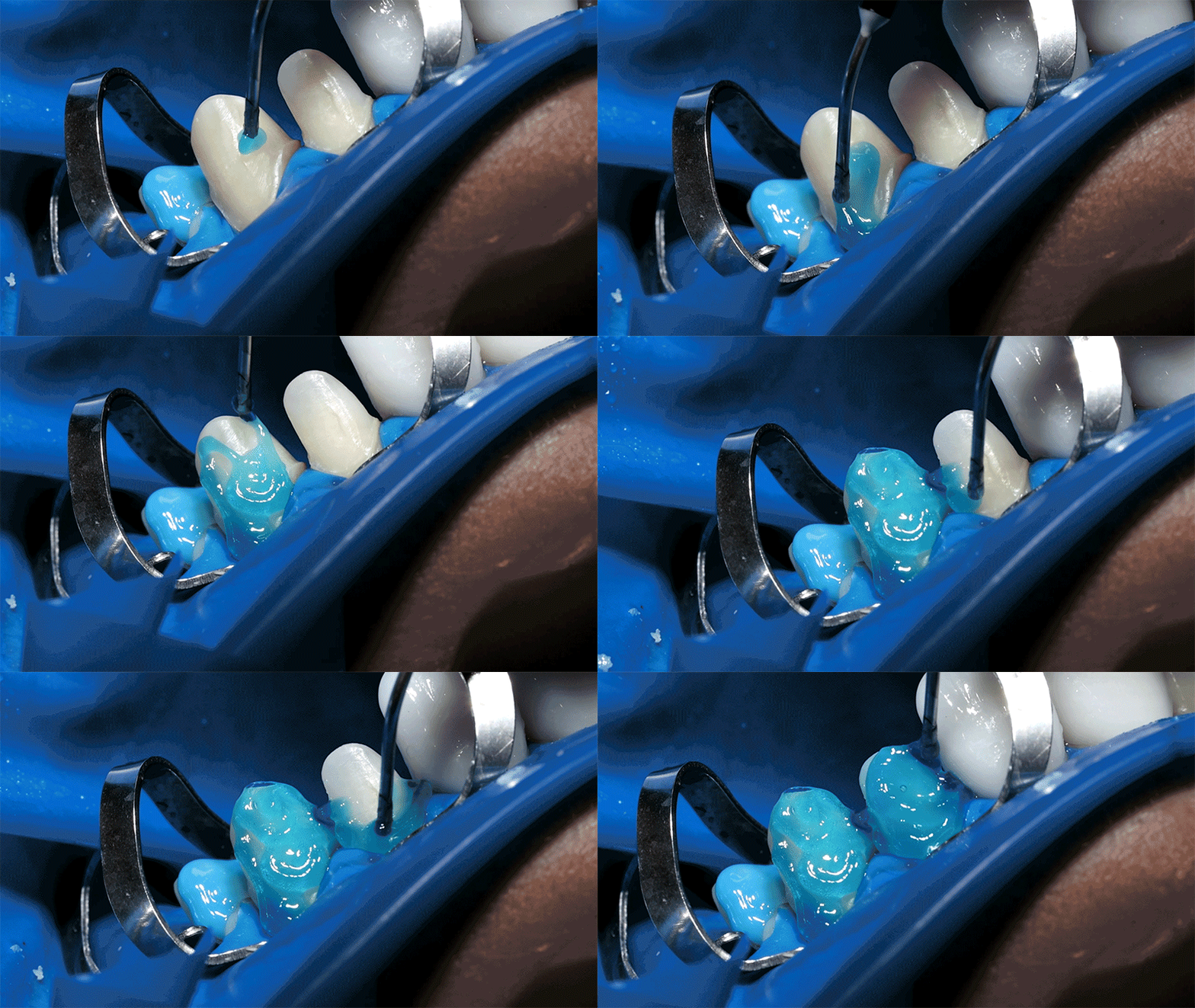
Many people assume that if they don’t like veneers later, they can simply “peel them off”—almost like removing a press-on nail.
With no-prep veneers, it may seem even more likely: “If my tooth wasn’t shaved, removal should be easy, right?”
In reality, veneers are bonded using strong adhesives to the hardest outer layer of your tooth (enamel) so they can withstand chewing and speaking. That strong bond is a key reason veneers can last.
So when veneers are removed, the process is typically not about weakening the adhesive and lifting the veneer off like a sticker. Instead, removal is often done by carefully reducing the ceramic itself using dental instruments or laser-assisted methods.
No-prep veneers can be removed, but it usually isn’t a quick or effortless process. This is why it’s important to understand that the decision may not be easily reversible—and to confirm the expected final shape in advance and choose a clinician you trust.
5.What should you confirm before choosing no-prep veneers?

As noted earlier, veneers are a careful decision—especially because reversing the result may not be simple. To protect your teeth and aim for a satisfying outcome, it’s not enough to rely on the phrase “no-prep” alone. Before you proceed, make sure you confirm these three points:
1) Accurate diagnosis and a conservative plan
- Your tooth condition should be assessed in detail to determine whether reshaping is truly unnecessary.
- If reshaping is needed, the plan should be to adjust only the minimum required.
- If teeth are crooked or protruding, it may be helpful to evaluate whether limited orthodontic treatment should be considered first.
2) Bonding quality matters
- Veneers depend heavily on how well they are bonded.
- If bonding is not done properly, veneers may debond, and issues such as decay at the margins can occur.
- Appearance matters, but so does the quality and precision of the bonding process.
3) Confirm the clinician’s experience and aesthetic judgement
- Veneers require both technical skill and an eye for overall facial harmony.
- It can help to choose a clinician with substantial experience in aesthetic dentistry.
- It’s also important to confirm whether you can preview and adjust the planned shape before final placement.
6.Frequently Asked Questions (FAQ)
Q. Can I whiten my teeth after getting veneers?
Veneers are ceramic, so whitening agents will not change the veneer’s color. However, the natural teeth next to the veneers can be whitened. Because of this, it’s important to choose a final shade carefully before treatment.
Q. How long can no-prep veneers last?
Longevity can vary greatly depending on the material used, the clinician’s technique, and how well you maintain them. In general, veneers may last around 7 to 15+ years, and they may last longer when bonded precisely to the tooth surface. Regular dental checkups are important.
Q. What side effects can occur, and how can I reduce the risk?
Without proper care and planning, issues such as gum inflammation, color changes at the margins, debonding, and—in some cases—sensitivity can occur. Risk reduction starts with an accurate assessment of whether minimal reshaping is needed, and choosing a clinician experienced in conservative preparation and precise bonding.
Q. What is the most important thing to consider before deciding on no-prep veneers?
The most important point is not to be swayed only by the phrase 'no-prep,' but to confirm whether the plan is conservative, stable, and aesthetically appropriate for your tooth condition. It can be helpful to receive evaluations from more than one clinic and carefully review the clinician’s approach and technical detail before deciding.

'No-prep' veneers are based on a positive goal—protecting your natural teeth. But they are not a one-size-fits-all solution. The key is to consider whether this approach truly fits your tooth shape and condition. Rather than pursuing only fast cosmetic change, aim for a careful decision that helps preserve both long-term dental health and a natural-looking smile.
Sources
- Korean Dental Association (KDA). (2023). Trends in Aesthetic Dental Treatment and Clinical Considerations for Veneers.
- The Korean Academy of Prosthodontics. (2022). Clinical Guidance on Minimizing Tooth Reduction in Aesthetic Prosthetic Restorations.
- Dumfahrt, H., & Schädle, B. D. (1998). Clinical evaluation of 1060 anterior all-ceramic crowns and fixed partial dentures after 10 years. The International Journal of Periodontics & Restorative Dentistry, 18(6), 577–584.
※ The copyright for all content on this blog belongs to Medihi. Unauthorized copying, distribution, or derivative use is strictly prohibited, and violations may result in legal action without prior notice.
Recommended reads
 medihi