
If thyroid levels are high during pregnancy, could it put the fetus at risk? This post explains what the TSH 2.5 vs 4.0 cutoffs really mean, how TPOAb antibody positivity can change treatment decisions, and why pregnant women in Korea should be more cautious about iodine excess than iodine supplementation.
“I’m pregnant, and I was told my thyroid hormone level (TSH) is outside the normal range. What should I do?”

A temporary rise in levels due to hormonal changes during pregnancy is quite common. What matters is clearly distinguishing whether your current status is at a stage where medication support is needed, or a stage where it’s reasonable to monitor and wait.
In this article, we’ll organize practical “golden time” management around the 12-week mark of pregnancy, along with updated diagnostic criteria.
1. In the first 12 weeks of pregnancy, how much do the mother’s hormones influence the
baby?
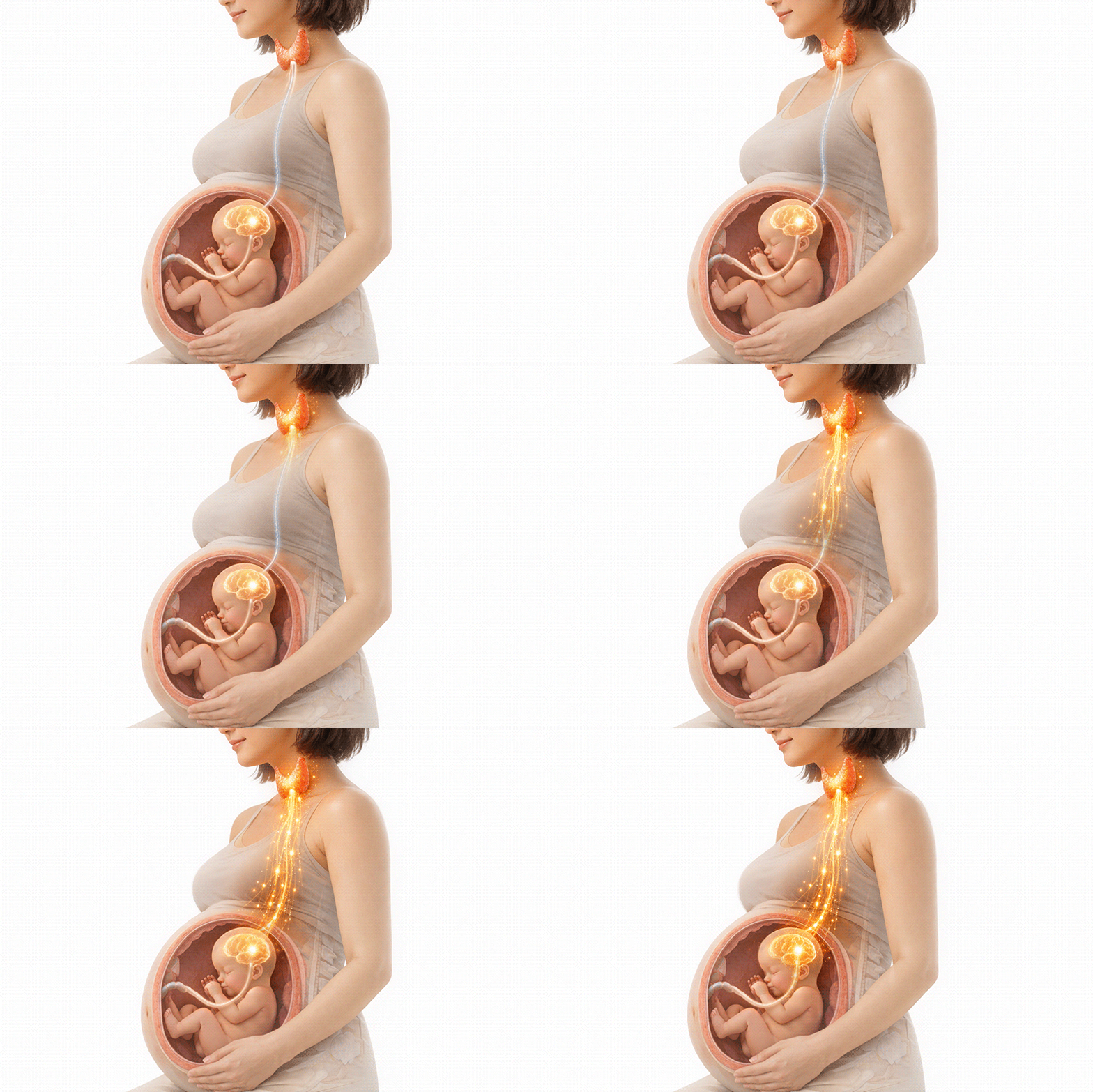
The relationship between the fetus and the mother in early pregnancy can be compared to a “construction site that needs an external power supply.”
The fetus begins building a complex, highly sophisticated structure: the brain and nervous system. However, the “in-house generator” needed to produce the energy for that construction (the fetus’s own thyroid) does not truly start operating in earnest until after about 12 weeks of pregnancy.
Until then, the fetus must rely entirely on the mother—the “main power plant”—to supply the thyroid hormone (T4) needed for development.
If the mother’s power output is low (hypothyroidism) or the supply is unstable, the fetal “construction site” may face temporary difficulties in obtaining the necessary materials. This is why clinicians monitor thyroid function closely right after pregnancy is confirmed, especially during the first trimester.
For this reason, the interpretation of the “TSH (thyroid-stimulating hormone) level,” which reflects the power supply status of the main power plant, also changes depending on the stage of pregnancy. In the early stage (first trimester), when the fetus depends entirely on the mother’s hormones, even small instabilities should be detected sensitively—so monitoring tends to be more strict. As pregnancy progresses into the second and third trimesters, when the fetus’s own “generator” begins to run, the criteria can become somewhat more flexible.
A slight shortage of power does not mean construction stops immediately or the building collapses. The human body is highly adaptable. If the gap is supported at the right time with external power (medication), the construction can proceed smoothly again.
2. If the number is over 2.5, is it automatically a danger sign?

In the past, if TSH exceeded 2.5 mIU/L, medication treatment was sometimes considered right away. However, recent medical trends and Korean guidelines (2023) apply this cutoff much more flexibly.
During pregnancy, TSH fluctuates under the influence of placental hormones (hCG). Recently, instead of a uniform “2.5 cutoff,” the approach has shifted toward prioritizing trimester-specific reference ranges when available, or—if such reference ranges are not available—using 4.0 mIU/L as the upper limit.
In other words, a value around 3.0–3.5 is not automatically considered “abnormal” or “a fetal risk.” Clinicians do not judge based on a single number; they assess overall risk. Increasingly, research suggests that decisions should consider not only TSH but also thyroid autoantibody test results. If antibodies are positive, treatment may be needed even when TSH is not very high. When reviewing your lab report, it may help to check the items below as well.
✅ Checkpoints when interpreting TSH results
- Was the result interpreted using “pregnancy-specific reference ranges”? (If none are provided, consider an upper limit of 4.0)
- Is the thyroid autoantibody (TPOAb) test result “positive”?
- Is there a history of miscarriage, infertility, or thyroid disease?
- Is the current gestational age within the first trimester (within 12 weeks), when fetal dependence is high?
3. When you should take medication vs when it’s okay to monitor
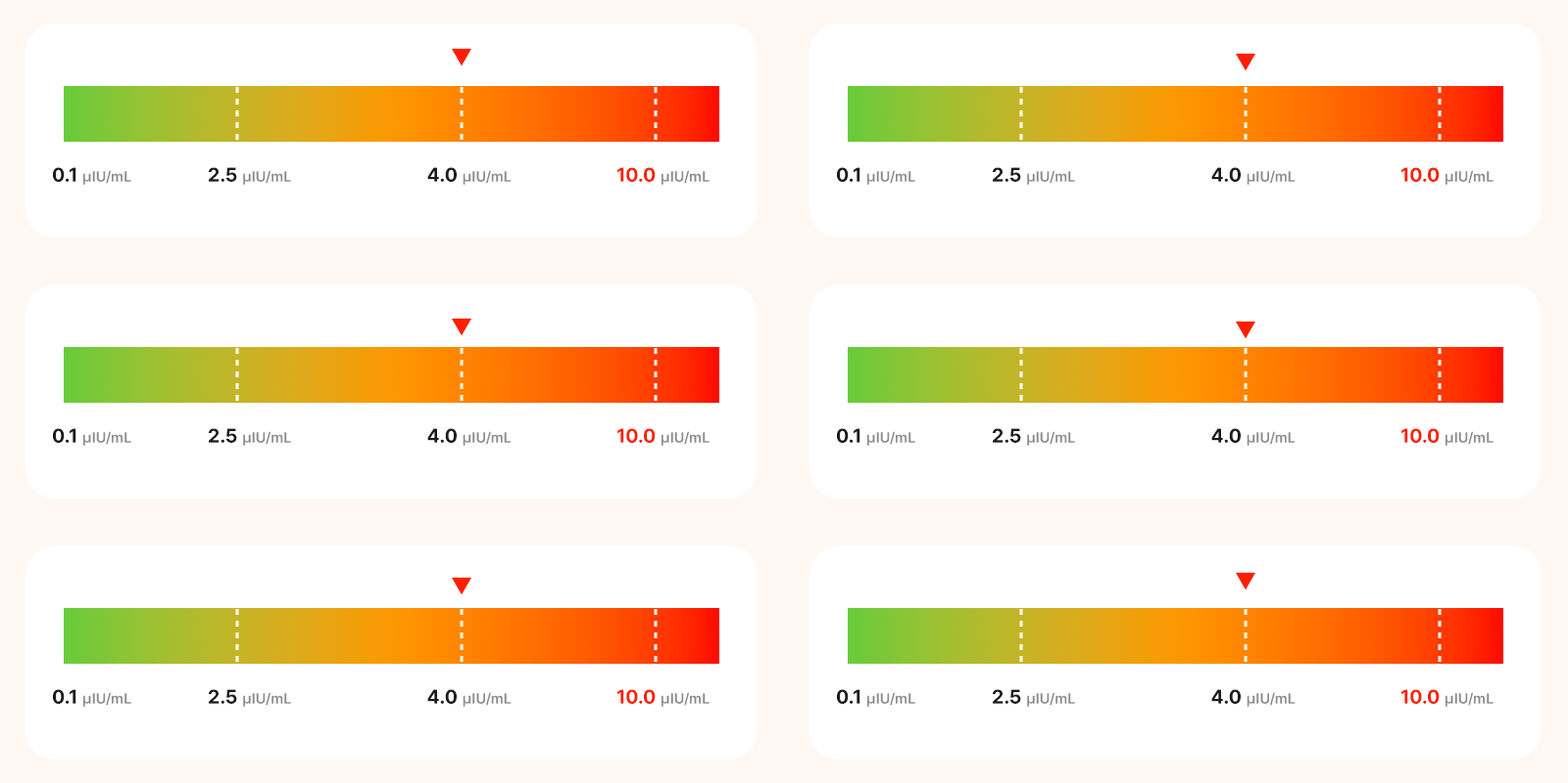
In asymptomatic (subclinical) hypothyroidism, the key factors that determine whether to treat are the presence of autoantibodies (TPOAb) and how high the TSH level is.
To make this easier to understand, here are common decision principles summarized:
| Category | Condition (Criteria) | Treatment Recommendation |
|---|---|---|
| Active Treatment | TSH > 10.0 | Immediate treatment required, regardless of antibody status |
| Treatment Recommended | Antibody positive + TSH > 4.0 (or exceeding upper reference limit) |
Consider hormone replacement therapy through medication |
| Borderline / Observation | Antibody negative + TSH 2.5–4.0 | Usually monitored via follow-up to track changes (considering individual risk) |
- When antibodies are present and the level is high
There is a higher likelihood that an internal “engine problem” (autoimmunity) is making it difficult for the mother’s power plant to supply enough hormone to the fetus. In this situation, supplementing hormone from the outside to stabilize supply is often beneficial for both mother and fetus. - When antibodies are negative and the level is only borderline
If antibodies are negative and the TSH rise is not large, clinicians often monitor rather than start medication immediately. This is because recent studies suggest that even if medication is used for mild TSH elevation, it may not produce a clear benefit or a meaningful impact on fetal cognitive development. Therefore, if TSH is 4.0 or below during pregnancy, it may generally be considered less concerning.
However, hormonal changes during pregnancy vary widely by individual, and the appropriate approach can differ case by case. Because gestational age, maternal condition, and medical history all matter, final decisions about managing TSH levels and whether to treat should be made through close consultation with a qualified clinician.
4. If you’re pregnant in Korea, watch out for iodine “excess” more than “supplementation”

You may have heard that you need to “take iodine” for thyroid health. It’s true that iodine is a raw material for thyroid hormone. But for pregnant women in Korea, the opposite strategy may be necessary.
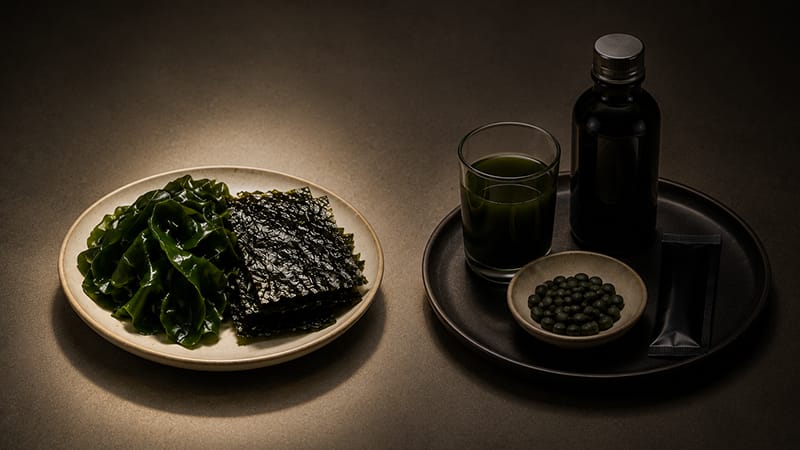
Korea is known globally as an iodine-sufficient (and sometimes iodine-excess) country, because many people already consume enough through everyday foods (seaweed, sea salt, etc.). If you pour more fuel into a tank that is already full, the engine may actually malfunction.
The biggest concern is not typical meals, but high-concentration health products. If you add kelp pills or highly concentrated extracts because they seem “good for you,” thyroid function may actually decline. It’s worth reviewing your current diet and supplements.
✅ Iodine excess prevention checklist
- Do you take “concentrated products” daily, such as kelp pills or seaweed extracts?
- Does your multivitamin contain iodine, and are you also taking additional supplements
that overlap? - Do you have a history of thyroid disease but have not limited seaweed intake at all?
If any of the above apply, adjusting your intake can help support thyroid health.
5. Are you worried the medication could harm the baby?

“Is it okay to take medication during pregnancy?” This is a common concern. However, levothyroxine, which is prescribed for hypothyroidism, is somewhat different from typical “chemical drugs.”
This medication works by “replacing” a hormone that your body is supposed to produce but is currently lacking, in tablet form. Let’s recall the earlier “construction site” analogy. If electricity is insufficient and you cut off the external power supply because “external power might be risky,” what happens? The construction may become even harder to continue.
This medication is a standard treatment with extensive accumulated experience in
pregnancy. If taken at an appropriate dose under medical supervision, with periodic blood tests, it can help maintain an environment in which the fetus can grow healthily.
In fact, stopping the medication on your own “because it might be harmful” can create a bigger variable. Even in hyperthyroidism (such as Graves’ disease), it is possible to manage with medications chosen to minimize fetal impact according to gestational age (for example, PTU is often prioritized in the first trimester). Be sure to discuss this with your primary physician.
6.Frequently Asked Questions (FAQ)
Q. I’m preparing for pregnancy—when is the best time to get a thyroid test?
The mother’s hormones have the greatest influence in early pregnancy (around 12 weeks). So it’s best to check in advance at the planning stage. Especially if you have a family history or a history of miscarriage/infertility, consider getting TSH and antibody tests to assess your baseline status.
Q. Can I take thyroid medication (levothyroxine) together with iron supplements?
Iron or calcium supplements can interfere with gastrointestinal absorption of thyroid hormone medication. If you need both, separate the timing. Common guidance is to take thyroid medication in the morning on an empty stomach, and take iron after lunch or in the evening—keeping at least a 4-hour interval.
Q. I’m taking medication for Graves’ disease (hyperthyroidism). What if I become pregnant?
As soon as you learn you are pregnant, consult your physician to adjust the medication type or dose. In the first trimester, a specific medication (PTU) is often considered first because the relative risk of fetal malformations is lower, and the medication may be changed later depending on the stage of pregnancy. Stopping on your own can be risky for both mother and fetus.
Q. In what situations should I see an endocrinologist sooner?
If prenatal testing shows TSH above the upper limit of the reference range (or above 4.0), or if you develop more severe-than-usual fatigue, palpitations, or weight loss, further evaluation may be needed. Bring your lab results to an endocrinology visit so you can receive more accurate counseling and a treatment plan tailored to your gestational age.

Managing thyroid health during pregnancy doesn’t have to feel overwhelming.
First, in early pregnancy, the mother’s hormones have an important influence on the fetus—so it’s best not to miss testing.
Second, even if the number is slightly high, management differs depending on antibody status and overall risk, so there’s no need to panic in advance.
Third, for Korean pregnant women, it’s often more important to watch out for iodine excess than deficiency—and if treatment is needed, trusting your clinician and managing consistently is a practical way to support the baby.
Rather than being swayed by each individual number, we hope you can spend your pregnancy with a calm mind, guided by accurate criteria.
Sources
- Korean Thyroid Association, Clinical Practice Guidelines for Thyroid Disease:
Management of Thyroid Disease During Pregnancy and Postpartum, 2023. - Moon et al., Reference intervals of thyroid hormones during pregnancy in Korea, Korean J Intern Med, 2016.
- Lazarus et al., Antenatal thyroid screening and childhood cognitive function, NEJM, 2012.
- Casey et al., Treatment of Subclinical Hypothyroidism or Hypothyroxinemia in Pregnancy, NEJM, 2017.
※ The copyright for all content on this blog belongs to medihi. Unauthorized copying, distribution, or derivative use is strictly prohibited, and violations may result in legal action without prior notice.
Recommended reads
 medihi