

Discomfort or sensitivity when chewing is not just “minor pain”—it can be a warning sign of tooth damage or disease. Learn what causes tooth sensitivity, how it can progress to cavities and tooth loss, and what you can do to protect your oral health.
“Every time I eat, my teeth feel sensitive and it’s really bothering me. Could this turn into something serious?”

Many adults share this concern. At first, it may not seem like a big deal—but if left untreated, it can progress to cavities or tooth damage.
In this post, we’ll cover why tooth sensitivity or discomfort happens when you chew, what risks come with ignoring it, and finally, when you may need to consider an implant.
1.Why do teeth feel sensitive when chewing?
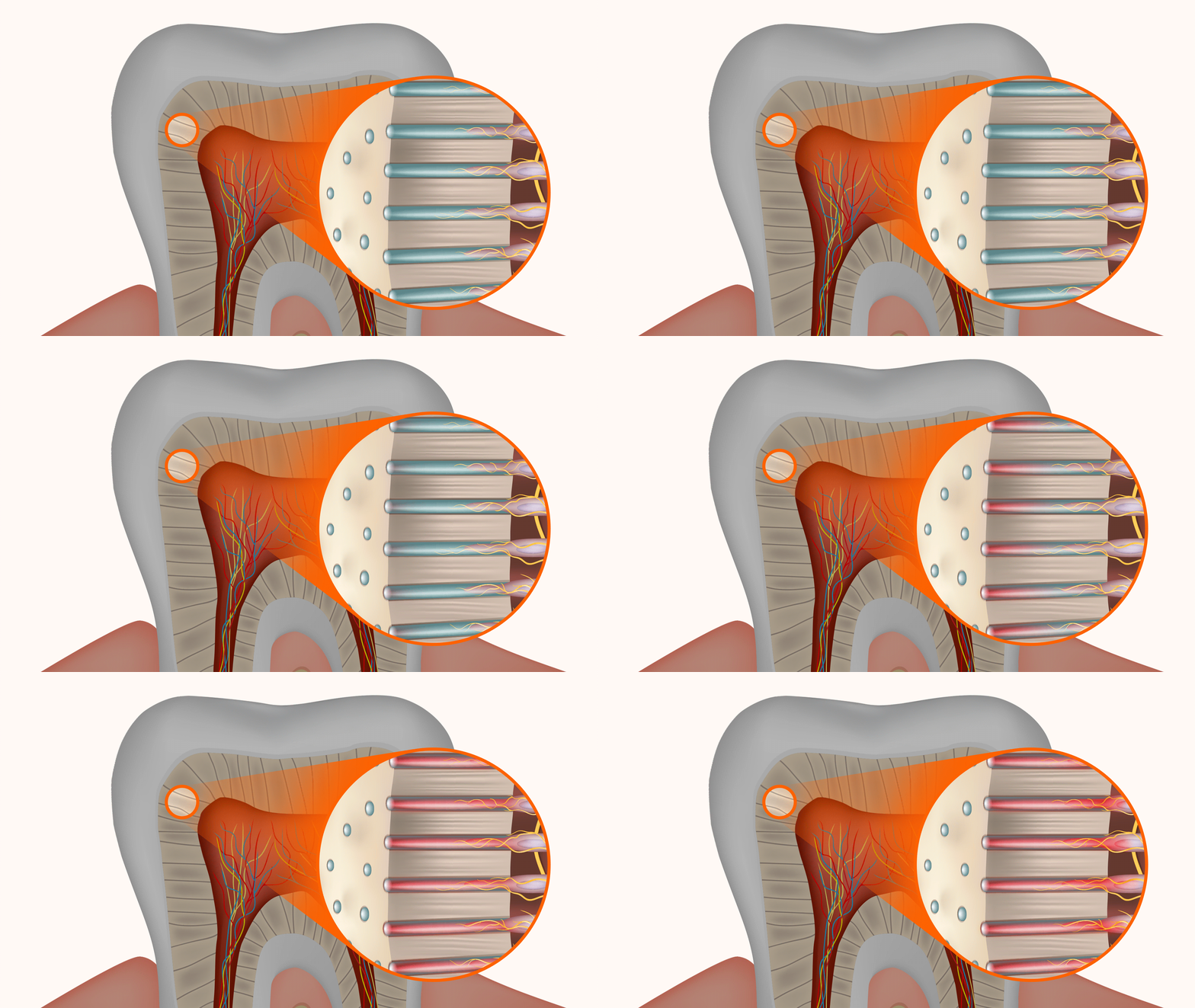
Have you ever felt a sudden twinge when drinking cold water or hot soup—or when chewing something hard? Tooth sensitivity is a common discomfort many adults experience.
One of the most common causes is when the enamel (the outermost layer of the tooth) becomes worn down or damaged, exposing the dentin underneath to external stimuli.
Dentin contains countless tiny tubules (dentinal tubules) connected to the nerve. When these tubules are exposed, triggers like cold, heat, sour foods, or sweets can transmit stimulation directly to the nerve—causing that sharp, sensitive pain.
- Key symptoms of tooth sensitivity
| 원인 | 증상 |
|---|---|
| 에나멜 손상 | 차가운 음식에 특히 민감 |
| 잇몸 퇴축 | 찬 공기에 노출될 때 시큰거림 |
| 치아의 미세한 금 | 특정 음식을 씹을 때 찌릿함 |
| 충치 또는 잇몸병 | 통증이 동반되기도 함 |
However, enamel wear isn’t the only cause. Tooth sensitivity can also occur due to gum recession that exposes the tooth root, improper brushing habits, or unconscious clenching/grinding (bruxism).
In addition, sensitivity may develop if gaps form around old dental restorations and bacteria seep in, or if there are tiny cracks in the tooth.
2. What happens if you ignore these uncomfortable symptoms?
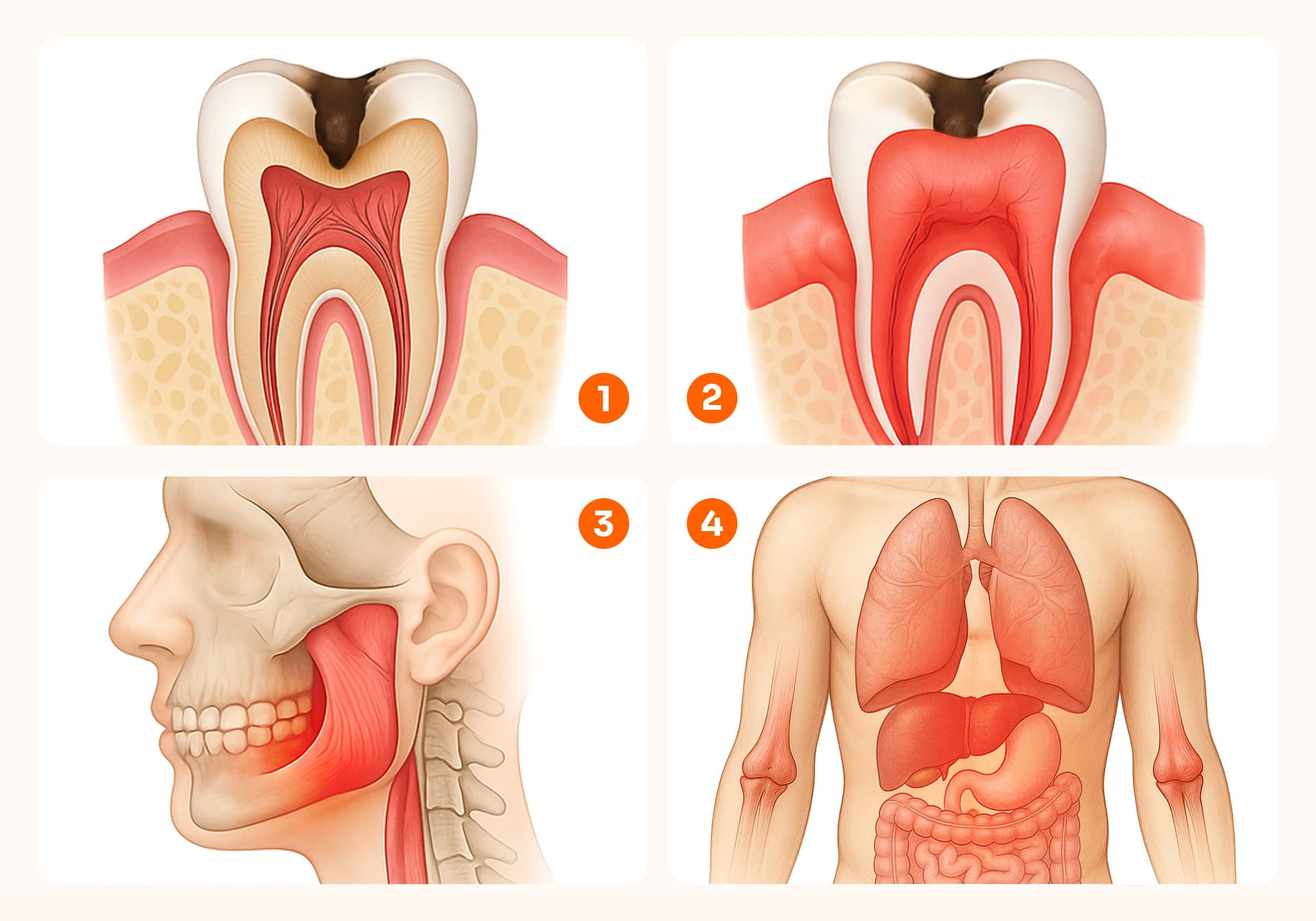
At first, you may only feel discomfort when chewing certain foods. But if you dismiss it and continue to leave it untreated, the problem can become more serious.
- Possibility of cavity progression
- Cavity-causing bacteria can move beyond the enamel into the dentin, and eventually into the nerve inside the tooth.
- Pain becomes more severe, and you may reach a point where saving the tooth is difficult.
- Spread of inflammation
- Inflammation can spread to the nerve and lead to a periapical abscess (a pocket of pus).
- The inflammation can affect the tissues around the root tip and the jawbone supporting the gums.
- Tooth & TMJ (jaw joint) issues
- Pain can lead to a habit of chewing only on one side.
- As a result, the jaw joint is strained, and the teeth on the opposite side take excessive load—accelerating wear or damage.
- Connection to overall health
- Oral bacteria can spread through blood vessels to other parts of the body.
- Studies have reported associations with conditions such as heart disease, diabetes, and stroke.
- Nutritional imbalance
- If chewing becomes uncomfortable and food intake decreases, nutritional imbalance may occur.
- Over time, this can lead to reduced digestive function and decreased stamina.
3. From cavity progression to tooth loss: what are the symptoms by stage?
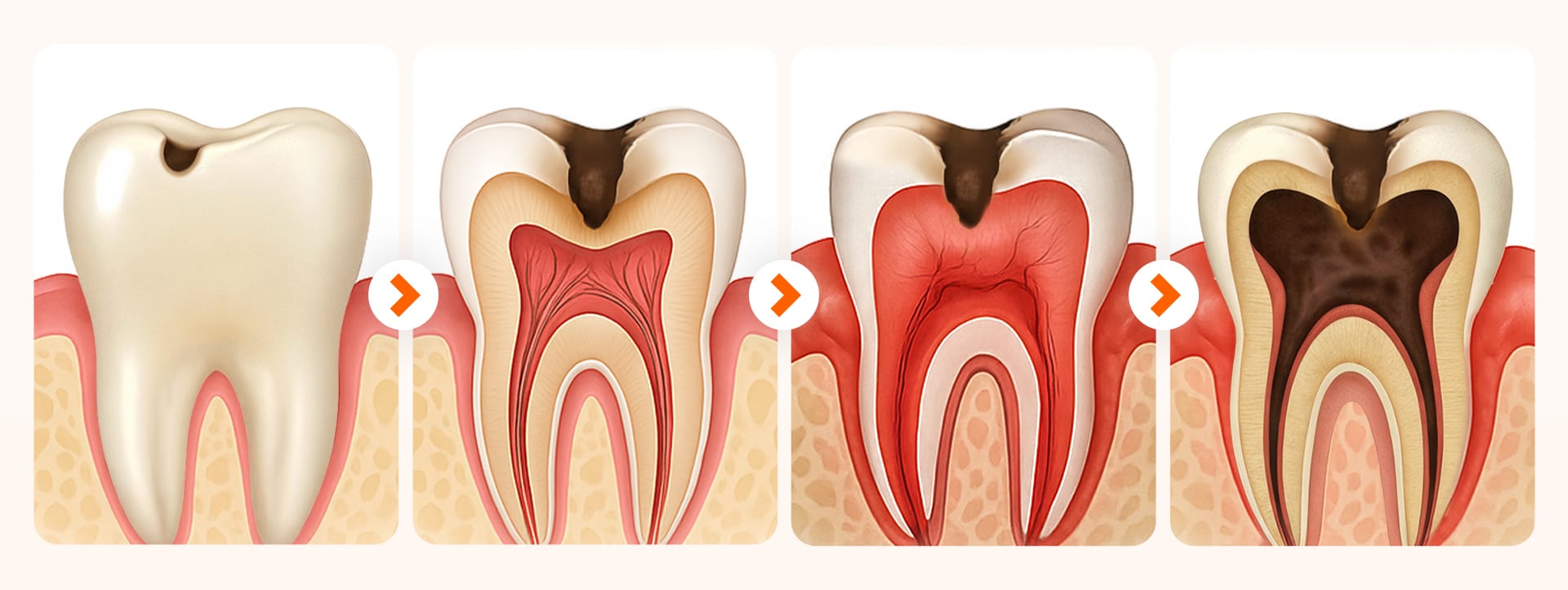
Cavity progression is typically divided into four stages, and symptoms differ at each stage.
[Symptoms by stage of cavity progression]
- Stage 1 | Enamel cavity
- You may notice a small black spot or a fine crack on the tooth surface.
- There is little to no pain, so it’s hard to recognize on your own.
- Stage 2 | Dentin cavity
- The cavity progresses past the enamel into the dentin (the layer closer to the nerve).
- You may experience intermittent sensitivity when eating cold or sweet foods.
- Symptoms can feel mild and easy to ignore, but this is when adult dental treatment tends to be most effective.
- Stage 3 | Decay involving nerve tissue
- The cavity has reached the nerve inside the tooth.
- Severe pain occurs with hot or cold stimuli, and you may feel throbbing pain even at rest.
- Root canal treatment is needed at this stage.
- Stage 4 | Inflammation at the root tip
- The tooth nerve becomes necrotic and an abscess forms at the root tip.
- Facial swelling or pus discharge from the gums may occur.
- If the tooth is judged difficult to preserve, extraction may be considered.
4. How can you tell when an implant is needed?
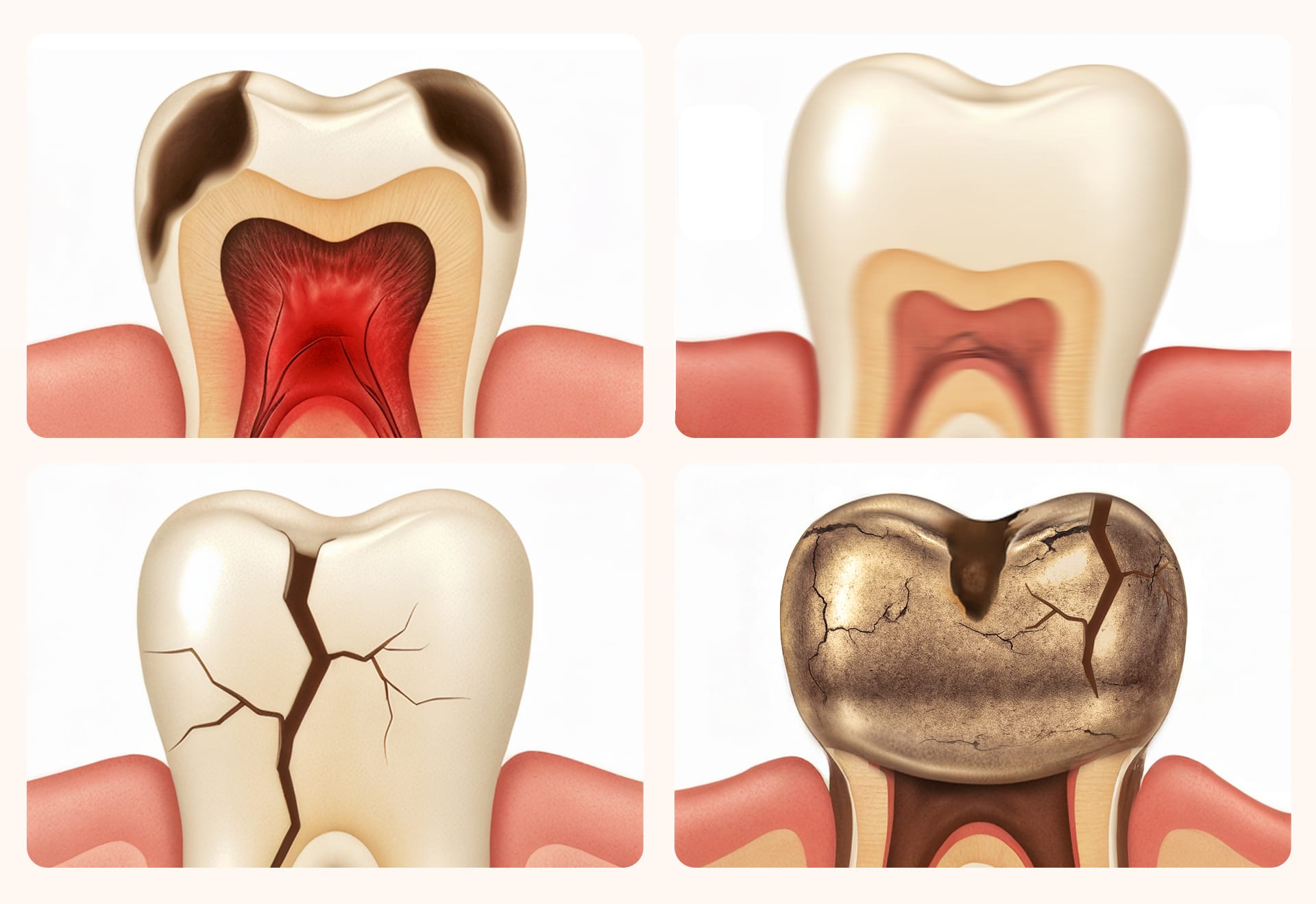
Unfortunately, not every tooth can be saved.
If a tooth has a deep crack or if inflammation has spread severely down to the root, and it is determined that preservation is no longer possible, extraction may ultimately be considered. In such cases, implant treatment may be needed.
[Common signs that you should consider an implant]
| Symptom | Timing & Presentation | Decision Points |
|---|---|---|
| Severe Pain | Persistent enough to disrupt sleep at night | High likelihood of nerve damage or necrosis |
| Tooth Mobility | Visible movement with the naked eye | Concerns over periodontitis progression and alveolar bone loss |
| Cracked Tooth | Tooth fractured while eating hard food | Tooth preservation may be difficult depending on the extent of the fracture |
| Repeated Treatment Failure | Symptoms persist despite repeated root canals and prostheses | Limits to long-term tooth preservation |
An implant is a representative treatment option that can restore function in a way that closely resembles a natural tooth.
- Alveolar bone preservation: Placing an artificial root may help maintain the alveolar bone.
- Protecting adjacent teeth: Unlike a bridge, it does not require shaving down neighboring teeth.
- Functional & aesthetic improvement: Chewing strength, speech, and appearance can be restored to closely resemble natural teeth.
5. Frequently Asked Questions (FAQ)
Q. What happens if I leave sensitive teeth untreated?
Sensitivity is a warning sign that something is wrong with the tooth. If you ignore it and leave it untreated, the condition can worsen to the point where root canal treatment is needed—or you may ultimately lose the tooth. Even if there is no pain, microscopic damage can continue to progress, so if you have symptoms, it’s important to visit a dental clinic for an accurate diagnosis.
Q. Is there anything I can do at home for emergency relief when sensitivity is severe?
Using toothpaste designed for sensitive teeth or avoiding very cold or hot foods may help. However, these are only temporary measures and do not address the underlying cause. If symptoms persist, you should visit a dental clinic for professional treatment.
Q. How can I tell whether discomfort when chewing is from a cavity or gum disease?
Both can cause discomfort when chewing, so it’s difficult for patients to distinguish on their own. Pain from cavities often feels sharp and localized, while gum disease may be accompanied by tooth looseness or bleeding gums. However, an accurate diagnosis requires an examination by a dental professional.
Q. What should I start doing right now for healthier teeth?
The first step is to schedule a dental appointment. Even without symptoms, it’s recommended to visit a dental clinic every six months for a checkup and scaling. Building proper brushing habits and making flossing part of your routine are also important.
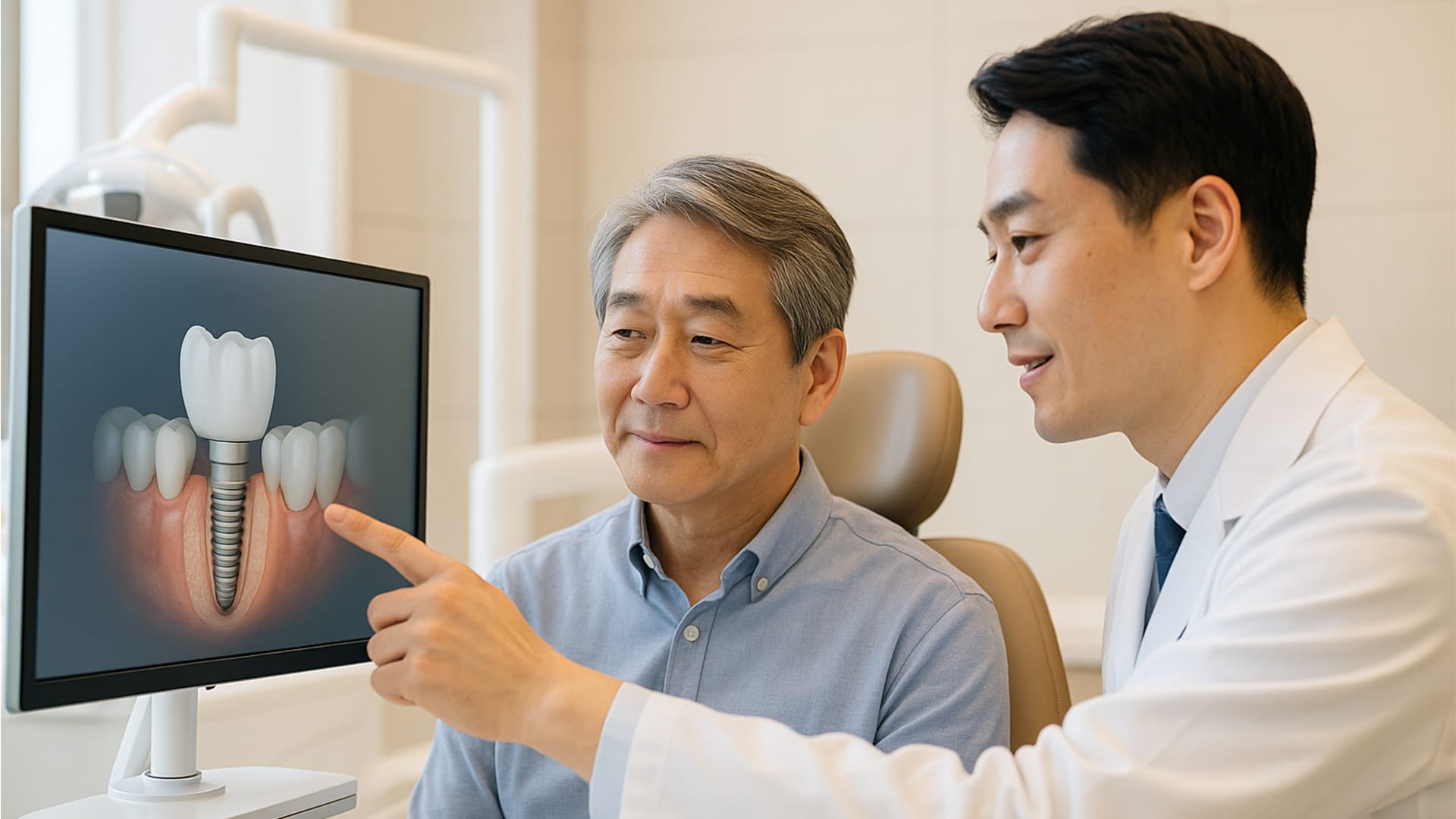
Teeth that feel uncomfortable or sensitive when chewing are not just minor symptoms—they can be warnings that may lead to tooth loss. However, when detected early and treated, most cases can be managed without major issues. If you feel discomfort, don’t endure it on your own—visit a nearby dental clinic for a checkup. Small actions are a highly reliable way to protect your teeth for life.
Sources
- Korean Dental Association. (2021). Guidelines for proper oral care.
- Korea Disease Control and Prevention Agency. (2023). Oral health statistics.
- American Dental Association. (2022). The link between oral health and general health. The Journal of the American Dental Association, 153(12), 1184-1186.
※ The copyright for all content on this blog belongs to medihi. Unauthorized copying, distribution, or derivative use is strictly prohibited, and violations may result in legal action without prior notice.
Recommended reads
 medihi