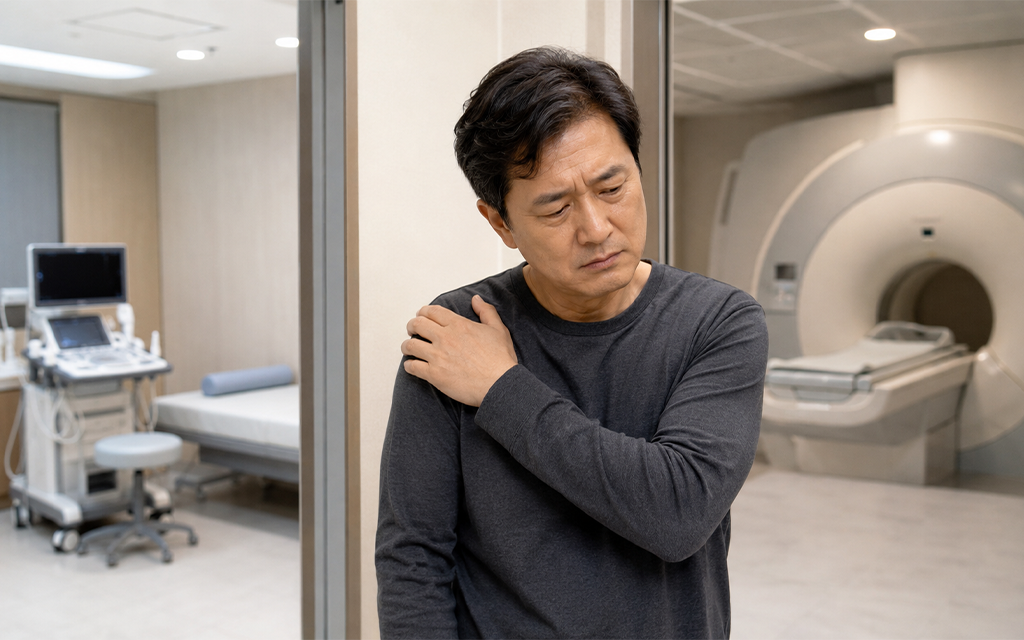

Shoulder joint disorders and cervical radiculopathy can present with very similar symptoms, so accurate differentiation should come first. Rather than judging by pain location alone, this post summarizes the key criteria that should be checked in the clinic.
Many people feel anxious—worried it could be something serious—when they say, “I feel numb from my neck to my fingers, and my sensation feels dull.” For office workers in their 40s–50s who spend long hours looking at monitors, this pattern can commonly occur when age-related changes in the cervical spine overlap with shoulder overuse.
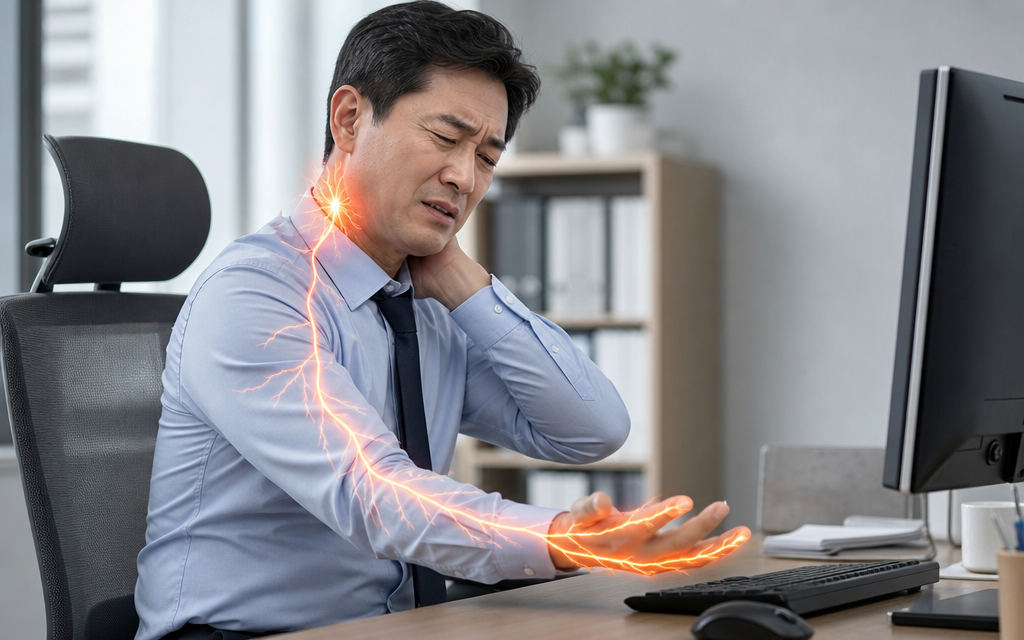
When the painful or numb area feels broad and complicated, it’s natural to worry. What matters is a step-by-step process to identify where this widespread tingling started, using objective clinical clues. If there are no warning signs such as progressive weakness, a structured evaluation can help determine the most reasonable treatment direction.
1. Why finger tingling should be evaluated together with the neck (cervical spine)
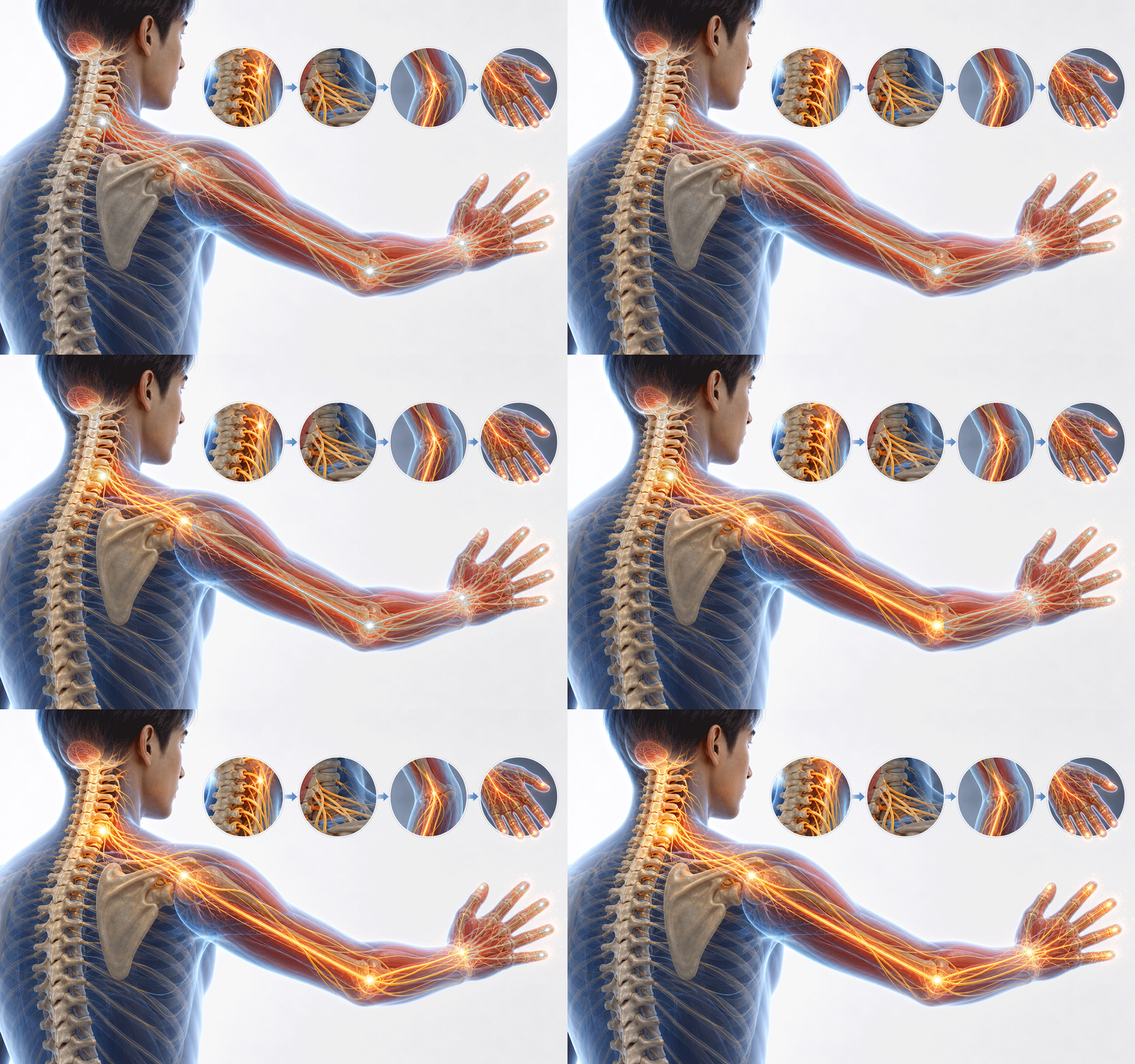
The body’s nerve network works much like a home’s electrical wiring. The cervical spine functions like the “main breaker panel” that supplies power. The shoulder, arm, and fingertips are like the “outlets” in each room where electricity arrives and devices operate.
Imagine that one day the “outlet” in the living room—your fingers—stops receiving electricity, causing numbness or reduced sensation. You might first suspect the outlet or device itself is broken. But it’s also possible that a wire near the main breaker panel is being compressed, causing a fault. This is the basic mechanism of cervical radicular pain (cervical radiculopathy): irritation or compression of a nerve root in the neck can send symptoms down the arm and into the hand.
That’s why, if you feel sharp tingling below the elbow or dull sensation in the fingers, it isn’t safe to look only at one peripheral area in isolation. Before concluding it’s a local problem, the entire nerve pathway originating from the neck should be assessed. Evaluating the neck and shoulder as one connected system is a key principle for reducing diagnostic errors.
2. Cervical disc vs shoulder disorder: key clues to identify where the pain starts
After middle age, it’s common for shoulder problems—such as rotator cuff pathology or impingement syndrome—and cervical nerve root irritation to occur at the same time. It’s like an older home where the breaker panel and outlets wear out around a similar period. Because pain patterns can overlap around the shoulder and scapular region, it’s difficult to determine the primary pain generator based on imaging of a single region alone.
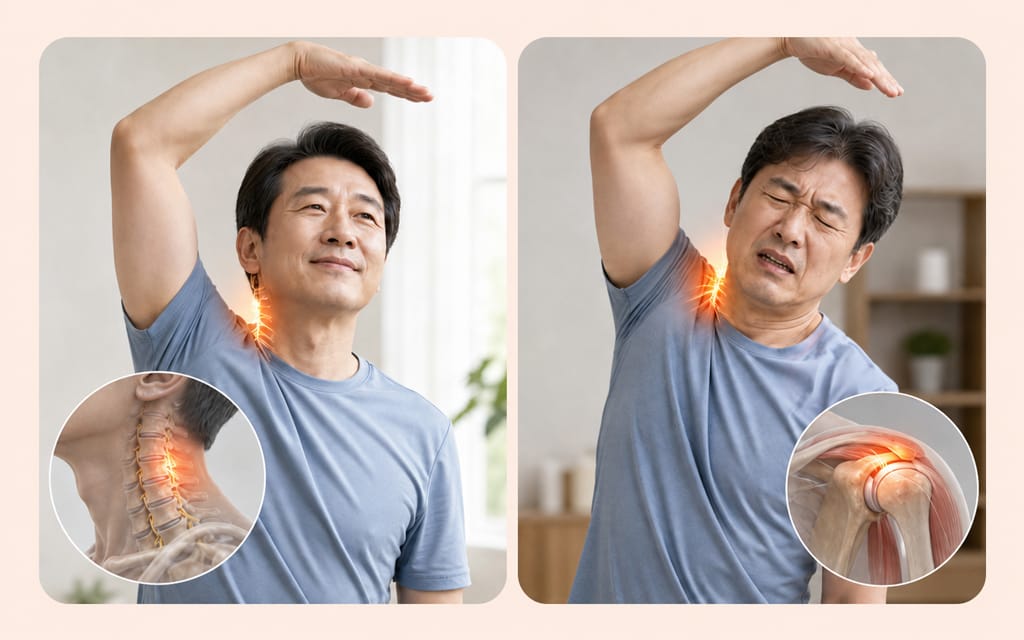
To narrow down the cause, a clinical approach is needed—separating “nerve clues” from “shoulder clues.” If lifting the arm comfortably overhead reduces tingling that runs from the neck down the arm, this may reflect temporary unloading of the cervical nerve root. In that case, the neck becomes a more likely source.
On the other hand, if rotating the arm at a certain angle or lifting it to a specific height triggers sharp pain deep inside the shoulder, this suggests a shoulder joint or tendon problem. If both patterns are present, it’s reasonable to evaluate both areas and then treat stepwise, starting with the clinically more dominant cause.
✅Pre-visit self-checklist to help differentiate neck vs shoulder
- Tingling decreases when you place your arm overhead and hold it there (cervical clue)
- Symptoms shooting down the arm become clearer when you extend your neck backward or rotate it to one side (cervical clue)
- Deep shoulder pain occurs when you twist the arm at a certain angle or raise it to a certain height (shoulder joint clue)
- Tingling continues all the way to the fingertips even when you are not moving the shoulder (nerve-related clue)
3. When it’s difficult to pinpoint the compressed nerve based on which finger tingles
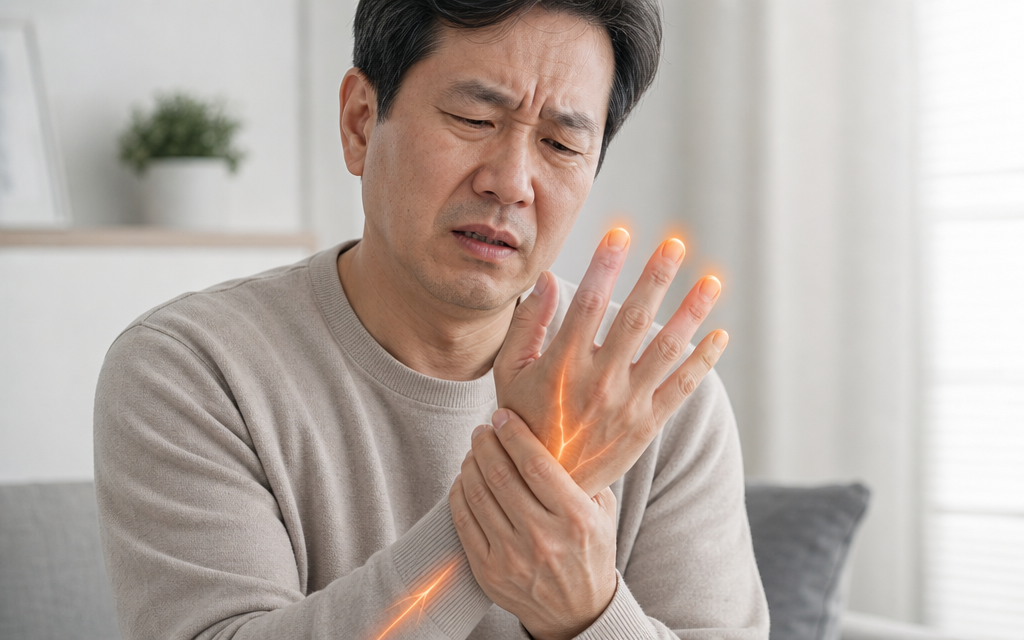
You may often hear explanations like, “If the thumb tingles, it’s the C6 nerve; if the little finger tingles, it’s the C8 nerve.” This can be a useful clue for estimating which nerve root may be involved. However, in real clinical practice, sensory maps on the skin rarely divide as cleanly as in textbooks—areas often overlap or spread more broadly.
In particular, if numbness is widespread across the entire palm or multiple fingers, more careful differentiation is needed. Finger tingling can occur not only from cervical pathology, but also from overlapping conditions such as carpal tunnel syndrome or cubital tunnel syndrome (ulnar nerve compression at the elbow). If nerves are compressed between muscles as in thoracic outlet syndrome, or if a double-crush phenomenon occurs (compression at two or more sites), symptoms can become even more complex.
A practical analogy is that tingling is like “where you see smoke.” Sometimes the smoke appears right where the fire started, but depending on airflow—or in the body’s case, nerve tension and biomechanics—it can appear far from the original spark. Rather than concluding based on location alone, clinicians narrow the cause by integrating sensory loss, muscle weakness, and reflex changes.
4. Why Spurling and distraction tests are combined with provocation tests in the exam
room
Having neck pain and arm tingling doesn’t mean you must rush into advanced imaging from the start. Even in healthy people, cervical MRI often shows reduced disc hydration or degenerative changes. That’s why imaging appearance alone is not enough to declare it the sole cause of current symptoms.
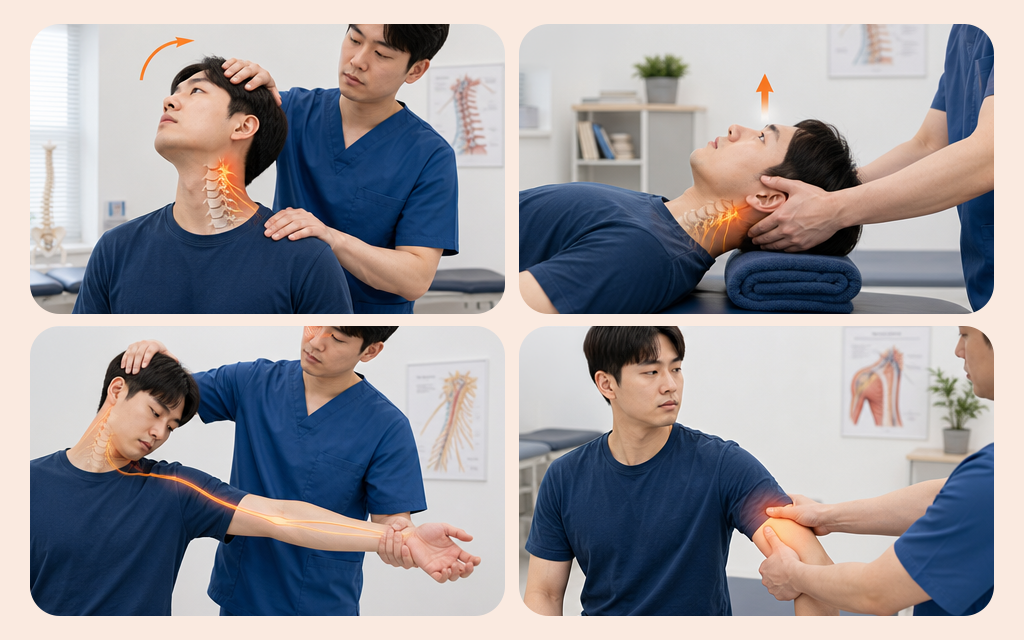
Clinicians therefore combine multiple provocation tests in the exam room to assemble the “pieces” of evidence. Because a single test cannot ensure accuracy, a test-cluster approach is used—interpreting several tests together.
- Spurling test: Extending and rotating the neck to see whether nerve root–related radiating pain is provoked.
- Distraction test: Gently lifting the head/neck to assess whether nerve compression and pain decrease.
- Upper limb neurodynamic test (ULNT): Increasing tension along the upper-limb nerves to assess nerve mobility and irritability.
- Arm Squeeze test: Compressing the upper arm to help differentiate shoulder-origin pain from nerve-related pain.
When these objective physical exam findings and neurological signs align with imaging findings, the treatment direction becomes clearer and safer.
✅Neurological red flags that require prompt, detailed evaluation
- Arm or hand strength decreases, and you keep dropping light objects.
- Fine hand movements—such as buttoning a dress shirt or using chopsticks—suddenly become clumsy.
- Your gait becomes unsteady, or you feel both hands and both feet becoming dull at the same time.
5. Surgery vs conservative care: stepwise decision criteria based on symptoms
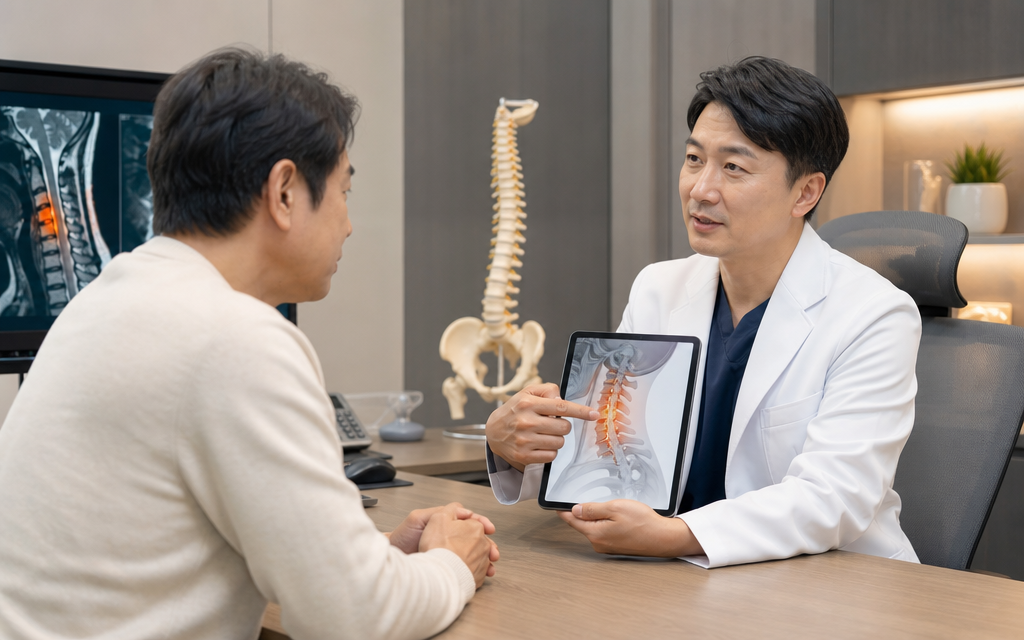
Even if you are diagnosed with cervical radicular pain, situations that require immediate surgery are limited. Even when tingling or pain interferes with daily life, if there are no red flags suggesting spinal cord involvement or severe neurological deficit, a stepwise approach starting with conservative treatment is generally recommended.
Conservative care typically combines medication and physical therapy to reduce
inflammation around the nerve. For diagnostic support and faster pain relief, injection-based treatment (e.g., selective nerve root block) may be considered depending on the individual situation. On the other hand, if severe pain does not improve despite adequate conservative treatment, or if neurological abnormalities are identified, a more detailed evaluation is warranted. Surgery is considered only when these objective criteria are met.
| Clinical Symptoms & Evaluation Criteria | Recommended Treatment Direction & Approach |
|---|---|
| Simple pain and numbness without muscle weakness | Prioritize non-invasive conservative treatment such as medication and physical therapy |
| Severe pain persisting despite conservative treatment | Consider injection therapy and evaluation of indications after detailed imaging assessment |
| Progressive muscle weakness or suspected myelopathy | Prompt detailed examination followed by active differential evaluation for surgery and procedures |
Most importantly, accurately recognizing your pain severity and neurological status—and discussing reasonable, safe options at each stage with a qualified clinician—helps guide the next step.
6. Frequently Asked Questions (FAQ)
Q. Can it still be cervical radicular pain even if I have almost no neck pain?
Yes. In cervical radicular pain, neck stiffness may not be prominent, and tingling or pain can be concentrated in the arm and fingers. Clinicians therefore do not rule it out based only on the presence or absence of neck pain; they make an overall judgment using sensory and strength testing.
Q. If my shoulder MRI is normal, does that make the neck more likely to be the cause?
If no structural tear is seen in the shoulder itself, it can increase the likelihood of a nerve-related issue originating from the neck. However, it’s difficult to confirm based on that result alone; it should be interpreted together with neck provocation tests and peripheral nerve evaluation.
Q. Can numbness recover more slowly than pain?
Tingling or reduced sensation caused by nerve compression tends to recover more slowly than typical muscle pain. Even after pain improves, some numbness may persist and resolve gradually, so ongoing monitoring with your clinician is important.
Q. What symptoms mean I should seek medical care without delay?
If your grip weakens and you drop a cup, or if you feel both hands and both feet becoming dull at the same time, you should seek care promptly. An unsteady gait or legs “giving way” can also indicate a serious condition such as spinal cord compression and requires urgent evaluation.

Complex pain and tingling that run from the neck and shoulder down to the fingertips are often difficult to explain as a problem in only one area. Only when clinical symptoms, neurological examination, and imaging findings all point in the same direction can the safest and most reasonable treatment plan be established.
Rather than becoming anxious by focusing on a single painful or numb spot, a structured examination that considers the full nerve pathway is needed. If red flags are screened out first and the cause is narrowed using objective clues, it can reduce uncertainty during treatment and help you move forward with a clearer plan.
Sources
- Health Insurance Review & Assessment Service (HIRA), Coverage criteria for MRI in spinal disorders
- Korean Neurosurgical Society, Patient information on cervical disc herniation
- Thoomes, E. J., et al., Differentiating cervical radiculopathy from shoulder pathologies: A systematic review, Musculoskeletal Science and Practice, 2020
※ The copyright for all content on this blog belongs to medihi. Unauthorized copying, distribution, or derivative use is strictly prohibited, and violations may result in legal action without prior notice.
Recommended reads
 medihi