

If your shoulder has been gradually stiffening and you notice grinding or creaking after age 60, consider shoulder osteoarthritis. Review how to differentiate it from frozen shoulder, rotator cuff tears, and cervical spine disorders—and learn the right criteria for treatment decisions.
“My shoulder has been getting stiffer over the past few months.”
“Every time I use my arm, it grinds.”

These are common symptoms in people over their 60s. It’s easy to dismiss them as “just aging,” but chronic shoulder pain isn’t always due to age alone. Because management can differ completely depending on the diagnosis, it’s important to identify the exact condition by evaluating movement patterns, possible tendon injury, and other key findings.
If you’ve been enduring the pain and putting off treatment, now is the time to learn clear diagnostic criteria to help you regain a healthier shoulder.
1. A Gradually Stiffening Shoulder in Your 60s May Be Shoulder Osteoarthritis, Not Frozen Shoulder
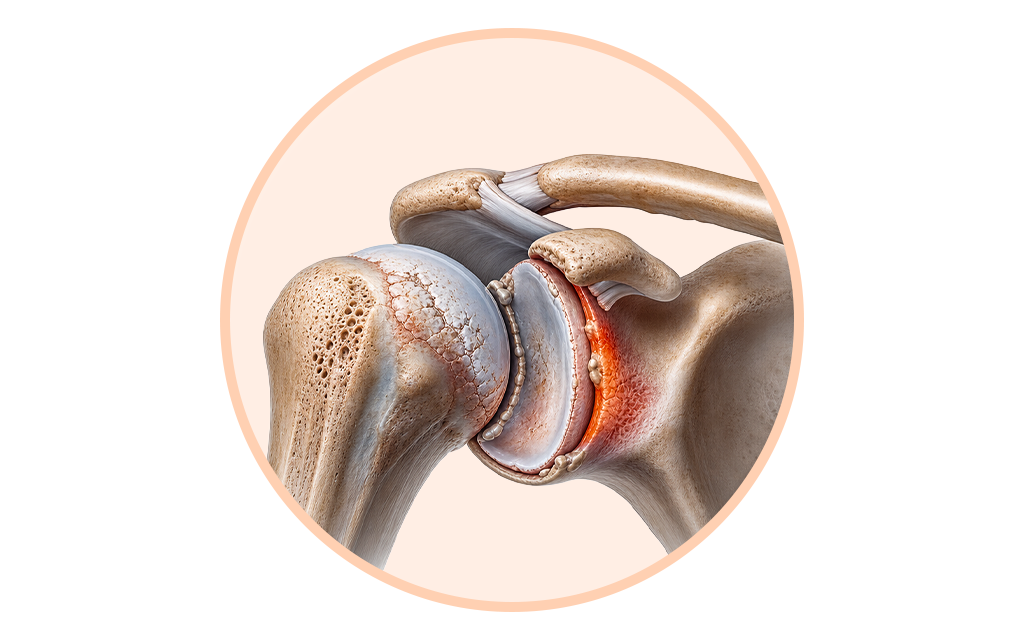
If you are over 60 and have had persistent shoulder stiffness and pain for several months, you may need to consider shoulder osteoarthritis (glenohumeral osteoarthritis). This condition develops as the cartilage that once smoothly covered the joint surface and absorbed shock gradually wears down, leading to pain.
Shoulder osteoarthritis is not merely a short-term inflammatory problem—it can cause progressive structural changes. As cartilage degenerates, the joint space becomes markedly narrowed, and in advanced cases, sharp bony outgrowths called osteophytes may form along the bone margins. The resulting pain and limited range of motion can closely resemble frozen shoulder (adhesive capsulitis) or chronic rotator cuff tears, making it difficult for patients to distinguish on their own.
That’s why an appropriate treatment plan requires a three-dimensional assessment—not only of joint wear, but also of surrounding tissues. If we compare this to transplanting a tree, the bony structure of the shoulder joint is like the “soil” that supports the tree, and the rotator cuff tendons are like the “roots” extending deep underground. For a tree to stand firm in strong wind and rain, the soil (bone) must be stable and the roots (tendons) must be healthy and intact. If you only check the soil and neglect the roots, the tree will eventually fall—likewise, if either component weakens, shoulder function can collapse. This is why evaluation of rotator cuff tendon integrity is essential when diagnosing shoulder osteoarthritis.
2. Frozen Shoulder vs Shoulder Osteoarthritis vs Rotator Cuff Tear: Active vs Passive Range of Motion Is the Key Divider

Restricted shoulder motion is a shared complaint across multiple conditions. However, careful examination—moving the joint to its end range—often makes differentiation possible. Clinicians compare the range when you lift your arm yourself (active ROM) versus when someone else lifts it for you (passive ROM). This objective clinical comparison helps identify where the limitation originates.
With adhesive capsulitis (frozen shoulder), the arm does not lift well whether you raise it yourself or someone else raises it for you. That’s because the entire joint capsule has thickened and tightened—like tree roots becoming rigidly bound together with the surrounding soil. Shoulder osteoarthritis can also be associated with capsular contracture, limiting motion in multiple directions.
Frozen shoulder and shoulder osteoarthritis can show similar early patterns of motion restriction. Therefore, after ROM testing, clinicians confirm the diagnosis with X-ray findings such as joint space narrowing and bony changes. Rotator cuff tears, however, often look different. When a tendon is torn, lifting the arm using your own strength is painful and difficult. But when someone else lifts it, the arm may rise relatively close to full range. This suggests that while the “roots” are injured and cannot support active movement, the joint capsule itself is not necessarily stiff.
✅Self-check: Assessing your shoulder range of motion
- When I lift my arm myself, I feel deep shoulder pain and limitation.
- Even when someone else lifts my arm, it feels firmly blocked and won’t go up. (Consider frozen shoulder/osteoarthritis)
- When someone else lifts it, it goes up relatively well. (Consider rotator cuff disease)
- I have chronic underlying conditions such as diabetes or thyroid disease.
3. Shoulder Grinding/Crackling Sounds (Crepitus): Just a Noise, or a Cartilage Warning Sign?
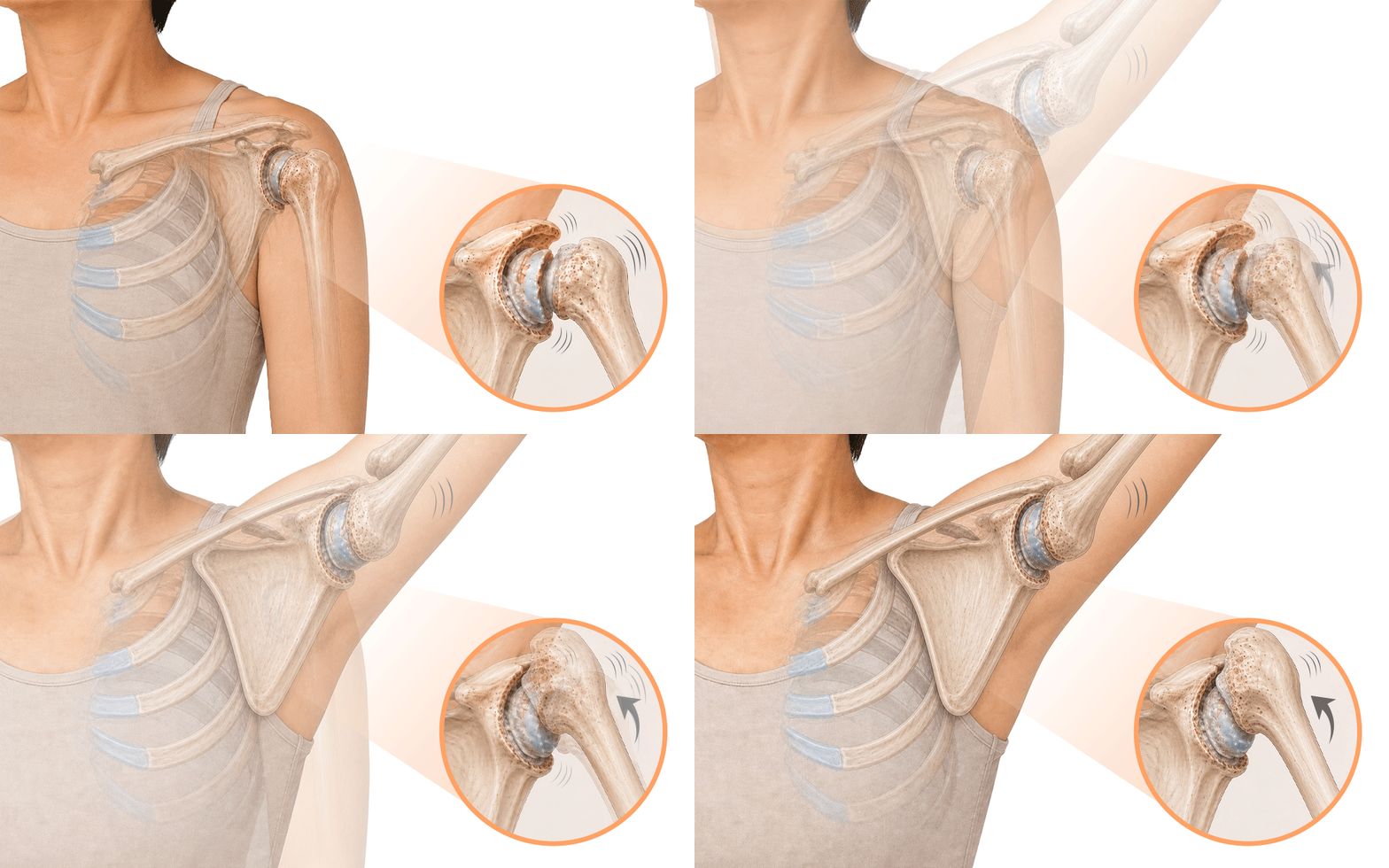
When you circle your arm, you may hear a scratchy, grinding sound from inside. Older adults often describe it as the joints “rubbing roughly.” Medically, this is called crepitus. It can occur when the cartilage surface that normally reduces friction becomes worn and is no longer smooth.
As degenerative osteoarthritis progresses, the cartilage covering the bone surface becomes thinner. The cushioning layer is lost, and exposed bone surfaces may begin to contact each other directly. Each time the shoulder moves, an irregular, dull sound can occur—like overgrown tree roots scraping against sharp rocks and getting injured.
However, you should not assume that any sound automatically means shoulder osteoarthritis. It may also be a transient sound produced as the rotator cuff tendons pass narrowly beneath the acromion. Sound is a warning clue that something may be changing inside the joint, but safe judgment requires both history-taking and a physical examination.
4. Why X-ray Findings Don’t Always Match the Severity of Shoulder Pain
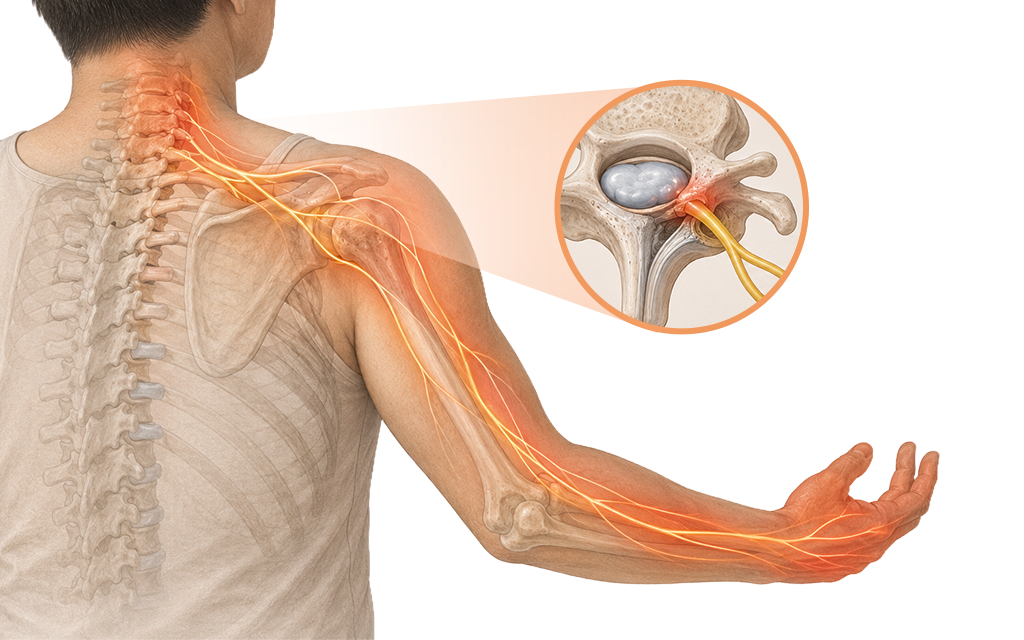
Many patients feel uncertain when they see their imaging results, because the degree of deformity on X-ray does not always match the intensity of pain. Some people have severe arthritis on X-ray but relatively little pain. Others have “clean” images yet suffer pain severe enough to disrupt sleep.
A standard X-ray shows bone alignment and approximate joint space in a flat, two-dimensional way. It cannot precisely identify soft-tissue inflammation or small tendon tears. It’s like soil that looks fine on the surface while the tree roots underground are being damaged. For that reason, clinicians do not decide on surgery based only on isolated X-ray findings.
In particular, the root cause may be cervical radiculopathy originating from the neck. When cervical nerves are compressed, severe radiating pain can shoot toward the back of the shoulder, along with tingling in the fingertips and sensory changes such as numbness or reduced sensation. If you treat only the shoulder without ruling out the neck-related cause, improvement may be limited. A balanced approach—combining detailed physical examination with appropriate imaging—is necessary to choose the right path.
✅What to confirm before choosing an evaluation and treatment plan
- Has the shoulder been gradually stiffening, with grinding sounds persisting for months?
- Along with pain, do you also have fingertip tingling or neck pain?
- Do you have prior test results (such as X-ray films) from another clinic?
- Have you confirmed the difference between active and passive range of motion directly with a clinician?
5. From Conservative Care to Shoulder Replacement: Rotator Cuff Status Determines the Treatment Path
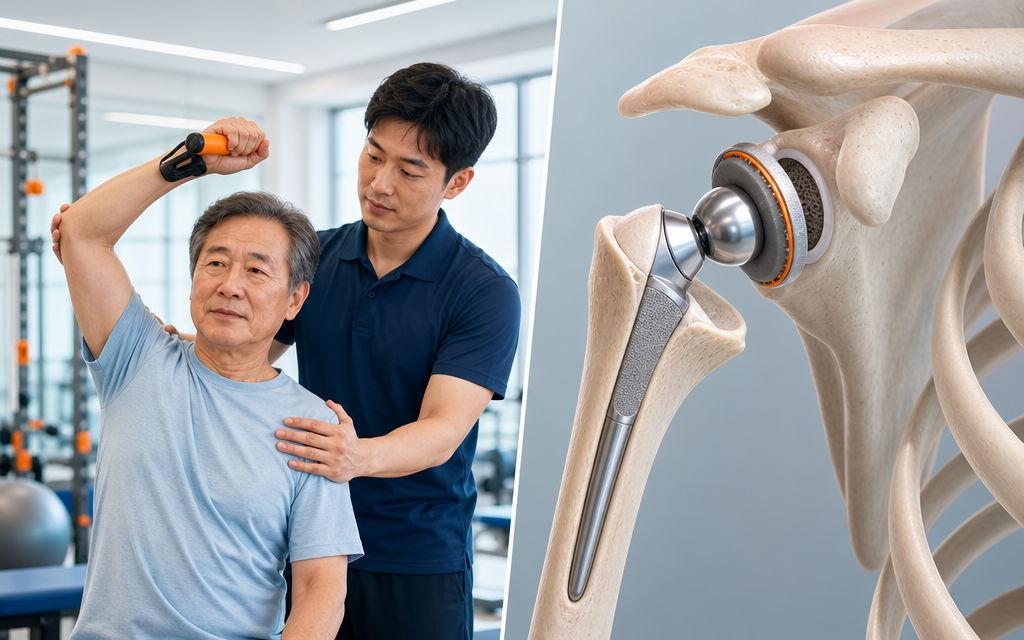
Shoulder treatment should be tailored to each patient’s current condition and muscle function. In early stages—when pain is mild and cartilage damage is limited—medications and physical therapy are typically prioritized. Forcing aggressive self-stretching to “loosen” a stiff shoulder can worsen tendon injury. It is better to restore a safe range of motion under medical supervision.
If joint damage has progressed significantly to an end-stage condition, surgical reconstruction may be considered cautiously. Even then, the integrity of the rotator cuff tendons is a key criterion for selecting the surgical method. If rotator cuff function is relatively well preserved, an anatomic total shoulder arthroplasty (TSA) can be discussed as one option.
If the tendons are extensively torn and it is difficult to maintain the joint’s center of rotation, a reverse total shoulder arthroplasty (RTSA) may be considered as an alternative. This approach compensates for lost tendon support by using a reversed implant design. The surgical method is not determined simply by age; it is selected after carefully integrating the degree of bony deformity and the condition of surrounding tissues.
6. Frequently Asked Questions (FAQ)
Q. If I can’t lift my arm well, is it frozen shoulder or a rotator cuff tear?
It’s difficult to determine from a single symptom. With adhesive capsulitis (frozen shoulder), the arm often doesn’t lift well whether you try on your own or someone helps you. With a rotator cuff tear, lifting is difficult with your own strength, but it may lift relatively well when someone else helps. Confirming this active-versus-passive pattern through examination is the first step in diagnosis.
Q. Can shoulder osteoarthritis be diagnosed accurately with X-ray alone?
X-ray is the most basic first-line test to detect joint space narrowing or osteophytes. However, it cannot fully assess capsular stiffness or rotator cuff tendon injury. A detailed physical exam must be performed alongside imaging, and if needed, ultrasound or MRI may be added to evaluate tendon status.
Q. How do you decide on injection treatments (steroids, hyaluronic acid, etc.)?
They may be considered cautiously when an acute inflammatory flare limits daily movement or when night pain is severe. Corticosteroids may be used for short-term symptom control, but repeated use requires caution. Hyaluronic acid has been reported to help pain in some cases, but responses vary and interpretation of evidence differs. It is safest to decide after discussing expected goals and annual frequency with your treating physician.
Q. Are there warning signs that mean I should seek urgent care right away for shoulder pain?
Yes—when the area around the shoulder joint becomes red and swollen, with severe heat and pain so intense that even light touch is unbearable, along with systemic fever. This may indicate a dangerous condition such as septic (infectious) arthritis rather than a degenerative disorder. If such rapid worsening signs appear, urgent medical evaluation is recommended.

Chronic shoulder pain in your 60s cannot be accurately diagnosed by relying on a single “rule of thumb.” To find a safe way forward, multiple possible causes—shoulder osteoarthritis, frozen shoulder, rotator cuff tears, and cervical radiculopathy—must be differentiated step by step.
Through a reliable physical examination, we encourage you to assess the current balance between bone and tendon as it truly is. We understand that the time you spent enduring pain was an effort to protect your daily life. Rather than rushing, continuing step-by-step treatment that fits your condition can help you regain stability in everyday life.
Sources
- Korea Disease Control and Prevention Agency (National Health Information Portal), guides on osteoarthritis (degenerative arthritis) and shoulder pain.
- Korean Shoulder and Elbow Society (public/patient education materials), overview of glenohumeral osteoarthritis.
- Journal of Orthopaedic Research. Efficacy of intra-articular injections of hyaluronic acid in patients with glenohumeral joint osteoarthritis: A systematic review and meta-analysis. 2023.
※ The copyright for all content on this blog belongs to medihi. Unauthorized copying, distribution, or derivative use is strictly prohibited, and violations may result in legal action without prior notice.
Recommended reads
 medihi