

In This Article
Even after a dislocated shoulder is reduced (put back in place), pain may persist or lifting the arm can remain difficult. This post summarizes associated injuries to watch for—especially in people in their 40s and older—along with signs that suggest a rotator cuff tear, when to consider imaging tests, and practical rehabilitation guidelines.
1. Shoulder dislocation in your 40s and beyond—what’s different?
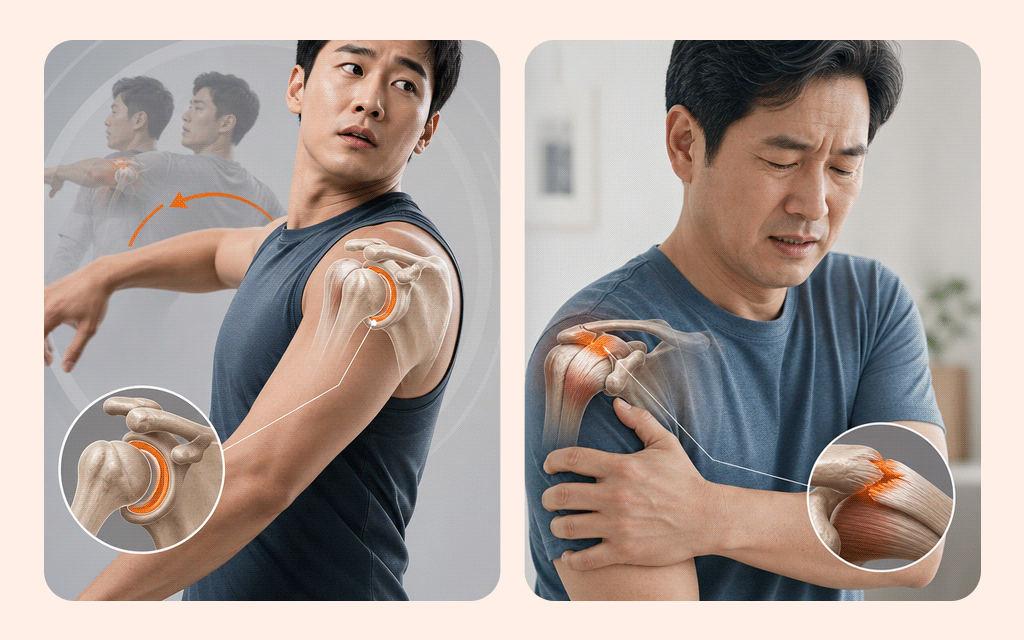
In people in their 40s and older, the risk of tearing the rotator cuff tendons at the time of a shoulder dislocation is higher. In contrast, in younger patients, the main issue is often a tear of the labrum (the cartilage that helps stabilize the joint), which can lead to recurrent dislocations and ongoing instability.
After your 40s, tendon elasticity decreases, making it harder for the tendons to withstand the strong friction and traction forces that occur during a dislocation. A greater tuberosity fracture (a piece of bone near the shoulder breaking off) or nerve injury affecting the arm may also occur. For that reason, even after the bone is put back in place, it’s important to carefully assess the condition of the tendons and nerves—not just confirm that the joint is aligned.
2. Why your arm can still feel weak after the bone is put back
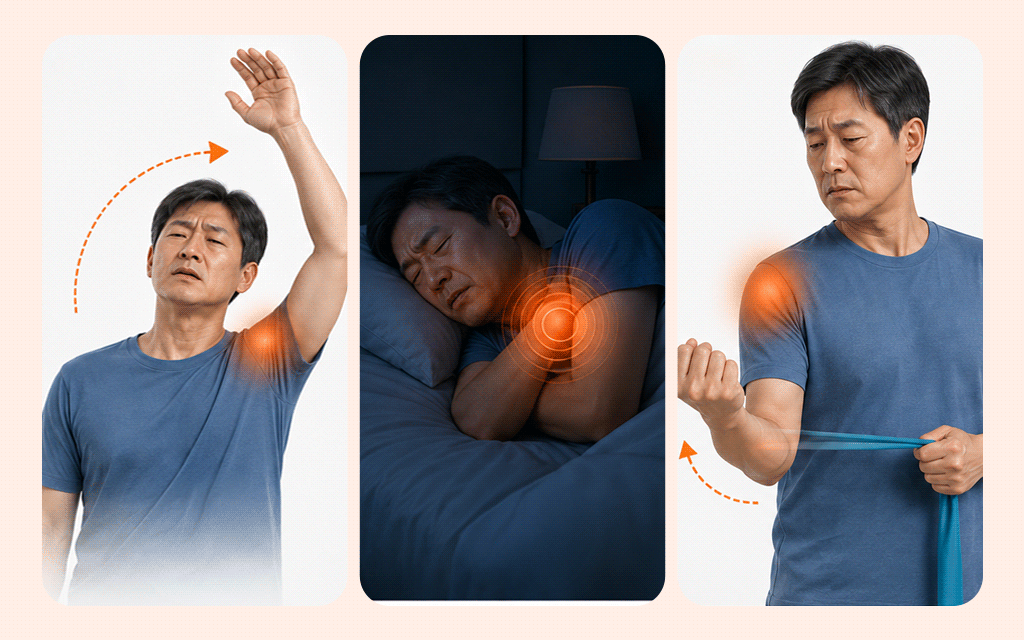
Reduction (realignment) of the shoulder joint alone does not resolve a rotator cuff injury. Even if the bone position looks normal, a torn tendon can make it difficult to lift the arm on your own.
✅Symptoms that may suggest a rotator cuff injury
- Difficulty lifting your arm overhead by yourself.
- Deep, aching shoulder pain that is more noticeable at night than during the day.
- Weakness when rotating the arm outward (external rotation).
If a tear is missed, the torn tendon can retract (curl inward). This retraction can make later repair more difficult, so persistent weakness after reduction should not be dismissed as “just soreness.”
3. How do you tell pain-related limitation from pseudoparalysis?
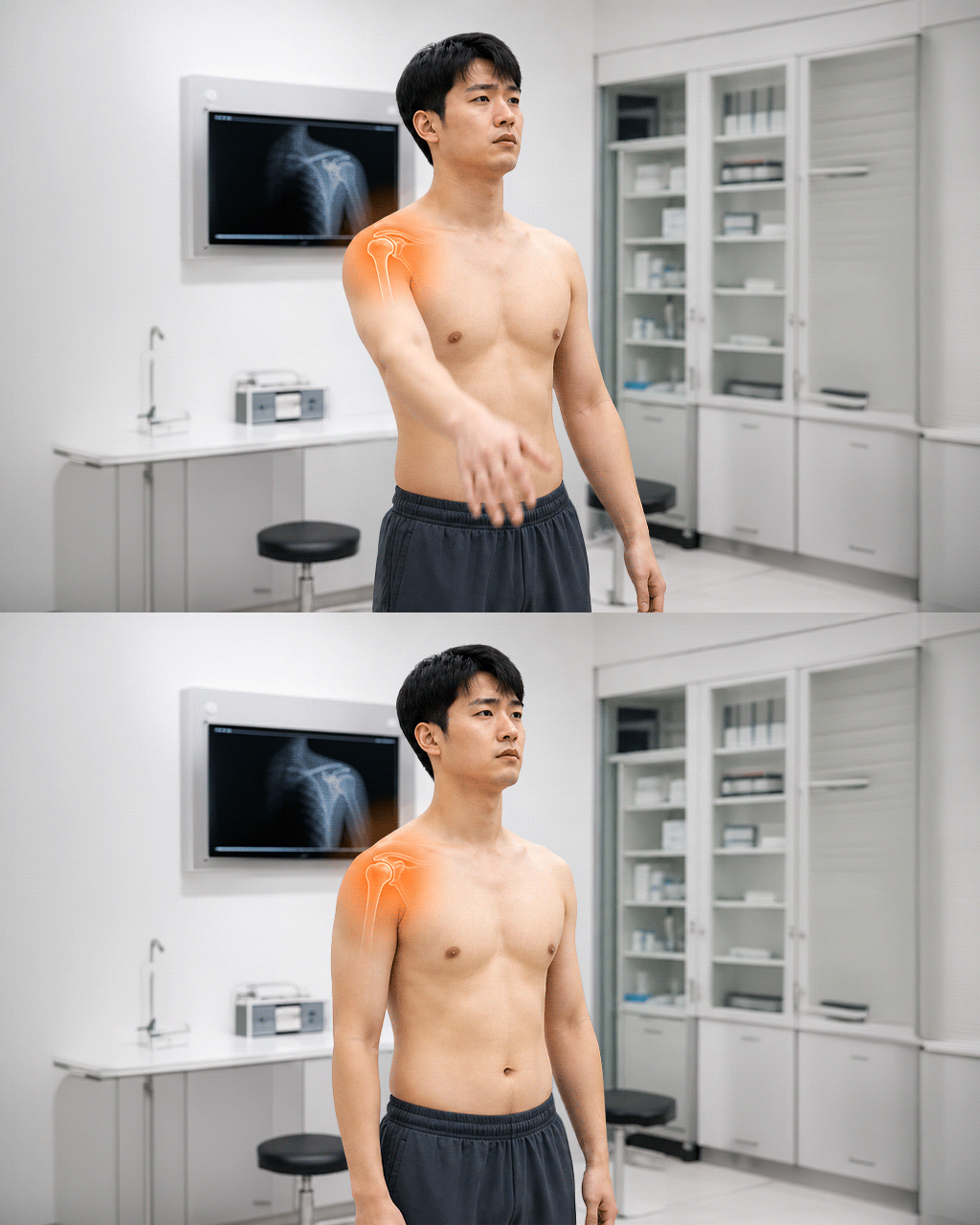
If the arm won’t lift after a dislocation, it’s important to distinguish temporary pain-related limitation from tendon injury.
- If pain is the main reason: resting for a few days and letting inflammation settle may allow the arm to gradually lift again.
- If the rotator cuff is widely torn: you may be unable to actively lift the arm even without nerve paralysis—this is called pseudoparalysis.
A typical pattern is that someone else can support your arm and raise it fully, but when you try alone, the arm may suddenly drop at mid-range.
Also consider nerve involvement. If the axillary nerve was injured during the dislocation, sensation over the outer shoulder can become dull, and arm strength may drop significantly.
These symptoms should be differentiated from frozen shoulder or a simple sprain. If your movement pattern suggests pseudoparalysis or you notice sensory changes, it is safer to confirm the cause through an orthopedic specialist’s examination.
4. When should ultrasound or MRI be considered?
Even if you are in your 40s or older, not everyone needs advanced imaging on the first day of a dislocation. However, if pain worsens after reduction or weakness is severe enough to raise concern for pseudoparalysis, early imaging can be considered. If diagnosis is delayed, there is a risk of tendon retraction or fatty degeneration (fatty infiltration) progressing.
- X-ray: used first to check bone alignment and look for fractures (including a greater tuberosity fracture).
- Ultrasound: can evaluate the rotator cuff relatively quickly while observing the tendons in motion.
- MRI: used to assess tear depth, labral injury, subtle internal bone injuries, and other details; it can also help evaluate possible nerve-related issues depending on the clinical context.
Importantly, seeing a tear on imaging does not automatically mean surgery is required. Treatment is determined by combining imaging findings with the degree of real functional loss.
Consider a detailed evaluation if, after several days :
the arm still drops at mid-range, night pain persists or spreads, outer-shoulder sensation is dulled, strength is reduced when lifting the arm to the side or rotating it outward.
5. Key precautions during rehabilitation after dislocation
Before the tendons have healed, forcing the shoulder into extreme positions or aggressive stretching can cause re-injury. On the other hand, keeping the shoulder immobilized in a brace/sling for too long can lead to stiffness.
A common staged approach is:
- Early phase: short-term protection with a brace/sling to protect injured tissues.
- Next: begin passive range-of-motion exercises first (moving the joint with assistance from the other arm or an external aid), timed to pain improvement.
- Later: once the tendon has reattached firmly, progress to strengthening and functional recovery.
✅Movements to avoid in early rehabilitation
- Forcing the arm backward or sideways in a way that increases stress on the front shoulder ligaments
- Hanging from a pull-up bar or lifting heavy equipment when pain and weakness in outward rotation remain
- Removing the brace/sling and lifting objects without medical confirmation
6. Frequently Asked Questions (FAQ)
Q. If pain and weakness continue after the shoulder is put back in place, what tests are done?
A basic X-ray is used to check the bones. If injury to surrounding tissues such as the rotator cuff or joint capsule is suspected, ultrasound or MRI may be considered after a clinical examination.
Q. If a rotator cuff tear is suspected, how do you choose between ultrasound and MRI?
Ultrasound is useful for confirming injury while viewing the tendons in motion. MRI is used to evaluate tear depth, subtle injuries to the labrum and bone, and to help establish a treatment plan; it may also be used to assess concerns such as possible nerve involvement depending on symptoms and exam findings.
Q. In non-surgical treatment after dislocation, how is injection therapy managed?
Injections are used in a limited way to reduce severe early pain and inflammation. If given too frequently, they can interfere with recovery of the tendons and joint capsule, so a specialist adjusts the number and interval.
Q. After the shoulder is reduced, what symptoms mean I should return to the hospital?
If you have difficulty lifting your arm on your own, night pain that disrupts sleep, or decreased sensation over the outer shoulder, it’s advisable to see a specialist promptly. Sensory loss may be a sign of axillary nerve injury.
This health content has been reviewed by medical professionals, compiled from authoritative domestic and international sources, and is regularly updated in accordance with the latest clinical guidelines.
Sources
- Korean Orthopaedic Association, Clinical Guidelines for Shoulder Joint Disorders and Rotator Cuff Injury, 2021.
- Kim et al., Clinical Features of Rotator Cuff Tears After Traumatic Shoulder Dislocation in Patients Aged 40 and Older, *Clinics in Shoulder and Elbow*, 2020.
- Moss et al., Radiologic Evaluation and Treatment Prognosis Analysis in Middle-Aged and Older Patients With Shoulder Dislocation, *Cureus*, 2025.
※ The copyright for all content on this blog belongs to medihi. Unauthorized copying, distribution, or derivative use is strictly prohibited, and violations may result in legal action without prior notice.