

Tooth decay and periodontal disease can progress faster than many people expect. If early warning signs are ignored, the risk of tooth damage—or even tooth loss—can increase, and in some cases replacement treatment such as an implant may be needed. Below, you’ll find practical ways to protect your natural teeth through regular checkups and preventive care.
“Lately, my teeth feel sensitive every time I chew, and my gums bleed often after brushing. Is it just because I’m tired? Or will I soon need an extraction or something like an implant? I’m really worried.”

These concerns are common among adults in their 30s to 50s. When you’re focused on work and family, it’s easy to postpone dental visits—but tooth decay and periodontal disease can progress more quickly than you might think, increasing the risk of tooth loss.
This article focuses on early signs of tooth decay and periodontal disease—warning signals you should recognize before losing a tooth.
1. How does tooth decay start?
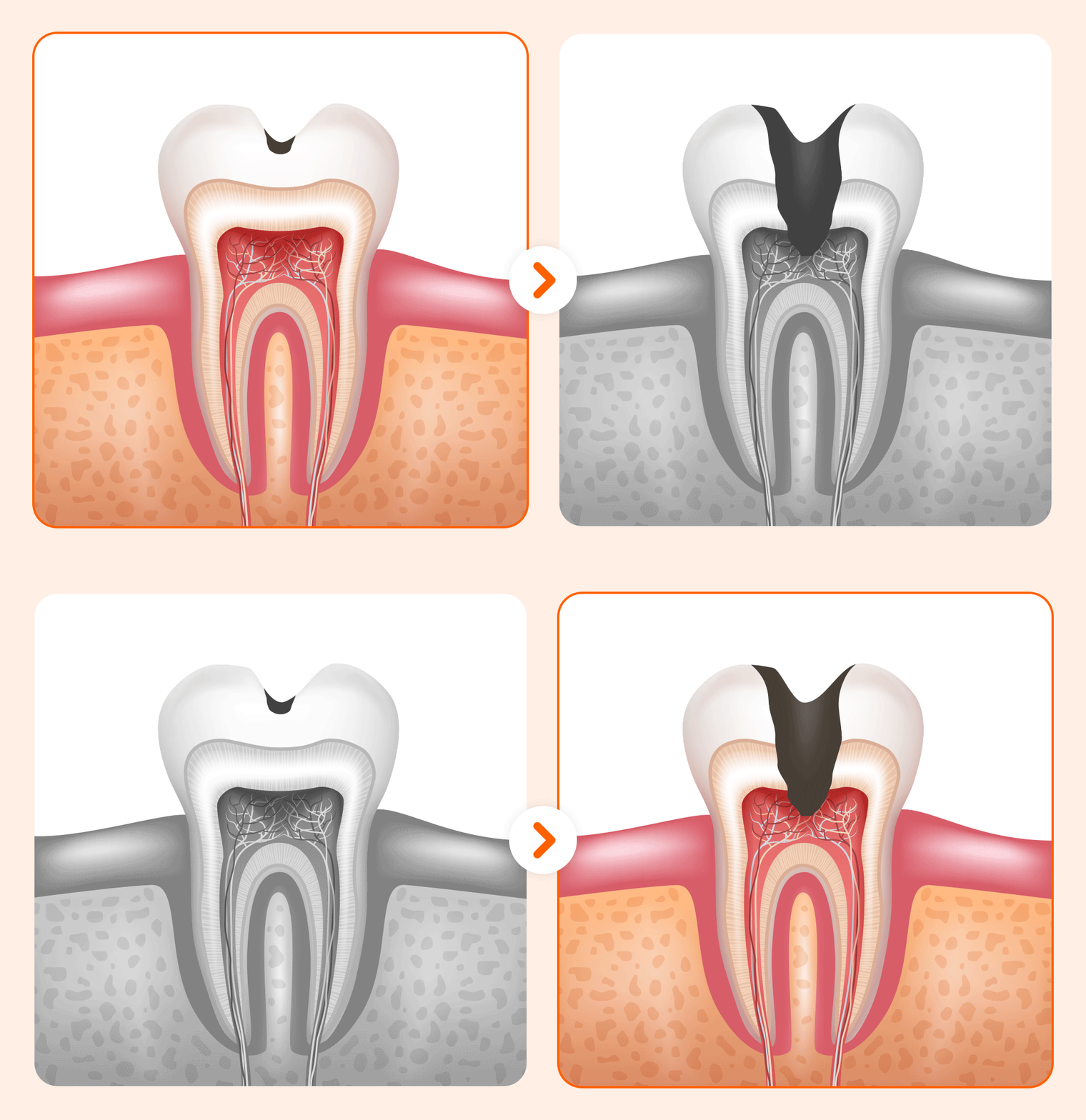
“My tooth hurt on and off, then it felt fine, so I ignored it. But when I looked in the mirror, I noticed a tiny hole in my molar or a black spot on the surface. Isn’t that still okay?”
Many people assume that if the pain goes away, the problem is resolved. However, this can be a strong sign of early tooth decay.
Tooth decay begins when tiny defects form in the enamel, the hardest outer layer of the tooth. Early on, there is little to no pain, and you may only notice a milky-white change on the surface or a small dark spot. A black spot or surface change can be a signal that needs evaluation, including the possibility of decay.
Once decay progresses beyond this stage and starts to penetrate into the inner dentin, the black hole grows larger, and sensitivity may occur—especially with cold water or sweet foods.
2. What early symptoms does periodontal disease show?
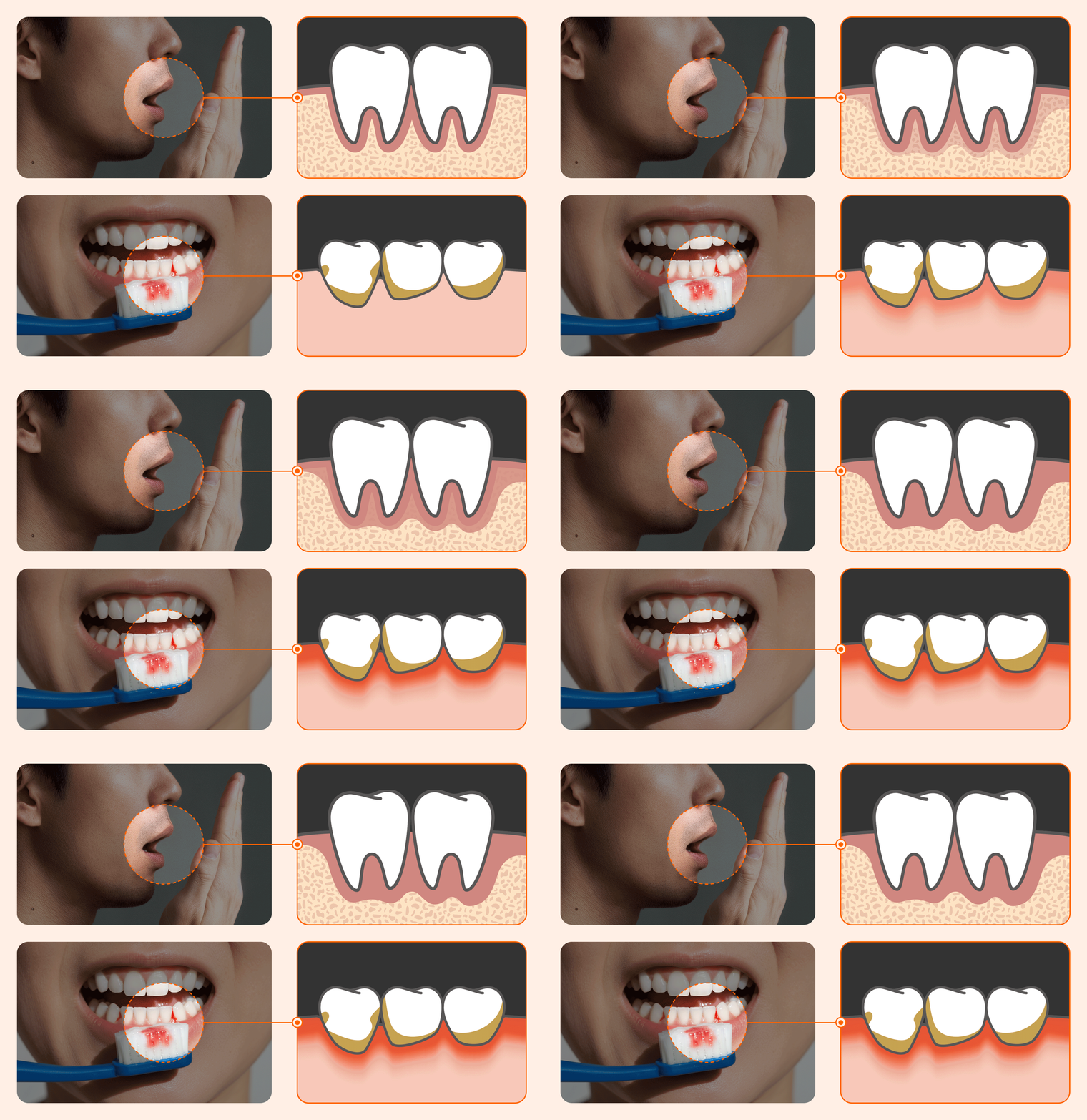
Chronic bad breath is one of the clearest signs of periodontal disease. Food debris and bacteria (plaque and tartar) accumulate in periodontal pockets (the space between the gums and teeth). As they break down, they produce foul-smelling compounds called volatile sulfur compounds, which can worsen mouth odor.
Periodontal disease can also begin with gum bleeding. If you notice bleeding after brushing or swelling of the gums, it may indicate that inflammation is already progressing.
A common pattern is waking up with a “stale” feeling in the mouth, or noticing gum bleeding when eating hard foods. If left untreated, it can lead to alveolar bone resorption (loss of the bone that supports the teeth).
Because periodontal disease often progresses without pain, it’s important to pay attention to indirect signs such as bad breath and gum bleeding.
Summary: If gum bleeding keeps happening, it’s not just “because of the toothpaste.” You should suspect periodontal disease and get a dental checkup.
3. Is it dangerous if a tooth feels slightly loose?
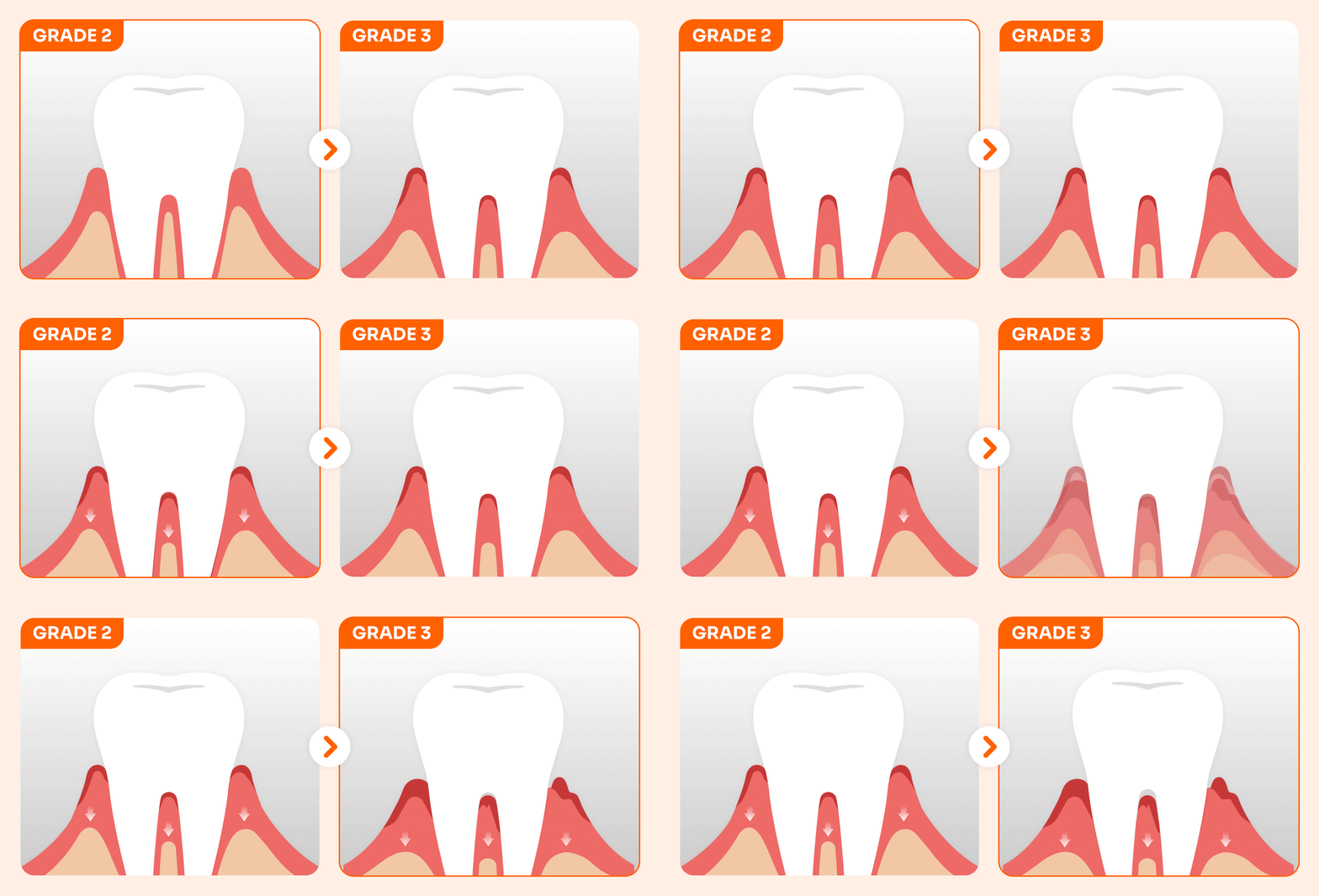
In clinical practice, tooth looseness is assessed using the Miller mobility index. According to this index, greater mobility generally indicates more gum-bone loss and a poorer prognosis for the tooth.
In particular, Grade II or higher mobility may indicate an advanced stage of periodontitis and possible periodontal tissue damage. A detailed evaluation is needed, and because the likelihood of extraction can be higher, the decision is made after comprehensively assessing the condition of the gum bone and the tooth’s prognosis.
[Risk levels by stage of tooth looseness]
| Tooth Mobility Stage (Miller Index) | Degree of Mobility | Clinical Significance | Prognosis & Action |
|---|---|---|---|
| Grade 0 | Normal, no movement | Healthy tooth condition | Maintain regular check-ups |
| Grade I | Less than 1mm movement back and forth | Possible early periodontitis | Scaling & early gum treatment required |
| Grade II | 1mm or more movement back-and-forth & side-to-side | Severe periodontitis stage, accompanied by alveolar bone loss | Conservative treatment possible, but high risk of extraction ↑ |
| Grade III | All directions + vertical movement | Collapse of supporting structures, loss of function | Extraction and replacement therapy (e.g., implant) may be considered |
A typical case starts with “a slight feeling of movement when chewing,” and gradually progresses to a stage where the tooth moves even when touched with a finger. If neglected, it can place extra stress on neighboring teeth and may eventually require replacement treatment such as an implant.
4. Before implant treatment, what options are available?
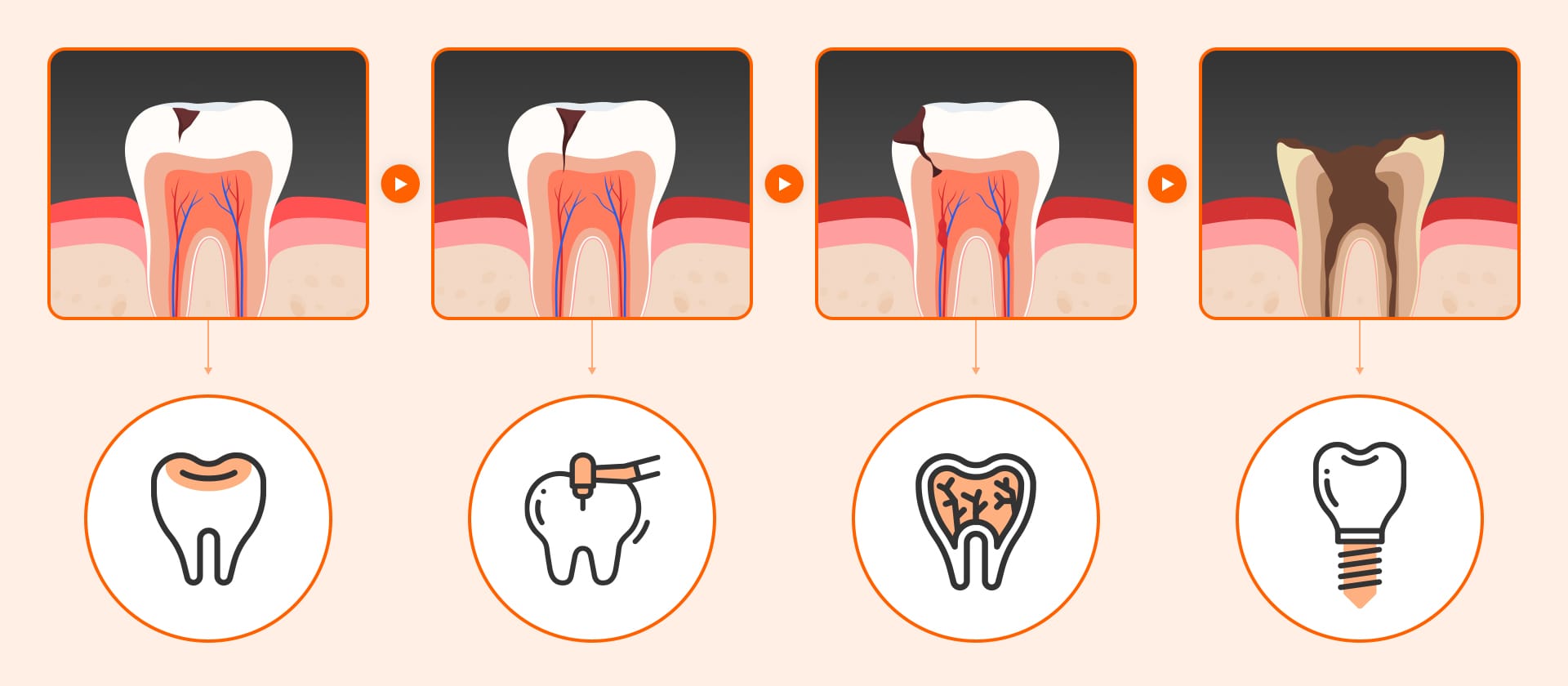
Before a situation reaches the point where an implant is needed, there are many conservative treatment options that may help preserve the tooth. Tooth loss does not happen overnight; it typically occurs as tooth decay or periodontal disease is not managed in time, gradually weakening the root and supporting gum bone.
That’s why receiving the appropriate conservative treatment at each symptom stage is crucial.
[Stage-by-stage warning signs before tooth loss]
| Stage | Key Symptoms | Clinical Significance | Treatment & Action |
|---|---|---|---|
| Early Stage | Sensitivity, black spots | Enamel (outer tooth surface) damage, tooth decay progression begins | Caries treatment such as resin or inlay |
| Intermediate Stage | Gum bleeding and swelling | Periodontitis progression, gum inflammation, and alveolar bone resorption begin | Scaling, root planing, subgingival curettage |
| Advanced Stage | Tooth mobility, pain | Nerve damage or severe loss of alveolar bone | Root canal treatment, tooth splinting, partial prosthesis |
| End Stage | Severe mobility, inability to chew | Collapse of tooth-supporting structure | Extraction followed by replacement therapy (implants, bridges, etc.) |
Common treatment options include:
- Gum curettage: treatment that scrapes out inflammation and bacteria from inside the gums
- Root canal treatment: a procedure to preserve the root when decay has spread to the nerve
- Partial restoration: a method to cover or reinforce a tooth when part of it is damaged
The key point is that early action can help you avoid extraction. If you don’t dismiss mild sensitivity or gum bleeding and instead get prompt evaluation and treatment, you may be able to keep your teeth longer.
5. Frequently Asked Questions (FAQ)
Q. My tooth decay was severe, so I had root canal treatment. Am I okay now?
Root canal treatment is a conservative procedure that removes infected nerve tissue to save the tooth. After root canal treatment, the tooth may become weaker, so depending on the condition of the tooth, you may consider protecting it with a restoration such as a crown. Even after root canal treatment, problems can recur if the surrounding teeth and gums worsen, so regular checkups are still necessary.
Q. My gums aren’t in good shape—Is scaling alone not enough?
Scaling is a highly effective preventive treatment for gingivitis (gum inflammation), which is an early stage of periodontal disease. However, if tartar has built up deep under the gums and the condition has progressed to periodontitis where bone loss occurs, scaling alone may not be sufficient. Additional treatments—such as root planing (smoothing/cleaning the root surface) or gum surgery—may be needed to help prevent progression to a stage where an implant becomes necessary.
Q. I have slight tooth mobility. Do I need an extraction and an implant?
Mild tooth mobility can be an early sign of tooth loss risk, but it does not automatically mean you need an implant right away. With professional periodontal treatment to remove inflammation and preserve the remaining gum bone, the tooth may be saved. If mobility is not severe, conservative treatment such as splinting (stabilizing the tooth by bonding it to neighboring teeth) may be attempted to keep the natural tooth as long as possible.
Q. What is the most important habit to prevent tooth decay or gum disease in advance?
The most important habit is brushing correctly and using floss or an interdental brush daily to help prevent periodontal disease. In addition, even if you have no pain, getting regular checkups and preventive care such as scaling at least every 6–12 months is one of the most effective approaches. Regular checkups and preventive management can reduce the risk of progression of tooth decay and periodontal disease and help improve the chances of preserving natural teeth.

Tooth decay and periodontal disease can lead to tooth loss if early signs are brushed off. However, if you don’t miss small signals—such as sensitivity, gum bleeding, or looseness—and you keep up with regular checkups, prevention is achievable. The minor discomfort you feel today may be your biggest opportunity to protect your teeth.
Sources
- Korean Academy of Conservative Dentistry. (2022). Guidelines for the Prevention and Treatment of Dental Caries. Korean Academy of Conservative Dentistry.
- Korean Academy of Periodontology. (2021). Guidelines for Periodontal Disease Management. Korean Academy of Periodontology.
- Chung-Ping Wu, Yu-Kang Tu, Sao-Lun Lu, Jui-Hung Chang, Hsein-Kun(2019). Quantitative analysis of Miller mobility index for the diagnosis of moderate to severe periodontitis: A cross-sectional study. Journal of Dental Sciences, 14(1), 63–69.
※ The copyright for all content on this blog belongs to medihi. Unauthorized copying, distribution, or derivative use is strictly prohibited, and violations may result in legal action without prior notice.
Recommended reads
 medihi