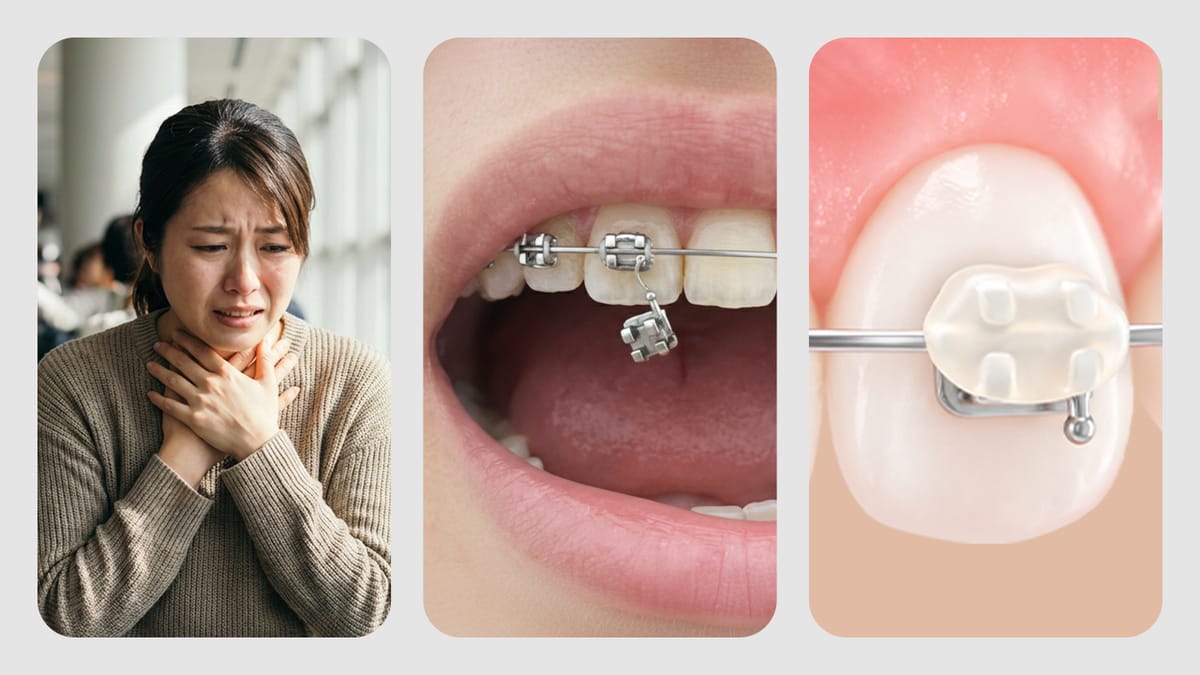

The speed of rapid orthodontics is not determined by the force of the appliance, but by the 'biological rhythm'—the rate at which the bone and tissues surrounding the teeth respond to change. For international patients looking to maximize orthodontic efficiency during their stay in Korea, we have summarized three core methods based on medical principles and the safety standards that expats must prioritize.
"Will starting my treatment while staying in Korea make my braces finish faster?"
"But if the treatment is fast, won't it put too much strain on the tooth roots?"
For those visiting Korea on a limited schedule, the desire for maximum results in a short time often clashes with concerns about side effects. Orthodontic treatment is not a mechanical task of moving objects; it is a delicate procedure involving living cells and tissues. Focusing solely on speed can lead to overlooking critical factors like periodontal health and safety.
What is commonly referred to as 'rapid orthodontics' is not a method of forcing speed, but rather an 'ancillary strategy' to optimize the bone environment so that teeth can move more efficiently. Here, we explain the principles of three core methods used in Korean clinical practice and provide a checklist for international patients to ensure a safe treatment choice.
1. How does rapid orthodontics move teeth faster?
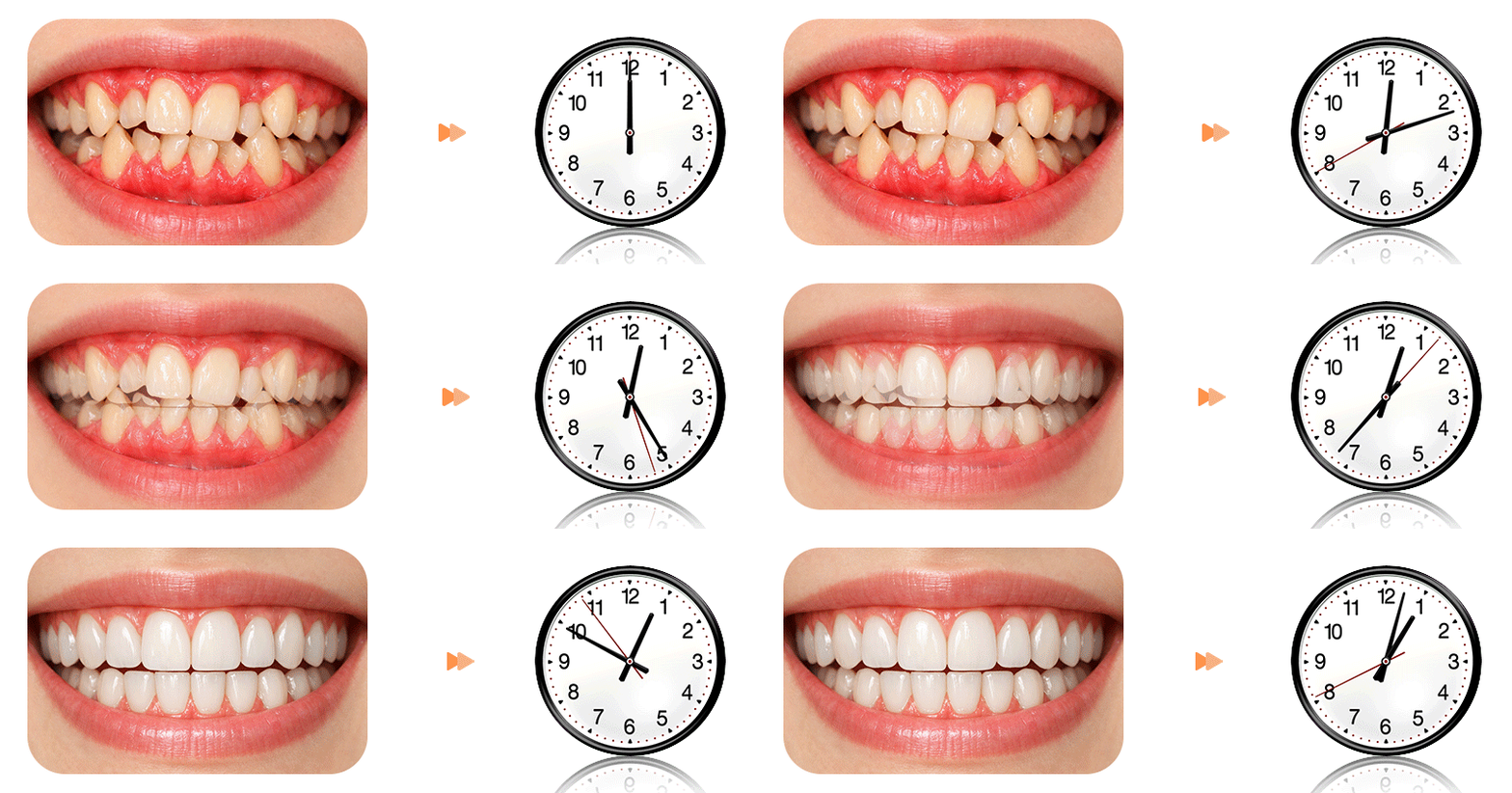
You might assume 'rapid orthodontics' involves tightening brackets harder or using thicker wires, but this is far from the truth. Think of orthodontics as 'driving to a destination.' No matter how good the engine (the appliance) is, if the road conditions (the jawbone) are poor or the navigation (the plan) isn't updated, you cannot safely increase speed. In fact, forcing speed increases the risk of 'accidents' such as root resorption or gum recession.
Instead, these methods utilize a biological principle called RAP (Regional Acceleratory Phenomenon). When intentional stimulation is applied to the bone or surrounding tissues, the body temporarily increases metabolic activity to heal the area. This is similar to how skin regenerates faster after a minor cut. Korean rapid orthodontic protocols utilize this phenomenon to temporarily reduce bone density, creating an environment where teeth can move more easily.
However, this response is not indefinite, and effects vary based on individual bone density and nutritional status. Rather than viewing it as a way to significantly shorten the total duration for everyone, it should be understood as a "booster" to improve efficiency in segments where tooth movement is typically difficult.
Realistic Criteria for Your Situation:
- Safety Priority: If your goal is a drastic reduction in total treatment time, it is wise to adjust your expectations. Biological responses vary greatly by individual. Aiming for 'progress without delays' rather than 'forced acceleration' provides more peace of mind.
- Efficiency Priority: If the goal is 'initial alignment' or 'movement efficiency in a specific segment,' ancillary therapies can provide meaningful assistance. Consult with your orthodontist to see if you are a candidate.
2. 3 Core Ancillary Therapies: Surgery, Minimally Invasive, and Photo-stimulation
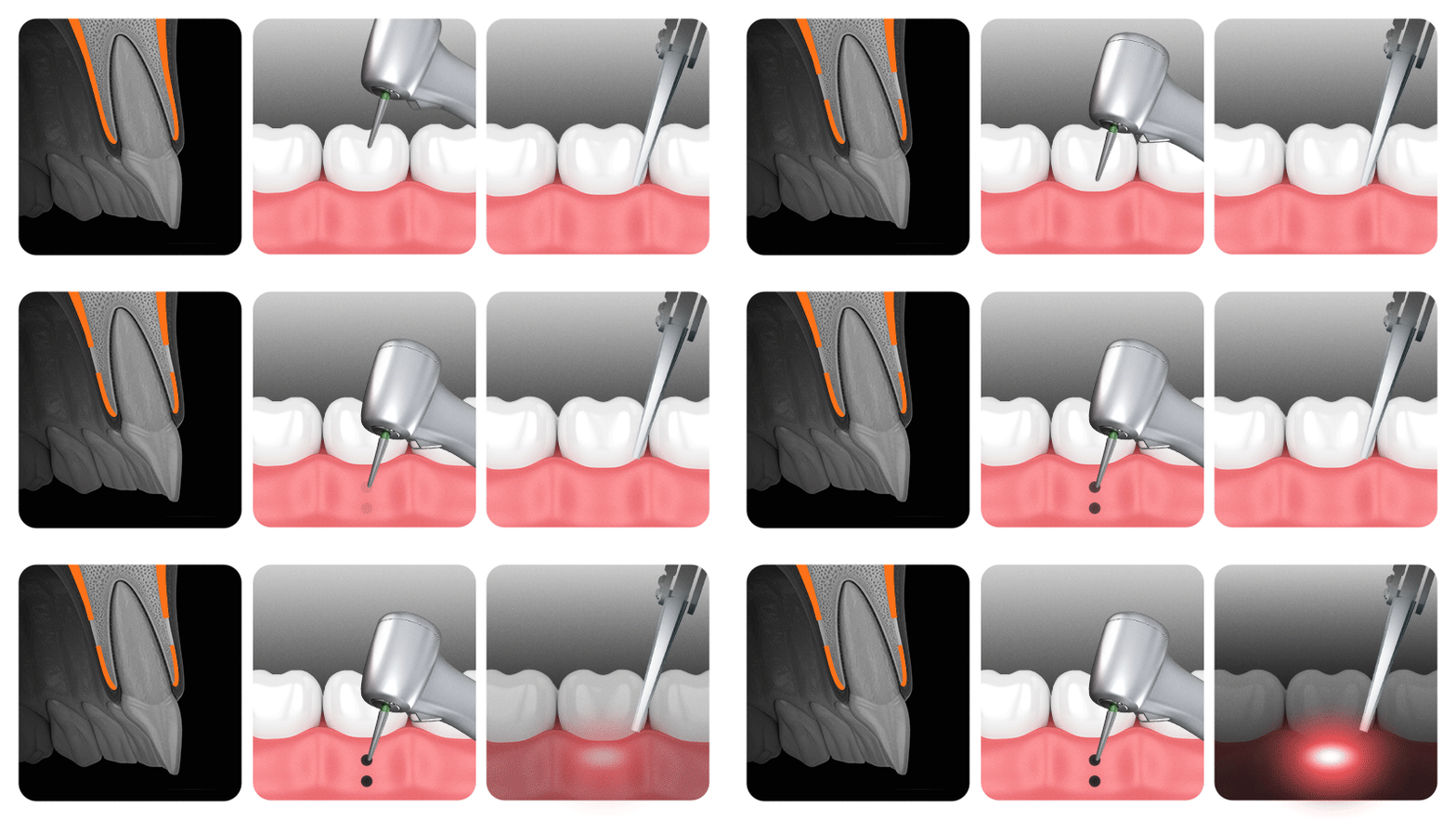
Ancillary therapies that support biological responses are divided into three categories based on their level of invasiveness. Each method has distinct pros and cons, so you must choose based on your gum health, pain sensitivity, and length of stay in Korea.
1) Surgical Ancillary Therapy (Corticotomy-based)
This is a traditional method where a small incision is made in the gums to stimulate the surface of the alveolar bone (cortical bone), inducing a RAP response. Reports suggest this can help increase initial movement speed in adult patients with dense bone. However, as it is a surgical procedure, a recovery period is required. Patients with a short stay should decide carefully due to potential swelling or discomfort.
2) Minimally Invasive Bone Stimulation (MOPs, etc.)
Designed to reduce the burden of surgery, this method involves making tiny perforations or stimulations in the bone using specialized tools without large gum incisions. Recovery is relatively quick, but because the stimulation area is narrow, the effect may be localized. The practitioner's skill is crucial, as results depend on the protocol (depth and frequency).
3) Photobiomodulation (PBM, Orthodontic Light Stimulation)
This is a non-surgical method using low-level lasers or light to activate cellular energy. A significant advantage is that it involves minimal discomfort. However, the effect may be less pronounced than physical bone stimulation. Most importantly, consistent application is essential; you must verify if you can maintain the same device or protocol after returning to your home country.
Selection based on gum health and stay duration:
- Healthy Gums & Manageable Schedule: If your periodontal status is good and you can attend follow-ups for sterilization or suture removal, surgical or minimally invasive stimulation may be considered.
- Weak Gums or Very Short Schedule: If there is gum inflammation or your stay is too short for post-operative care, invasive procedures can be counterproductive. In such cases, a non-surgical approach or standard orthodontics is much safer.
3. Realistic Criteria for Expats: What is possible in a short period?

Receiving a procedure in Korea and returning home does not mean the treatment will automatically finish faster. For short-term patients, the biggest variable is not the 'technology' itself, but the 'continuity of follow-up care after returning home.'
Even with accelerated orthodontics, appliance adjustments, hygiene checks, and monitoring of tooth roots must continue. Failure to check variables that arise when teeth move faster than expected can lead to complications. Therefore, you must establish a roadmap: Visits - Stay - Aftercare.
- Visits (Pre-visit & Diagnosis): Before arriving in Korea, identify a local dentist in your home country who can adjust your appliances. The first step is confirming if a local doctor can understand and cooperate with the plan set by the Korean medical team.
- Stay (Treatment during stay): Focus on 'precise diagnosis and creating the initial environment' rather than 'completing treatment.' If you receive an ancillary procedure, you must confirm the wound has healed well and learn emergency protocols before boarding your flight.
- Aftercare (Post-return maintenance): This is the most critical stage. Secure all records from the Korean clinic, including X-rays (DICOM), intraoral scan files (STL), and English medical reports. Sharing these records with your local dentist is the only way to ensure continuity of care.
Checkpoints for Safe Maintenance After Returning Home:
- Confirmed Local Coordination: If you can share records with a local clinic and have a scheduled check-up, accelerated procedures in Korea can create synergy.
- Difficult Local Management: If it is hard to visit a dentist or if the primary caregiver is unclear after returning home, you should modify your plan to focus on 'stability' rather than speed. Acceleration without monitoring can be risky.
Rapid orthodontic technology is not magic; it is a scientific ancillary tool that utilizes our body’s healing capabilities. Rather than a goal of "finishing as fast as possible," approach it with the mindset of "finding the most efficient and safe speed within the limits allowed by my bone and gums."
First, accelerated orthodontics is not a technology that provides a certain reduction in total treatment time for every case. Speed varies by individual biological response, and safety must always come first.
Second, the right method for you depends on your 'periodontal health' and 'stay schedule.' It is more important to consult with a medical professional to decide on a method that fits your gums and timeframe rather than forcing a procedure.
Third, the key to success for short-term patients is 'coordination with a local dentist.' Ensure that your treatment records from Korea (DICOM, STL, etc.) are accurately delivered to your local medical team.
Since your teeth are precious assets to be used for a lifetime, we hope you achieve a healthy and beautiful smile through a safe and systematic method tailored to your situation.
Sources
- Korean Association of Orthodontists (KAO), Clinical Guidelines and Patient Educational Materials.
- Korean Journal of Orthodontics, Clinical efficacy of corticision and MOPs (Relevant clinical studies).
- Cochrane Oral Health, Additional non-surgical treatments for accelerating tooth movement in dental patients being treated with fixed appliances (CD010887).
※ The copyright for all content on this blog belongs to medihi. Unauthorized copying, distribution, or derivative use is strictly prohibited, and violations may result in legal action without prior notice.
Recommended reads
 medihi