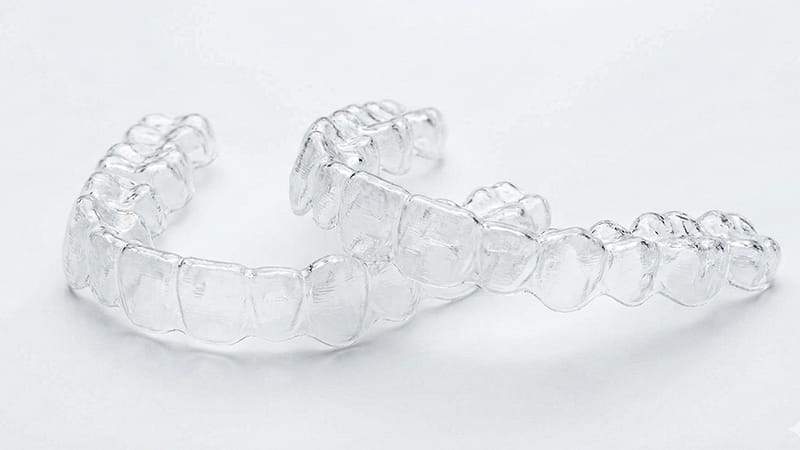

International patients planning dental implant treatment in Korea must avoid the common misconception of confusing mechanical "assembly" with biological "healing." This article clearly separates the treatment stages and provides decision-making criteria for designing a realistic schedule based on your specific jawbone condition.
"Since Korean technology is advanced, can I finish my implants during this vacation?"
"Is it safe to fly immediately after surgery? What if a problem occurs after I return home?"
complete all procedures in a single visit. Especially for patients in their 40s to 60s with busy schedules, the desire for "rapid completion" is high.
However, it is vital to remember that dental implants are not a carpentry project of tightening screws; they are a process of "biological healing (osseointegration)" where the artificial tooth fuses with living bone. Just as rushing the drying time of concrete compromises a building's safety, our bodies require an absolute amount of time for recovery.
To help alleviate your anxiety and establish a safe plan, we have summarized three core criteria.
1. Can an Implant Truly be Completed in a "Single Visit"?
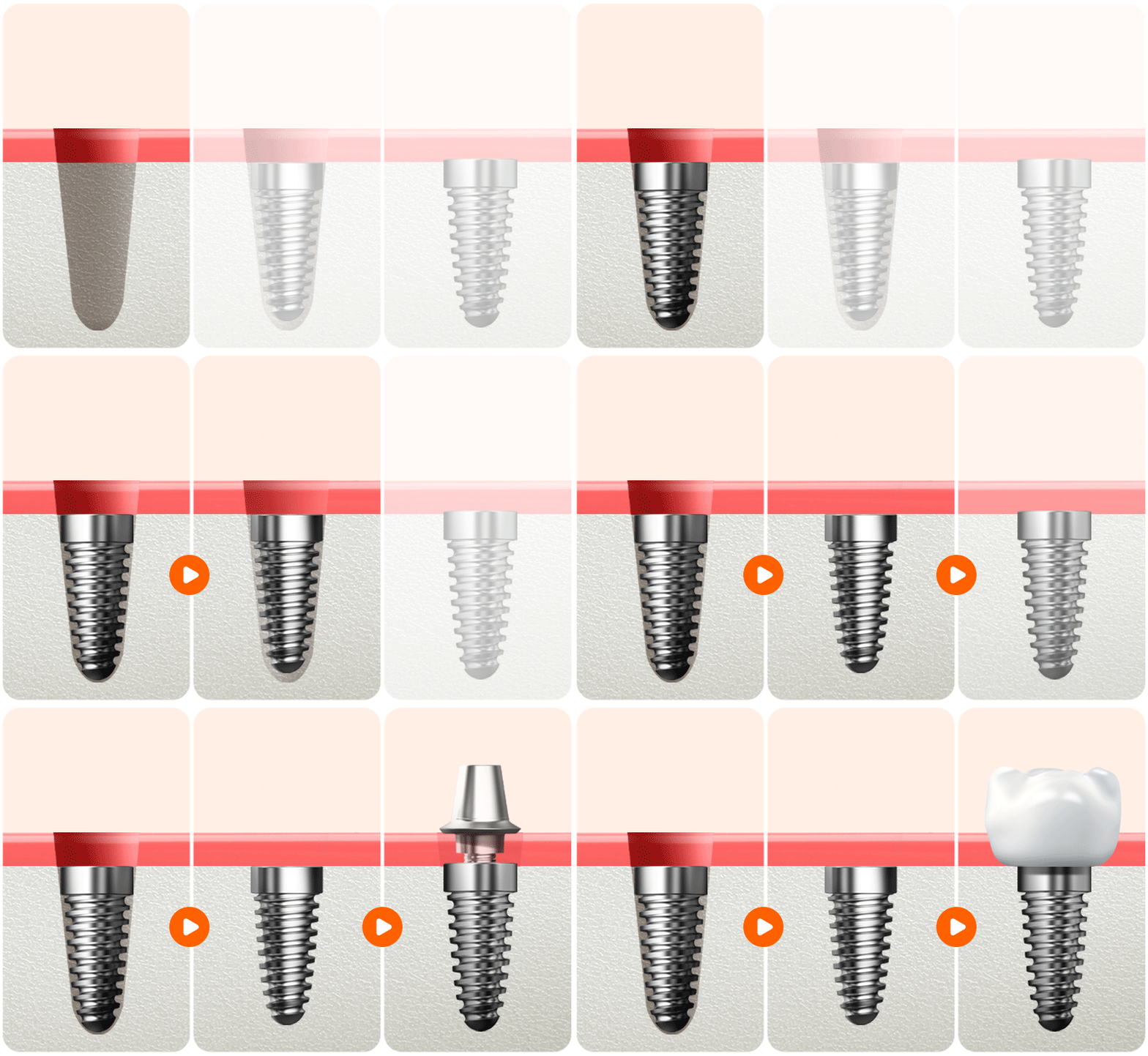
The first thing to clarify is what "one visit" means within the context of the entire treatment process. One of the most common dental implants Korea misconceptions is confusing the "stages" of treatment with the "time" required.
Implant treatment generally consists of five stages:
- Diagnosis & Planning: Evaluating bone volume, systemic health, and periodontal status.
- Surgery (Placement): Implanting the fixture into the bone (including bone grafting if necessary).
- Healing (Osseointegration): The biological period where the bone and implant fuse securely.
- Prosthetics: Connecting the final tooth-shaped crown.
- Maintenance: Ongoing periodic check-ups and hygiene management.
The key is not to focus on reducing the number of visits, but to clarify the "goal of this specific visit."
- A) If the goal of this visit is "Surgery": After a precision diagnosis, the placement is performed. You should stay in Korea for the initial healing period recommended by the medical team to monitor the site. The subsequent healing time (osseointegration) will be spent in your home country, and a return visit or local coordination for the final prosthesis may be required.
- B) If additional procedures (like bone grafting) are needed due to poor bone condition: This is essentially like stabilizing the ground before building a house, which may extend the total treatment period. In this case, it is wiser to define this visit as "safe foundational work" and create a flexible plan rather than forcing a shorter schedule.
"Streamlining a schedule" and "deleting" the time required for bodily recovery are entirely different things. Therefore, instead of asking "How many days will it take?", ask "Based on my condition, what is the safest amount of progress for this visit?"
2. Can implants be done in one visit Korea? Checking 'Conditions' for Immediate Placement and Loading
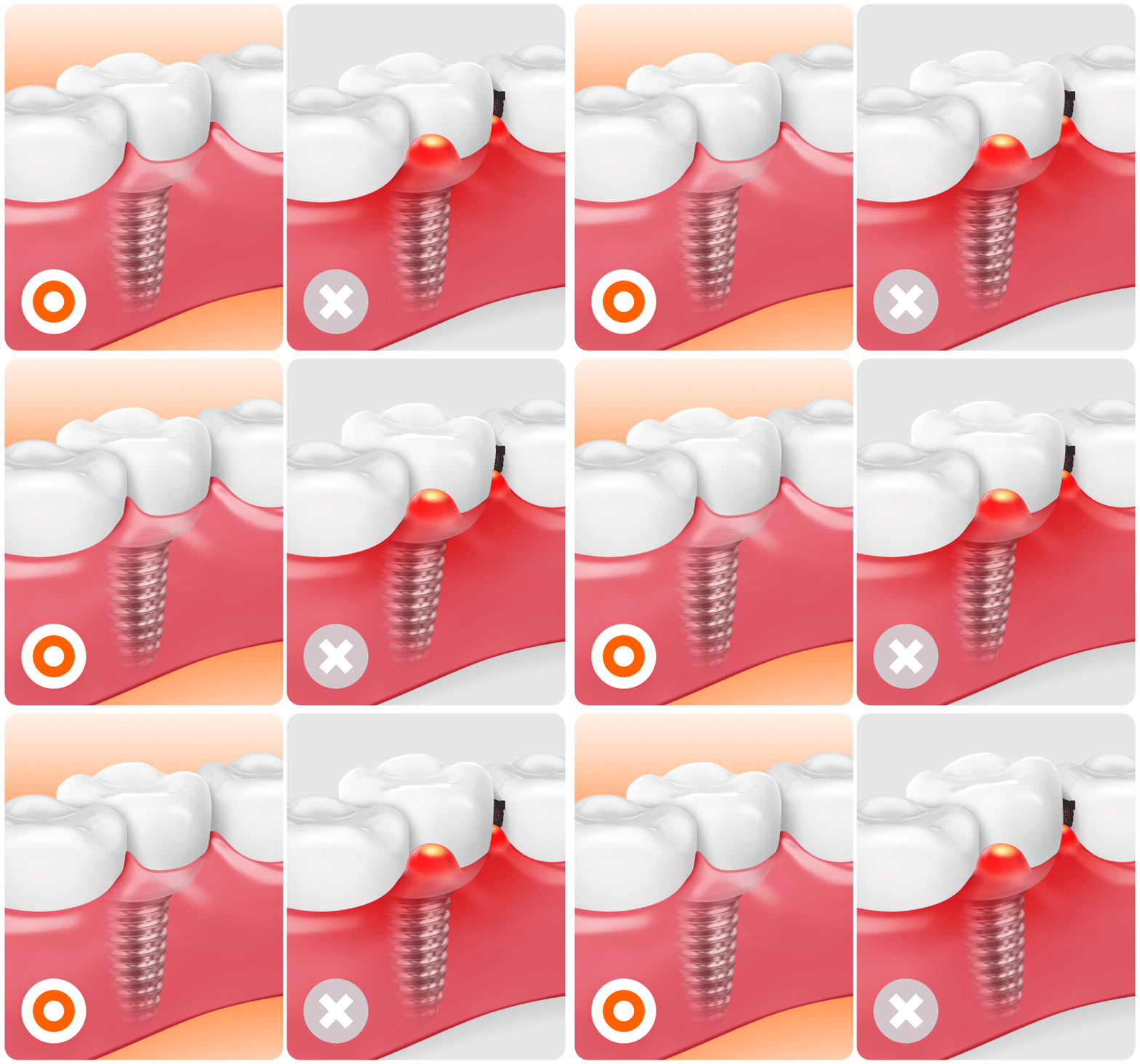
The second criterion is to view "fast treatment" as a result of meeting specific "conditions." Regarding the question, "Can implants be done in one visit Korea?", medical professionals make decisions based on your unique oral status. Specifically, immediate loading implants Korea is a protocol considered only when strict conditions are met, not for every patient.
To consider immediate placement or immediate loading (connecting a temporary tooth immediately after surgery), the following three conditions are essential:
- Initial Stability: The implant must be firmly fixed in the bone during surgery. This may be impossible if the bone is too soft or insufficient in volume.
- Infection & Inflammation Control: If there is severe inflammation at the extraction site, "delayed placement"—waiting for the gums to heal to reduce infection risk—is safer.
- Occlusal (Bite) Balance: If a patient grinds their teeth or has a strong biting force, it can interfere with initial healing, potentially limiting immediate loading.
- C) If all conditions are met: At the discretion of the medical team, a temporary tooth can be connected on the day of surgery to facilitate a quicker return to daily life. However, this does not mean you can immediately eat hard foods. You must stick to a soft or liquid diet to manage the load until the implant fully fuses with the bone.
- D) If even one condition is lacking: Waiting is the fastest route, even if it feels slower. Forcing a shortened timeline can lead to greater costs later, such as implant failure or infection after returning home.
Ultimately, "long-term durability" is more important than "finishing quickly." It is crucial to check whether your jawbone and systemic health (such as diabetes) can handle a faster pace.
3. Aftercare: More Important than an implant warranty Korea—Designing Your Post-Return Care

The final criterion is to define the "end" of treatment not as the moment after surgery, but as your "daily life after returning home." The biggest anxiety for international patients is often, "What if a problem occurs after I return?" Rather than relying vaguely on an "implant warranty Korea," it is far more practical to design a specific aftercare system in advance.
To ensure a safe return and successful maintenance, please secure the following three items:
- Detailed Specifications: Simply remembering "I had it done in Korea" is insufficient. Request an English record containing the manufacturer, exact diameter, length, and abutment specifications of the placed implants. If you need to replace parts or receive repairs at a local clinic later, this information is vital for finding compatible instruments.
- Monitoring Plan & Communication: Establish a "hotline" to know when you should take X-rays after returning home or whom to contact if your gums swell. Having a channel for consultation during emergencies provides significant peace of mind.
- Contingency Plan: If your stay in Korea is short, it is beneficial to identify a local clinic or emergency route you can visit immediately after returning home in case of unexpected pain or bleeding.
Aftercare is not something you do "when a problem arises"; it is the process of preparing "so that problems do not arise." If this system is well-established, you can maintain a close psychological connection with your medical team despite the physical distance.
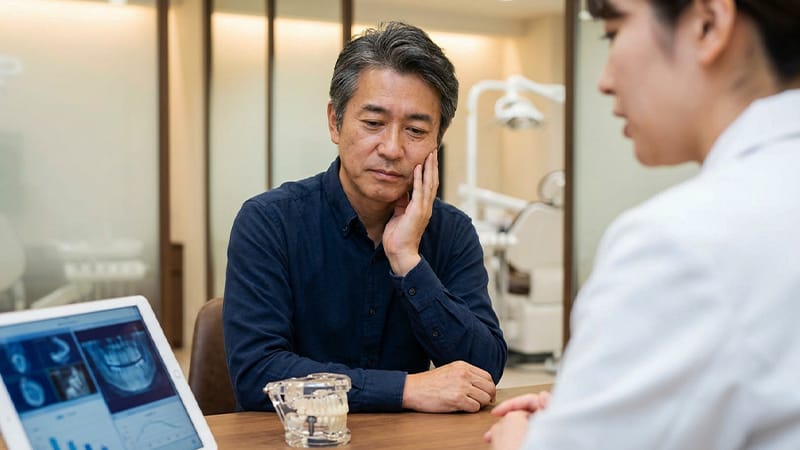
We fully understand the desire to "finish everything in one trip" when planning implant treatment from abroad. However, for a successful outcome, please remember these three criteria:
First, define the goals of this visit realistically by dividing the treatment into Diagnosis, Surgery, Healing, and Prosthetics.
Second, understand that Immediate Placement and Loading is a selective option available only when your bone condition and health allow.
Third, the surest way to protect your health after returning home is to secure English records and communication channels rather than relying solely on a warranty.
We sincerely hope that your choice for your precious teeth is filled with safety rather than haste.
Sources
- Korea Disease Control and Prevention Agency (KDCA), Dental Implant Procedure Process, 2023.
- Korean Academy of Oral & Maxillofacial Implantology, Dental Implant Treatment Guidelines, 2022.
- ITI Consensus, Implant placement & loading protocols.
※ The copyright for all content on this blog belongs to medihi. Unauthorized copying, distribution, or derivative use is strictly prohibited, and violations may result in legal action without prior notice.
Recommended reads
 medihi