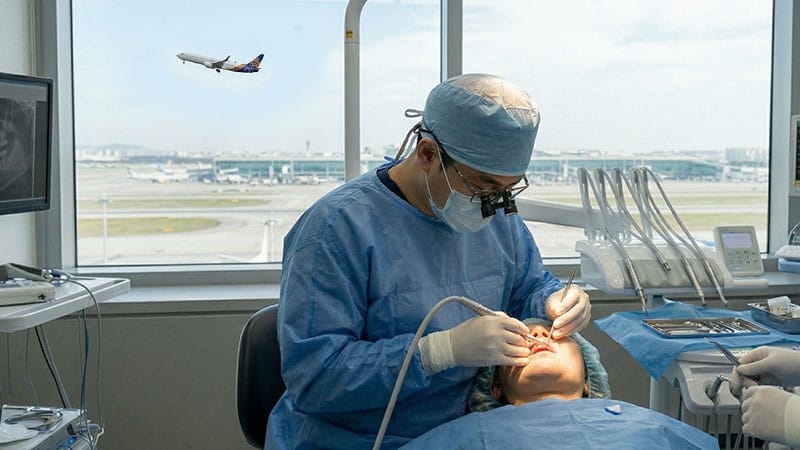

We provide clear criteria for distinguishing between emergency and non-emergency discomfort that may occur after returning to your home country. By clarifying the distinct roles of remote monitoring and local dental visits, this guide ensures you can safely maintain your oral health even from a distance.
"What if I suddenly start bleeding or feel pain after I get home?"
"If a screw looses or inflammation develops, do I have to fly back again?"
It is a perfectly natural reaction to feel fearful when unexpected symptoms appear after returning home following a major treatment abroad. Feeling overwhelmed about how to cope in a local environment where the language may be a barrier and the healthcare system is different is common.
To ensure your journey home is worry-free, it is more important to hold clear decision-making criteria in your hands rather than relying on vague reassurance. The dental implant journey for international patients is largely divided into the completion of treatment (Visits), the coordination of essential visits and short-term recovery (Stay), and management after returning home (Aftercare). In this article, we will explain in detail how to classify and respond to symptoms that may arise after your return.
1. When Pain, Swelling, or Bleeding Persists After Returning Home: Which Signals Should You Distinguish First?
While some level of discomfort after dental implant surgery can be a part of the healing process, concerns naturally grow if bleeding or swelling persists after you return home.
In such cases, it is safer to first categorize whether the signals require an immediate in-person evaluation rather than simply feeling anxious. Biological problems around implants are divided into peri-implant mucositis (limited to the gums) and peri-implantitis (which can affect the bone). In both cases, an early evaluation significantly helps in preventing the condition from worsening.
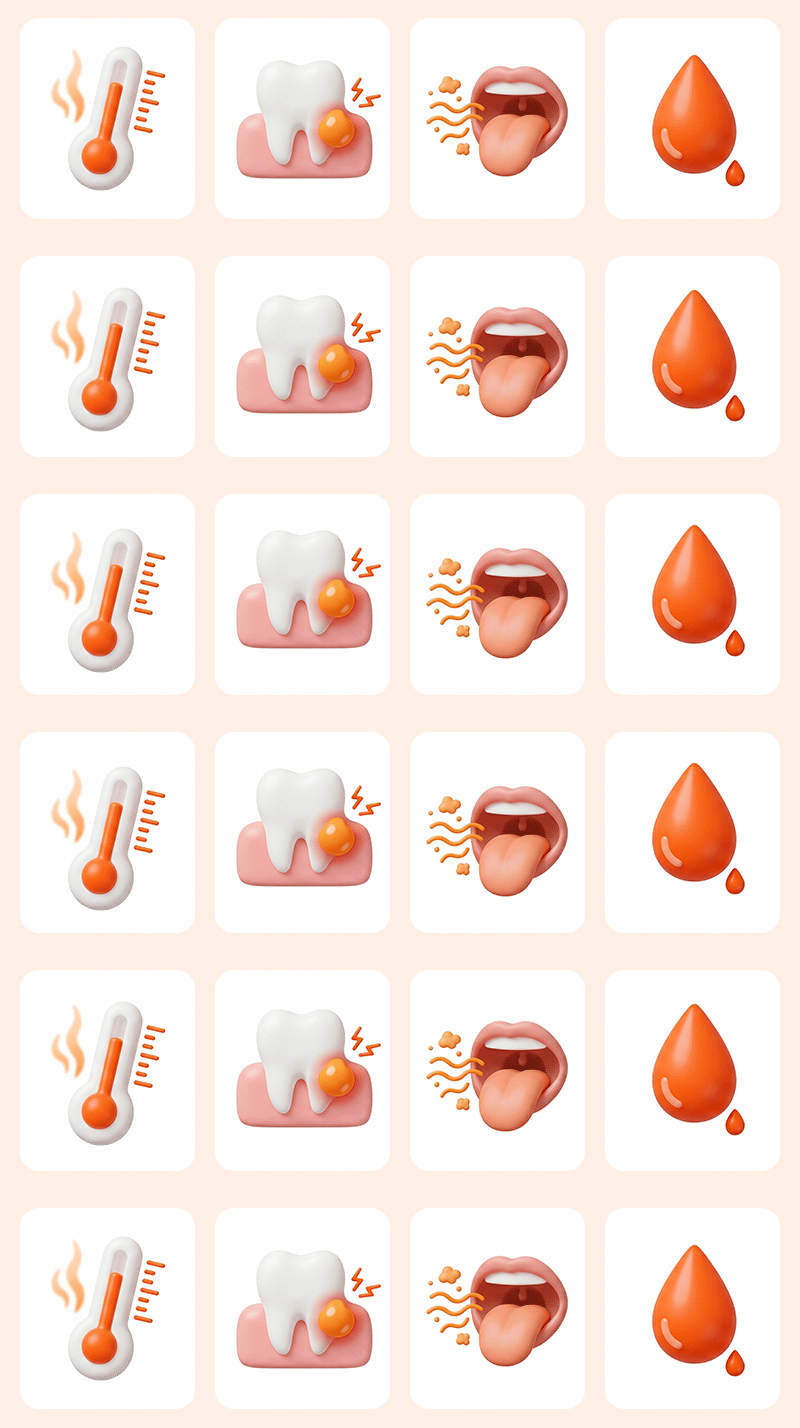
The most confusing part for international patients is having to judge the "level of emergency" themselves. If the following symptoms appear, they should be considered signals of potential infection, and a local in-person evaluation should be considered promptly:
- Persistent fever
- Pus discharging from the gums
- Abnormal swelling and a feeling of intensifying pain
- A continuous unpleasant taste or foul odor in the mouth
- Bleeding that does not stop abnormally
These symptoms are unlikely to subside on their own. On the other hand, mild soreness or temporary swelling can be considered initial symptoms that can be monitored while keeping a record of when they started and how they change.
It is similar to the principle of installing a fire alarm in a house. Just as an alarm tells you whether it is minor smoke or an actual fire, you need criteria to accurately read your body's signals.
2. How Far Can Remote Follow-up Go, and When is Local Treatment Necessary?
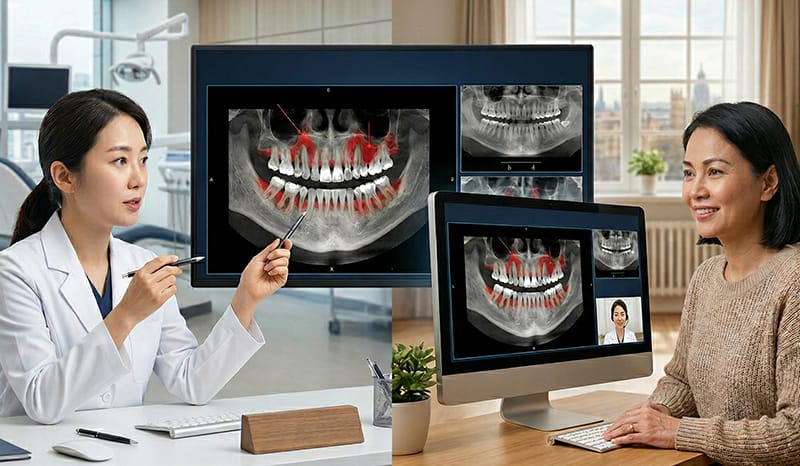
After returning home, there may be an expectation that all problems can be resolved remotely. however, it is essential to understand that non-face-to-face consultation (remote monitoring) is not about performing the treatment itself, but rather excels at providing guidance for the next safe action, symptom classification, and local coordination.
Through remote monitoring, we primarily classify whether a patient's symptoms are biological or mechanical and check the overall progress based on photos provided. Based on this, it serves as a "navigation" role to gauge whether an immediate visit to a local dentist is necessary.
Conversely, the scope of what must be performed in person at a local clinic is also relatively clear. Probing examinations (measuring the depth of gum pockets) to accurately check the inflammatory status around the implant or radiographic evaluations can only be done through in-person visits. Professional cleaning to remove hardened tartar, screw tightening, prosthetic repairs, and direct disinfection of infected areas also require the intervention of local medical staff.
If you have meticulously prepared "handover materials"—including the type of implant, a surgery summary, and the prosthetic connection method—during the pre-departure stages (Visits/Stay), you can continue check-ups safely and without misunderstanding when visiting a local dentist during the Aftercare phase. Sharing thorough records is the strongest foundation for maintaining patient safety.
3. How to Respond When Mechanical Complications Like Screw Loosening or Prosthetic Issues are Suspected?
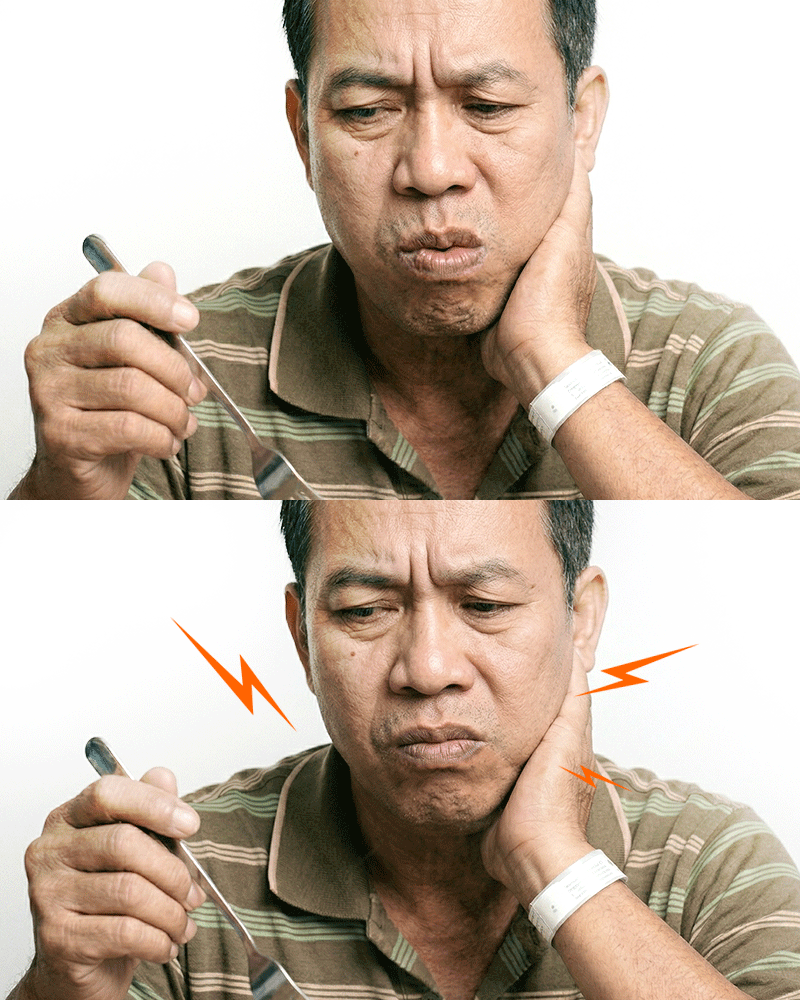
If the implant area feels shaky when chewing food, anxiety is bound to feel significant. Shaking can be a mechanical issue, and if left unattended, the risk of inflammation in the surrounding gums increases, making a dental evaluation mandatory.
Clues that may suggest mechanical problems include new discomfort when chewing, clicking sounds, a feeling that the bite is too high, or a sensation of a foreign body as if the prosthesis is chipped or a screw has loosened.
In these cases, rather than trying to resolve it remotely, it is safer to prioritize visiting a local dentist to check the occlusion (bite) and consider measures to tighten the screws.
It is practical to set different response and check-up cycles based on individual risk factor conditions. While regular follow-ups at 3 to 6-month intervals are generally recommended for implant maintenance, responses tailored to the following situations are necessary:
- If you have a habit of teeth grinding or clenching: The possibility of mechanical problems may be higher, so it is better to receive a mechanical evaluation immediately if shaking or noise is felt.
- If you suffer from diabetes or immune-deficiency diseases: Wound healing may be delayed, so it is safer to receive an early local in-person evaluation even if very minor signs of worsening appear.
- If you smoke or have a history of periodontal disease: Promptly moving up your dental check-up schedule when mild bleeding and swelling recur is a wise way to prevent major problems.
Even if there are no symptoms, establishing a routine for regular check-ups and professional cleaning according to your individual risk level can turn post-return anxiety into a systematic plan.
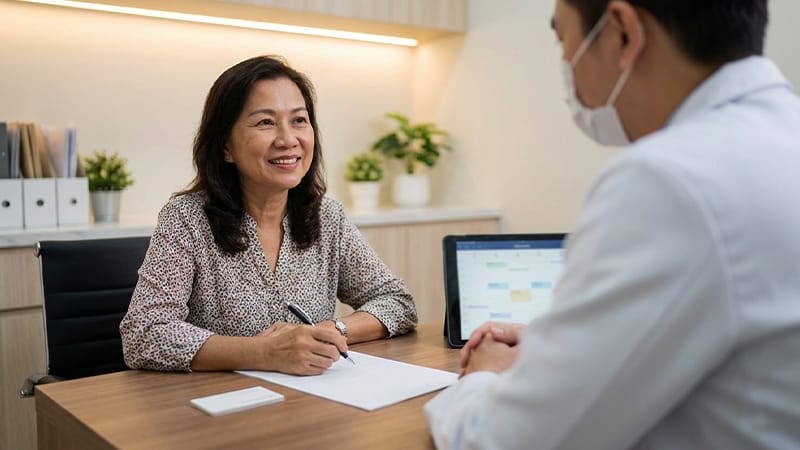
To ensure successful implant aftercare, here is a warm summary of the three core decision-making criteria to remember after returning home:
First, classify symptoms such as fever, pus, severe swelling, worsening pain, or an unpleasant taste as emergency signals requiring prompt local in-person evaluation.
Second, utilize remote monitoring as a reliable supporter for classifying symptoms and judging the necessity of local treatment, while conducting actual examinations and procedures through a local dentist.
Third, prepare your post-return regular check-up routine in advance by securing English handover materials, including a surgery summary and prosthetic structure, before leaving Korea.
Rather than trying to resolve all symptoms at once remotely with excessive expectations, it is important to cooperate with local dentists based on correct response criteria and handover materials. we sincerely support you in enjoying a comfortable and sturdy daily life, regardless of the distance.
Sources
- Seoul National University Hospital Medical Information, Guide for Dental Implant Patients, n.d.
- Asan Medical Center Procedure/Surgery Information, Guide to Implant Surgery, n.d.
- Journal of Advanced Prosthodontics, A multi-center study on the prognosis and risk factors of implant prosthodontics, 2024.
※ The copyright for all content on this blog belongs to medihi. Unauthorized copying, distribution, or derivative use is strictly prohibited, and violations may result in legal action without prior notice.
Recommended reads
 medihi