

What determines how natural a veneer looks is not the teeth alone, but harmony with the entire face. This post organizes key criteria for a design that helps reduce regret—facial proportion, the smile line, and translucency.
“What if it looks obviously fake, like artificial teeth?”
“Even if I bring a celebrity photo, I’m worried it won’t suit me.”
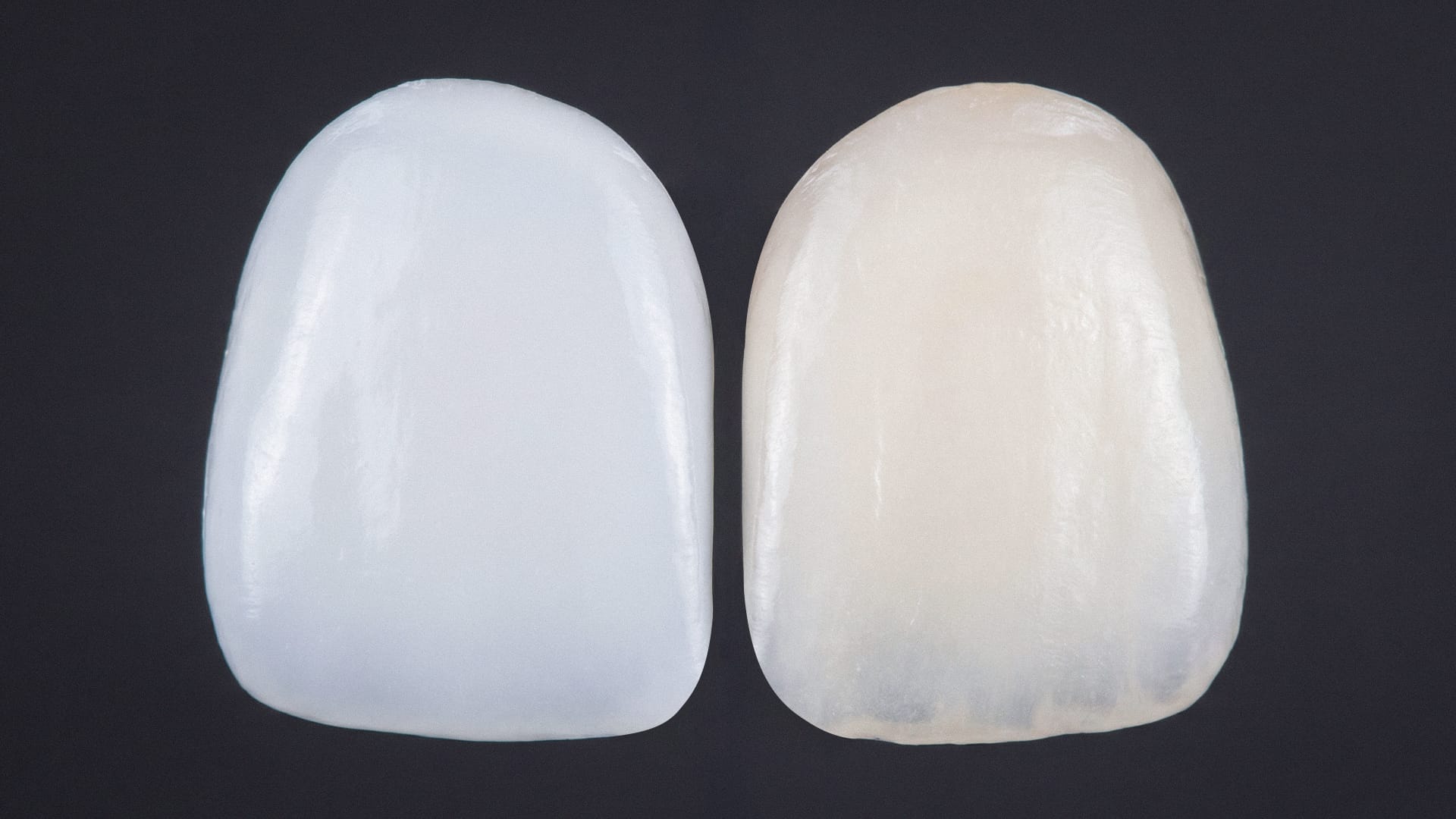
Many patients who come to the clinic talk first not about excitement, but about fear of an unnatural result. That concern is understandable. A veneer is not simply “sticking on a white tip”—it is closer to facial-level design work, where tiny angle changes and differences as small as 0.1 mm in thickness can alter your overall impression.
This article does not recommend any particular design trend. Instead, it lays out clear criteria for deciding “what kind of design will blend naturally with my face.” If you know these principles, you can move beyond a vague request like “Please make it pretty,” communicate more specifically during consultation, and better anticipate the outcome.
1. Why You Should Check the “Facial Midline” Before Tooth Shape
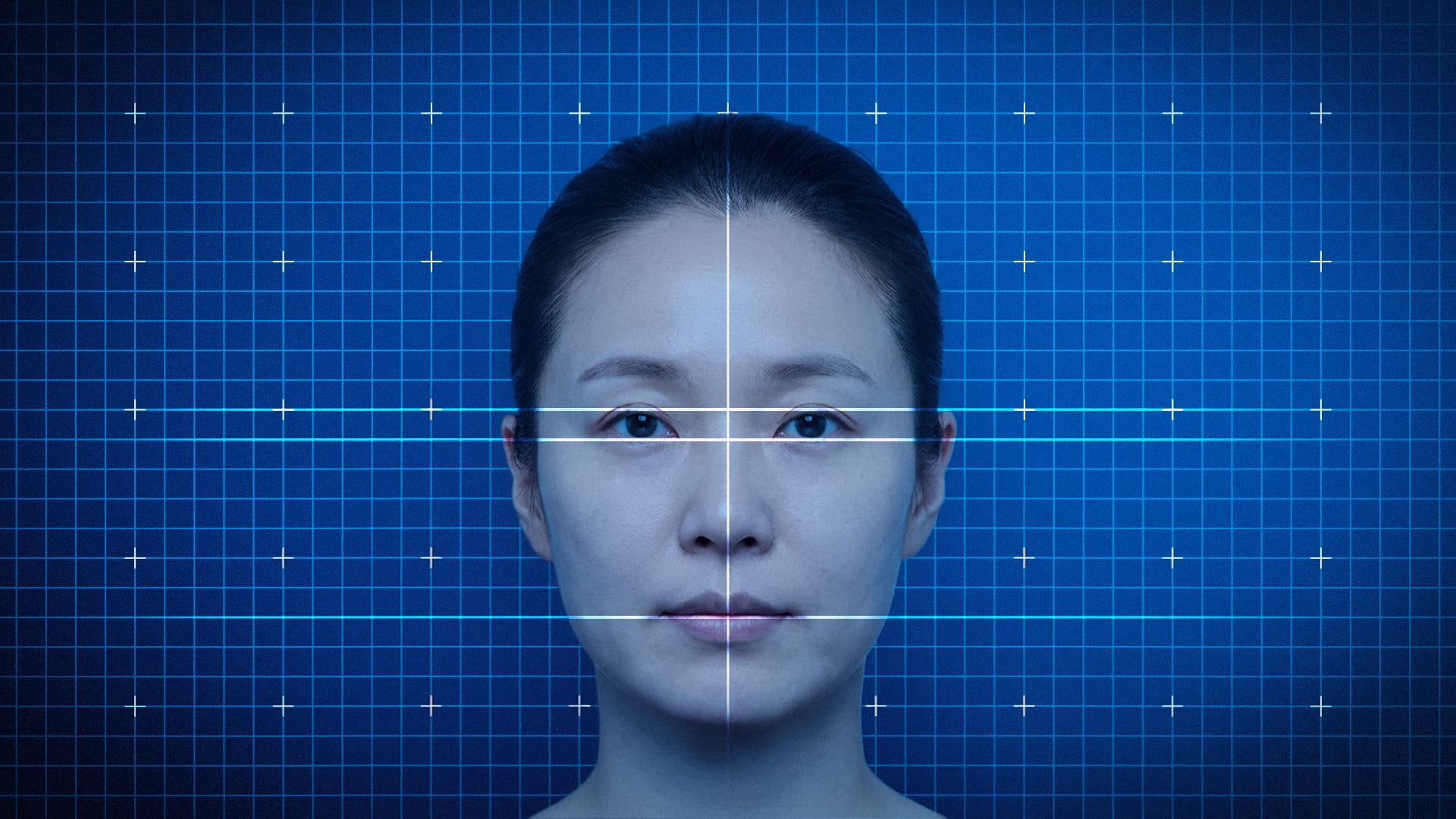
The first step in veneer design is a “face-driven plan.” In simple terms, before drawing the teeth, you first align the horizontal and vertical axes of the “canvas,” which is the face.
Imagine hanging a framed picture on a wall. No matter how great the artwork is, if the frame is tilted or off-center, it feels unstable and looks strange. Teeth are similar. More important than the tooth shape itself is whether the facial midline (nose–philtrum–chin) matches the dental midline.
That is why, before design begins, it is essential to confirm the facial axis using a frontal photo or facial scan. If the dental midline is shifted relative to the facial midline, the design should first address how to visually compensate for that. Also, even if something looks aesthetically pleasing, if the bite (occlusion) does not fit properly it can contribute to fracture risk—so functional positioning must be considered alongside appearance.
[Items worth confirming during consultation]
- Will you design it so that my facial midline (philtrum) aligns with the center of my front teeth?
- Do you take into account the asymmetrical movement of my lips when I smile or speak
- Do you check for occlusal (bite) interference in addition to aesthetics?
2. If Your Smile Feels “Off,” the Answer Is the “Smile Arc”
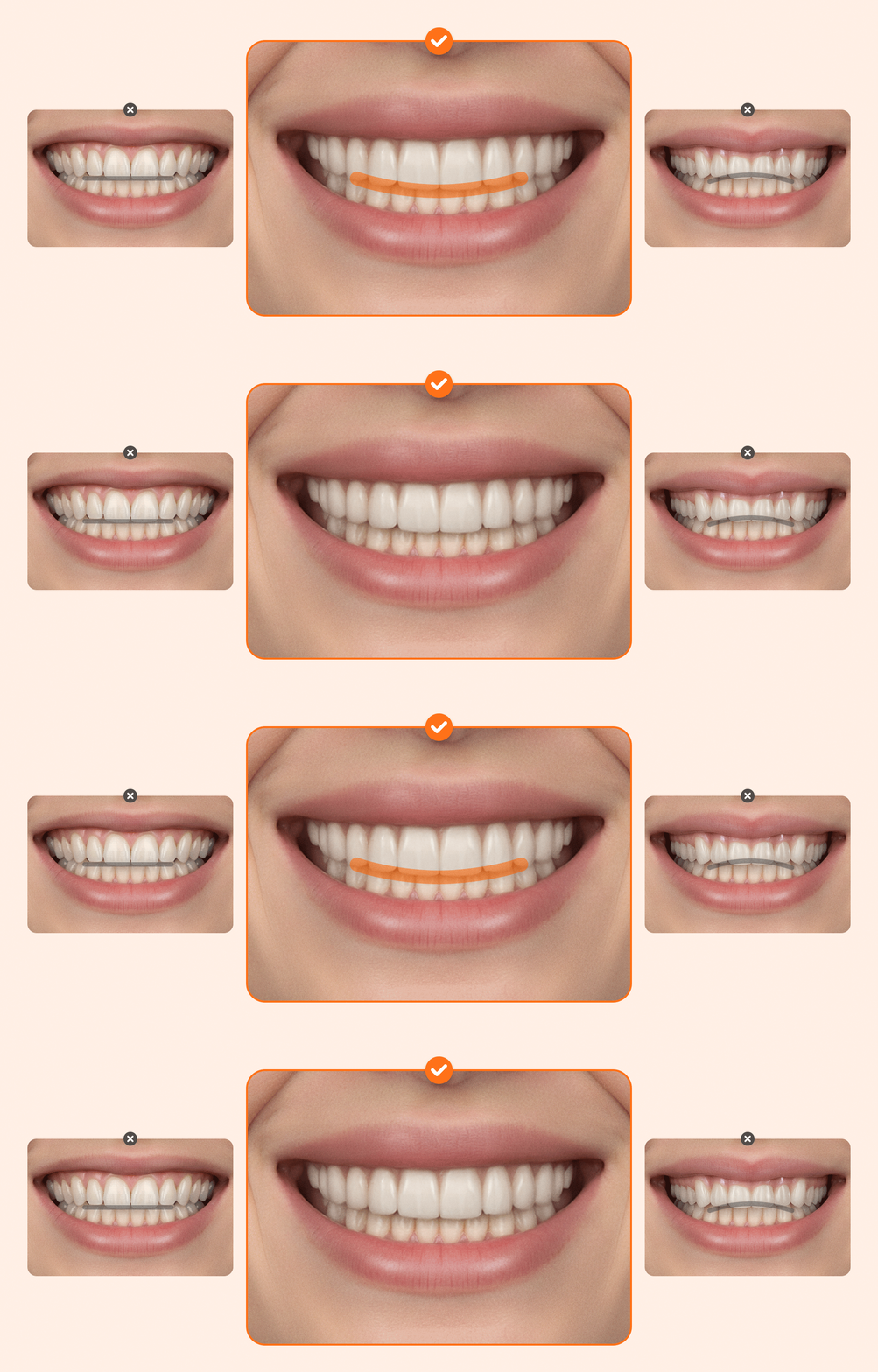
If you feel “something is off” after veneer treatment, in many cases it comes down to disharmony in the smile line. The most natural-looking smile tends to appear when the line connecting the edges of the upper front teeth runs gently parallel to the curve of the lower lip—this is the “Smile Arc.”
You can think of it like a bowl and a spoon. When the spoon (upper incisal line) sits neatly along the rim of a round bowl (lower lip), it looks comfortable. But if the spoon sticks out or lies stiff and straight, it creates visual discomfort.
If the front teeth line is made too straight, it can look like a “white bar,” creating an artificial impression. On the other hand, if the curve is exaggerated too much, it may give an overly youthful or lightweight look that doesn’t match the person’s age. Especially for people in their 20s and 30s, more tooth show is common when smiling—so even a 0.5 mm adjustment in length can significantly change the overall image.
3. Is the Golden Ratio the Answer? Finding the Right “Fit” for Your Face Shape
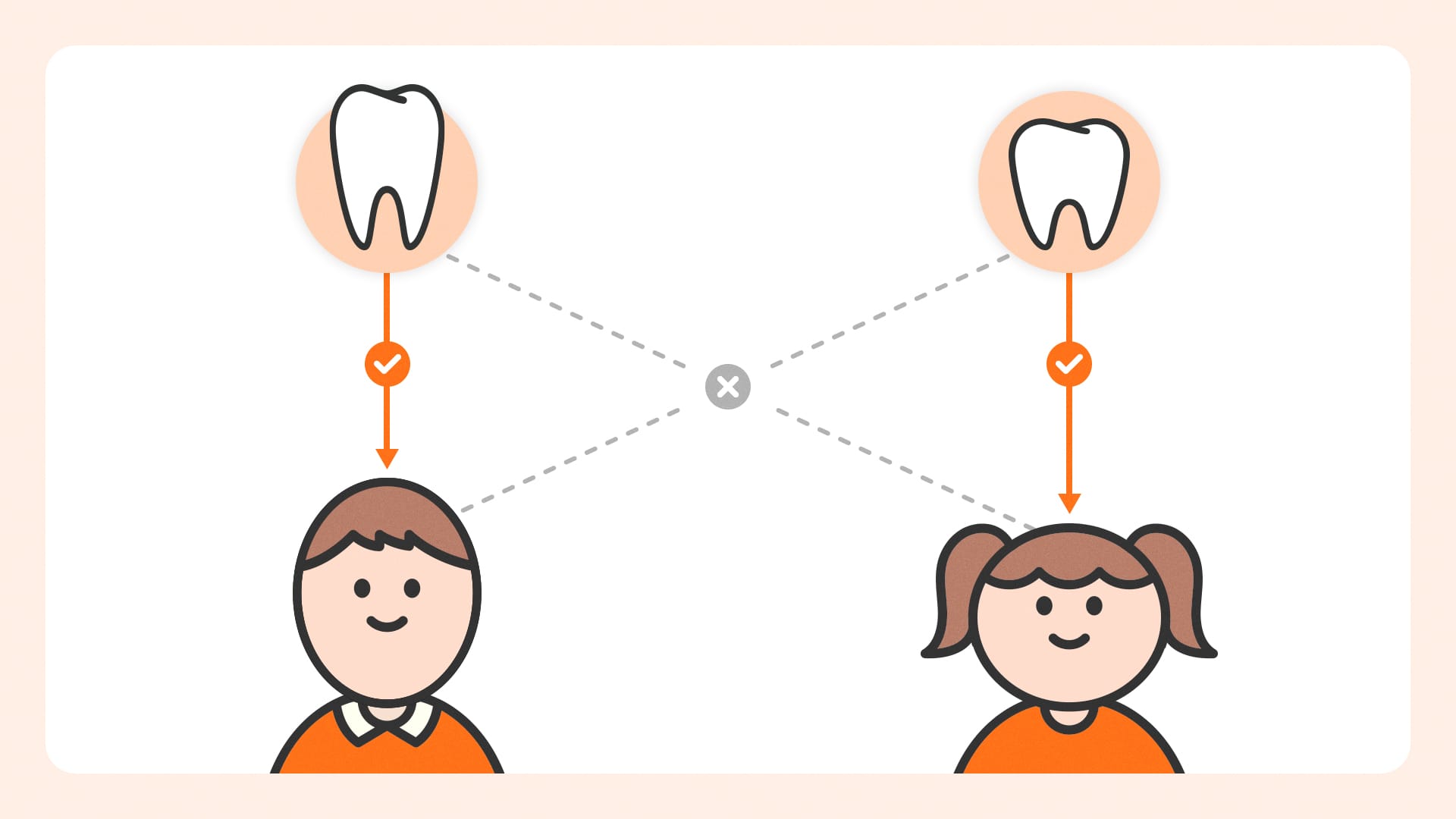
The “tooth golden ratio (1:1.618)” often seen online is only a reference point, not an absolute answer. Because face shapes differ, tooth proportions also need to be customized.
Depending on face shape, different proportions can be advantageous.
- If your face is on the longer side: slightly longer tooth proportions tend to look more harmonious. Forcing short, round teeth can actually make the face appear longer.
- If your face is on the rounder side: rounding the tooth corners or adjusting width can create a more refined impression.
Thickness matters just as much as proportion. Even if you want “no-prep” veneers, simply adding material when teeth are uneven or space is limited can make the teeth look bulky and increase the risk of a protrusive-looking mouth. More important than numerical ratios is choosing a thickness and volume that still allows your lips to close comfortably.
[Items worth confirming during consultation]
- Will the design be customized to my facial shape (e.g., long or round) rather than just following the standard golden ratio?
- Is there a risk of the veneers making my teeth too thick, causing my mouth to appear protruded?
- Will I be able to see the changes in length and width in a mirror during the temporary veneer stage?
4. Is “Whiter” the Goal? Without Translucency, It Can Look Fake
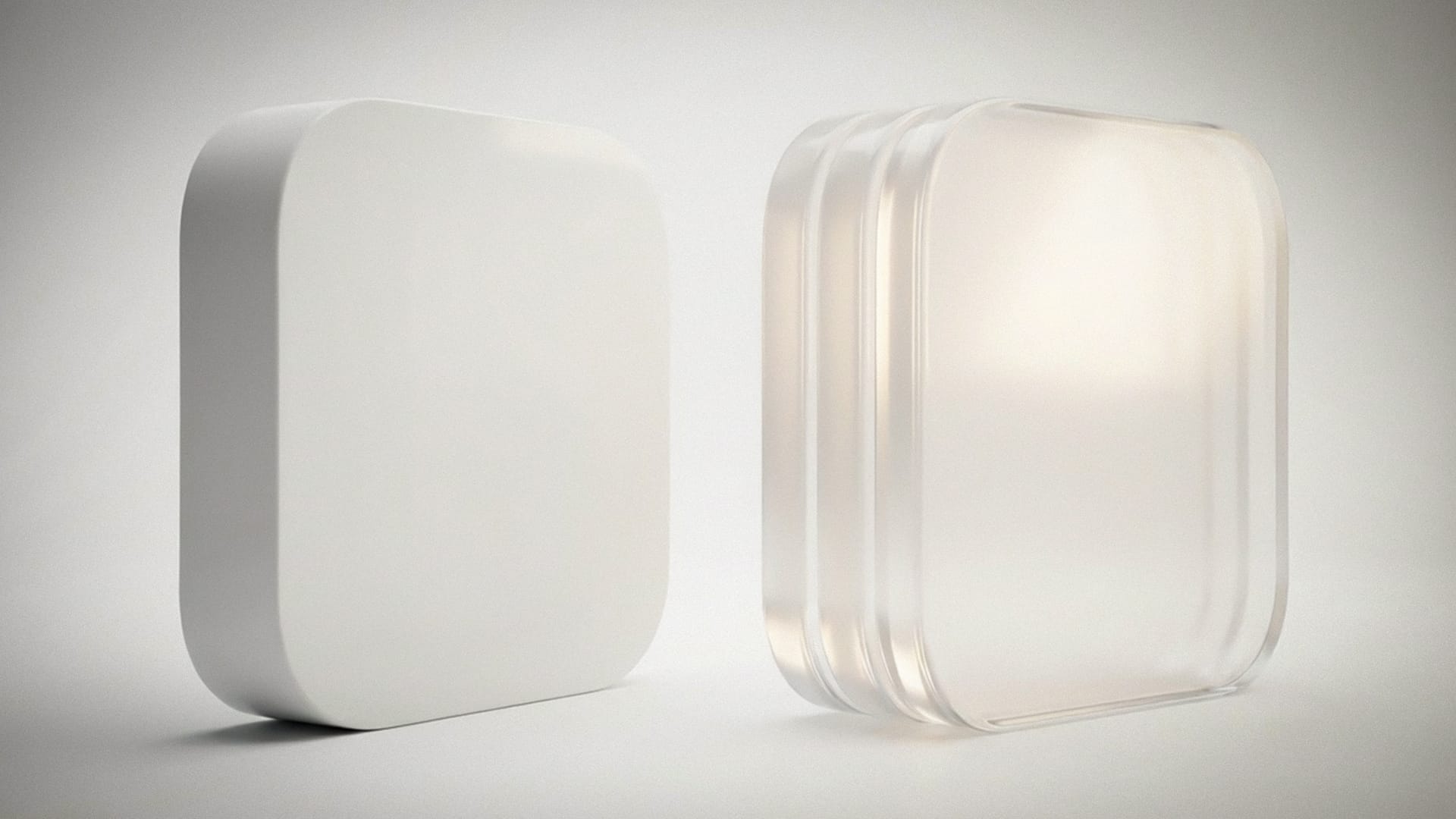
“It looks like bathroom tile—too white and floating.”
This is one of the most common complaints from people seeking veneer re-treatment. The key to natural results is not just color (brightness), but translucency and texture.
If you look closely at natural teeth, they are not a single flat color. Near the gums, the shade is deeper, and toward the edge it becomes clearer and more translucent, like glass—creating a gradient. In contrast, artificial restorations can look like a uniform coat of paint from top to bottom, and may appear dull under light.
Veneer color behaves like a thin silk blouse: the thinner it is, the more it blends with what’s underneath (your natural tooth color), creating a subtle tone. So rather than insisting on the brightest shade, it’s better to choose a color that harmonizes with the whiteness of your eyes and your skin tone. It can also help to ask whether a layering technique is used to create a translucent layer at the incisal edge.
5. A Hard-to-Reverse Mistake—Can “Simulation” Prevent It?
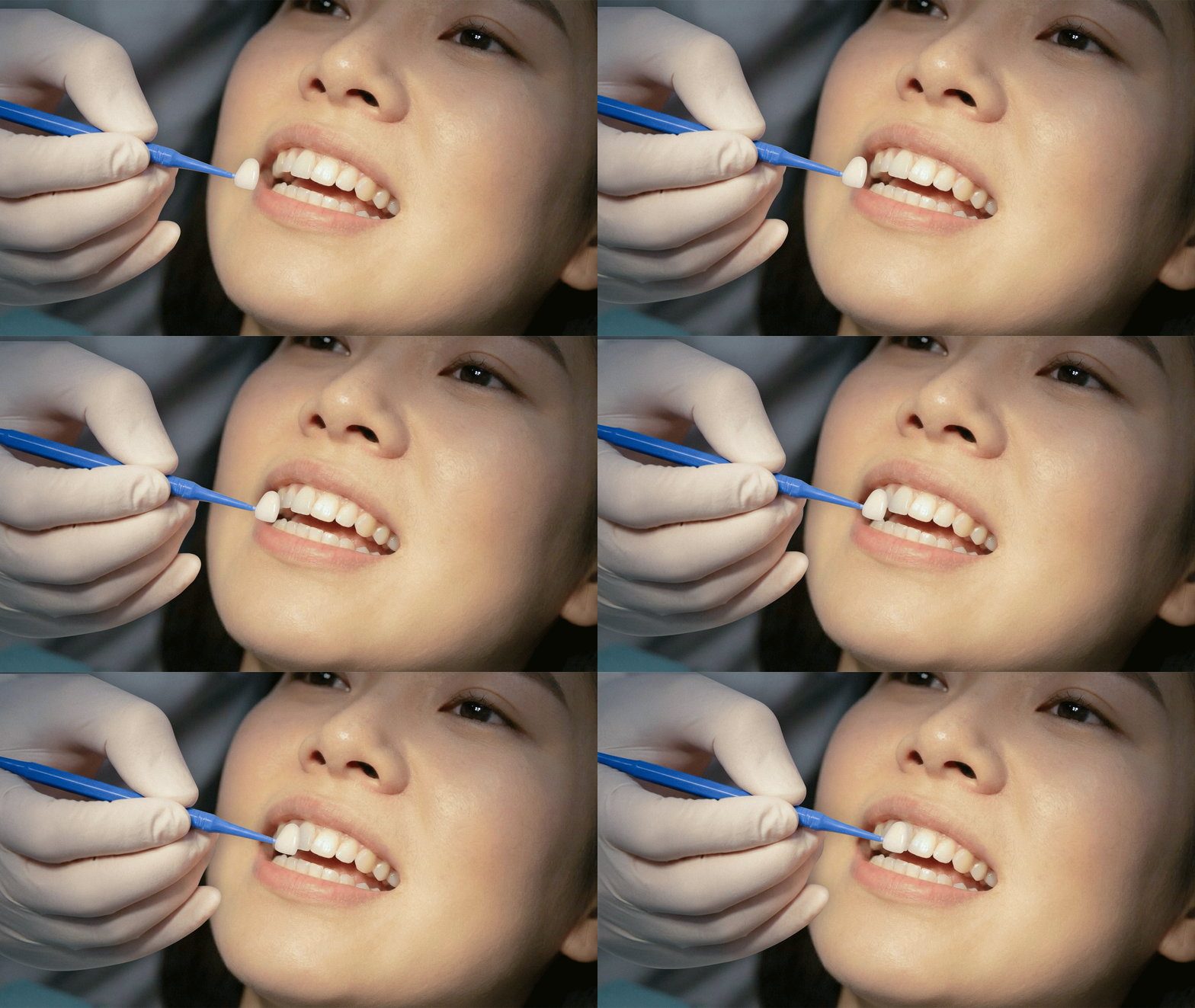
Once veneers are bonded, they are difficult to modify, and removal may not fully return the teeth to their original state. That is why “verification before final bonding” functions as a safety step that strongly influences success.
This process is like stepping into a fitting room before buying clothes.
1. Digital preview (DSD): an expected tooth design is drawn over your facial photo.
2. Temporary try-on (mock-up): temporary teeth made from provisional material are placed in your mouth so you can live with them for a few days and check speech, comfort, and aesthetics in real life.
3. Final fitting (try-in): right before bonding the final restoration, a paste similar in color to the adhesive is used so you can confirm the final shade in the mirror.
Going through these three checkpoints can greatly reduce the chance of feeling “this isn’t what I imagined.” Rather than being swayed by the phrase “no-prep,” it is important to use simulation to confirm the minimum thickness that does not compromise your tooth health.
[ Items worth confirming during consultation]
- Can I preview the before-and-after results using Digital Smile Design (DSD) and a temporary mock-up?
- Before the final bonding, is there a 'final try-in' process where I can check the actual color and shade?
- If I have a habit of grinding my teeth, can you make a protective night guard to prevent the veneers from chipping or fracturing?
6. Frequently Asked Questions (FAQ)
Q. How can I know the right front-tooth length for my face?
Take a smiling photo during consultation and review it together. A commonly ideal length is when the edge line of the upper teeth naturally follows the curve of the lower lip (the smile arc). If it’s too long, it can resemble “bunny teeth,” and if it’s too short, it can make you look older—so using lip position as the reference is often the most accurate approach.
Q. Are no-prep veneers good for everyone?
Not necessarily. No-prep can be advantageous when teeth are small (microdontia) or when there are spaces. If space is limited and you force a no-prep approach, teeth may look bulky or inflammation can occur near the gum margin. A “minimally invasive” approach—reducing only as much as needed for your condition—can ultimately look more natural and be healthier.
Q. If I choose the veneer material color well, will it look natural?
Not only the material, but also the color of the “adhesive” matters. The thinner the veneer, the more the cement shade and your original tooth color show through. Even if the veneer is bright, a yellowish cement can darken the overall tone—so you should confirm the final shade visually through the try-in process.
Q. When is consultation or design confirmation especially necessary?
When existing restorations look opaque and artificial and you want to replace them, or when you feel self-conscious about gaps between teeth when smiling. In particular, if you have discoloration or shape dissatisfaction that whitening alone cannot solve and you want to improve your overall smile line, it is worth getting a detailed diagnosis and design consultation.

Veneer design is not simply the act of shaping teeth to look pretty. It is a precise planning process that finds balance in your face and helps you regain a smile that feels like you. The criteria for a successful outcome are clear. First, prioritize harmony between the facial midline and the lips—not just the teeth. Second, find a natural curve through the smile arc. Third, confirm the result with your own eyes through temporary try-on and final fitting. Don’t worry about seeming “too picky.” This is about designing a smile that will stay with your face for a long time. If you use today’s criteria to communicate thoroughly with your clinician, you will be far more likely to find a natural smile you won’t regret.
Sources
- Korean Academy of Prosthodontics, Aesthetic Prosthodontic Guidelines, 2022.
- Seoul National University Dental Hospital, Department of Conservative Dentistry: Veneer Treatment Information.
- Layton DM, Walton TR. “The up to 15-year clinical performance of feldspathic porcelain veneers”, International Journal of Prosthodontics, 2012.
※ The copyright for all content on this blog belongs to medihi. Unauthorized copying, distribution, or derivative use is strictly prohibited, and violations may result in legal action without prior notice.
Recommended reads
 medihi