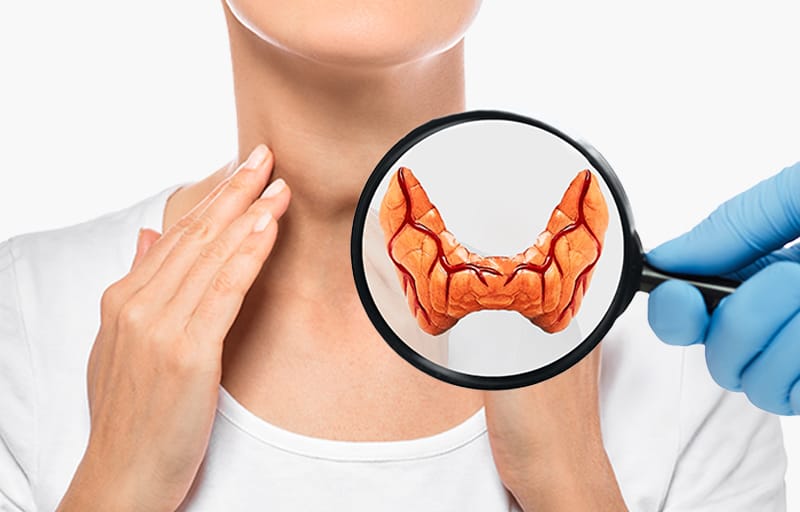

The biggest fear when starting thyroid medication is the perception that "once you start, you can never stop." However, not every patient needs lifelong medication. The duration of treatment depends on the cause of the disorder and the possibility of recovery, determined by clear medical criteria.
When medical professionals determine the duration of a prescription in thyroid treatment, the first criterion they check is whether the current functional decline is long-term or temporary.
A poor test result does not automatically mean lifelong medication. A treatment plan is established by comprehensively considering the underlying cause of the disease and the patient's recovery potential.
"I'm afraid that once I start the medicine, I'll be tied to it for the rest of my life."
This is a concern many patients express in the consultation room, often hesitating to begin treatment. Many miss the optimal window for treatment due to stories they've heard or vague fears.
However, thyroid medication is not addictive. Depending on your body's condition, it may be needed long-term like 'glasses' or temporarily like a 'cast.'
Through this article, we hope you can gauge which situation applies to you.
1.Once you take it, it's for life? It's the principle of 'glasses,' not 'addiction'

Many people misunderstand that once they start taking thyroid medication (mainly levothyroxine), their body will become dependent on it and they won't be able to stop.
From a medical perspective, medication for hypothyroidism is not an antibiotic that "cures" the body. It is closer to a "replacement" that supplements missing hormones.
It is the same principle as someone with poor eyesight wearing glasses; their eyes do not become "addicted" to the glasses. Glasses are simply a tool that processes visual information on behalf of the eyes because they cannot see clearly on their own.
Similarly, if thyroid function is lost to the point where it can no longer produce hormones, hormones (medication) must be provided externally to maintain metabolism. In other words, if medication is required long-term, it is not because of drug dependence, but because the "thyroid factory" in the body has closed down.
Conversely, what if the factory is just on a temporary strike (temporary inflammation)? You can receive external support only until the factory starts operating again and then stop. Medically, this is called a 'bridge' role that connects the recovery period. Therefore, the answer to "Do I have to take it for life?" depends on your thyroid's 'residual function,' not the medication itself.
💊 Principles for Effective Dosage
- Maintain a Fasting State: Take it with water immediately after waking up and stay fasted for at least 30 minutes to 1 hour.
- Spacing Out: Calcium supplements, iron supplements, and antacids interfere with absorption, so keep a gap of at least 4 hours.
- Consistent Timing: You must take it at the same time every day to maintain a steady hormone concentration.
2.Where is the line for 'recovery potential' to stop medication?

Then, in which cases is long-term use necessary, and in which cases can it be stopped? This is determined by whether the 'cause' of the decreased thyroid function is irreversible.
If [Condition A] the thyroid has been entirely removed through surgery (e.g., for thyroid cancer) or the thyroid tissue has been destroyed by radioactive iodine treatment, long-term medication is the standard. Also, in cases of chronic Hashimoto's thyroiditis, where the thyroid tissue has already shrunk due to an autoimmune response, the possibility of function returning is low, requiring long-term hormone replacement. This is like the situation where one must wear 'glasses' for life.
On the other hand, [Condition B] 'postpartum thyroiditis,' which occurs temporarily after childbirth, or 'subacute thyroiditis,' which occurs after a viral infection, are different. In these cases, cellular function is often temporarily decreased or unstable due to inflammation.
It is similar to wearing a 'cast' for a while when a leg is broken and removing it once the bone has fused. Once the inflammation subsides and function is restored, the medication can be tapered or stopped after an evaluation by a medical professional. However, since hypothyroidism may persist in some patients, a re-evaluation through blood tests around 6 months to a year is essential.
✅ Lifelong or Temporary? Checklist
- Higher Lifelong Possibility: History of total thyroidectomy, history of radioactive iodine treatment, findings of thyroid atrophy on ultrasound.
- Higher Temporary Possibility: Within 1 year after childbirth (postpartum thyroiditis), acute inflammation accompanied by severe neck pain (subacute thyroiditis), occurrence after taking specific medications.
3.Why 'antibodies' are key over 'duration' for stopping hyperthyroidism medicine

What about 'Graves' disease (hyperthyroidism),' where the problem is excessive function? Medication for hyperthyroidism (antithyroid drugs) is not a lifelong drug but aims to calm the thyroid over a certain period to reach a state of 'remission' (maintaining normal function without medication).
Generally, medication is taken for about 12 to 18 months while monitoring progress. However, the decision to stop is not made simply because "a year and a half has passed." The key indicator for judging whether it is safe to stop the medication is the TRAb (TSH Receptor Antibody) level.
This antibody is the causative agent that constantly stimulates the thyroid. Even if the medication period is completed, if this level is still high, the risk of recurrence upon stopping the medication increases. Therefore, hyperthyroidism patients should check if their antibody levels are normalizing through regular check-ups rather than calculating the "stop date" on a calendar.
If the risk of recurrence is high or side effects of the medication are concerning, you may continue low-dose maintenance therapy or consider other methods such as radioactive iodine treatment after consulting with your medical provider.
4.Cases where 'observation' is better than 'immediate medication'

Many people receive results saying "thyroid levels are a bit high" during a health check-up and worry if they should take medicine right away. This is called 'subclinical hypothyroidism' (normal Free T4, elevated TSH). Recent clinical guidelines tend to recommend careful observation rather than unconditional medication at this stage.
In particular, for the elderly or those with mild elevations without symptoms, research results (such as the TRUST clinical trial) suggest that aggressive medication may actually increase the risk of side effects such as atrial fibrillation or fractures. In fact, mild abnormalities often return to normal naturally over time.
There are exceptions. For those preparing for pregnancy, those who already have cardiovascular disease risk factors, or those with high autoimmune antibody levels, proactive treatment may be beneficial. In other words, the decision is not made based on a single number. Treatment begins when the 'benefit of taking medication' outweighs the 'risk,' considering age, pregnancy plans, and comorbidities.
🔎 Follow-up points to check during observation
- Re-examination Timing: Usually, re-examinations are conducted at intervals of 3 to 6 months to see the trend of numerical changes.
- Items to Check: Verify the balance between TSH (Thyroid Stimulating Hormone) and Free T4 (Free Thyroxine).
- Transition to Treatment: Treatment is considered if TSH rises above 10 or if symptoms like fatigue become distinct.
✅ Good items to check during consultation
- Whether the cause of my hypothyroidism is 'irreversible damage' or 'temporary inflammation.'
- (In case of hyperthyroidism) The trend of change in 'TRAb antibody' levels used to judge the possibility of stopping medication.
- (If levels are ambiguous) Whether there are risk factors that require starting medication immediately at the current levels.
5.Why the "I stopped because I have no symptoms" judgment is dangerous

The most important thing to be cautious of is patients stopping medication on their own. If your body feels light and symptoms have disappeared after taking thyroid medication, it is evidence that the medicine is doing its job, not that the disease has completely vanished.
As mentioned in the analogy earlier, if someone with poor eyesight takes off their glasses because they can see well with them on, their vision will become blurry again. Especially for Graves' disease (hyperthyroidism) patients, if they stop medication arbitrarily because symptoms improved, the suppressed thyroid hormones can surge, leading to a high risk of symptom recurrence. The more recurrence is repeated, the more difficult and longer the treatment becomes.
Hypothyroidism patients also experience a slow decline in metabolism if they stop medication arbitrarily. This can lead to the return of problems such as severe fatigue, edema, and rising cholesterol. If you want to reduce or stop the medication, it is safe only if adjusted stepwise in consultation with a medical professional based on blood test results.
6.Frequently Asked Questions(FAQ)
Q. Only the TSH (Thyroid Stimulating Hormone) level came back high in my check-up; should I take medicine right away?
Not necessarily. In the case of 'subclinical hypothyroidism,' where thyroid hormone (Free T4) is normal and only TSH is high, it often returns to normal during a re-examination a few months later. According to clinical recommendations, it is common to observe for a certain period before deciding on treatment, considering the degree of elevation, the patient's age, and the presence of symptoms.
Q. I was diagnosed with thyroiditis after childbirth. Do I have to take medicine for life?
In most cases, you do not take it lifelong. Postpartum thyroiditis is a condition where the thyroid becomes temporarily inflamed due to changes in the immune system after delivery. Even if you take medication (levothyroxine) during the period of decreased function, it acts as a 'cast (bridge)' to aid recovery. Most patients recover function and can stop the medication within 6 to 12 months.
Q. How long do I usually take Graves' disease (hyperthyroidism) medicine before I can stop?
Typically, progress is monitored while taking antithyroid drugs for 12 to 18 months. However, this period is not an absolute standard. To stop the medication, thyroid function must be maintained at a normal level, and above all, it is safe to attempt stopping only after the autoimmune antibody (TRAb) that causes recurrence is confirmed to be negative.
Q. If I have Hashimoto's thyroiditis, must I take medication for life?
Not necessarily. Even if you have Hashimoto's thyroiditis (chronic autoimmune thyroiditis), you may only undergo regular observation without medication if your current thyroid function (hormone levels) is normal. However, if hypothyroidism has already occurred due to inflammation and tissue atrophy has progressed, long-term medication may be necessary to supplement the missing hormones.

The duration of thyroid medication treatment is not divided by dichotomies like "unconditionally lifelong" or "never stop." The key is 'whether my thyroid still has the ability to produce hormones on its own.'
If function is lost long-term due to surgery or radiation therapy, the medication becomes the essential 'glasses' that protect your body. On the other hand, if it is a recoverable inflammatory disease, it can be utilized like a temporary 'cast.' Furthermore, for mild abnormalities, observation without medication is often sufficient.
Do not postpone necessary treatment due to the fear that "once you take the medicine, you can't stop it for life." With an accurate diagnosis, medicine will not be a burden that weighs you down, but a reliable supporter that balances your body.
Sources
- Korean Thyroid Association, Clinical Recommendations for Subclinical Hypothyroidism, 2023
- Korean Thyroid Association, Recommendations for Diagnosis and Treatment of Thyroid Disease during Pregnancy and Postpartum, 2023
- American Thyroid Association (ATA), Guidelines for Diagnosis and Management of Hyperthyroidism and Other Causes of Thyrotoxicosis, 2016
※ The copyright for all content on this blog belongs to medihi. Unauthorized copying, distribution, or derivative use is strictly prohibited, and violations may result in legal action without prior notice.
Recommended reads
 medihi